
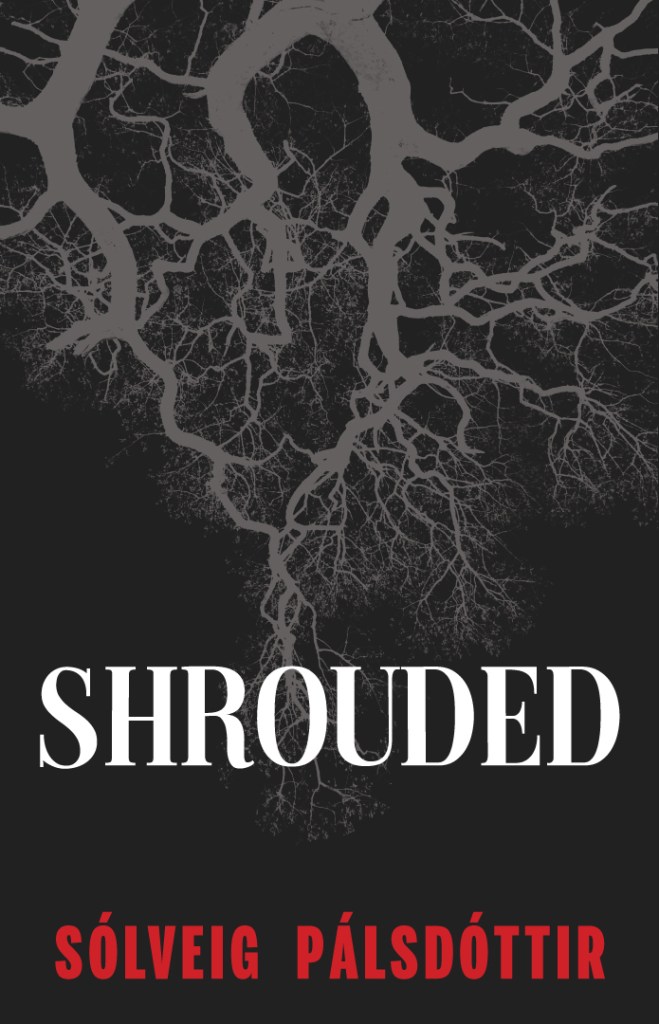
A retired, reclusive woman is found on a bitter winter morning, clubbed to death in Reykjavik’s old graveyard. Detectives Guðgeir and Elsa Guðrún face one of their toughest cases yet, as they try to piece together the details of Arnhildur’s austere life in her Red House in the oldest part of the city. Why was this solitary, private woman attending séances, and why was she determined to keep her severe financial difficulties so secret? Could the truth be buried deep in her past and a long history of family enmity, or could there be something more? Now a stranger keeps a watchful eye on the graveyard and Arnhildur’s house. With the detectives running out of leads, could the Medium, blessed and cursed with uncanny abilities, shed any light on Arnhildur’s lonely death?
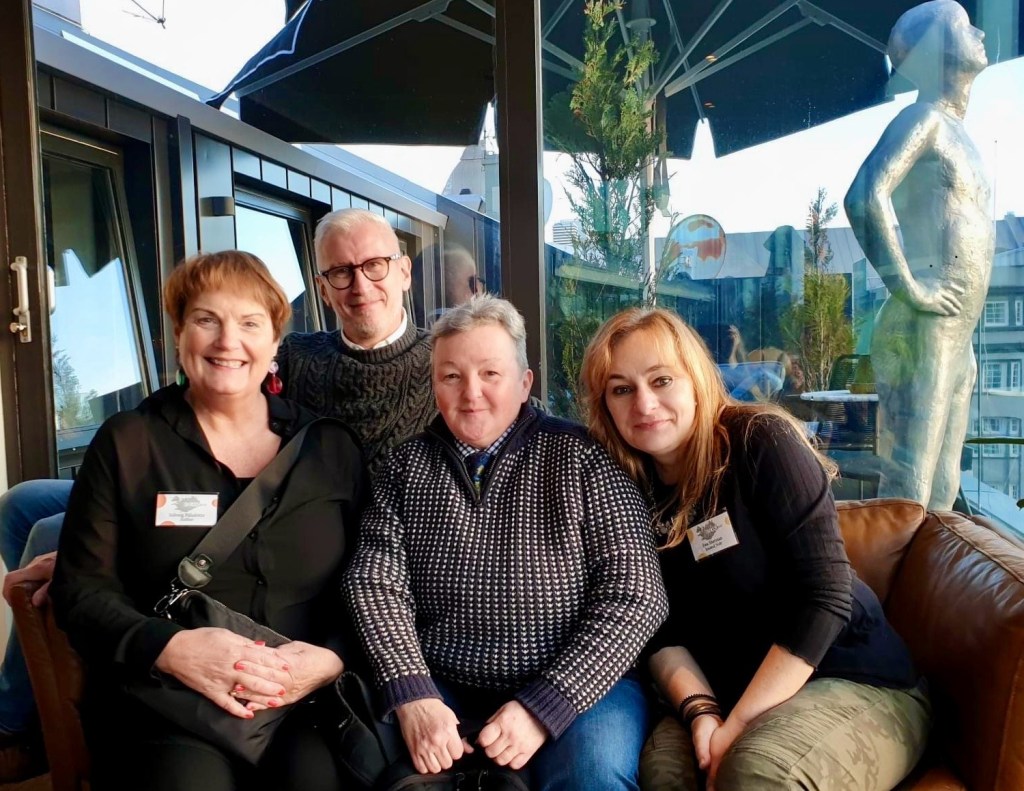
Sólveig Pálsdóttir’s latest gripping intriguing novel Shrouded in Quentin Bates’ translation from Icelandic has been published by Corylus Books last month, and received some excellent reviews from the readers. Here she talks about books that have made impression on her, over the years and quite recently.
‘I have always been a big reader, with an interest in literature of many kinds. My choice of reading depends on how I am feeling, as well as what I’m working on. I was a voracious reader of crime fiction before I started writing it myself. Swedish author Henning Mankell is my absolute favourite, a great stylist with strong social awareness and a highly versatile writer, as in addition to his crime fiction (featuring his most famous creation, Kurt Wallander) he wrote children’s books, plays, novels and powerful works based on his own life. Then I became a strong admirer of Stieg Larsson and his Millennium books. The Icelandic novelist Arnaldur Indriðason’s first books caught me in their grip, and as a student I naturally read Edgar Allan Poe and Umberto Eco, both of whom have been strong influences.
Since writing my own crime fiction, this is a genre I read less and find myself choosing other varieties of literature. I probably read half a dozen crime novels a year, just enough to keep up, and more of other books such as poetry, biographies and other fiction. I’m sure the reason for this is the concern that my work could be influenced by other authors’ crime stories and I want to avoid that happening. So I mustn’t read crime when I’m working on a book of my own.
There are more books than I can count that have been a strong influence on me, and many are by Icelandic authors who are mostly little known elsewhere. I have to include Iceland’s Bell by Nobel Prize winner Halldór Laxness.
I played a part in a dramatisation of Crime and Punishment by Fyodor Dostoevsky which was highly thought-provoking in a way that has stayed with me ever since.
Other authors who moved me deeply in my younger years and shaped my thinking were Margaret Atwood and Doris Lessing. I was captivated by The Grass is Singing and A Diary of a Good Neighbour. I haven’t read this again, but the feeling remains strong of what a curse restraint can be and how important it is to allow oneself fondness for others.
I can’t fail to mention Íslenskar þjóðsögur og dulrænar frásagnir / Icelandic Tolk Tales and Accounts of the Uncanny. I used to devour books like this well into adulthood, and listened carefully to people’s accounts of folk tales, the hidden people and ghosts. This can be clearly seen in The Fox and Shrouded, and probably in other books.
Of the more recent memorable books, I would like to mention The End of Loneliness by Benedict Wells. This seductive, low-key narrative technique has stayed in my mind. I read the book again recently and wasn’t disappointed. Now I mean to track down his latest book Hard Land. I recently read two novellas by Claire Keegan that I would wholeheartedly recommend, Small Things Like These and Foster. I have also been reading La Place by French Nobel Prize winner Annie Ernaux, which has recently been translated into Icelandic. This taut, almost cold, text was almost repelling, but it somehow stays with you, and I find myself again and again thinking about this book. Educated by Tara Westover also sticks in the mind. Her parents belonged to an isolated Mormon sect which believes the end of the world is imminent, living completely isolated from the outside world. It is an astonishing autobiography in every way. It’s shot through with the author’s powerful will to live, independence and belief in better things to come.’
You can buy Shrouded – Indie Press Network or the link above.
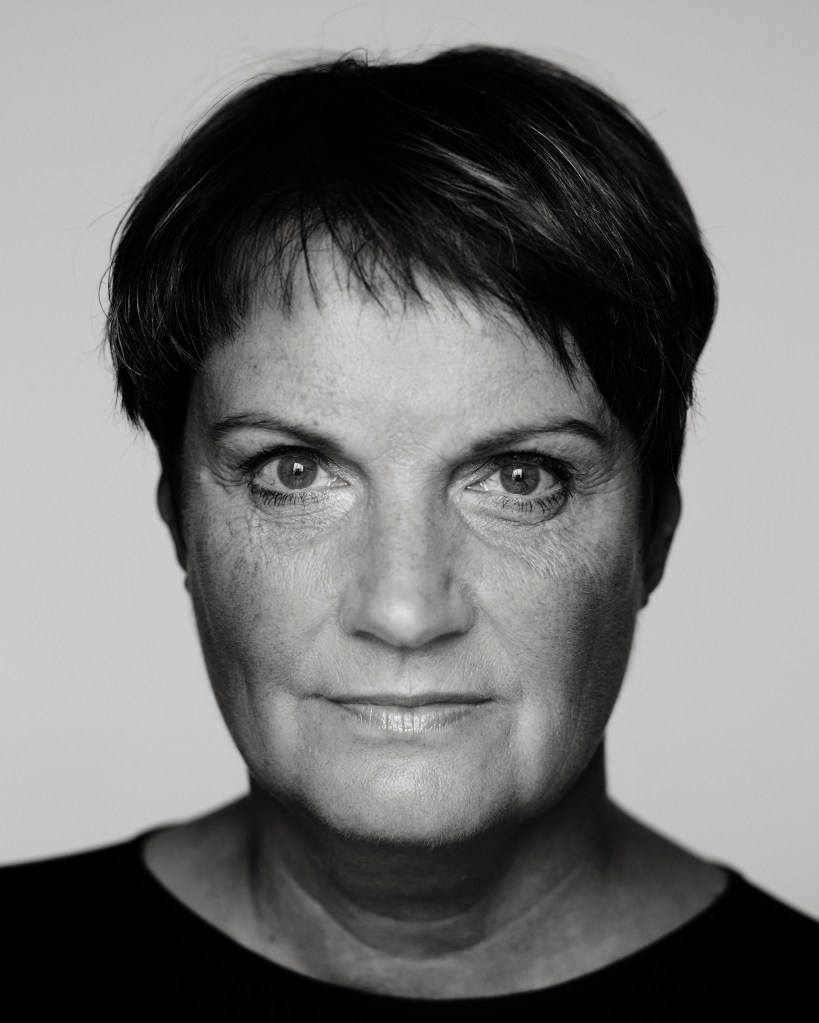
Sólveig Pálsdóttir trained as an actor and has a background in the theatre, television and radio. In a second career she studied for degrees in literature and education, and has taught literature and linguistics, drama and public speaking; she has also produced both radio programmes and managed cultural events. Her first novel appeared in Iceland in 2012 and went straight to the country’s bestseller list. Her memoir Klettaborgin was a 2020 hit in Iceland. Sólveig Pálsdóttir has written seven novels featuring Reykjavík detectives Guðgeir Fransson and Elsa Guðrún in the series called Ice and Crime. Silenced received the 2020 Drop of Blood award for the best Icelandic novel of the year and was Iceland’s nomination for the 2021 Glass key award for the best Nordic crime novel of the year. Shrouded is the series’ fourth book to appear in English. Sólveig lives in Reykjavík.
Quentin Bates has personal and professional roots in Iceland that go very deep. He is an author of series of nine crime novels and novellas featuring the Reykjavik detective Gunnhildur (Gunna) Gísladóttir. In addition to his own fiction, he has translated many works of Iceland’s coolest writers into English, including books by Lilja Sigurðardóttir, Guðlaugur Arason, Einar Kárason, Óskar Guðmundsson, Sólveig Pálsdóttir, Jónína Leosdottir, Ragnar Jónasson and elusive Stella Blomkvist. Quentin was instrumental in launching Iceland Noir in 2013, the crime fiction festival in Reykjavik.
 Nordic Lighthouse
wow!! 51Petrona Award 2024 – Longlist
LikeLike