Bloody Scotland 2025 kick off

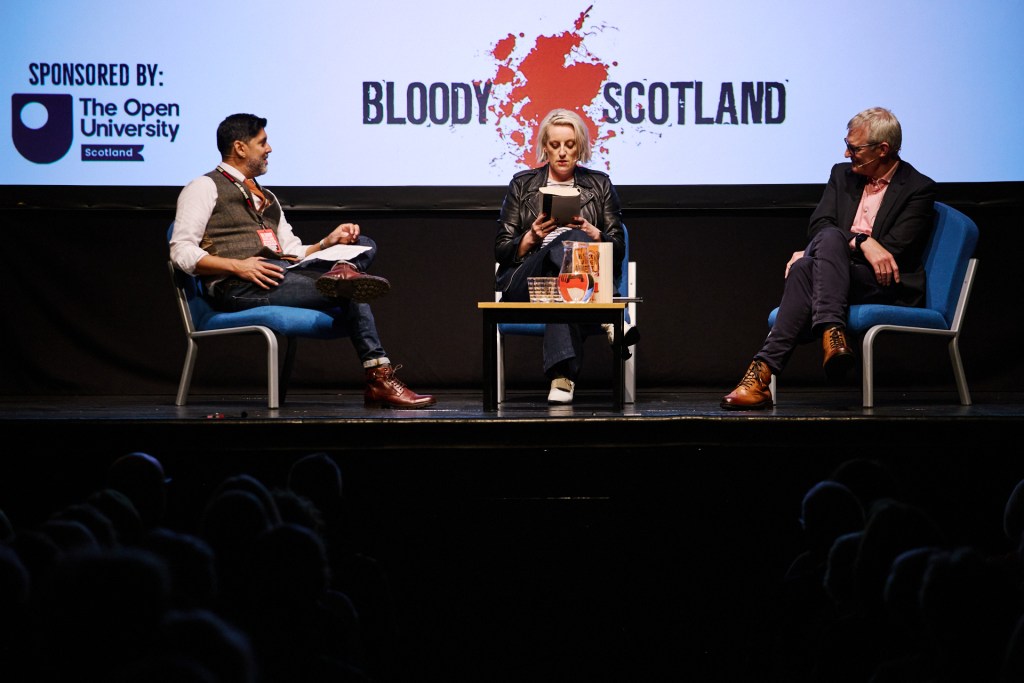
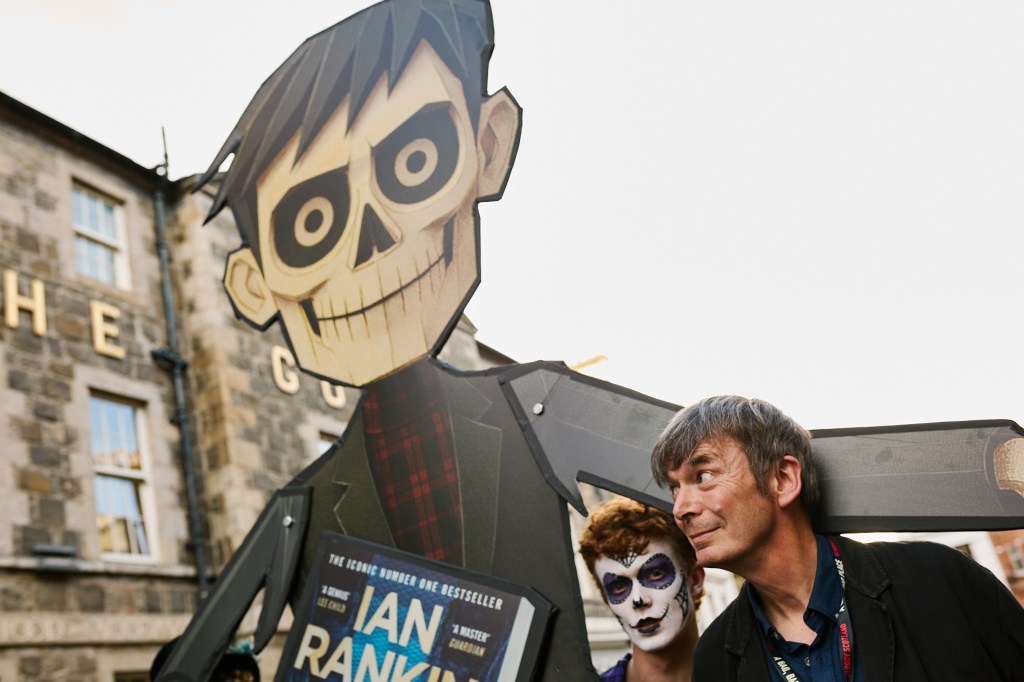
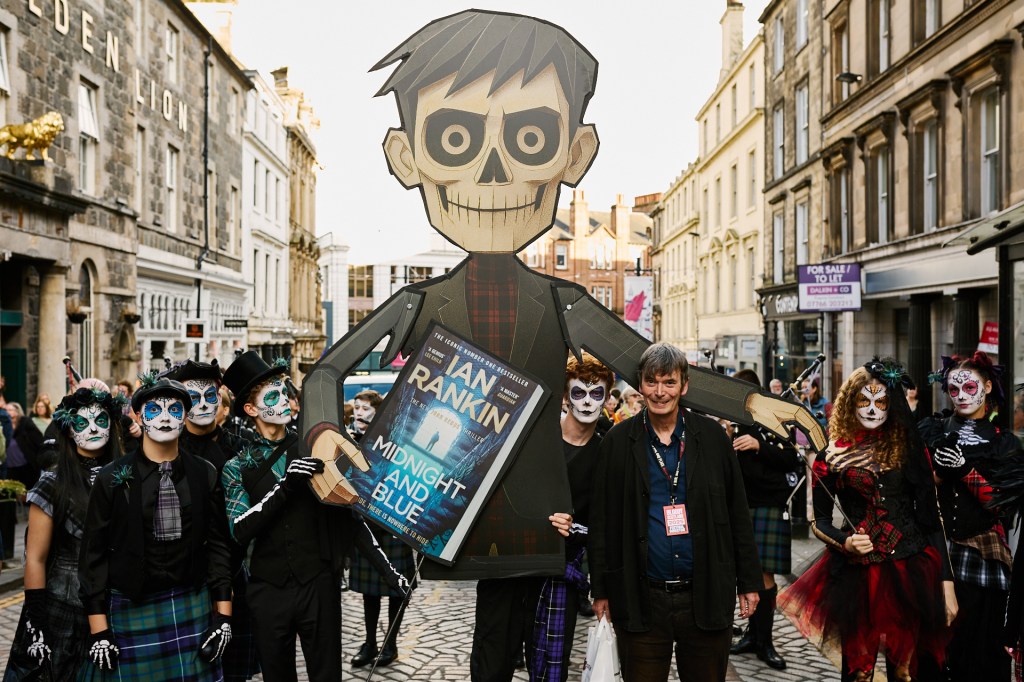
Bloody Scotland Internatonal Crime Festival kicked off with the prize announcements, a Day of the Deid parade led by an effigy of Sir Ian Rankin, and the big reveal of the mystery crime writer.

Dreich weather (is that the correct word?) outside my windows and I might be suffering from a serious case of FOMO but Bloody Scotland always has criminally good news. Here are some highlights straight from the people who are in Stirling.

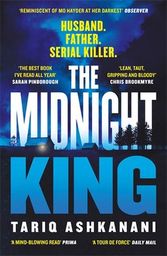
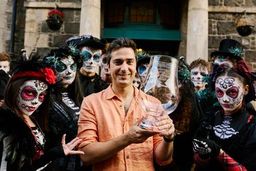
The winner of the McIlvanney Prize was revealed – in the ballroom with a giant crystal glass – to be Tariq Ashkanani with The Midnight King. It was presented to him on stage on the opening night – Friday 12th September – of the Bloody Scotland International Crime Writing Festival by the winner of the 2024 McIlvanney Prize Chris Brookmyre. Tariq, a solicitor from Edinburgh, appeared as a support act for Ian Rankin in Crime in the Spotlight at the 2021 festival and went on to win the Bloody Debut Prize in 2022. The McIlvanney Prize win brings the process of nurturing authors at Bloody Scotland full circle.

The judges who included broadcaster Nicola Meighan, journalist and writer Arusa Qureshi and crime reviewer Gordon McGhie said: ‘Tariq Ashkanani manages to create an atmosphere of dread while uniquely exploring the theme of nature vs nurture… When we speak about thrillers being page turners (this) should be used an example of how it should be done.’

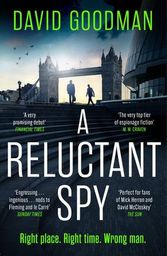
The winner of the 2025 Bloody Scotland Debut Prize was revealed to be David Goodman with A Reluctant Spy (Headline). Like Tariq, he was previously selected for Crime in the Spotlight, and appeared as a support act for thriller writer Frank Gardner at Bloody Scotland last year. This year it is he who takes centre stage. He also won the inaugural Theakston Old Peculier McDermid Debut Award in July. He lives in East Lothian with his family.  

The 2025 prize was judged by crime writer and Bloody Scotland founder Alex Gray, broadcaster Bryan Burnett and Kenny Tweeddale from The Glencairn Glass. They said: ‘Everything about this feels authentic. In fact, the only thing that’s not believable is that this could be a debut novel.’ Kirsty Nicholson, Design and Marketing Manager at the awards sponsor Glencairn Crystal, said: ‘A huge congratulations to Tariq Ashkanani on winning the McIlvanney Prize with his page-turning thriller The Midnight King, and to David Goodman on receiving the Debut Prize for his gripping first novel A Reluctant Spy.  Being a Scottish family company, we are proud to sponsor these distinguished annual awards with the Glencairn Glass, the official glass for whisky – both of which are deeply rooted in Scotland. It is an honour to help celebrate and shine a spotlight on such exceptional authors in the wonderful world of crime fiction.’

The prize giving was followed by the inaugural Bloody Scotland Day of the Deid procession with actors and local pipeband in full make up led by the two winners and an effigy of Sir Ian Rankin. It concluded at the Albert Halls where the ‘mystery authors’ behind Evelyn Clarke’s, The Ending Writes Itself, (HQ, 7 April 2026) were finally revealed to be #1 Sunday Times bestselling author, V.E. Schwab and longtime friend and screenwriter Cat Clarke. V.E. Schwab is best known for The Invisible Life of Addie LaRue and Bury Our Bones. HarperCollins acquired rights in a nine publisher auction and will be publishing simultaneously in the US and Australia.

Highlights on Saturday included Mick Herron (author behind TV series Slow Horses), broadcasters Steph McGovern, Jeremy Vine and The Reverend Richard Coles, bestselling writer Kate Atkinson, actor Richard Armitage and superstar of American crime fiction Kathy Reichs. The day concluded with a Bloody Scotland take on Crime Family Fortunes and the sold-out Karaoke at the Coo where famous authors took to the mic.

All photos (c) Bloody Scotland International Crime Festival

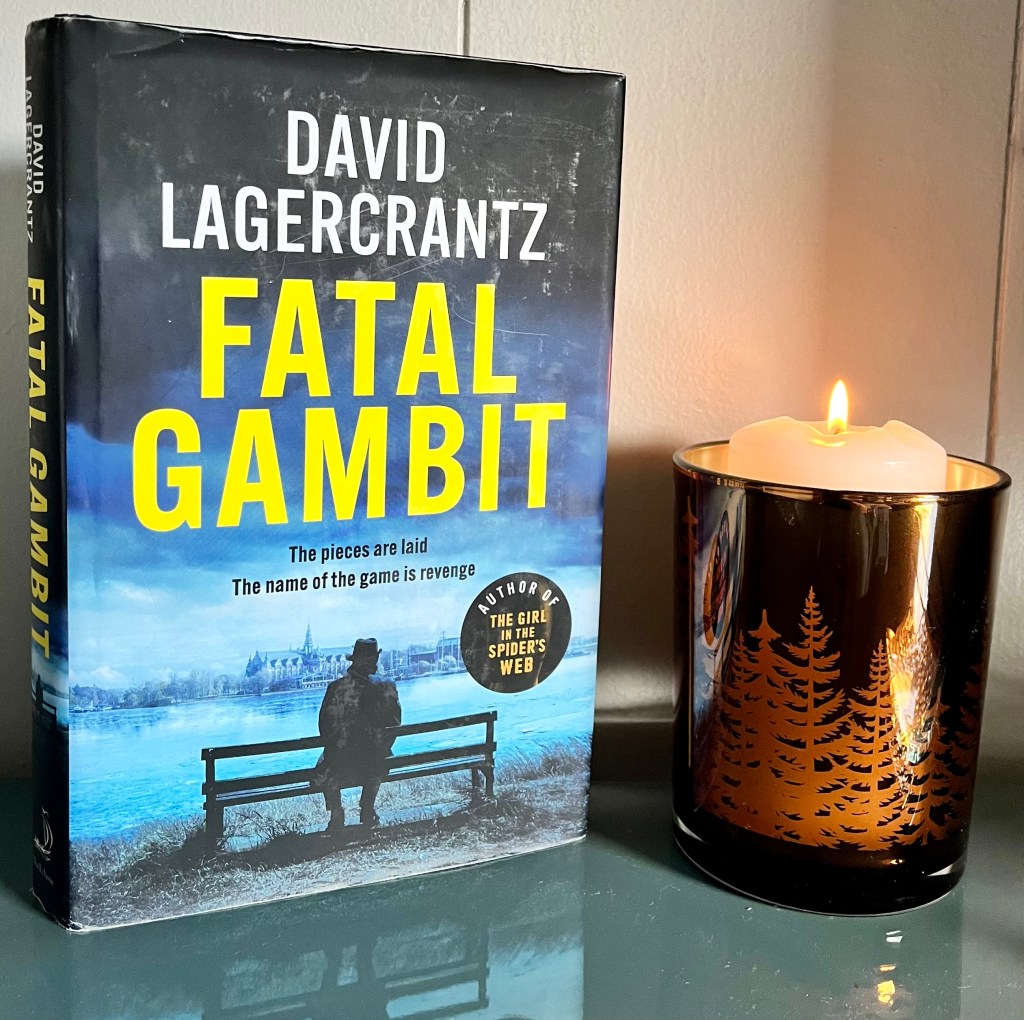
Fatal Gambit by David Lagercrantz

Brilliant academic and government consultant Hans Rekke and his unofficial work partner Detective Micaela Vargas are the latest duo following the well-established ‘method’ of the famous Sherlock and Watson partnership. However, they did not make a conscious decision to embark together on the crime-fighting journey. Beginnings of their cooperation are in Crime Review – Dark Music (2022), first novel of the new gripping series by David Lagercrantz, which is absolutely worth reading. Translation of both by Ian Giles is superb: flowing and engaging capturing the attention. I would expect that collaboration between Lagercrantz and Giles will continue as the complex threads of Fatal Gambit invite further investigations.   

As the modern take on Sherlock-Watson theme continues, it is not difficult to realise who is who here, and how that uneasy working relationship slowly embraces friendship and deeper understanding of personal motives. At times it is such a slow painful process that not only the readers might find it frustrating – the main characters as well, especially Vargas (but devil’s in the details). She had to move into Rekke’s vast apartment as a lodger because of her own private situation. Living with the professor who is both disillusioned and disgraced, and surviving on the diet of various pills and self-loathing, creates many practical and emotional challenges. Contrast between wealth and social standing, mostly going years back (to be precise) of Rekke versus down-to-earth attitude and immigrant background of Vargas amplify the difficulties within the Swedish society, too.

Main story strands focus on a missing woman Claire Lidman who was confirmed as dead in a fire fourteen years ago. Yet she suddenly appears in the background of a recent holiday photo taken in Venice. Her still-hopeful husband Samuel Lidman brings this anomaly to the pair. Scepticism seems to be the only reasonable response as the earlier investigation into Claire’s death showed no doubt. Rekke cannot deal with this cold case: he is very concerned that his daughter Julia has a secret new boyfriend and there are nuanced signs of dangerous darkness. At the same time he becomes aware of hearing a name from his past, a memory of a genius rival, a mastermind of words, deeds and manipulation. Enter Gabor Morovia, lapsed mathematician and evil player of chess and women. As a villain he is definitely outstanding, as a link in the chain holding lives of Rekke and others which will become obvious as the plot intensifies. This villainous creation takes me back to the latest book in the Millenium series: The Girl in The Eagle’s Talons where Karin Smirnoff pulled all the stops, just like Lagercrantz in his contribution to the Stig Larsson’s legacy. But back to Fatal Gambit.

Vargas tries to balance her life in the realm divided by the law-abiding profession she has chosen and the reality of criminal underworld. Her gangster brother threatens to silence her if she doesn’t get off his back, and he absolutely means that. Caught in the web of real and perceived violence, lack of support and understanding, and confusing emotions towards Rekke, she struggles with convincing others of making the right steps. When she finds out identity of Julia’s mysterious boyfriend, her fragile world collapses. However, this is not the time to stop and hide.

Perilous mystery opens avenues that nobody anticipated. Symbolic chess game is already on and Hans Rekke and Micaela Vargas are caught in the bigger game of the post iron-curtain connections, political machinations, big money and fear. Conclusion of the Claire case and exploration of various small elements in this picture affected them in deeply personal ways, and a as result brought their professional lives closer. And I loved the tension, drama and moral questions along the way.

Fatal Gambit by David Lagercrantz is out now, published by MacLehose Press.  

Paris Pages by Shelley Day

‘If I could make an effective plan I would write exquisite prose, multiply embedded, like W G Sebald, Modiano, Per Petterson. I’d tell it like it is, like Ernaux. I’d knock people over like Beckett; soothe like Tove Jansson; counsel, insightful, brave, and strong, like Maya Angelou; go dark-deep melancholy desperate beautiful like Plath. I’d meditate poetically like Toni Morrison, tantalise and annoy like Gertrude Stein. Like Clara, I’m never certain how well I get on with Stein; perhaps I see her more as a pivot, a queen bee, choreographing minions. I’d lead myself astray like Malte Laurids Brigge, or Anne in Astragale. I’d be capable of cruel shocking things, like those twins in Ágota Kristof.

My plan was to lose myself in a fast-paced thriller or a crime fiction novel as the Norwegian tradition encourages everyone during the long Easter break. However, a completely different story pulled me into its core and påskekrim might have to wait, although Shelley Day, author of The Confession of Stella Moon is no stranger to the genre. (What Are You Like shows her another writing style). Paris Pages, published by Postbox Press / Red Squirrel Press, is both a universal and a deeply personal book that deals with the importance of art in everyday life and Art with a capital ‘A’, and what it truly means to be an artist. The quote above is just a tiny indication of the richness in the book. Through one hundred pieces of sublime lyrical prose which often becomes poetry, Paris Pages explore essence of the creative process. This in itself is a complicated meandering journey through opinions, thoughts and emotions. As the book is focusing on three main characters, the understanding of what Art is, or should be, and how it could relate to our existence and living, it contemplates various artistic forms and styles, reaching into the real historical events while absorbing atmosphere of the city which has always been an inspiration to many. Shelley Day knows Paris well, having lived there, visiting various galleries and museums, walking the streets, looking at the buildings and breathing the air. She made notes and made inquiries, asked questions and asked herself, and kept writing. The result is a stunning story, quite urgent in its message, and painfully contemporary. 
Very private experiences are also relevant to the intertwined lives of Clara Delaney, Sadie Sarrazin and László Száműzetés, three people who found themselves in the French capital for different reasons. The psychotherapist Clara feels she’s nearly done with her job and profession, and is determined to become a biographer of the barely known, nearly completely forgotten and possibly disgraced Max Zuniga, a psychoanalyst and one of Freud’s colleagues. It seems as if he had never existed. She is still processing breakup with her partner Johannes from Oslo.
The young photographer Sadie as a volunteer worked with traumatised migrants at Sangatte, a commune on the northern coast of France, a place which we might heard about as the Jungle near Calais. She struggles with powerlessness, unable to be creative, to find this special spark and continue her work as a witness to the events that had happened during this particular refugee crisis. Her own trauma paralyses her; and therapy sessions with Clara seem to increase anxiety and sense of failure. And László, a mysterious man linking both women and somehow guiding them through complex emotions, represents the spirit and soul of Art. He is the personification of the Exile, a state of mind, a situation that is both physical and intellectual, and conveyed beautifully in Paris Pages. ‘Where is Home?’ will resonate with many readers.
The author makes so many references to writers, painters, sculptors, thinkers – Beckett, Edith Piaf, Louise Bourgeois, Ai Wei Wei, Rothko, Picasso, Cocteau, Patti Smith, Keats – all those creative giants who made their mark in Paris and who had also shaped her own relationship with art. I loved this element of the book as it forced me to pause, go back to a paragraph or sentence, read again, reflect on what I had learnt about them before and what I now wanted to check, find out again, put in context. The abundance of delicately distributed knowledge is like that extra sprinkling of dark chocolate in otherwise ordinary coffee. Not that there is anything ordinary about Day’s writing, a firm believer in the true concept that ‘The story is everything and everything is the story and it’s all inter-connected.’

Let me leave you with this thought as you hopefully reach for Paris Pages: ‘There is and never can be anything worthwhile in any manifestation of Art as long as human beings are suffering and humanity itself is imperilled on the verge of planetary self-destruction. Some things are of crucial importance. Art is an irrelevance in a world as troubled as this.’

Remembering Miriam, always and for ever

My dear friend Miriam V Owen died suddenly last month; today was her funeral which I joined online. It was a beautiful touching but heart-breaking occasion. I can’t even imagine how her family must feel… All her friends are deeply sad but want to cherish the moments spent together. I don’t feel I can express well anything that goes through my mind as I think of Miriam, one of the #ScandiGang’s original members. So just this short post for now… We met in London in 2013, and clicked straight away, and shared love of Scandinavian and Nordic things: literature, food, landscapes mood. We talked about bringing up boys, about work and life, about crime fiction, travel, writing. She sent recipes. She was always there… We’ve been together at different book events and festivals in Iceland and the UK but haven’t managed to meet in Bergen in Norway. The plan was to follow in the footsteps of Varg Veum, the fictional PI created by Gunnar Staalesen, whom Miriam adored. Her passion for #NordicNoir was shown in her informative views as my fellow judge for Petrona Award and on the pages of the fascinating blog from which I copy the words below.

Nordic Noir blog – Iceland Noir 2014 ‘This film is all about experience at a crime writing festival in Reykjavik, Iceland. It contains interviews with authors, fans and one of the festival organisers as well as images, music and some text. It was made as piece of academic work in 2014 to allow me to explore videography as a tool for research. I loved the experience of making a film, editing it and working with a musician on some of the soundtrack. The piece has been well received at two conferences. One around the theme of Community Memory at the University of Stirling and also at the Academy of Marketing Arts and Heritage Colloquium 2016 held at Royal Holloway in London. The Icelandic Ambassador in London has also viewed it. When I made this I did not have any really fancy tools […] This piece would not have been such positive experience without the support of the crime fiction community as well as the academic community that has supported me. Thank you all.’

I will write more but not today. We miss you, Miriam.

ScandiGang underground. 13 October 2013