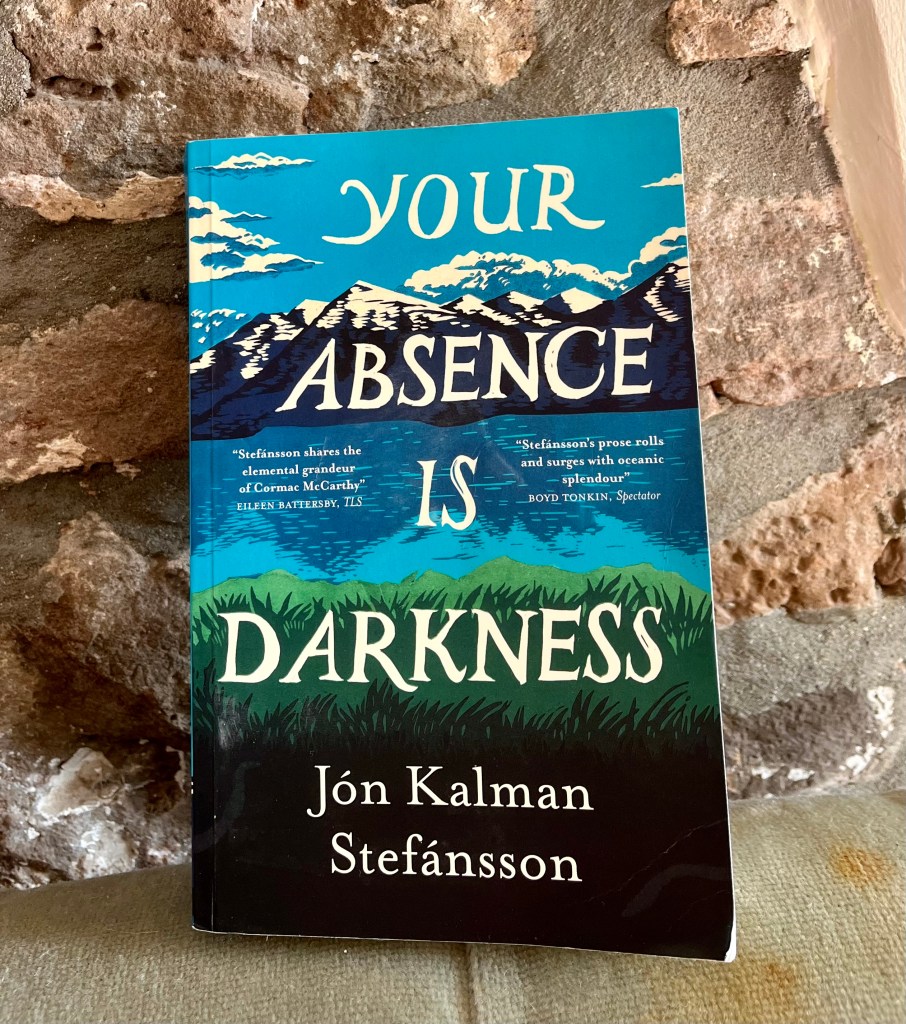
I am very very lucky to have some of my reviews published on the pages of European Literature Network. This particular review is available there as well but I wanted to share it on my blog, too. Here’s the link to Your Absence is Darkness. And I would absolutely recommend that you check other interesting articles written by extraordinary people who contribute #RivetingReviews.
Have you ever seen photographs of rivers and streams meandering through the rugged terrain of Iceland? The way they create their own space, take ownership of obstacles and thrive in the beautiful, unexplored countryside? As I was reading Jón Kalmann Stefánsson’s latest audacious novel Your Absence is Darkness, I was reminded of this Icelandic landscape. I fell under the spell of the storytelling, which meanders through time and locations, taking in life and death, punctuated by raw love of many kinds, and leading the reader to a perfect conclusion.
The powerful narrative, which is both stoic and emotional in equal parts, moves at a pace dictated by both the weather and the speed at which memories come to the surface. An unnamed man finds himself awake in a church in rural Iceland. He remembers nothing – he has completely lost his bearings – but he knows the presence of a stranger makes him feel uncomfortable.
This mysterious shape-shifting figure will accompany him on a journey of discovery. First a local woman helps him reunite with his sister. Then, as he listens to her stories about previous generations, he slowly submerges himself in a history that spans centuries, telling tales of the people who have loved, lost, fought, survived and died in the isolated, windswept farms and small villages on the Snæfellsnes Peninsula in western Iceland, whose stunning, unforgiving landscape has been influencing the ordinary lives of its inhabitants for centuries.
As the narrator begins to question this correlation between the natural environment and the economic situation of the inhabitants of these villages, which have changed very little over the years – ‘Blessed darkness, accursed damp – the history of Iceland?’ – we get to know the fates of the members of one particular family. Eirikur, a musician abandoned as a child by his mother, is running away from his Icelandic past, but suffers from loneliness and cannot connect with his father. A girl, chasing after the memory of one, intense blue-eyed gaze, moves from Reykjavik to the fjords. An uneducated farmer’s wife writes an essay on the earthworm, ‘the blind poet of the soil’ and unwillingly changes the course of two families’ lives. Petur, a pastor, neglects his wife, writes to a dead poet and falls in love with a stranger. An alcoholic father leaves those close to him and follows the starry night sky. We see dramatic events forcing men and women either to abandon their homes or stay firmly put, emigrate to Canada or settle for compromise, moved by love, pride or sense of duty. Just like in Iceland’s ancient sagas, the novel’s characters are bound together in a family history that spans around two hundred years.
Human tragedy links these individual stories, each of which deserves attention and patience from the reader. It seems that these characters cannot escape a brutal, often inexplicable destiny, but even as the natural world around them guides their daily existence, and even their morality, they also crave joy and a sense of belonging. Tenderness appears in the most unexpected places, humour provides some light, while Danish philosopher Søren Kierkegaard reminds the characters that they are loved: ‘Your memory is light, your absence darkness’.
Philip Roughton’s translation is superb, with the novel’s rhythm and tempo beautifully executed, especially when it comes to the way repetitions of words and phrases add to the overall sense of uncontrollable fate and the tensions between faith and biological fact. Stefánsson’s style – complex, intriguing, nuanced – in this translation flows like those Icelandic rivers.
Today it’s Moomin Day… But really it’s one hundred and ten years since Tove Jansson was born in Helsinki and I was thinking of a very special trip which was ten years ago exactly. I wrote about it some time later, and below is the text originally published on Nordic Noir website run by my wonderful friend, late Miriam Owen. So here it is…
More than three years ago, in 2014 I was on a ‘pilgrimage’ in Finland, following in the footsteps of an incredible writer and fine artist Tove Marika Jansson, a woman who has created a completely new universe inhabited by wise philosophical trolls (Moomins), and who hugely influenced my outlook on life. Tove Jansson’s multi-dimensional works overflow with humour and creativity.
In Finland you can see a permanent exhibition of Tove Jansson’s works at Moomin Museum in Tampere, or visit Moomin World created for children in Turku. Moomin Official constantly expands the variety of experiences. My own experience came from the first Polish editions of Muminki, full of humour and warmth, published in the 1970’s, beautifully translated from Swedish and including original drawings by the author. My mother, as a ‘special regular’ customer at the bookshop, had the copies set aside specially for me. I knew all Finn Family Moomintroll, Moominsummer Madness, Moominland Winter and Talesfrom Moominvalley by heart. As well as other children’s books by Scandinavian authors. Astrid Lindgren wrote about practical kids of The Six Bullerby Children, and crazy Pippi Langstrumpf / Longstocking. Over the years I read all these books again in English yet the Polish translation of names and places appeal more to me. At the time Tove Jansson visited Poland when work on adapting her books for the small screen was in full swing. In 1977 Łódź film-based Se-ma-for created the TV series Tales of the Moomins. The cartoon was made with the use of semi-flat animated puppets on glass and it still has quite a surreal feel and quality to it.
The characters from the world of Moomins do not pretend that life is always okay. Yet, despite the storms, turmoil, evil desires and problems there was always a happy ending in these tales. I wanted to be like Moomin Mama, carrying a handbag. She is compassionate, has a sense of humour and, very important, has a sense of her own worth. More visitors: we will make pancake batter in the bathtub because the kitchen is too small. Moomin Papa lacking inspiration: maybe a plate of boiled sweets will help. Forest creatures lost their house: there is always space to sleep. And The Groke whom everyone feared is one of my favourites. Yes, she’s scary and freezes everything she touches but only because she wants love and acceptance. Like all of us.
Later I discovered Tove Jansson’s modest book for adults The Field of Stones which contains a lot of reflections on the writer’s struggle with the word. Searching for more I found books translated into Polish and English. The Summer Book is always available in English but there are no further reprints in Polish. I have Sculptor’s Daughter, an autobiographical novel for adults, The True Deceiver, and Stone Field, adorned with the letter Y on the cover (a symbol of character with whose biography the book’s hero is struggling). A Winter Book and Fair Play show more of Jansson’s talent for writing. Now Sort Of Books published the new collection of short stories originally published in 1991, and translated for the first time by Thomas Teal. Understated, elegant, beautiful simplicity in delicate yet powerful short stories collected in Letters from Klara written when Tove Jansson was in her seventies, at the height of her fame. She has truly mastered the form. Balancing harshness of world and sharpness of the words, the stories also demonstrate love and compassion and a delicate sense of humour. They are philosophical, sarcastic and timeless:
‘…but if you’re odd, you’re odd, and that’s all there is to it.’
‘You’re hurt that I forgot your ancient birthday. You’re being unreasonable. I know you’ve always expected me to make a special fuss, simply because I’m three years younger. But it’s time you realized that the passage of years per se is no feather in anyone’s cap.’
I followed all Tove Jansson-related news and in 2013 I managed to find a hefty tome ToveJansson. Moomin’s Mum, a comprehensive biography by Boel Westin, which had been translated from Swedish into Polish. In the UK, the same biography titled Life, Art, Words:The Authorised Biography was published a year later.
In 2014, the hundredth anniversary of her birth, the summer presented various events which I attended. The Finnish Institute in London opened a photo exhibition at the Institute of Contemporary Arts (ICA) under the title Tove Jansson: Tales from theNordic Archipelago. I loved the beautiful photographs by C-G Hagström, reflecting the simplicity and beauty of the hardships of life, and at the same time the severity of the conditions of existence on the islands, to which Tove and her long-term life companion Tuulikki Pietila responded with joy.
Helsinki’s Ateneum Art Museum, previously the Finnish Art Society’s drawing school which she had attended in Helsinki, organised a brilliant retrospective exhibition of paintings, drawings and sketches, as well as everything related to Moomins before the Japanese machine began to create animations. Next stop for the exhibition is at Dulwich Gallery which opened in October 2017 and runs until28th January 2018 and I cannot wait to see it again.
Moomin troll first appeared as a long snouted ‘Snork’ in 1943 at the time when young Tove drew cartoons for the satirical political anti-Hitler paper Garm. His first formal outing was in The Moomins and the Great Flood published in 1945, and then through further books and comic strips, translations and slowly but steadily growing Moomin emporium. His modest beginnings and frequent cameo appearances in the drawings and paintings eventually demanded proper presence in a book.
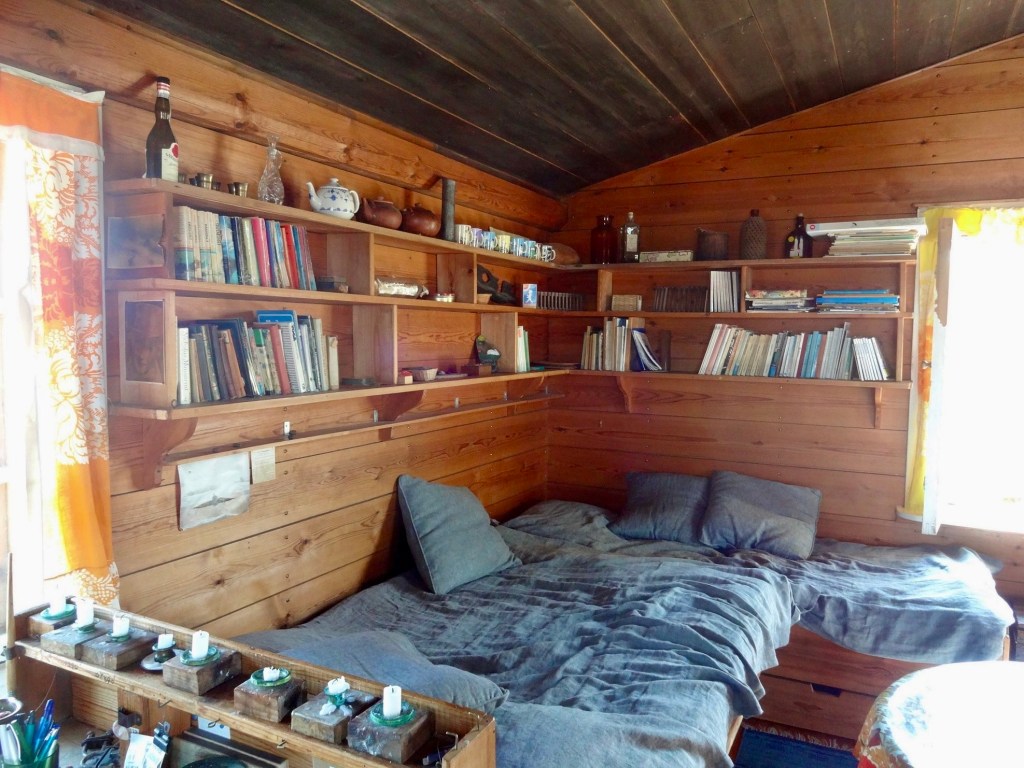
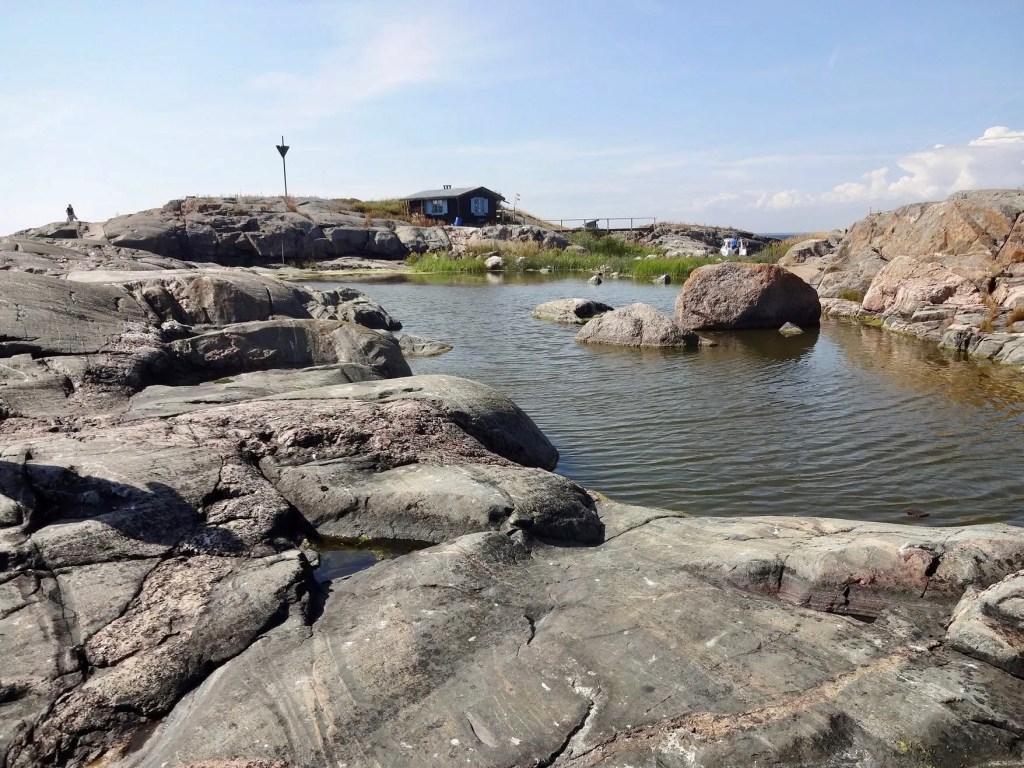
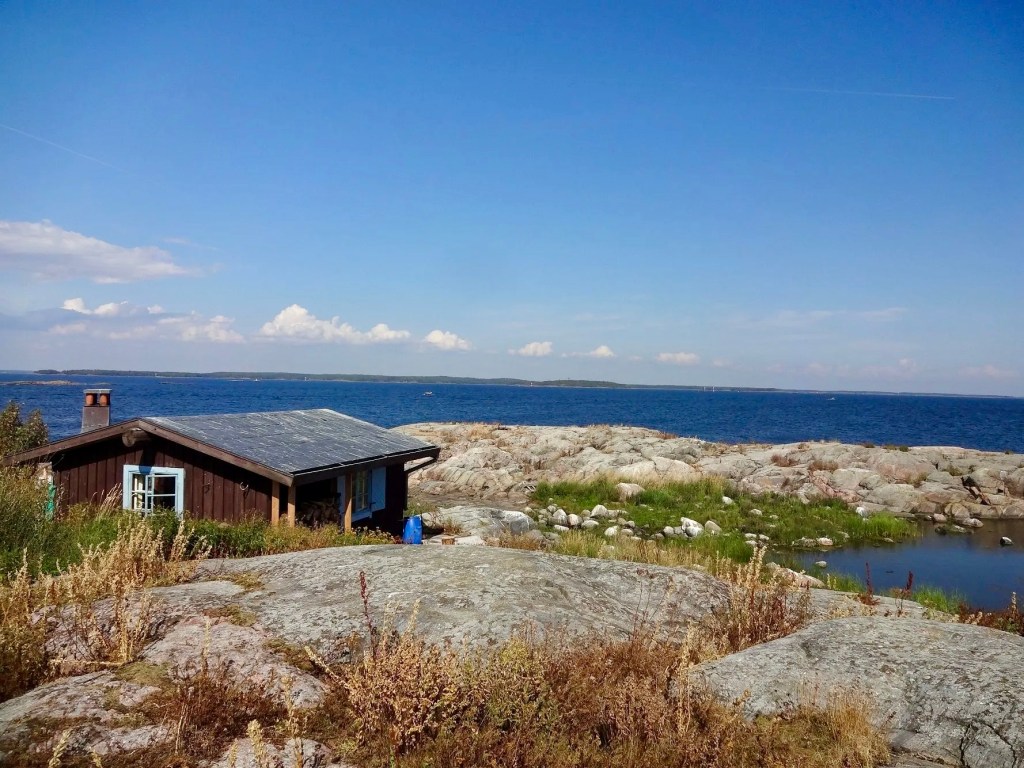
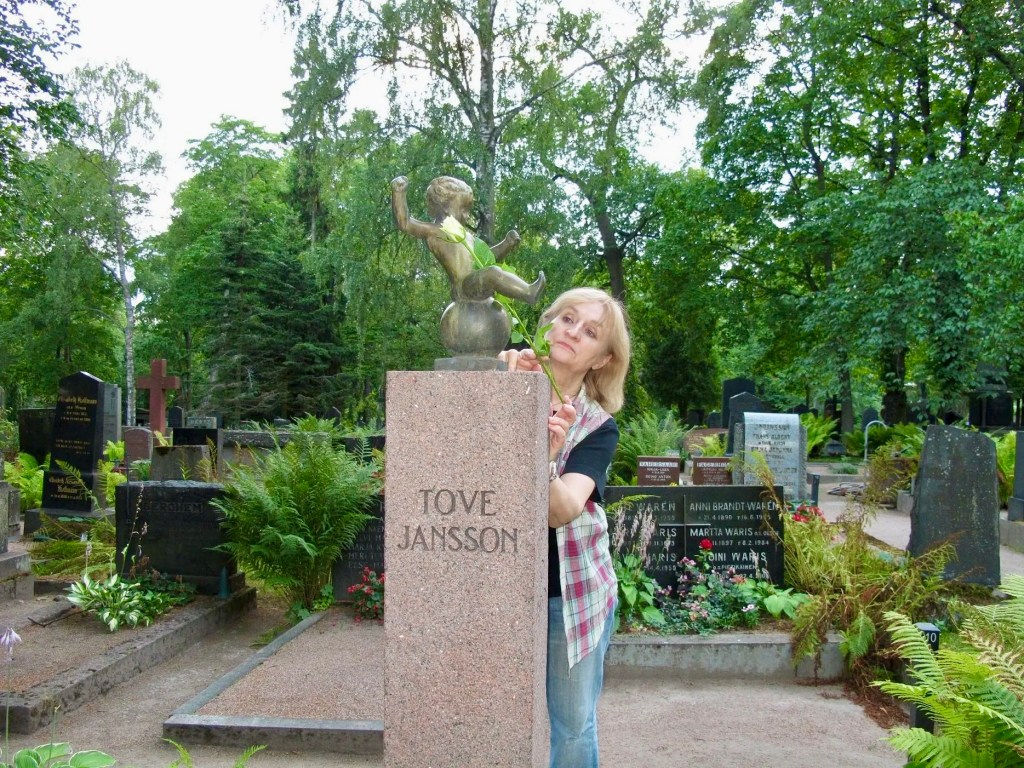
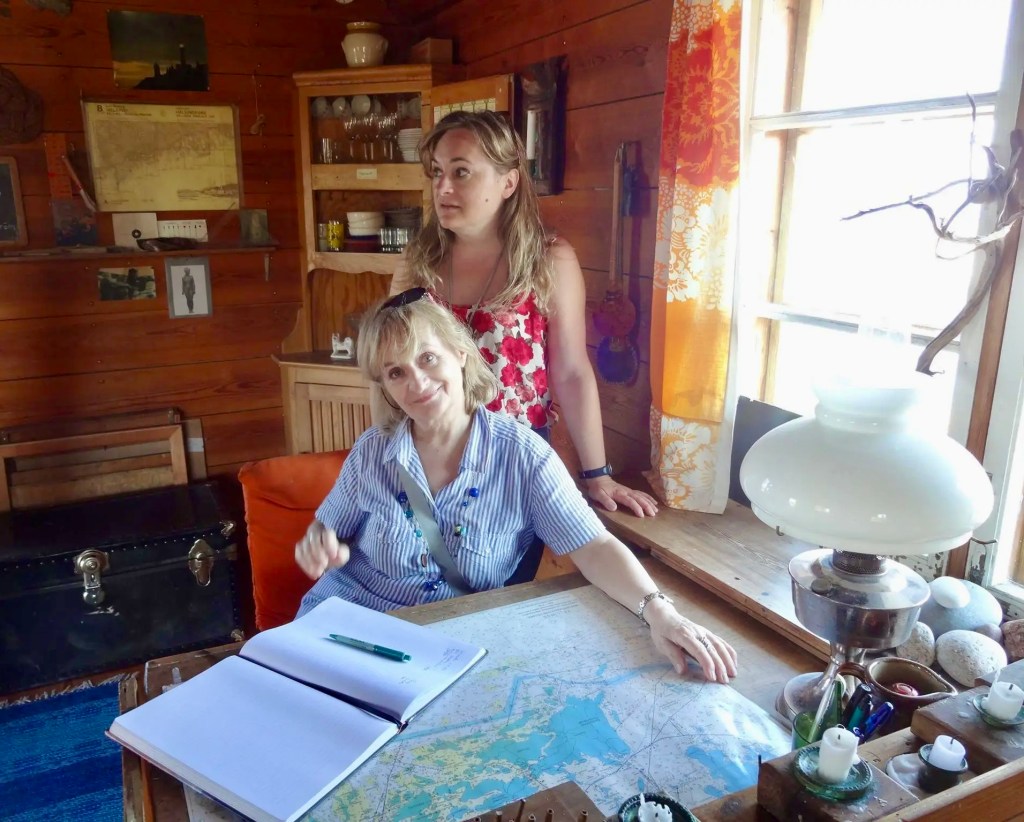
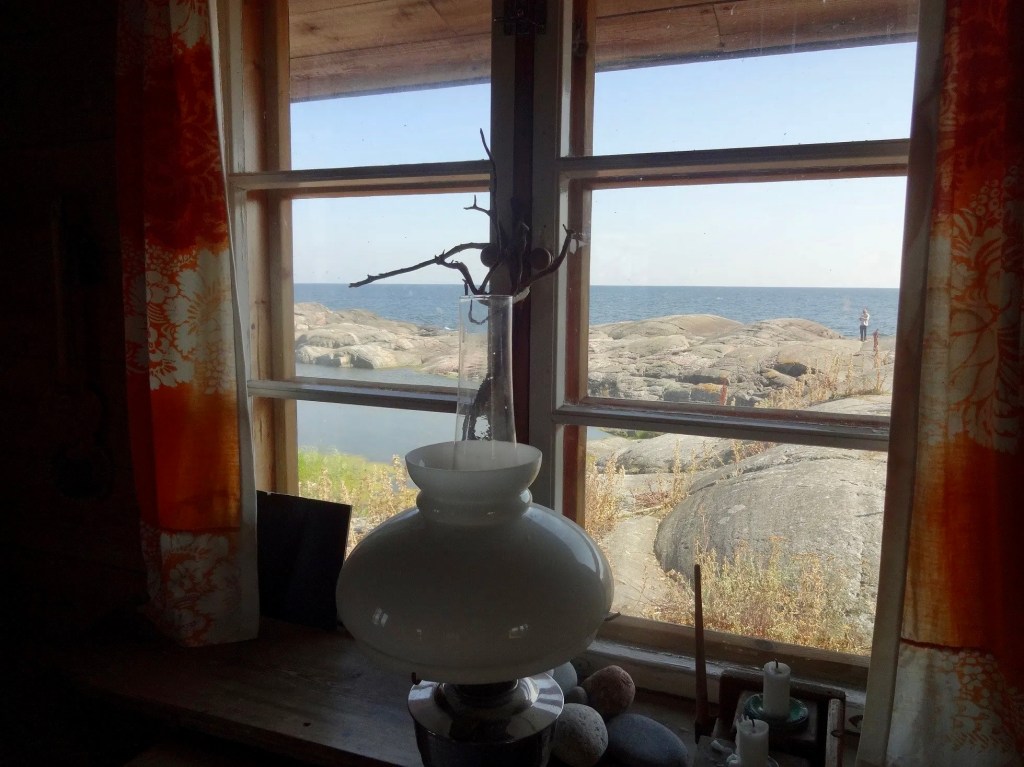
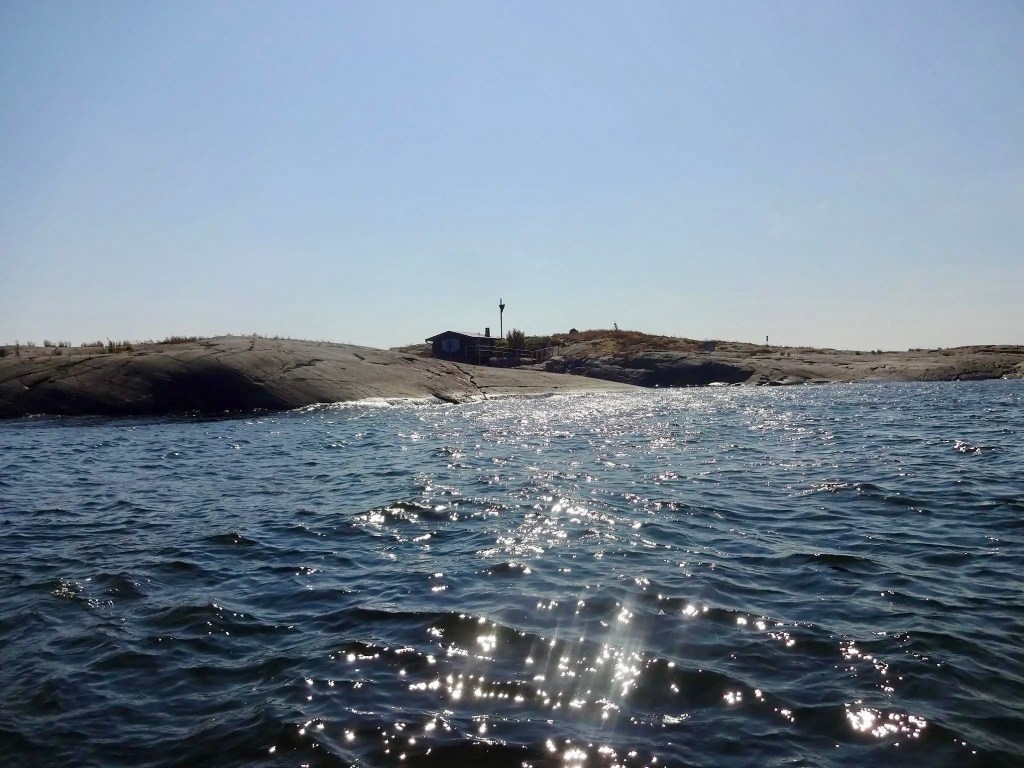
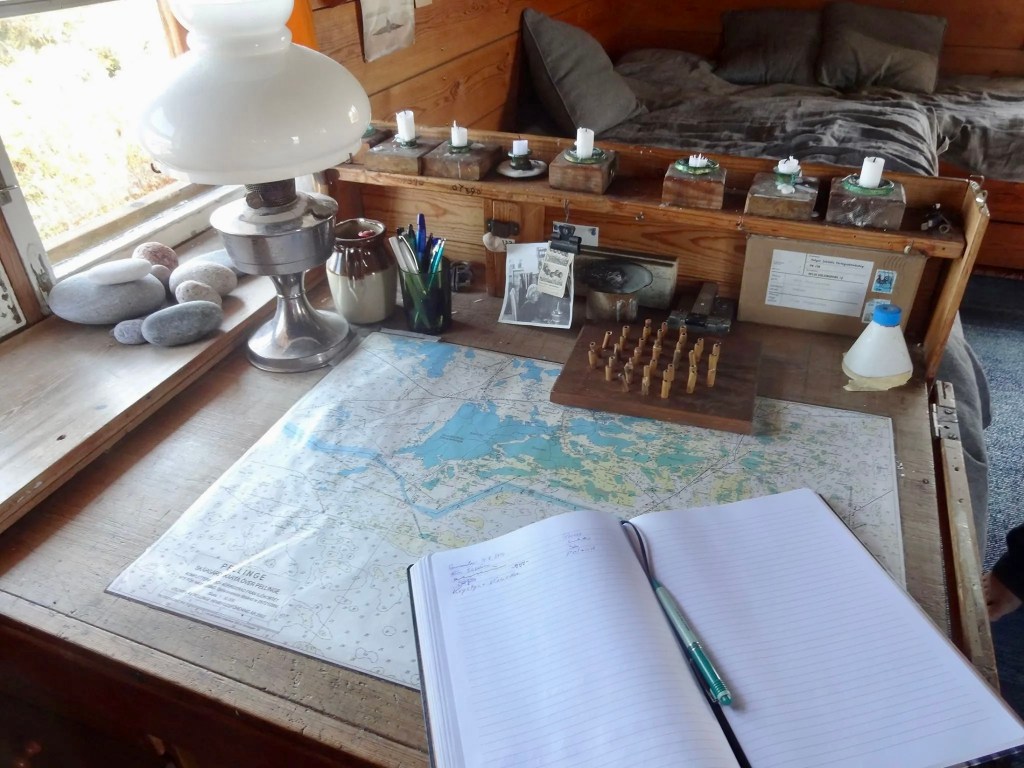
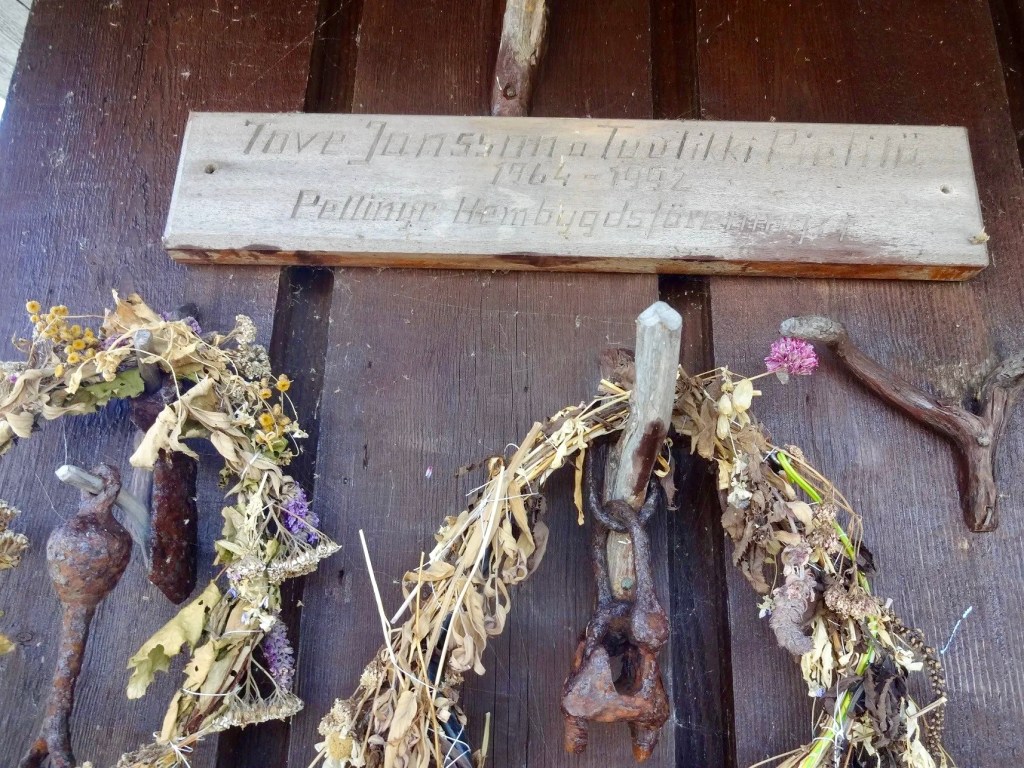
In August 2014 I travelled with my mum Krystyna Konecka, another fan of Tove Jansson, and our adventure started at the Hietaniemi cemetery at the family grave exactly on a day of Tove’s hundredth birthday. Her mother was the Swedish artist and graphic designer Signe Hammarsten, called Ham, and the father was the Finnish sculptor Victor Jansson, known in the family as Faffan. Afterwards we travelled by bus to Porvoo, 50 km east of Helsinki, and then to the island Klovharun in the Gulf of Finland. Even though it was incredibly hot and all arrangements have been confirmed weeks in advance, the trip could have been cancelled because of strong winds. And that’s how it was for Tove and her partner Tuulikki – when they left the bustle of the Capital life and moved to the island for the entire summer for nearly thirty years. Harsh reality of isolated island living, friends, uninvited guests and creativity.
In Porvoo we received a booklet with the Moomin Troll on the cover, made by Polish studio Se-ma-for. This was presented by Liisa Vähäkylä, Managing Director of Finnanimation. She and other members of Tove Jansson Society, along with the head Annikki Vähätalo attended, and we joined them at the opening of the exhibition of photographs of the artist by her friend of many years, artist C-G Hagström, whom I met earlier in London, and Tove’s younger brother Per Olov Jansson who is now 97 years old.
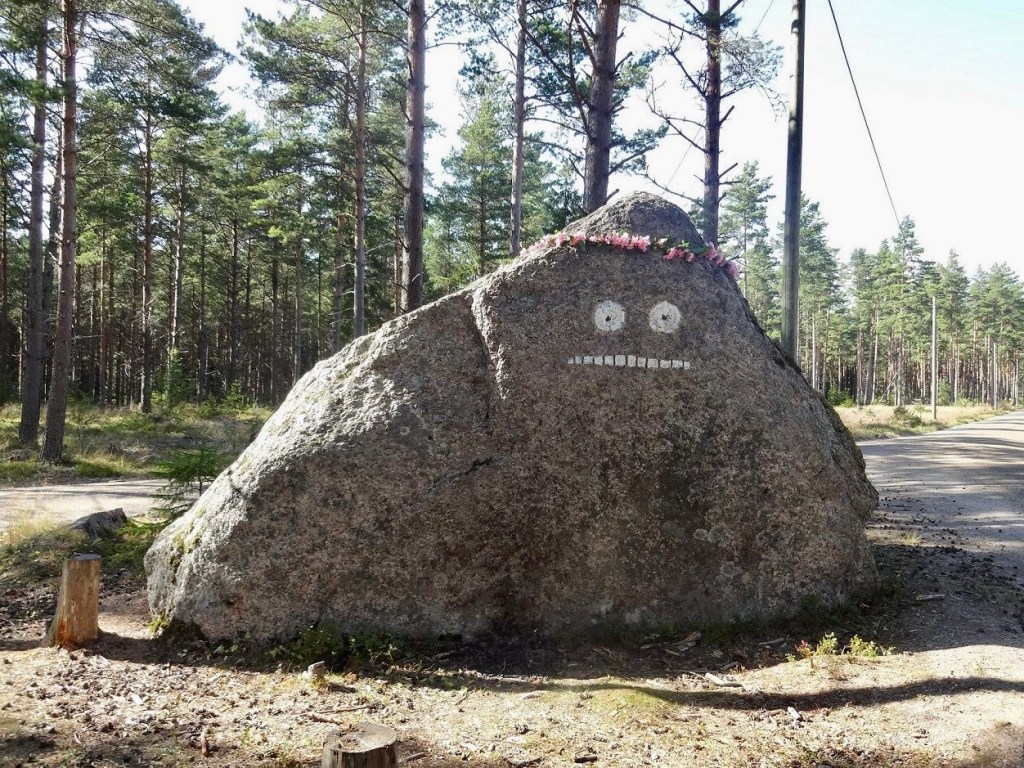
Another adventure awaited in a form of Gerd, wonderful Finnish Swede, living on one of the islands of the archipelago Pellinki, who had arrived in a big taxi to collect us. We made online arrangements for our trip from Porvoo to the small place on the coast. Gerd knew the archipelago, its history, people, roads, landscape. She stopped at the village store where Tove used to do basic shopping, coming by boat from her island Klovharun. On the way back, taking a slightly different route, she suggested stopping for a moment to see ‘Mårran’. And so we drove into the woods and suddenly there was a huge boulder in an unusual shape, a wreath of flowers on its top, with luminous painted eyes and teeth, and it was a happy Groke! A new Finnish word to add to my limited vocabulary.
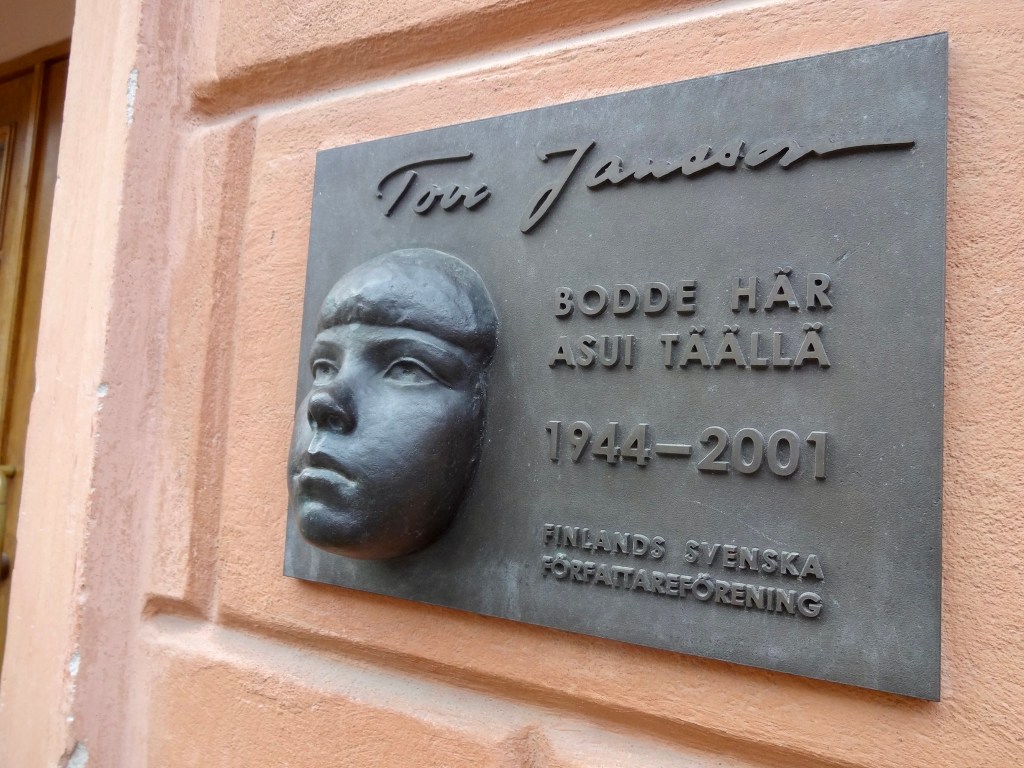
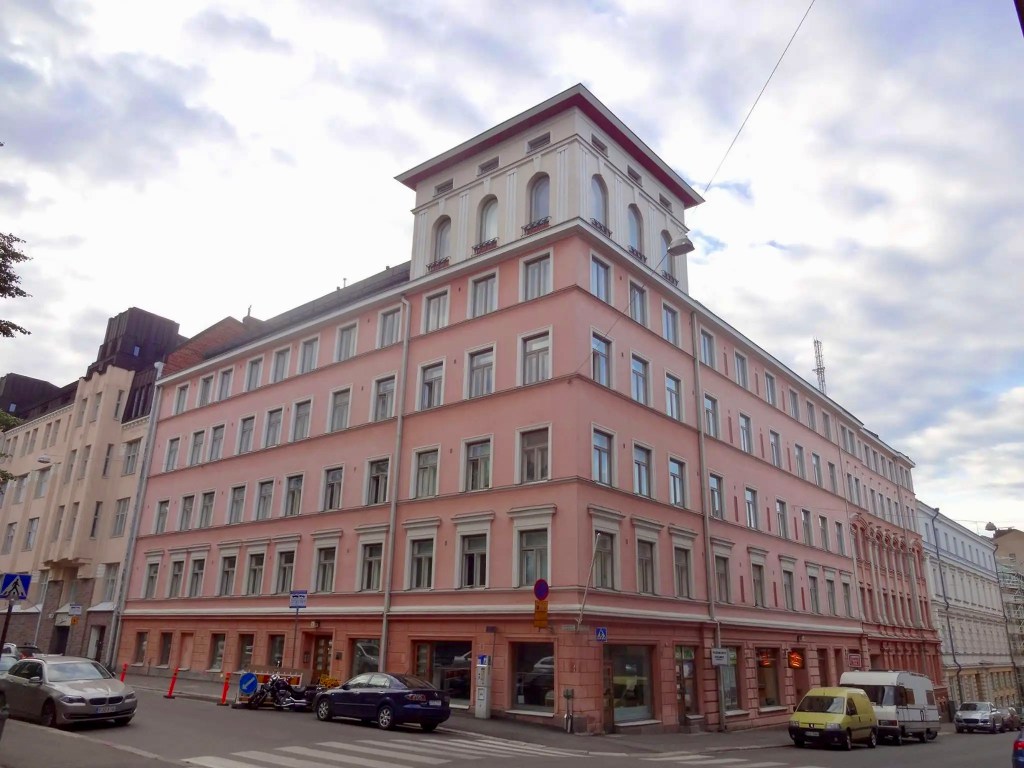
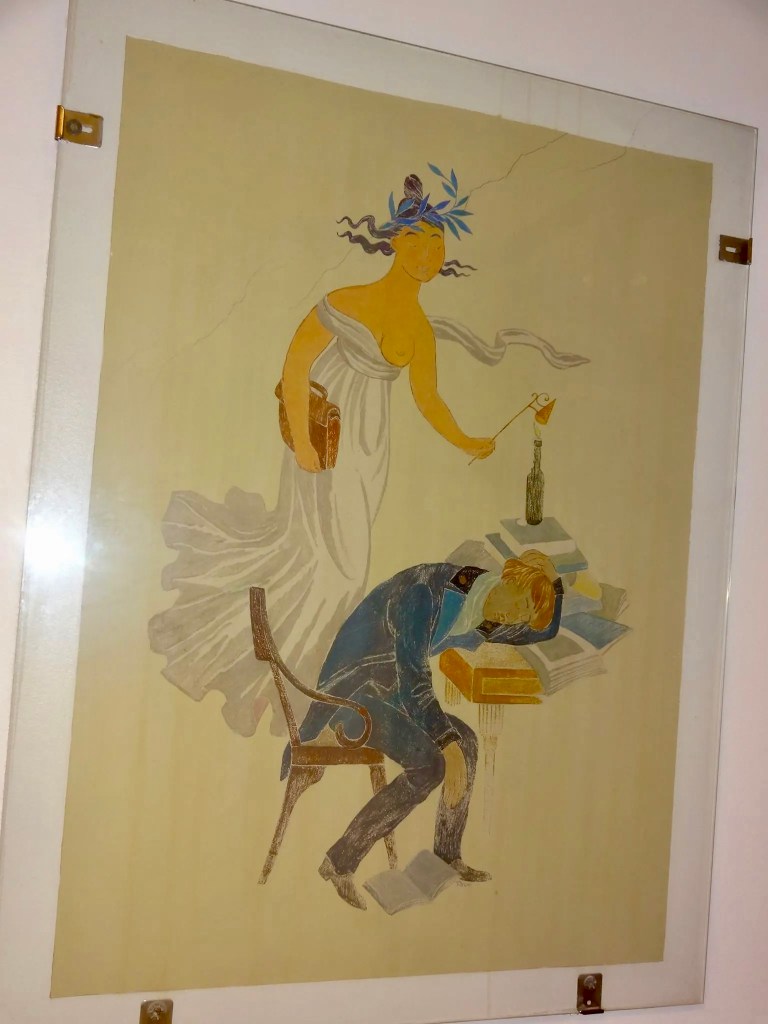
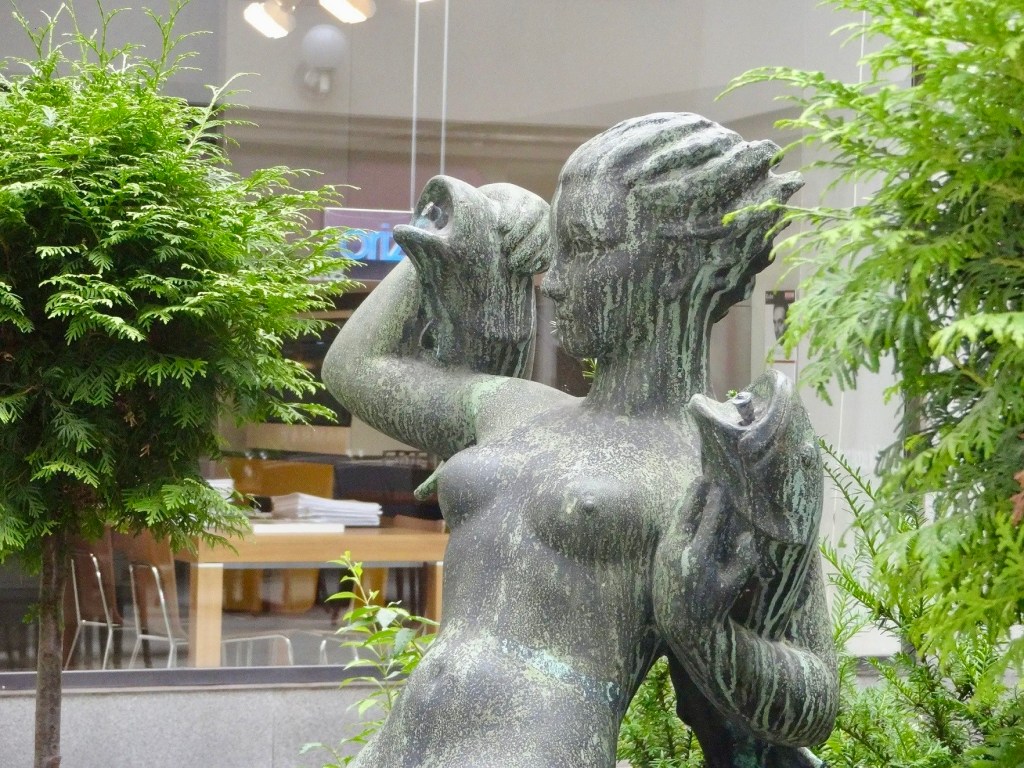
Walking all day in Helsinki added flavour and substance to what I’ve learnt about Tove’s life. The imposing building at Luotsikatu 4 was the childhood home and her parents’ studio. From there she often walked around the corner to buy tobacco for her father to what is now a tiny Café Signora. Then she lived at the House of Artists Lallukka from 1933 until 1942 when she moved to her first studio nearby, and two years later to a tower of a building at Ullanlinnankatu 1. The top floor flat was cold and drafty, the building hit in the bombings but the upper window showed a strip of sea. Tove lived and worked in this oasis until her death. The little gems scattered around the town include Domus Academica (providing student accommodation) which hosts two original murals painted by Tove, or a modest courtyard surrounded by modern office buildings. Hiding amongst the greenery a Viktor Jansson’s sculpture of Mermaid, modelled on young Tove, is standing in an empty fountain.
Various Finnish places have memories of the artist and she has a special place in many hearts, not only those who love Moomins.

 Nordic Lighthouse