Winner of Petrona Award 2025

It is so exciting to annonce the winner of the Petrona Award 2025 for the Best Scandinavian Crime Novel of the Year:

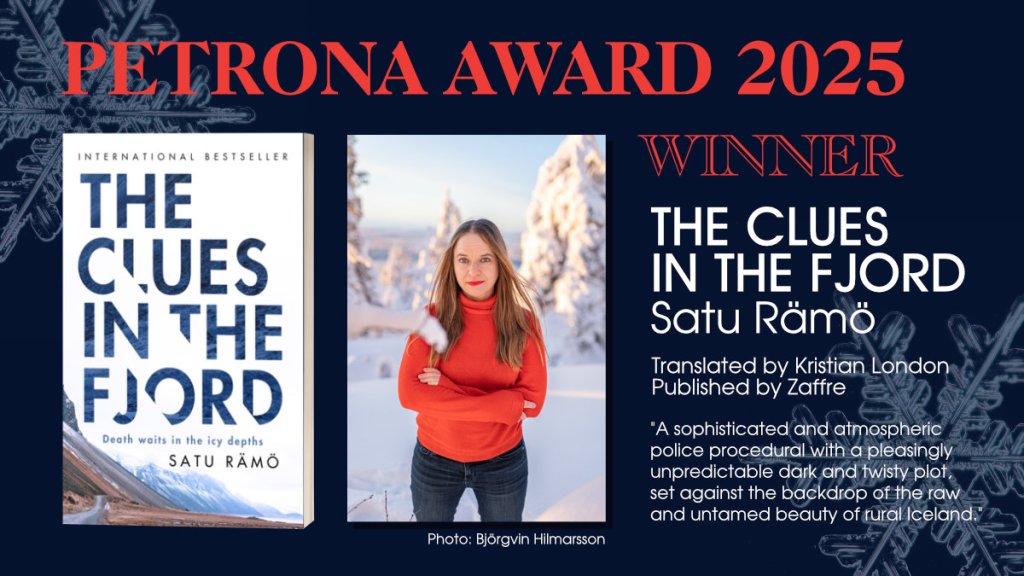
THE CLUES IN THE FJORD by Satu Rämö translated from the Finnish by Kristian London and published by Zaffre. Satu Rämö will receive a trophy, and both the author and translator will receive a cash prize. The Petrona team would like to thank David Hicks for his sponsorship of the Petrona Award.

The judges’ statement on THE CLUES IN THE FJORD:

THE CLUES IN THE FJORD is a sophisticated and atmospheric police procedural with a pleasingly unpredictable dark and twisty plot, set against the backdrop of the raw and untamed beauty of rural Iceland.

Providing the local detective with a Finnish side-kick allows the author to contrast Icelandic and Finnish traits, adding authenticity to an original story. The intriguing back-stories of both characters leave the reader anticipating the next instalments.

In the ever-increasing Icelandic crime fiction scene, Satu Rämö has carved out a unique position between traditional mysteries and the darker end of crime fiction.

Statements from the winning author, translator and publisher:

Satu Rämö:

I am deeply honoured to receive this award, and I want to thank the jury and the organizers of the Petrona Award. I also want to acknowledge the incredible writers nominated alongside me. To be included among such talented writers is a reward in itself. Your words have inspired me a lot!

This award reminds me of a conversation I had with a reader, a ninety-five-year-old woman, who shared how the book, the first part in the Hildur crime book series, THE CLUES IN THE FJORD, made her feel. She told me that she knows she is getting very old but after reading this book, she hoped she would live long enough to read the sequel, to know what happened to the two little girls who got lost on their way from school. When the sequel came out, I sent it to her and called her after a few weeks. She was still as happy and joyful as last time, waiting for the next book in the series to come out…

It is the readers who keep stories alive. Thank you for reading. I want to thank you also, my British publisher Zaffre and my translator Kristian London. Great teamwork! Thank you jury from the bottom of my heart, this award means so much to me.

Kristian London:

When I first took on translating Satu Rämö’s THE CLUES IN THE FJORDthe book’s incredible success in Finland suggested it had a high chance of connecting with audiences abroad as well. I’m gratified to see this is the case. It has been a privilege to act as an intermediary between Rämö’s imagination and those of her English-speaking readers as they enter Hildur’s world of human quirks and foibles, familial traumas and inheritances. For me, the work’s slow power springs from its true protagonist: that isolated land in the North Atlantic that serves as the setting, and the terrain and culture and people we’re introduced to through an outsider’s keen eyes. Many thanks to the Petrona Award jury for this honor.

Kasim Mohammed (editor at Zaffre):

Being Satu’s English-language publisher is a real honour. She has such an eye for crafting stories about real people, and a real heart to her writing that is hard to find these days. Bringing authors’ dreams to life is a privilege and moments like this are wonderful to experience. To know Satu’s work is resonating with so many readers, worldwide, brings the team here at Bonnier so much pride. Thank you to the Petrona Award jury for this honour – we will treasure this as we continue to publish Satu! 

The judges

Jackie Farrant – creator of RAVEN CRIME READS and a bookseller for a major book chain in the UK.

Ewa Sherman – translator and writer, and blogger at NORDIC LIGHTHOUSE.

Sonja van der Westhuizen – book critic for print and online publications in the UK and South Africa, as well as a blogger at WEST WORDS REVIEWS.

Award administrator

Karen Meek – owner of the EURO CRIME blog and website.

Petrona Award 2025 shortlist in full is here and further information can be found on The Petrona Award website.

Petrona Award 2025 – Shortlist

Outstanding crime fiction from Finland, Iceland, Norway and Sweden shortlisted for the 2025 Petrona Award

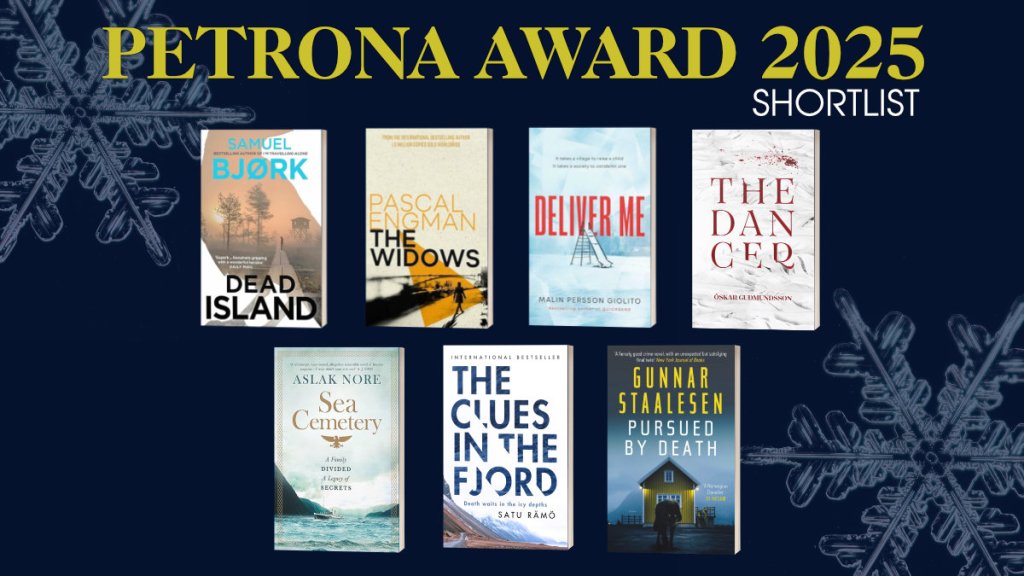
Seven impressive crime novels from Finland, Iceland, Norway and Sweden have been shortlisted for the 2025 Petrona Award for the Best Scandinavian Crime Novel of the Year. The shortlist is announced today, Thursday 18 September and is as follows:

1.     Samuel Bjørk – Dead Island tr. Charlotte Barslund (Norway, Bantam)

2.     Pascal Engman – The Widows tr. Neil Smith (Sweden, Legend Press

3.     Malin Persson Giolito – Deliver Me tr. Rachel Willson-Broyles (Sweden, Simon & Schuster)

4.     Óskar Guðmundsson – The Dancer tr. Quentin Bates (Iceland, Corylus Books)

5.     Aslak Nore – The Sea Cemetery tr. Deborah Dawkin (Norway, MacLehose Press)

6.     Satu Rämö – The Clues in the Fjord tr. Kristian London (Finland, Zaffre)

7.     Gunnar Staalesen – Pursued by Death tr. Don Bartlett (Norway, Orenda Books)

The winning title will be announced on 16 October 2025.

The Petrona Award is open to crime fiction in translation, either written by a Scandinavian author or set in Scandinavia, and published in the UK in the previous calendar year. The Petrona team would like to thank our sponsor, David Hicks, for his generous support of the Petrona Award.

The judges’ comments on the shortlist:

There were 31 entries for the 2025 Petrona Award from six countries (Denmark, Finland, Iceland, Norway, Sweden and Switzerland). This year’s shortlist sees Norway represented with three novels, Sweden with two and Finland and Iceland with one novel each. The judges selected the shortlist from a strong pool of candidates with the seven shortlisted authors including three previous Petrona Award winners: Pascal Engman, Malin Persson Giolito and Gunnar Staalesen.

As ever, we are extremely grateful to the seven translators whose expertise and skill have allowed readers to access these outstanding examples of Scandinavian crime fiction, and to the publishers who continue to champion and support translated fiction.

The judges’ comments on each of the shortlisted titles:

Samuel Bjørk – DEAD ISLAND translated by Charlotte Barslund (Norway, Bantam)

DEAD ISLAND, the fifth instalment in the Mia Krüger and Holger Munch series, sees the duo away from their stomping grounds in Oslo, pondering their future. Both police investigators are dealing with separate professional and personal traumas yet cannot escape the violent events and aftermath of those, on the picturesque island of Hitra in northern Norway. While Mia re-examines a cold case of a missing boy, a teenage girl is brutally murdered. Convinced that the cases are connected, she digs deep into the individual stories of people living behind the sheen of a respectable community. The idyllic surface crumbles to show deceit, danger and darkness as the plot delves into psychological and cunning ways of using violence. A focus on personal dynamics and processing the nuanced information creates tension and a gripping story with empathy and depth, affecting everyone in the vicinity of the crimes.

Pascal Engman – THE WIDOWS translated by Neil Smith (Sweden, Legend Press)

In THE WIDOWS, two bodies are discovered in a Stockholm park, one a policeman and the other an unidentified young woman. With the police believing the woman to be nothing more than unfortunate collateral damage, they focus on the murder of the police officer. But Detective Vanessa Frank takes a different approach and her investigation turns out to be more personal than she could have imagined. Frank must tread carefully as she moves into the world of terrorist networks operating deep within the shadows, where society’s fears make her job more chaotic and dangerous than ever. A previous winner of the Petrona Award with FEMICIDE, Pascal Engman once again produces a high-octane thriller which impressed the judges with its complex plotting, nerve wracking tension and strong characterisation throughout.

Malin Persson Giolito – DELIVER ME translated by Rachel Willson-Broyles (Sweden, Simon & Schuster)

DELIVER ME is a harrowing crime thriller that explores the devastating impact of gang violence and class differences on two childhood friends in suburban Stockholm. The story centres on Billy and Dogge, two boys from different backgrounds whose friendship is tested by the allure of gang activity. Recruited as drug runners, their lives spiral out of control, leading to a tragic confrontation.

The novel is a gritty and uncompromising look at a topical social problems such as restrictive immigration policies, corrupt law enforcement, and economic inequality. Giolito’s account of the boys lives and circumstances is so convincing it might as well have been a true account. A lawyer herself, she poses questions about justice for children who commit crimes in a society that has failed to protect them. DELIVER ME is a powerful, yet unsettling, examination of the dark underbelly of suburban Stockholm and the real victims of gang violence and social inequality.

Óskar Guðmundsson – THE DANCER translated by Quentin Bates (Iceland, Corylus Books)

Tony is a young man who has always been on the losing side in life. He was brought up by his troubled, alcoholic mother who had a past of her own as a talented ballerina, until a life-changing accident brought her dreams to a sudden end. As her own ambitions for fame and success were crushed, she used cruel and brutal methods to project them onto her young son – with devastating consequences. There’s no doubt that a body found on Reykjavik’s Öskjuhlíð hillside has been there for a long time and when the case is handed to veteran detective Valdimar, and his new partner Ylfa, it’s not long before it’s clear a vicious killer is on the loose – and very little about the case is what it appears to be at first glance. THE DANCER is an incredibly dark and uncompromising crime read, that plays with the reader’s perceptions from the outset, alternating between empathy and horror, balanced out by the enjoyable repartee between the police protagonists.

Aslak Nore – THE SEA CEMETERY translated by Deborah Dawkin (Norway, MacLehose Press)

THE SEA CEMETERY is a suspenseful literary thriller and complex family saga moving through Norway’s recent history, its links to Europe and the Middle East, and questioning individual choices made by the main characters. The universal human issues are hidden just below the surface of the dramatic story about trust, legacy and control, and consequences of untruths. Set in the dramatic harsh Norwegian natural beauty and inspired by a devastating maritime disaster during World War II, it follows the fate of two warring branches of the powerful Falck dynasty. The death of its writer matriarch, intestate, and with secrecy surrounding her manuscript confiscated by the secret police decades earlier, sets in motion an inheritance dispute between families in Oslo and Bergen. Private investigation into the affairs, connections and conflicts between those in power are painted with astute detail, making this ambitious novel both a historical and contemporary tale with strong message about Norwegian values and delivering a thrilling mix of espionage, tension and seduction.

Satu Rämö – THE CLUES IN THE FJORD translated by Kristian London (Finland, Zaffre)

Hildur Rúnarsdottir is the only police detective working on the isolated west coast of Iceland. She is desperate to forget her traumatic past by burying herself in her cases alongside her new trainee, Jakob Johanson. Jakob’s life has its own complications however, and it soon becomes clear that neither can run from their pasts for long. When a local man is found with his throat slit, underneath an avalanche that has buried much of the evidence, Hildur and Jakob must set their own problems aside and unravel the dark secrets to expose a killer. THE CLUES IN THE FJORD is a sophisticated and atmospheric police procedural with a pleasingly unpredictable dark and twisty plot, set against the backdrop of the raw and untamed beauty of rural Iceland.

Gunnar Staalesen – PURSUED BY DEATH translated by Don Bartlett (Norway, Orenda Books)

PURSUED BY DEATH, the latest in the long-running Varg Veum series, is a hard-boiled noir that tackles contemporary social issues in Norway. The plot begins when private investigator Varg Veum reads a newspaper article about the missing Jonas Kleiva, a man he recognises as the driver of a camper van he noticed at a bus stop. Kleiva disappeared after attending a demonstration in Solvik against the powerful salmon-farming corporation, Sunfjord Salmon. This case leads Veum to investigate not only the missing protestor but also a cold case from the past that was originally dismissed by the police.

The novel, told through a first-person narrative, showcases Veum’s wry, deadpan observations. Staalesen consistently creates fully fleshed-out, vibrant, and lively characters, with Veum standing out as an unforgettable protagonist. The story is set against a compressed history of Norway’s salmon-farming industry, while also providing a critical look at the environmental and social conflicts surrounding it. Staalesen, again, masterfully blends a traditional detective story with a commentary on modern issues, making the novel a relevant, topical, and thoroughly engaging read.

The judges:

Jackie Farrant – creator of RAVEN CRIME READS and a bookseller for a major book chain in the UK.

Ewa Sherman – translator and writer, and blogger at NORDIC LIGHTHOUSE.

Sonja van der Westhuizen – book critic for print and online publications in the UK and South Africa, as well as a blogger at WEST WORDS REVIEWS.

Award administrator
Karen Meek
– owner of the EURO CRIME blog and website.

Further information can be found on the Petrona Award website.

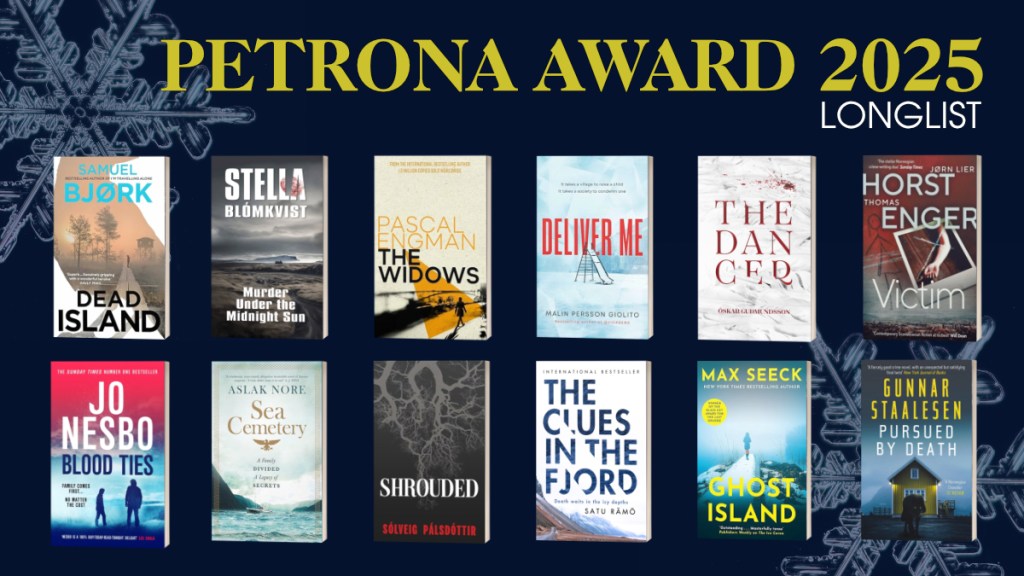
Petrona Award 2025 – Longlist

Outstanding crime fiction – twelve crime novels from Finland, Iceland, Norway and Sweden have made the longlist for the 2025 Petrona Award for the Best Scandinavian Crime Novel of the Year. They are:

  1. Samuel BjørkDead Island tr. Charlotte Barslund (Norway, Bantam)
  2. Stella BlómkvistMurder Under the Midnight Sun tr. Quentin Bates (Iceland, Corylus Books)
  3. Pascal EngmanThe Widows tr. Neil Smith (Sweden, Legend Press)
  4. Malin Persson GiolitoDeliver Me tr. Rachel Willson-Broyles (Sweden, Simon & Schuster)
  5. Óskar GuðmundssonThe Dancer tr. Quentin Bates (Iceland, Corylus Books)
  6. Jørn Lier Horst and Thomas EngerVictim tr. Megan E Turney (Norway, Orenda Books)
  7. Jo NesbøBlood Ties tr. Robert Ferguson (Norway, Harvill Secker)
  8. Aslak NoreThe Sea Cemetery tr. Deborah Dawkin (Norway, MacLehose Press)
  9. Sólveig PálsdóttirShrouded tr. Quentin Bates (Iceland, Corylus Books)
  10. Satu RämöThe Clues in the Fjord tr. Kristian London (Finland, Zaffre)
  11. Max SeeckGhost Island tr. Kristian London (Finland, Mountain Leopard Press)
  12. Gunnar StaalesenPursued by Death tr. Don Bartlett (Norway, Orenda Books)

The longlist contains a mix of newer and more established authors including previous Petrona Award winners Pascal Engman, Malin Persson Giolito, Jørn Lier Horst, and Gunnar Staalesen. Both large and small publishers are represented on the longlist, with Corylus Books having an impressive three entries. The breakdown by country is Norway (5), Iceland (3), Finland (2) and Sweden (2).

The shortlist will be announced on 18 September 2025.

The Petrona Award 2025 judging panel comprises Jackie Farrant, the creator of RAVEN CRIME READS and a bookseller for a major book chain in the UK; Ewa Sherman, translator, writer and blogger at NORDIC LIGHTHOUSE, and Sonja van der Westhuizen, a book critic for print and online publications in the UK and South Africa, as well as a blogger at WEST WORDS REVIEWS. The Award administrator is Karen Meek, owner of the EURO CRIME blog and website.

The Petrona team would like to thank our sponsor, David Hicks, for his continuing support of the Petrona Award.

The Petrona Award was established to celebrate the work of Maxine Clarke, one of the first online crime fiction reviewers and bloggers, who died in December 2012. Maxine, whose online persona and blog was called Petrona, was passionate about translated crime fiction but in particular that from the Scandinavian countries. The award is open to crime fiction in translation, either written by a Scandinavian author or set in Scandinavia and published in the UK in the previous calendar year. More information on the history of the Award and previous winners can be found at The Petrona Award website.

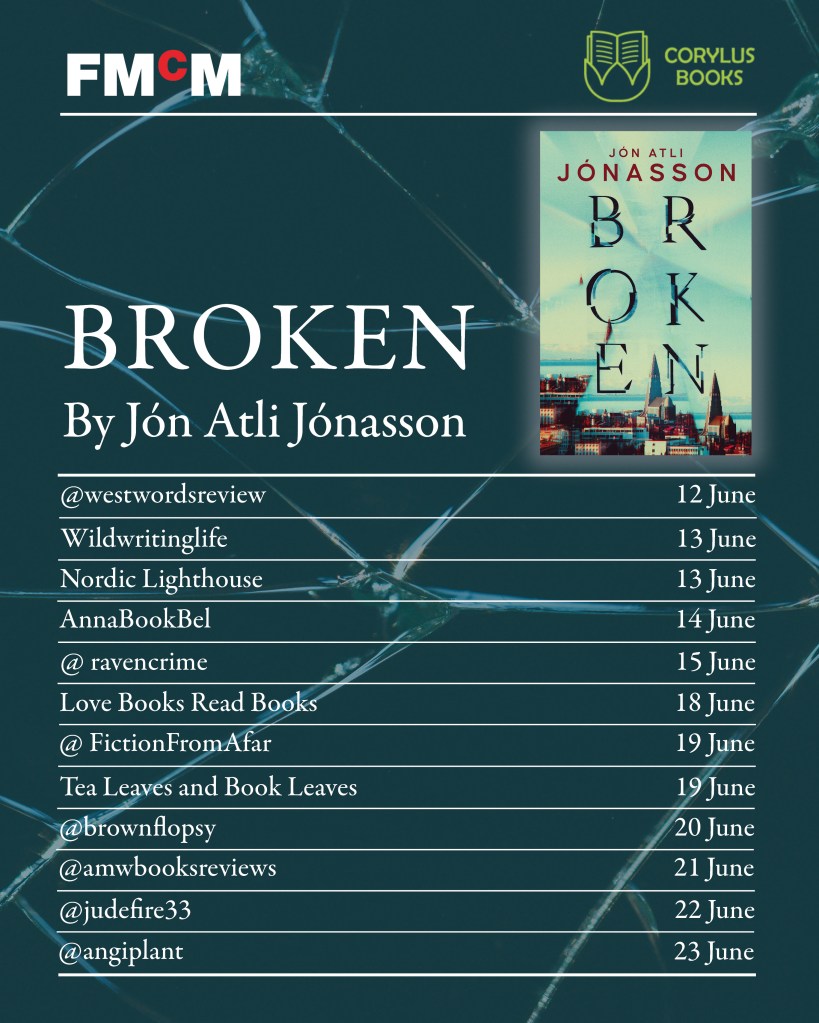
Broken by Jón Atli Jónasson: Setting a new standard for Nordic crime fiction

Jón Atli Jónasson is a new name among the crime writers from Iceland appearing in translation, and his English-language debut Broken definitely pushes this genre in a new direction.

The pair of two cops who probably shouldn’t be on the force, let alone working together, isn’t a new idea, but the supremely damaged Dóra and second-generation immigrant Rado as the cop duo is brilliantly done. They fit together, but at the same time they don’t. Then there’s the cast of characters Jón Atli has woven into this story who give it such bright colours. There’s chain-smoking Elliði, Dóra’s boss and former patrol partner who was present when she was so badly injured, and the cast of other cops who don’t hide their suspicion and dislike of the foreign guy in their ranks.

Rado’s family and his shady in-laws, also immigrants, are sharply drawn, highlighting the rootlessness and the conflictedness of people finding a foothold in a new, strange country, and how their children cope (or fail to cope) with this double identity. It doesn’t help that in this new home they’ve rebuilt the criminal empire they were forced to abandon back in the old country… Jón Atli shows us an Iceland that’s so far removed from the version visitors see that it’s barely recognisable, but at the same time scarily familiar.

Then the criminals, both the old-school homegrown variety with their clunky methods, and a new generation of villains who don’t sample their own merchandise and look up to business figure, seeing themselves as entrepreneurs who have the unfortunate disadvantage of operating on the wrong side of the law. And then there’s the sinister and mysterious Groke, the consummate professional who takes no prisoners, and who comes with a backstory of his own that hits so painfully close to home.

Jón Atli Jónasson is an acclaimed screenwriter and playwright. Broken is his first novel to appear in English, translated by Quentin Bates and published by Corylus Books. A TV adaptation is already in the works, and shooting is scheduled to start next year.

Here’s a short sample of Jón Atli Jónasson’s writing:

The fishing lodge couldn’t be seen from the road, and hardly even from the rutted track that led down to it. If he hadn’t got the jeep stuck in the soft ground then he wouldn’t be standing here in a pair of rubber boots and a shovel in his hands, trying to fill in the deep tyre tracks. It was as well there was nobody about. There was a farmhouse on the far side of the ravine, but he was fairly sure it had been long abandoned.

Shovelling was tiring, but he didn’t mind that. The cool air was invigorating. It was April and the snow was melting, freeing water to stream down from the highlands. It was difficult to see where the meltwater was going, until you put a foot on the ground and the gravel gave way into the slush beneath. This aroused his interest more than anything else. It didn’t trouble the Groke in the least. He had never seen any point in letting himself be angered by nature or its laws. In fact, he lived closer to nature than most people – close to the border with death and decomposition. He was a ferryman of a kind, leading all sorts of people, understandably not always willing, to that border and across it.

The two corpses he had conscientiously buried behind the fishing lodge were prime examples. This couple lived in Reykjavík, in one of the new districts that had sprouted up over the last decade. In these sprawling, soulless boxes where vast flat screens cast their blue glare on the walls and the big picture windows. The couple had stolen money. This was an amount that would have been worth negotiating, if only they’d showed a little inclination. But they hadn’t. They thought they would get away with it. They hadn’t realised that this was too much money to simply shrug off. Their attitude had been such that threats, beatings and even torture hadn’t done the trick. Some people had to have their hands held to the border between life and death, while others failed to understand that their own behaviour brought the border to them. Their deaths would serve as a warning to others. He knew that wasn’t true. Man as a species is too cross-grained for that to be the case.

Neither of them had been able to say a word before they died. The man had been coming out of the bathroom. The Groke sank the needle deep into his neck, and he sank down against the wall of this house that looked as if it had been cut from the pages of a piece of property porn. They had great taste, which perhaps was the reason for their downfall. In the end it had all been too costly, all the beautiful art on the walls, the expensive furniture and wardrobes crammed with designer goods.

Just moments after the man slipped to the floor, his wife parked her new electric car in front of the house and wondered who owned the jeep with tinted windows standing in the drive, and which she didn’t recall having seen before. She went indoors, called out, but didn’t get a response.

The Groke waited patiently in the corridor upstairs. He heard her potter around the kitchen, putting groceries away and calling her husband. The low hum from the man’s phone carried from the bedroom. He eventually heard her come up the stairs. When she appeared in the corridor and saw her husband lying there, she was about to scream. But the blow he gave her to the solar plexus punched all the breath out of her. He didn’t like this. It felt amateurish. But there was no other option. Then he grabbed her by the back of the neck and sank the needle deep into it. A few seconds later she lay on the floor beside her husband. If anyone were to wonder about them, then border control would inform them that the couple had left the country on a charter flight to Portugal. Their social media accounts had been hacked into. There would be a few pictures posted of landscapes and Southern European cuisine before their trails would disappear for good.

The Groke descended the stairs and went into the kitchen, where he opened the fridge and checked out the contents. The same luxury was on offer there. He glanced at the clock, and sent a Signal message from his phone. 2-0.

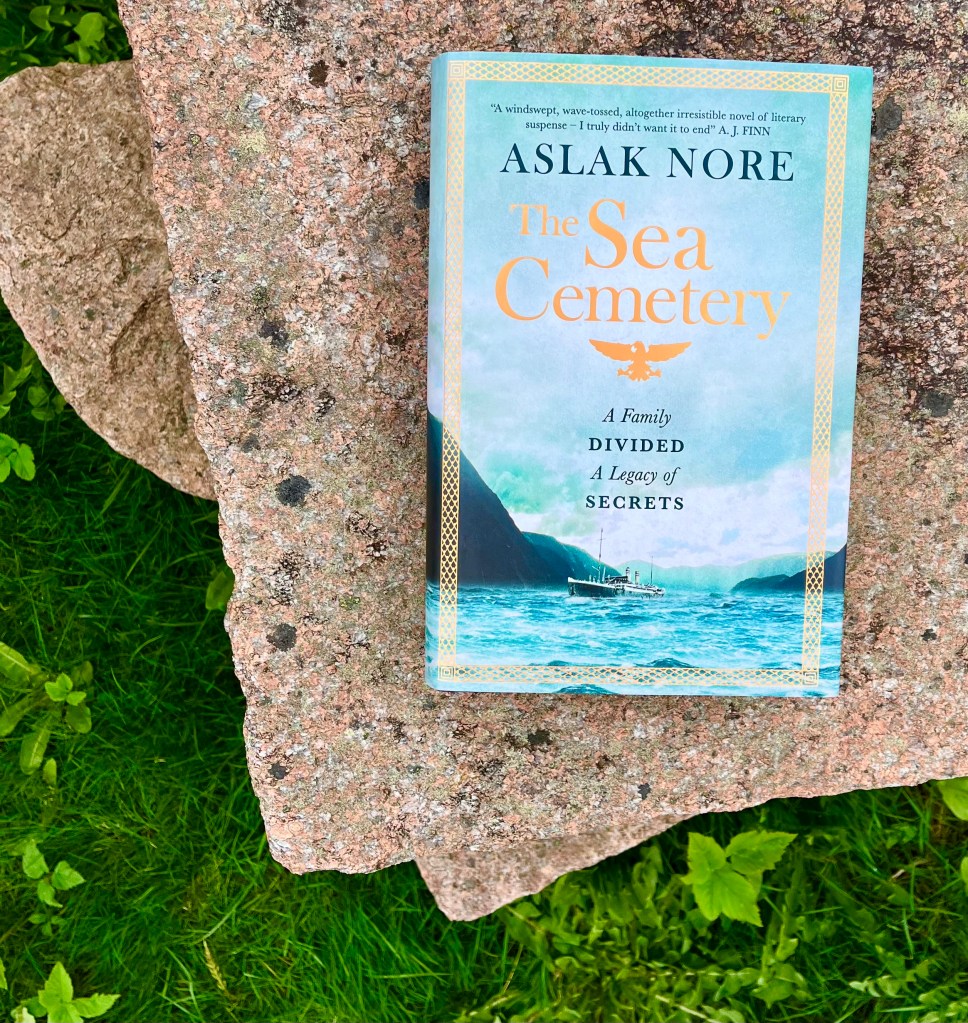
The Sea Cemetery by Aslak Nore

What an incredible novel! From the very first pages I knew that The Sea Cemetery / Havets kirkegård, a literary thriller and family saga combined in one huge tome, would take me on an unforgettable voyage through the recent history of Norway and its connections with the Europe, and questions about individual choices made by the main characters. The universal human issues are hidden just below the surface of the dramatic story about legacy and control, and consequences of hidden secrets in the thriller set among the harsh Norwegian natural beauty.

Aslak Nore’s inspiration came from the authentic sea disaster during the WWII when Norway was under German occupation. Sinking of the Norwegian passenger ship DS Prinsesse Ragnhild in 1940 was the worst wartime tragedy. The ship struck a mine and disappeared under the water between Bodø and Lofoten in the North, with loss of many lives.

Vera Lind, writer and matriarch of a rich and powerful dynasty, commits suicide on the family stunning estate near Oslo. She has been writing memoirs while trying to deal with her own and family’s trauma, going back to the times of wartime shipping disaster in October 1940 that had killed her husband and hundreds of other passengers and German soldiers. However, her earlier attempts to publish the novel were met with fierce opposition by Olav, her son and heir to the fortune. Forty years later in 1970 the manuscript vanished and Vera was placed under a Guardianship Order. Something strange has taken place.  

Not everyone wants to dig into the past to uncover shocking truth but her granddaughter Sasha (Alexandra) is determined to find out what has happened to Vera. Her husband Mads and siblings Sverre and Andrea don’t want to rock the boat, so to speak, and so she does it alone, although Johnny Berg, a journalist and discredited Norwegian secret service agent, decides to help her along the way. This semi-professional relationship is tricky. Sasha is torn between loyalty to her strong-willed father Olav and the family, and the need to ‘avenge’ her grandmother. Berg, apart from his personal motives to search for the manuscript, has also signed the contract to write biography of Hans Falck, a charismatic doctor and an adventurer, notorious for his personal life and famous for his humanitarian work in the Middle East. Sasha’s cousin Hans is from Bergen and convinced that Vera bequeathed the fortune to him and his children. There is no love lost between two branches of the Falck family: in Bergen on the beautiful Norwegian coast and in Oslo, close to the country’s financial centre.  

So far so complex regarding the family ties. However, the power struggles and different sentiments become much more evident as the novel unravels. I enjoyed the occasionally uneven tempo of this epic tale. Hunt for Vera’s missing testament and manuscript was shown through eyes of main players and as a novel-in-novel process, and my view of various people shifted. It’s right to say that ‘History is power. Control the narrative, and you wield the power.’ Chapters exploring conflict in Kurdistan and Afghanistan added both clarity and some confusion necessary to paint a picture of intertwined connections within the family, known only to those who make the decisions. The geopolitical context is relevant as the author also took on the most sacred Norwegian values, such as patriotism and trust, and explored them in the view of family secrets.

The Sea Cemetery, in superb translation by Deborah Dawkin, culminates in a brilliant and completely unexpected twist that paves the way for the second part of this trilogy. It was published by MacLehose Press in 2024. Now I am really looking forward to reading The Heirs of the Arctic / Ingen skal drukne.

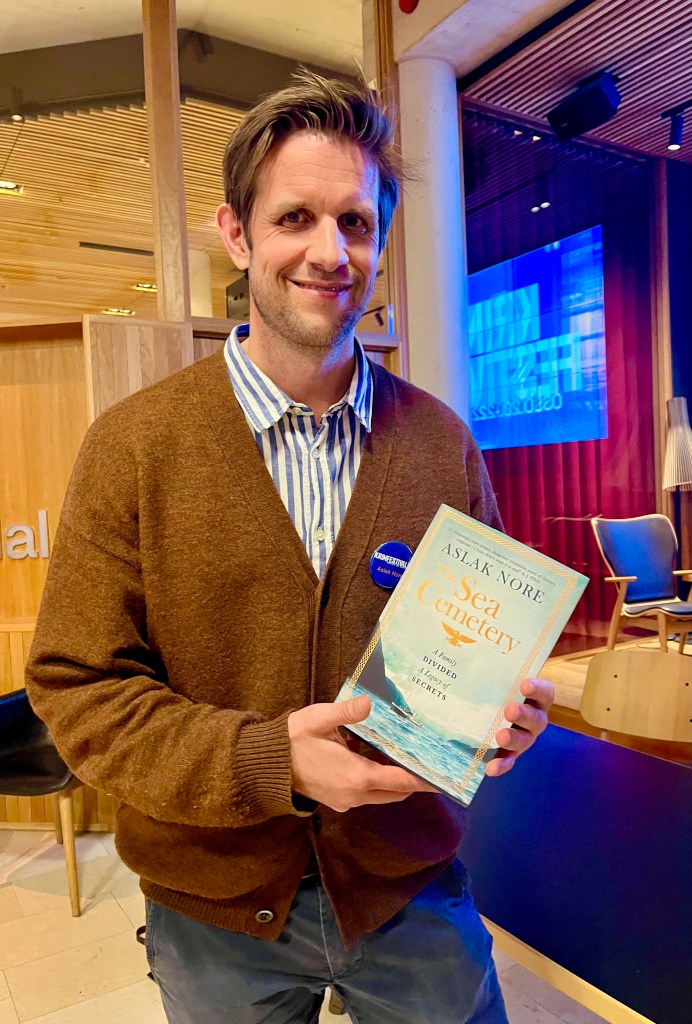
Aslak Nore with The Sea Cemetery during Krimfestivalen 2025

Aslak Nore (b. 1978) grew up in Oslo. He was educated at the University of Oslo and the New School for Social Research in New York and has served in Norway’s elite Telemark Battalion in Bosnia. A modern-day adventurer, Nore has lived in Latin America and worked as a journalist in the Middle East and Afghanistan. He has published several non-fiction books and four novels. Wolfsangel (2017) was a national bestseller and won the Riverton Prize for best crime novel in Norway in 2018. The Cemetery of the Sea (2021) is the first novel in an epic literary thriller series and a huge international success and bestseller. Nore lives in Provence, France. © Winje Agency

Happy New Year 🥳

Good evening to you all… Hope 1st January has been a good relaxing day. I went for a long walk in the forest with my son, we fell down several times on the icy paths covered by new not-snowman-type snow, then we helped our best friends with snow shovelling and had hot dogs by a fire in the cold white garden. Feeling lazy and content I want to recommend links to the pages that you should or could follow, pages by wonderful bloggers who enjoyed the novel below…

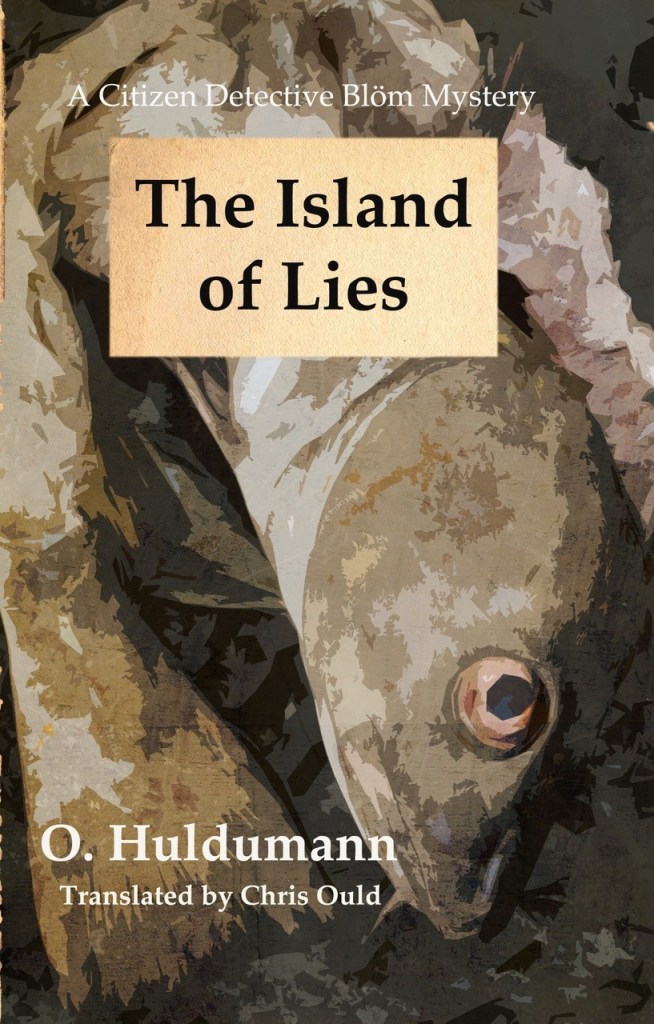
The new year 2025 is very young and full of promises for all of us as we look into the future and want the goodness of the world to win. Again and again. Just like it often happens in the books of various types, and especially in the crime fiction genre. And right now I want to go back to the recent past for long enough to enjoy the strange marvellous beauty of Chris Ould’s latest translation: The Island of Lies by the mysterious O. Huldumann, published a couple of months ago. I organised a blogtour for this Nordic Noir book and so did not write a review for my own blog. However, if I may I would love to share what our favourite Scandi Brit / Icelander Quentin Bates wrote here: The Huldumann Enigma.

The Island of Lies follows Citizen DetectiveCitizen Detective, also translated by Chris Ould who is much better known among crime fiction fans as the author of the fantstic Faroese Trilogy, set, yes, in the Faroe Islands and seen from the perspective of a semi-ousider. Details and reviews can be found in the links.

This is also a perfect occassion to thank brilliant bloggers who support books in all forms, and spread the word about titles and authors that they find interesting, and who are not afraid to read the unusual. I’m sure you are familiar with their insightful posts but I will list them here as a reminder. Thank you Peter turns the pageBrown Flopsy’s Book Burrow, Angry AlgonquinShots BlogWild Writing LifeLove Books, Read Books and West Words Reviews. Happy New Year!

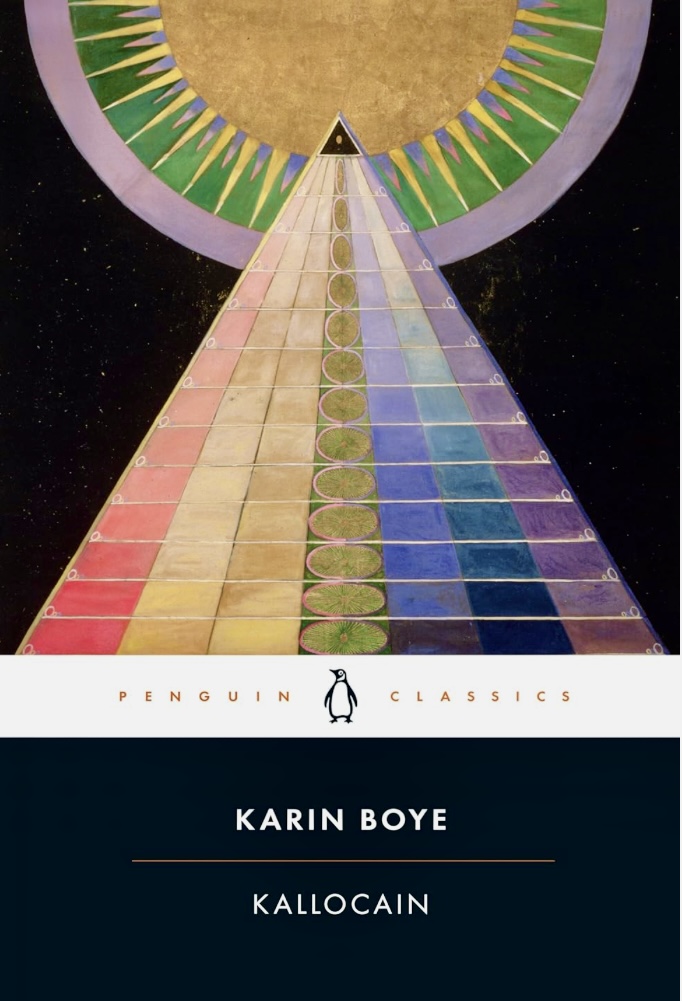
Kallocain by Karin Boye

Leo Kall, a research chemist and a very obedient citizen, has been working on a revolutionary new drug that will force everyone to share the most private and innermost personal thoughts. Police are keen to use Kallocain as a new interrogation technique to crush citizens of the totalitarian ‘World State’. Leo begins to feel alienated and terrified.

Let me start with mentioning the translator David McDuff who did an incredible job bringing this pioneering work of dystopian fiction from a Swedish author into emotive and taut precise English. He also wrote an introduction to the novel, and I would like to quote some of his words to get a better understanding of the poet, novelist and essayist Karin Boye. Her science fiction novel, written in 1940, presented a ‘vision of enslaved humanity, an allegory dream- like and grotesque, yet instantly recognizable to anyone then living through the international crisis.’ It is a novel from one of Sweden’s most acclaimed writers that we know nothing or very little of.

I was reading Kallocain with trepidation, shocked by the incredible clarity of literary vision of its author Karin Boye. It depicts a totalitarian ‘World State’ designed to crush and obliterate the individual and all private thoughts. It is also pure Nineteen Eighty-Four even though it was written eight years before George Orwell’s dystopian classic, with touches of The Handmaid’s Tale which I just couldn’t handle. Boye’s fictionalised futuristic world was influenced by the contemporary unfolding events of the Second World War and two apparently opposing systems: ‘ice-cold reasoning’ of Hitler and the ‘merciless dialectics’ of Stalin’. This chilling and totally absorbing tale follows the research chemist Leo Kall, a very obedient citizen and middle-ranking scientist. He is a Fellow Solider, just as his wife is, and as his three children will be. Their life is rigorously compartmentalised in the society divided by basic skills and needs. Leo has been working on ‘truth drug’ Kallocain which will force truth of anyone when the liquid is injected straight into the bloodstream, making people fall into a sleep-like state and saying what’s on their minds, even the most personal opinions, hidden deep down in subconsciousness. When the drug stops working, everyone is aware and often intensely ashamed of sharing everything. The authorities are excited: ‘Kallocain gives us the possibility of controlling what goes on in people’s minds’ and will replace all other methods of interrogation.

Leo and his superior start initial tests on ‘five subjects from the Voluntary Sacrifice Service’ which proved satisfactory and more ‘human material’ gets brought in to experiment on. Soon the top police get involved, production of Kallocain goes ahead, other Fellow Soldiers are trained to administer it – and Leo begins to fear for his own life. Surrounded by ‘police eyes’ and ‘police ears’ – cameras and microphones – which are in the walls of apartments and houses, and lacking any sense of security at home as Linda often vanishes without a word, he, like everyone else, is terrified of being denounced and found guilty of not denouncing others. Because this is happening as more injections are given to anyone who dares to think differently, more arrests and deaths. However, he realises that there is a seed of opposition in the society, and equally scared of being own person.

Karin Boye paints a bleak desolate landscape of underground buildings and corridors; with a need for surface permissions; dehumanised and alien, lacking colours and smells. Grim. Leo tells his story from the prison where he’s been for over twenty years, not sure how long because of the isolation and induced timelessness, and still continues as a chemist, his existence being still terrified but also a little bit brave and resigned that he must not be completely silent. Whatever happens to him afterwards is unclear; however, I believe that any reader of Kallocain by Karin Boye will be shaken to the core.

Karin Boye (1900–41) was born in Gothenburg, Sweden and studied in Stockholm and Uppsala. As a young woman she joined the international socialist and pacifist organization Clarté and published her first volume of poetry while still in her early twenties. She translated T. S. Eliot’s The Waste Land into Swedish in 1931, and wrote several novels throughout the decade. She married a fellow writer but left her husband after undergoing psychoanalysis in Berlin and formed a lifelong relationship with a German woman, Margot Hanel. Boye’s most famous book, Kallocain (1940), was partly inspired by eye-opening trips to Nazi Germany and Soviet Russia. She died from an overdose of sleeping pills the year after writing the novel.
David McDuff’s translations for Penguin Classics include Dostoyevsky’s Crime and Punishment, The Brothers Karamazov and The Idiot, and Babel’s short stories.

Winner of Petrona Award 2024

The winner of the 2024 Petrona Award for the Best Scandinavian Crime Novel of the Year is:

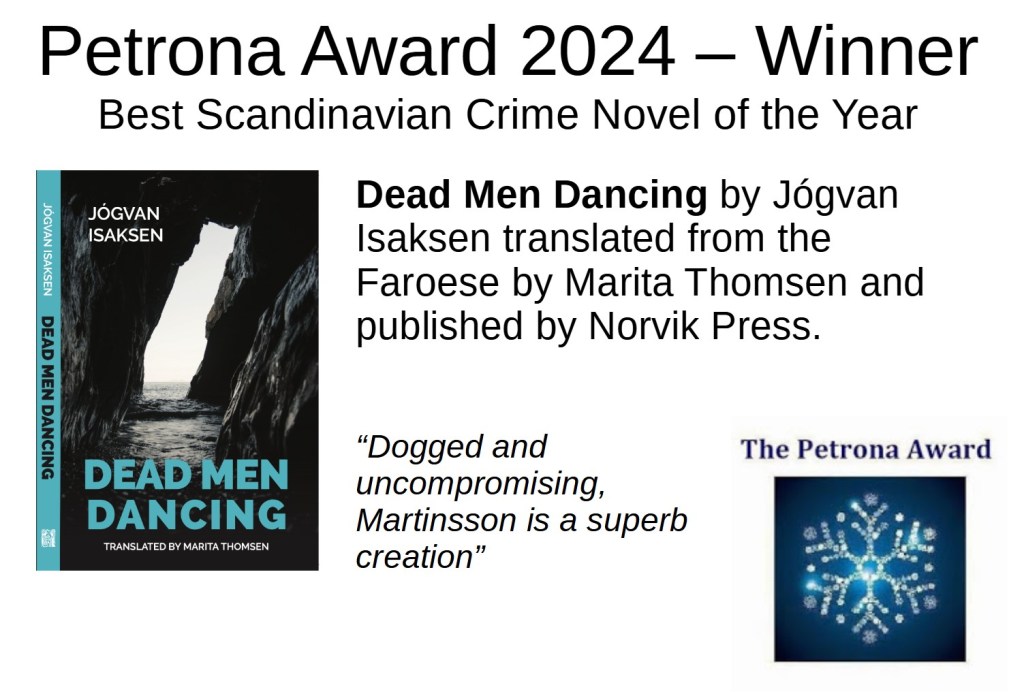
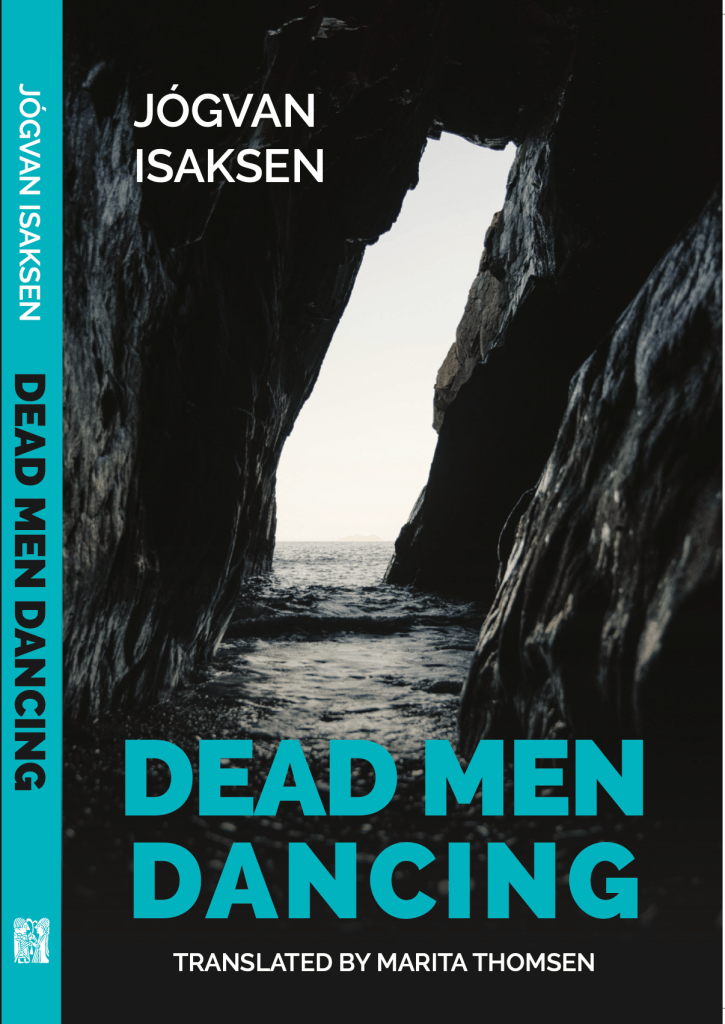
DEAD MEN DANCING by Jógvan Isaksen, translated from the Faroese by Marita Thomsen and published by Norvik Press. Jógvan Isaksen will receive a trophy, and both the author and translator will receive a cash prize.

The judges’ statement on DEAD MEN DANCING:

Similar to the story of the ancient god Prometheus, a man has been shackled to rocks on the Faroe Islands, and left to drown on the beach. The discovery of his body throws the local community into an unsettling chaos, and as the journalist Hannis Martinsson investigates, he comes across evidence of similar deaths. He realises they are linked to the events in Klaksvík in the 1950s, and a local revolt which tore the community apart. As Martinsson digs into the troubled past, he learns about his country’s history, and also gives the reader a chance to discover what makes the Faroes intriguing and spellbinding. Being a largely unknown territory to most, Dead Men Dancing includes a useful introduction to the modern reality of these islands by the CEO of the Faroese Broadcasting Corporation, mirrored by the social commentary that lies at the heart of the book itself, and the portrayal of the relationship with Denmark throughout the years.

This is only Isaksen’s second novel to be translated into English following Walpurgis Tide. This contemporary Faroese crime fiction writer places his characters in the wild, beautiful, and unforgiving environment and allows them to search for truth. The judges found the location to be absolutely integral to the unfolding of the plot, and how the raw natural beauty of the Faroes served as a reflection of the thoughts and actions of the characters.

Dogged and uncompromising, Martinsson is a superb creation, similar in his ‘detective’ thinking and approach to Gunnar Staalesen‘s lonely wolf PI Varg Veum, which the judging panel found very appealing. Martinsson’s gloomy demeanour and natural cynicism was beautifully balanced throughout with the more empathetic side of his nature, and in the age-old tradition of crime fiction his personal and professional relationships are fraught with tension.

The translation by Marita Thomsen is both accomplished and a little unusual, drawing as she does on the vernacular and intonation of the Scottish dialect. Again, the judges found this to be refreshingly different, and enjoyed the unique cadence and rhythm this gave to the book overall, an essential quality of any book in translation.

The judges agreed that in Dead Men Dancing the balance between location, plot and characterisation worked well, incorporating some of the familiar tropes of crime fiction, but also providing a refreshingly different reading experience. This was achieved by the depiction of the Faroes themselves and their history, working in symmetry with the narrative, and also by the characterisation of Martinsson, reminiscent of the traditional spare style in Nordic crime fiction. The assured and distinctive translation was also a significant factor in the judges’ overall decision.

Statements from the winning author, translator and publisher:

Jógvan Isaksen (author):

I feel it is a great honour to win this award, especially when I see that the competition includes several of my favourite Scandinavian authors. I am also proud to represent my country, the Faroe Islands, a self-governing part of the Danish Kingdom with its own language and traditions. Furthermore there are special bonds between the UK and The Faroes since the friendly occupation during World War II. I personally became a member of Collins Crime Club when I was only thirteen, and fought my way through crime novels I could hardly read. But at last I got there and have for many years been an admirer of Agatha Christie, Dorothy Sayers, Eric Ambler, Colin Dexter, Ian Rankin and many, many more.

Marita Thomsen (translator):

It was thrilling to translate the Faroese novel Dead Men Dancing and a great honour to receive the Petrona Award. I am privileged to find myself in the company of the master crafters of stories and languages shortlisted this year, congratulations to all! My thanks first and foremost to Jógvan Isaksen for keeping us in suspense, as he navigates the rugged outlines of the psychology and wild shores of the Faroe Islands. This book offers a fascinating window into regional tensions in the archipelago and historical tensions in the Kingdom of Denmark. Thank you to the passionate Norvik team for expert guidance and editorial advice. And to Richard and Jane for your patience and boundless enthusiasm for everything, even the difference between rowing boats and oared boats.

Janet Garton (Norvik Press Commissioning Editor):

We are delighted that Dead Men Dancing has won this year’s Petrona Award. Jógvan Isaksen is a master of suspense, and his maverick amateur sleuth Hannis Martinsson takes the reader on hair-raising trips by land and sea before – of course – solving the mystery before the frustrated police. The Martinsson series was the basis of the successful TV series TROM, and this is the second of the series to be published by Norvik Press, after Walpurgis Tide in 2016. Hopefully there will be more to come!

The Petrona team would like to thank David Hicks for his continuing sponsorship of the Petrona Award. Petrona Award 2024 – shortlist

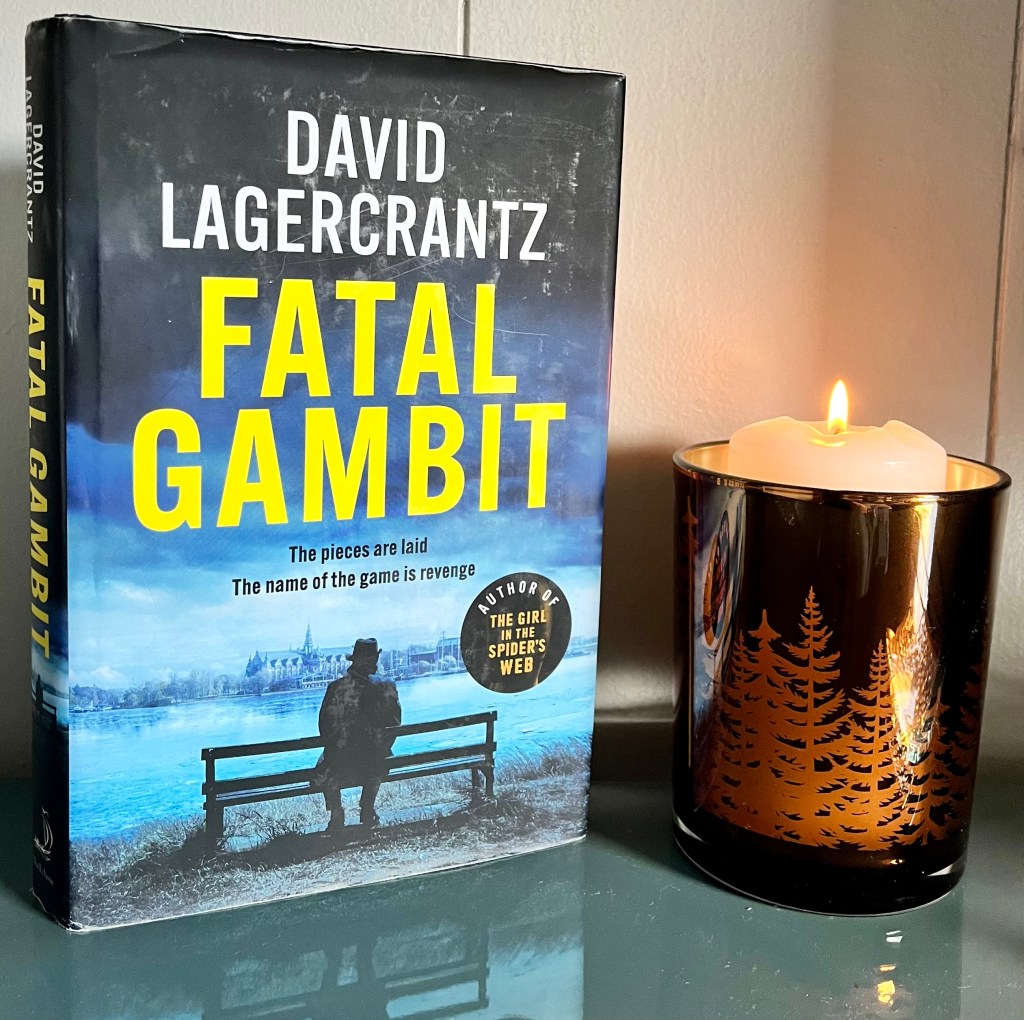
Fatal Gambit by David Lagercrantz

Brilliant academic and government consultant Hans Rekke and his unofficial work partner Detective Micaela Vargas are the latest duo following the well-established ‘method’ of the famous Sherlock and Watson partnership. However, they did not make a conscious decision to embark together on the crime-fighting journey. Beginnings of their cooperation are in Crime Review – Dark Music (2022), first novel of the new gripping series by David Lagercrantz, which is absolutely worth reading. Translation of both by Ian Giles is superb: flowing and engaging capturing the attention. I would expect that collaboration between Lagercrantz and Giles will continue as the complex threads of Fatal Gambit invite further investigations.   

As the modern take on Sherlock-Watson theme continues, it is not difficult to realise who is who here, and how that uneasy working relationship slowly embraces friendship and deeper understanding of personal motives. At times it is such a slow painful process that not only the readers might find it frustrating – the main characters as well, especially Vargas (but devil’s in the details). She had to move into Rekke’s vast apartment as a lodger because of her own private situation. Living with the professor who is both disillusioned and disgraced, and surviving on the diet of various pills and self-loathing, creates many practical and emotional challenges. Contrast between wealth and social standing, mostly going years back (to be precise) of Rekke versus down-to-earth attitude and immigrant background of Vargas amplify the difficulties within the Swedish society, too.

Main story strands focus on a missing woman Claire Lidman who was confirmed as dead in a fire fourteen years ago. Yet she suddenly appears in the background of a recent holiday photo taken in Venice. Her still-hopeful husband Samuel Lidman brings this anomaly to the pair. Scepticism seems to be the only reasonable response as the earlier investigation into Claire’s death showed no doubt. Rekke cannot deal with this cold case: he is very concerned that his daughter Julia has a secret new boyfriend and there are nuanced signs of dangerous darkness. At the same time he becomes aware of hearing a name from his past, a memory of a genius rival, a mastermind of words, deeds and manipulation. Enter Gabor Morovia, lapsed mathematician and evil player of chess and women. As a villain he is definitely outstanding, as a link in the chain holding lives of Rekke and others which will become obvious as the plot intensifies. This villainous creation takes me back to the latest book in the Millenium series: The Girl in The Eagle’s Talons where Karin Smirnoff pulled all the stops, just like Lagercrantz in his contribution to the Stig Larsson’s legacy. But back to Fatal Gambit.

Vargas tries to balance her life in the realm divided by the law-abiding profession she has chosen and the reality of criminal underworld. Her gangster brother threatens to silence her if she doesn’t get off his back, and he absolutely means that. Caught in the web of real and perceived violence, lack of support and understanding, and confusing emotions towards Rekke, she struggles with convincing others of making the right steps. When she finds out identity of Julia’s mysterious boyfriend, her fragile world collapses. However, this is not the time to stop and hide.

Perilous mystery opens avenues that nobody anticipated. Symbolic chess game is already on and Hans Rekke and Micaela Vargas are caught in the bigger game of the post iron-curtain connections, political machinations, big money and fear. Conclusion of the Claire case and exploration of various small elements in this picture affected them in deeply personal ways, and a as result brought their professional lives closer. And I loved the tension, drama and moral questions along the way.

Fatal Gambit by David Lagercrantz is out now, published by MacLehose Press.  

Outstanding crime fiction from the Kingdom of Denmark, Iceland, Norway and Sweden shortlisted for the 2024 Petrona Award

Six impressive crime novels from the Kingdom of Denmark, Iceland, Norway and Sweden have been shortlisted for the 2024 Petrona Award for the Best Scandinavian Crime Novel of the Year. The shortlist is announced today, Thursday 10th October and is as follows:


·       Anne Mette Hancock – The Collector tr. Tara F Chace (Denmark, Swift Press)

·       Jørn Lier Horst – Snow Fall tr. Anne Bruce (Norway, Michael Joseph)

·       Arnaldur Indriðason – The Girl by the Bridge tr. Philip Roughton (Iceland, Harvill Secker)

·       Jógvan Isaksen – Dead Men Dancing tr. Marita Thomsen (Faroe Islands (Kingdom of Denmark), Norvik Press)

·       Åsa Larsson – The Sins of our Fathers tr. Frank Perry (Sweden, MacLehose Press)

·       Yrsa Sigurðardottir – The Prey tr. Victoria Cribb (Iceland, Hodder & Stoughton)

The winning title will be announced on 14 November 2024.

The Petrona Award is open to crime fiction in translation, either written by a Scandinavian author or set in Scandinavia, and published in the UK in the previous calendar year. The Petrona team would like to thank our sponsor, David Hicks, for his continued generous support of the Award.

The judges’ comments on the shortlist:

There were 31 entries for the 2024 Petrona Award from six countries (Kingdom of Denmark, Finland, France, Iceland, Norway, and Sweden). This year’s shortlist sees both the Kingdom of Denmark and Iceland represented with two novels each and Sweden and Norway with one novel each. The judges selected the shortlist from a strong pool of candidates with the shortlisted authors including Petrona Award winners Jørn Lier Horst and Yrsa Sigurðardottir. As ever, we are extremely grateful to the six translators whose expertise and skill have allowed readers to access these outstanding examples of Scandinavian crime fiction, and to the publishers who continue to champion and support translated fiction.

The judges’ comments on each of the shortlisted titles:

Anne Mette Hancock – THE COLLECTOR translated by Tara F Chace (Denmark, Swift Press)

When ten-year-old Lukas disappears from his Copenhagen school, police investigators discover that the boy had a peculiar obsession with pareidolia: a phenomenon that makes him see faces in random things. A photo on his phone, posted just hours before his disappearance, shows an old barn door that resembles a face. Journalist Heloise Kaldan thinks she recognises the barn – but from where? When Lukas’s blood-flecked jacket is found, DNA evidence points to Thomas Strand, a former soldier suffering from severe PTSD, but then Strand turns up dead in his apartment. 

This is a complex thriller of buried secrets, that beautifully wrong-foots the reader from beginning to end.

Jørn Lier Horst – SNOW FALL translated by Anne Bruce (Norway, Michael Joseph)

The discovery of an Australian backpacker’s body in Spain prompts a group of amateur true crime detectives into action. They are scattered online around the world, attempting to solve the mystery of her death. Astri, a young Norwegian woman whose intense pursuit takes her closer than anyone else to solving the case, prepares to reveal her findings and then goes offline. When William Wisting reluctantly gets involved in the investigation, he is faced with the unusual, unorthodox investigators of varied skills and intentions, and puzzling connections.

A slow methodological approach gathers pace and pulls readers into a complex web of low-key international ties. As always Lier Horst delves deep into the psychology and motives of the characters, creating a slow-burning police procedural of empathy and human interest, firmly rooted in Norwegian society.  

Arnaldur Indriðason – THE GIRL BY THE BRIDGE translated by Philip Roughton (Iceland, Harvill Secker)

When a young woman known for drug smuggling goes missing, her elderly grandparents have no choice but to call friend of the family, retired detective Konrád. Still looking for his own father’s murderer, Konrád agrees to investigate the case, but digging into the past reveals more than he set out to discover, and a strange connection to a little girl who drowned in the Reykjavík city pond decades ago recaptures everyone’s attention.

One of Iceland’s most established authors, Indriðason skilfully interweaves different timelines along with assured characterisation, in this second book to feature Konrád.

Jógvan Isaksen – DEAD MEN DANCING translated by Marita Thomsen (Faroe Islands (Kingdom of Denmark), Norvik Press)

Similar to the story of the ancient god Prometheus, a man has been shackled to rocks and left to drown on the beach. But this time it happens on the Faroe Islands. The discovery of his body throws the local community into an unsettling chaos. As the journalist Hannis Martinsson investigates, he comes across evidence of similar deaths. He realises they are linked to the events in Klaksvik in the 1950s, and a local revolt which tore the community apart. As Martinsson digs into the past, he learns about his country’s history, and the reader has a chance to discover what makes the Faroes intriguing and spellbinding.

This is only Isaksen’s second novel to be translated into English. The contemporary Faroese crime fiction writer places his characters in the wild, beautiful, and unforgiving environment and allows them to search for truth. Dogged and uncompromising, Martinsson is a superb creation.

Åsa Larsson – THE SINS OF OUR FATHERS translated by Frank Perry (Sweden, MacLehose Press)

Rebecka Martinsson, disillusioned with her challenging job as a prosecutor, initially has no intention of looking into a fifty-year-old case involving the missing father of Swedish Olympic boxing champion, Börje Ström. Agreeing, however, to the dying wish of her forensic pathologist friend she begins to follow links when a body is found in a freezer at the house of a deceased alcoholic. The grim realities of life in the area years ago, and the current influx of criminals attracted by developments in Kiruna make for a tough investigation and difficult soul-searching, coupled with Rebecka’s own history in a foster family.

Larsson remains a wise observant social commentator and creator of a gripping, suspenseful and utterly moving series, with her eye to the past and the future, and emotive style. Delicate and  relevant humour adds hope to the fragile lives of the main characters.

Yrsa Sigurðardottir – THE PREY translated by Victoria Cribb (Iceland, Hodder & Stoughton)

Kolbeinn has been called to his old home as the new owners have uncovered some photos, and a muddied child’s shoe bearing the name ‘Salvor’. A name Kolbeinn doesn’t recognise. Soon after, his mother’s carers say that she has been asking for her daughter, Salvor.

Jóhanna is working with the search and rescue team in Höfn to find two couples from Reykjavik. Their phones’ last location, the road leading up into the highlands. In a harsh winter, the journey is treacherous, and they soon find the first body.

Hjörvar works at the Stokksnes Radar Station in the highlands. He’s alone when the phone connected to the gate rings: the first time it’s ever done so. Above the interference he can hear a child’s voice asking for her mother.

How are these events connected?

Sigurðardottir balances these three storylines, each with her trademark creeping sense of unease, in this dark and disturbing standalone.

The judges

Jackie Farrant – creator of RAVEN CRIME READS and a bookseller/ Area Commercial Support for a major book chain in the UK. Ewa Sherman – translator and writer, and blogger at NORDIC LIGHTHOUSE. The Award administrator is Karen Meek – owner of the EURO CRIME blog and website.

Further information on the history of the Award and the previous winners can be found on the Petrona Award website.