
Time is always right for crime. Or krim, and by that I mean crime fiction. One morning in March at the Norwegian Gardermoen airport I was waiting for a plane to Warsaw. The plane was delayed, delayed and delayed, and then cancelled. Suddenly I was scheduled to fly to Stockholm and then to Warsaw. My original plan was gone. When everything is out of my control, the only thing that remains is to deal with the day and to travel to another place via a book. I spent hours at two big airports and arrived in a hotel close to midnight. However, in a meantime I have been to Wilhelmsburg, so-called ‘problem area’ in Hamburg thanks to Sharks, a tale of greed, power and resistance, by Simone Buchholz, in excellent translation from German by Rachel Ward. That’s where the latest story takes place as the prosecutor Chastity Riley is assigned the case of a brutally murdered American couple found in a derelict villa in this part of the town. She quickly finds herself waist-deep in a murky tangle of city planners, shady investors and vanishing officials. The gentrification machine is rolling on, and someone is sending a very clear message. As November fog settles over the city, Chastity is coughing up blood, her personal life is a slow-motion disaster, and her former colleague, Faller, won’t stop interfering. But nothing’s going to stop her from cutting through the lies – not even the sharks circling ever closer.
I’ve admired Buchholz’s gritty, precise and quick-witted writing since her first book was published in UK by Orenda Books, and I love how she doesn’t shy from pushing her characters into thought-provoking situations without compromising her own sharp and visceral style. She embraces vulnerability and the feeling of camaraderie in tough circumstances: ‘Like I said, aren’t we all just glorious bastards. And my team-building techniques are a blast.’ Beton Rouge, the second book in the series, made huge impression on me, with its originality and dark sense of humour.
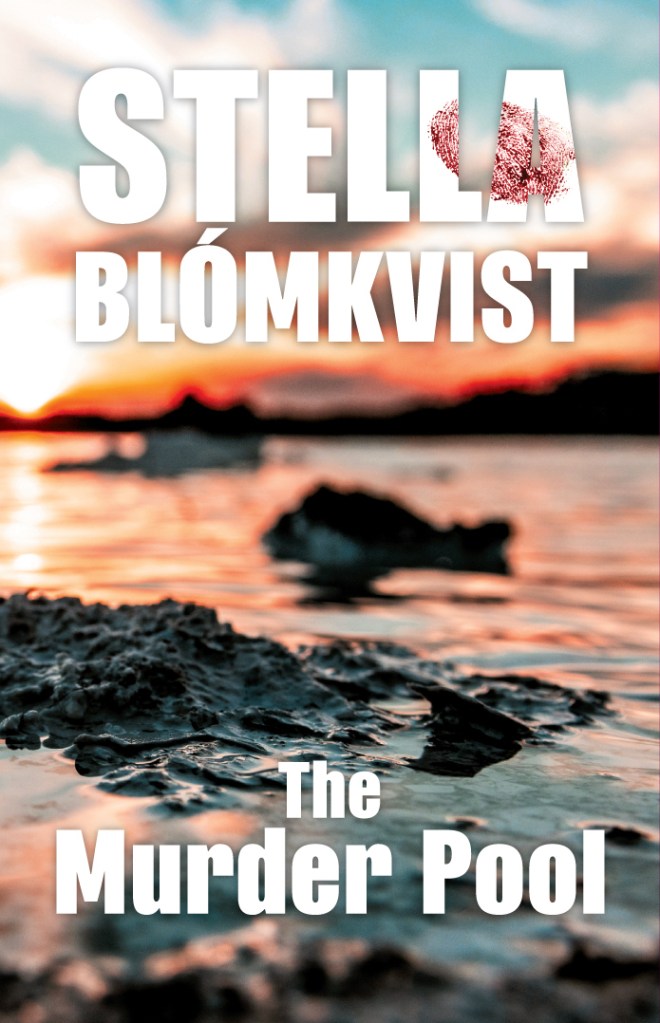
My timing regarding writing reviews is often off. Basically I am late to most parties, even if I’m up to speed with what’s going on in the crime fiction world. So as I finished the latest Stella Blómkvist’s book The Murder Pool I was very impressed by the way the main character’s personal story developed over the course of four novels we had a pleasure to read in English thanks to the translator extraordinaire Quentin Bates. I occasionally arrange blog tours for new publications ready to fly into the English sphere, and have done exactly that for Corylus Books. Yet, in this case before I even got to draft my review of the most mature / compelling incarnation of two Stellas: the mysterious author and the controversial heroine, brilliant posts from knowledgeable bloggers began to appear online. So allow me to point you in the direction of their excellent thoughts. Here are comments from Peter turns the page, Raven Crime Reads, amwbooks, Brown Flopsy’s Book Burrow, Blue Book Balloon, AnnaBookBel, Jen Med’s Book Reviews, West Words Reviews, Angry Algonquin, Trip Fiction, Madame Bibi Lophile Recommends, Crime Fiction Lover, plus Paul Burke’s reviews of all four books in Aspects Of Crime. It might seem like an information overload but if you’re into high quality writing about books, you probably know these people already, or will enjoy discovering them.
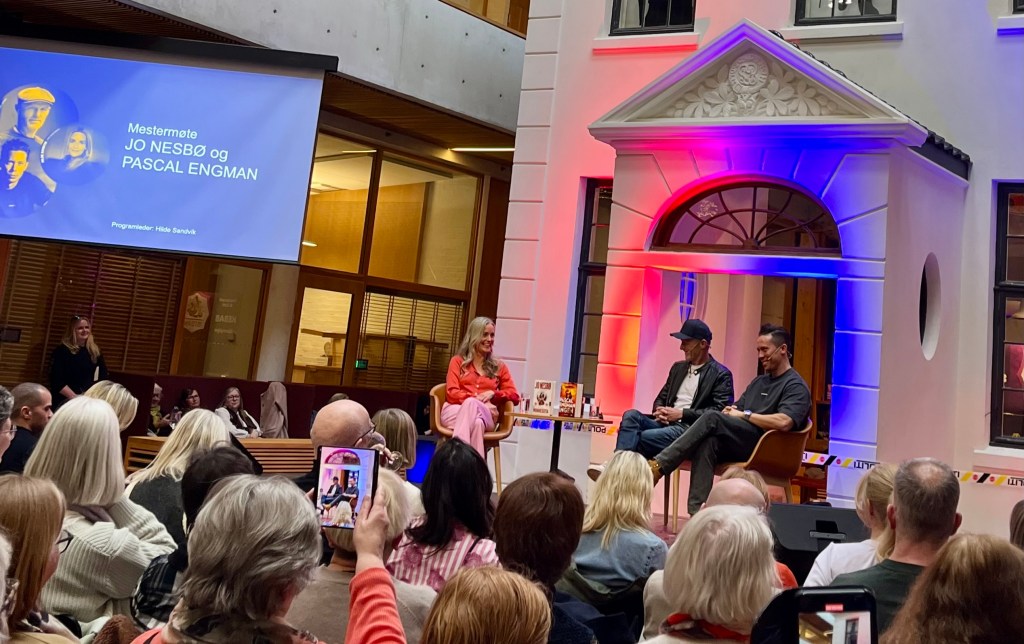
Special time for the unique brilliant and damaged detective Harry Hole will come tomorrow. So far I have watched only one episode (OMG! The tension!) of the new series and Tobias Santelmann is sensational as Harry and Oslo is both realistic and totally unreal. I also wanted to read again The Devil’s Star on which the latest worldwide sensation from Netflix is based. My copy of the book is from 2009 when Jo Nesbø was still being compared to the legendary Swedish author and journalist Stieg Larsson. The translation from Norwegian by Don Bartlett became as iconic as the books themselves.
I’ve been a huge fan Jo Nesbø’s literary and music career for years, and followed in Harry Hole’s footsteps in Oslo: Jo Nesbø’s Knife. I also love his band Di Derre.
I had no time to finish reading One True Word by Snæbjörn Arngrímsson but I’m on it. Translated by Larissa Kyzer this is an original take on the possibly unreliable narrator: After a day of simmering tension on a trip to an uninhabited island, Júlia snaps and leaves her husband Gíó marooned in the middle of a freezing fjord in the depths of the Icelandic winter, with night drawing in. When she regrets her decision and returns, he is nowhere to be found. The police launch a manhunt, but soon their suspicion falls on his wife. She spins them a story to hide her involvement, but she can feel the net closing in.’
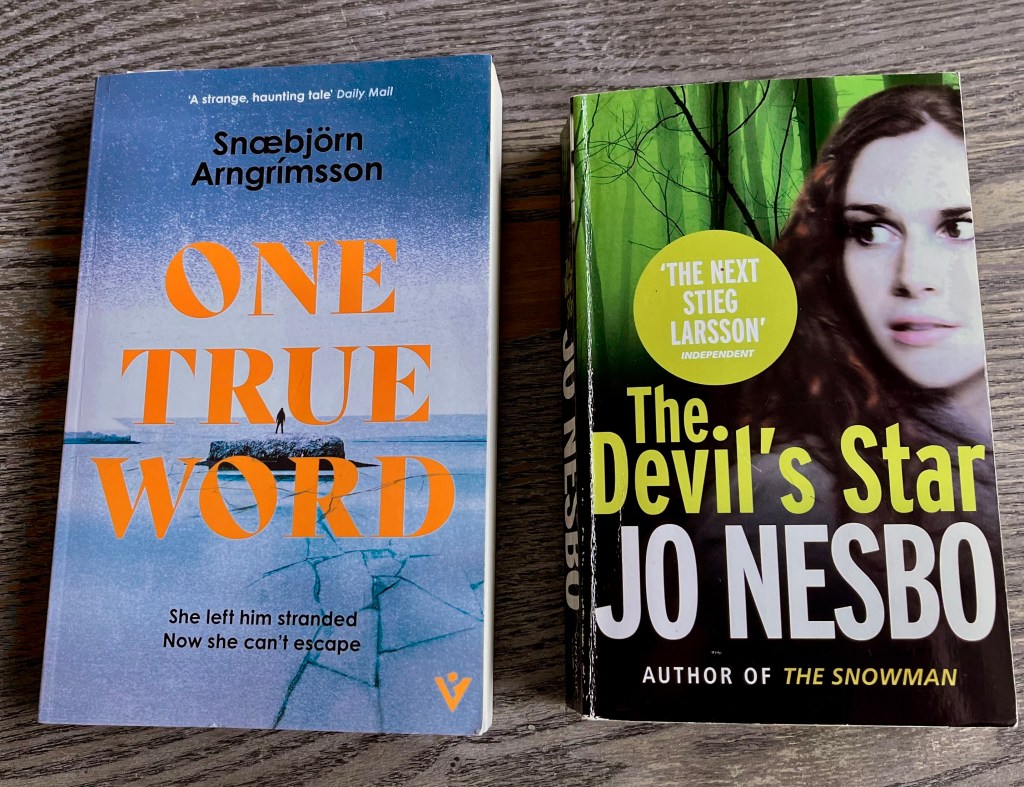
I also have a stack of Scandinavian crime fiction books in translation entered for the Petrona Award 2026 but that’s another long story.
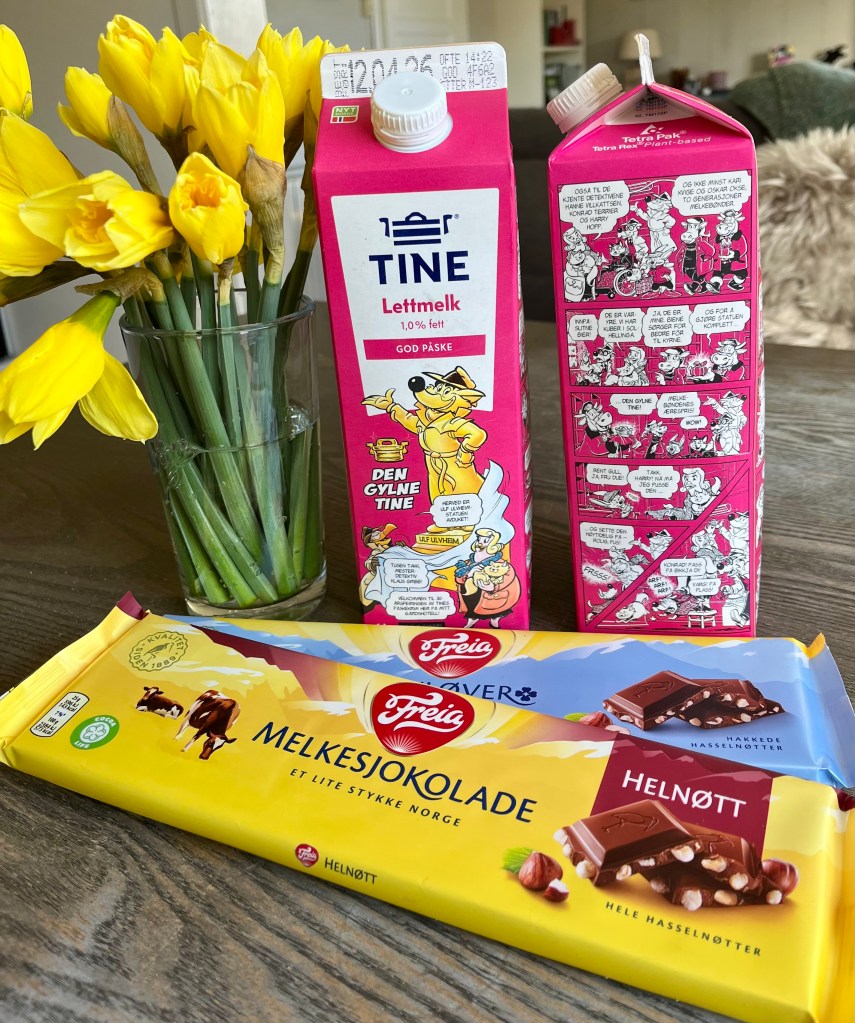
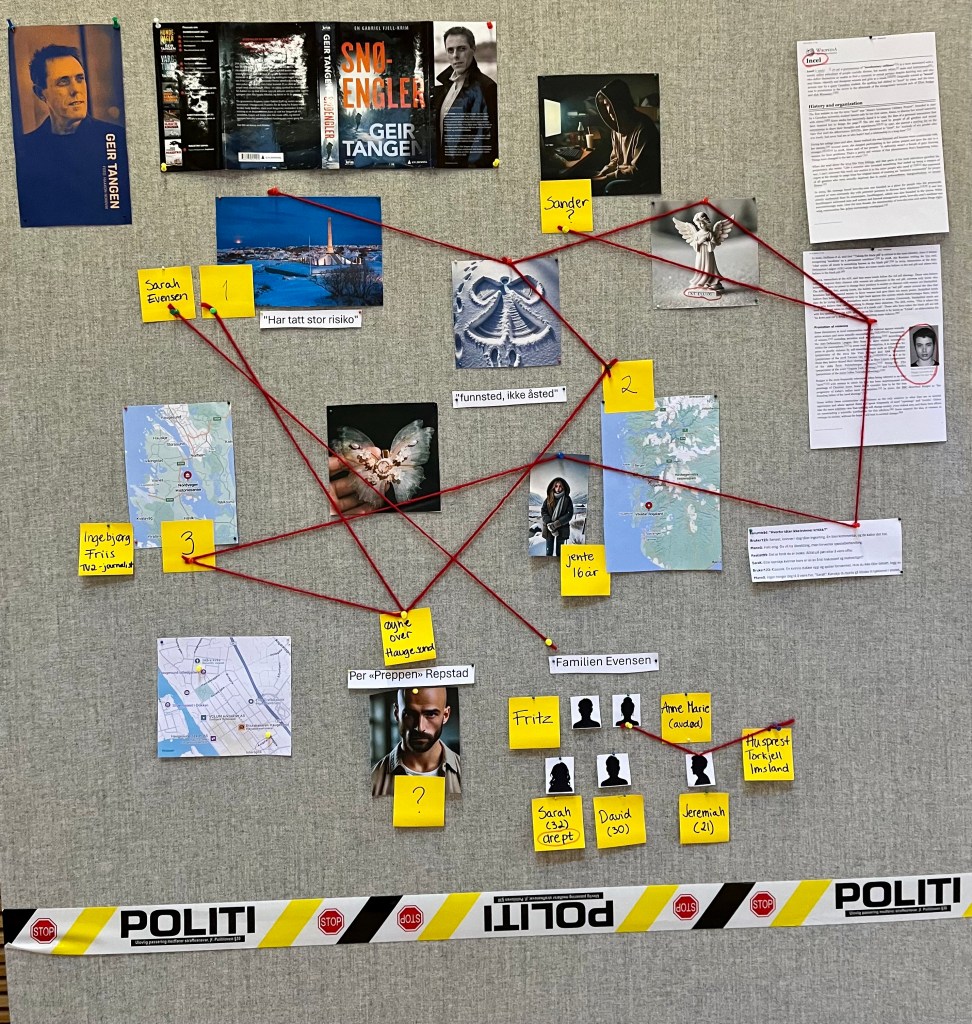
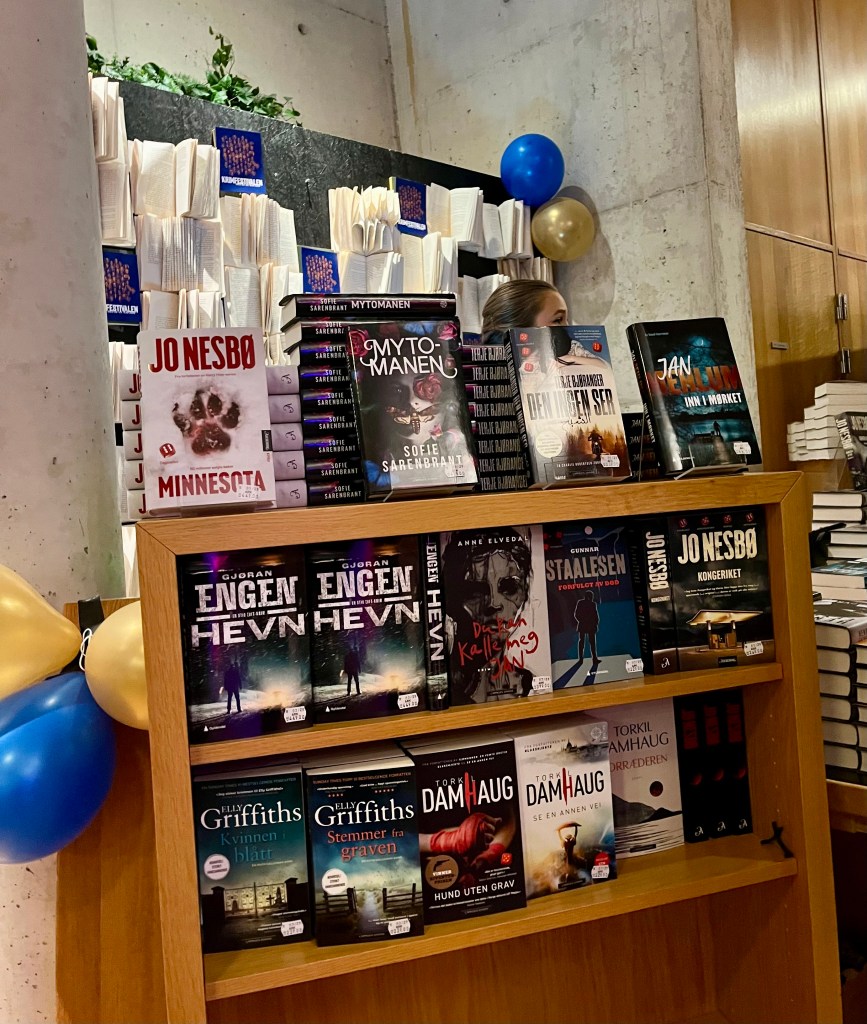
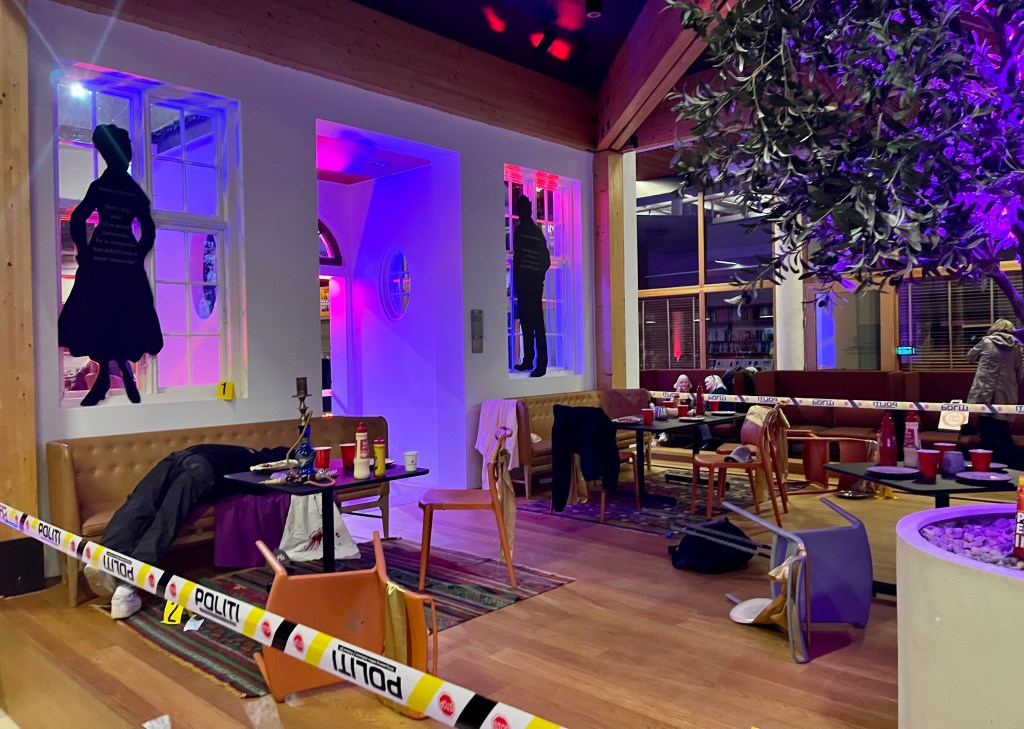
Tonight I won’t be heading to a wooden cabin in the forest or mountains as per the longstanding Norwegian tradition of Påskekrim (God Påske with Don Bartlett). No time. No cabin. Yet. But I have my favourite Freya chocolate, enthusiastic daffodils, warm blanket and working TV at home. Plus milk cartons with the annual mystery from Tine, one of Norway’s largest food companies and supplier of dairy products. Outside the last night’s snow has melted, seagulls are discussing the best places for laying their eggs, and my cat is supervising everything that’s happening (or not) in the garden.
Outside the overnight snow has melted, seagulls are discussing the best places for bringing up their chicks and my cat is supervising everything that’s happening (or not) in the garden.
Have a great Easter whatever you do. God påske. Happy Påskekrim 🐣








 Nordic Lighthouse