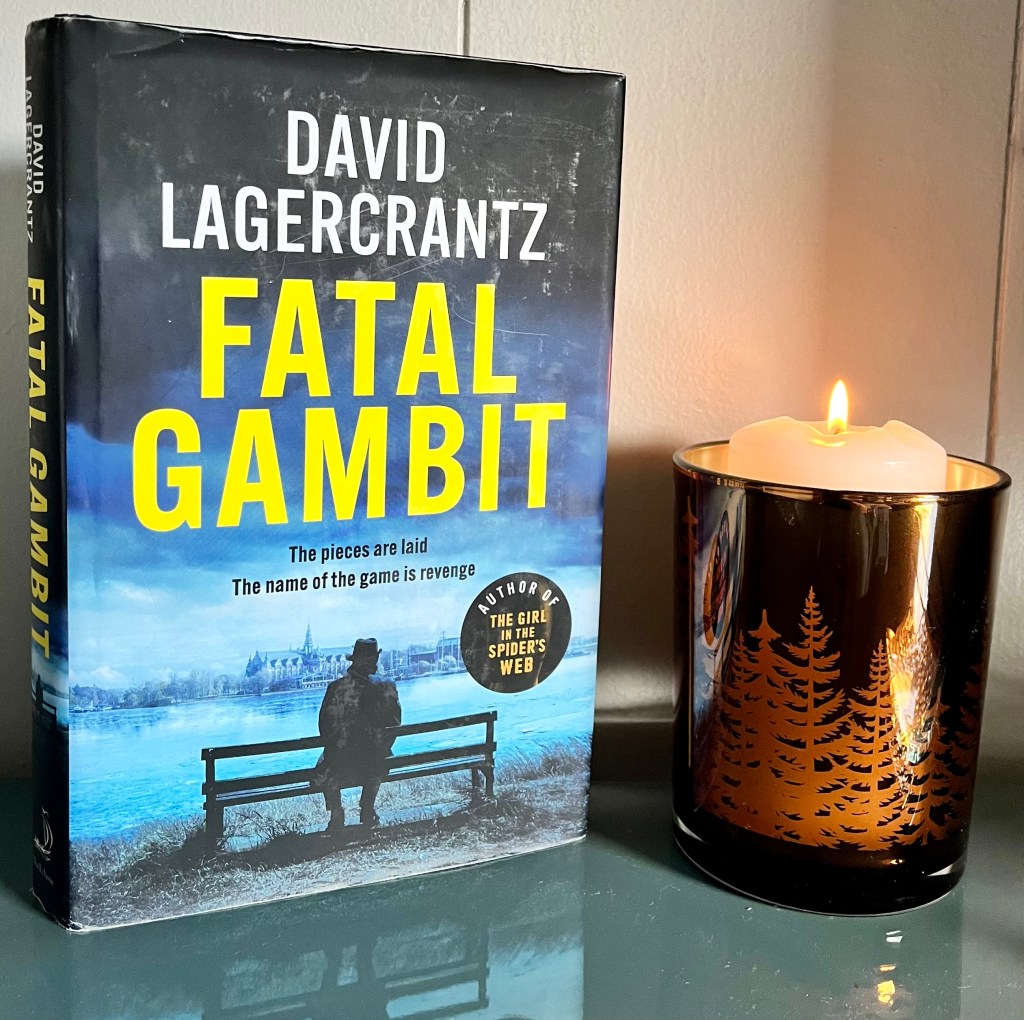
Fatal Gambit by David Lagercrantz

Brilliant academic and government consultant Hans Rekke and his unofficial work partner Detective Micaela Vargas are the latest duo following the well-established ‘method’ of the famous Sherlock and Watson partnership. However, they did not make a conscious decision to embark together on the crime-fighting journey. Beginnings of their cooperation are in Crime Review – Dark Music (2022), first novel of the new gripping series by David Lagercrantz, which is absolutely worth reading. Translation of both by Ian Giles is superb: flowing and engaging capturing the attention. I would expect that collaboration between Lagercrantz and Giles will continue as the complex threads of Fatal Gambit invite further investigations.   

As the modern take on Sherlock-Watson theme continues, it is not difficult to realise who is who here, and how that uneasy working relationship slowly embraces friendship and deeper understanding of personal motives. At times it is such a slow painful process that not only the readers might find it frustrating – the main characters as well, especially Vargas (but devil’s in the details). She had to move into Rekke’s vast apartment as a lodger because of her own private situation. Living with the professor who is both disillusioned and disgraced, and surviving on the diet of various pills and self-loathing, creates many practical and emotional challenges. Contrast between wealth and social standing, mostly going years back (to be precise) of Rekke versus down-to-earth attitude and immigrant background of Vargas amplify the difficulties within the Swedish society, too.

Main story strands focus on a missing woman Claire Lidman who was confirmed as dead in a fire fourteen years ago. Yet she suddenly appears in the background of a recent holiday photo taken in Venice. Her still-hopeful husband Samuel Lidman brings this anomaly to the pair. Scepticism seems to be the only reasonable response as the earlier investigation into Claire’s death showed no doubt. Rekke cannot deal with this cold case: he is very concerned that his daughter Julia has a secret new boyfriend and there are nuanced signs of dangerous darkness. At the same time he becomes aware of hearing a name from his past, a memory of a genius rival, a mastermind of words, deeds and manipulation. Enter Gabor Morovia, lapsed mathematician and evil player of chess and women. As a villain he is definitely outstanding, as a link in the chain holding lives of Rekke and others which will become obvious as the plot intensifies. This villainous creation takes me back to the latest book in the Millenium series: The Girl in The Eagle’s Talons where Karin Smirnoff pulled all the stops, just like Lagercrantz in his contribution to the Stig Larsson’s legacy. But back to Fatal Gambit.

Vargas tries to balance her life in the realm divided by the law-abiding profession she has chosen and the reality of criminal underworld. Her gangster brother threatens to silence her if she doesn’t get off his back, and he absolutely means that. Caught in the web of real and perceived violence, lack of support and understanding, and confusing emotions towards Rekke, she struggles with convincing others of making the right steps. When she finds out identity of Julia’s mysterious boyfriend, her fragile world collapses. However, this is not the time to stop and hide.

Perilous mystery opens avenues that nobody anticipated. Symbolic chess game is already on and Hans Rekke and Micaela Vargas are caught in the bigger game of the post iron-curtain connections, political machinations, big money and fear. Conclusion of the Claire case and exploration of various small elements in this picture affected them in deeply personal ways, and a as result brought their professional lives closer. And I loved the tension, drama and moral questions along the way.

Fatal Gambit by David Lagercrantz is out now, published by MacLehose Press.  

Outstanding crime fiction from the Kingdom of Denmark, Iceland, Norway and Sweden shortlisted for the 2024 Petrona Award

Six impressive crime novels from the Kingdom of Denmark, Iceland, Norway and Sweden have been shortlisted for the 2024 Petrona Award for the Best Scandinavian Crime Novel of the Year. The shortlist is announced today, Thursday 10th October and is as follows:


·       Anne Mette Hancock – The Collector tr. Tara F Chace (Denmark, Swift Press)

·       Jørn Lier Horst – Snow Fall tr. Anne Bruce (Norway, Michael Joseph)

·       Arnaldur Indriðason – The Girl by the Bridge tr. Philip Roughton (Iceland, Harvill Secker)

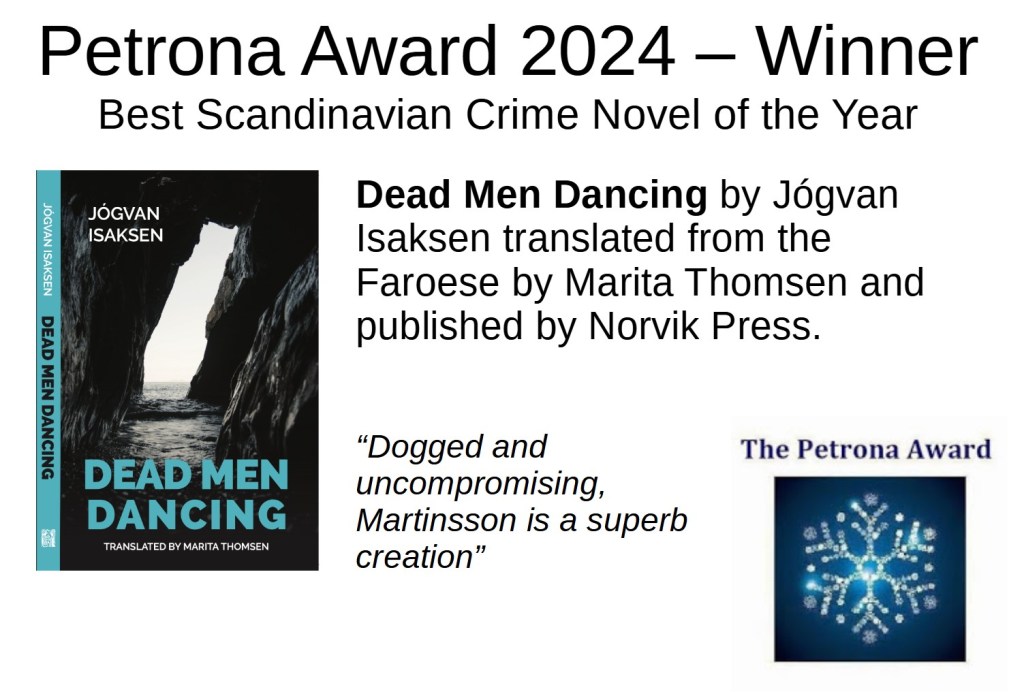
·       Jógvan Isaksen – Dead Men Dancing tr. Marita Thomsen (Faroe Islands (Kingdom of Denmark), Norvik Press)

·       Åsa Larsson – The Sins of our Fathers tr. Frank Perry (Sweden, MacLehose Press)

·       Yrsa Sigurðardottir – The Prey tr. Victoria Cribb (Iceland, Hodder & Stoughton)

The winning title will be announced on 14 November 2024.

The Petrona Award is open to crime fiction in translation, either written by a Scandinavian author or set in Scandinavia, and published in the UK in the previous calendar year. The Petrona team would like to thank our sponsor, David Hicks, for his continued generous support of the Award.

The judges’ comments on the shortlist:

There were 31 entries for the 2024 Petrona Award from six countries (Kingdom of Denmark, Finland, France, Iceland, Norway, and Sweden). This year’s shortlist sees both the Kingdom of Denmark and Iceland represented with two novels each and Sweden and Norway with one novel each. The judges selected the shortlist from a strong pool of candidates with the shortlisted authors including Petrona Award winners Jørn Lier Horst and Yrsa Sigurðardottir. As ever, we are extremely grateful to the six translators whose expertise and skill have allowed readers to access these outstanding examples of Scandinavian crime fiction, and to the publishers who continue to champion and support translated fiction.

The judges’ comments on each of the shortlisted titles:

Anne Mette Hancock – THE COLLECTOR translated by Tara F Chace (Denmark, Swift Press)

When ten-year-old Lukas disappears from his Copenhagen school, police investigators discover that the boy had a peculiar obsession with pareidolia: a phenomenon that makes him see faces in random things. A photo on his phone, posted just hours before his disappearance, shows an old barn door that resembles a face. Journalist Heloise Kaldan thinks she recognises the barn – but from where? When Lukas’s blood-flecked jacket is found, DNA evidence points to Thomas Strand, a former soldier suffering from severe PTSD, but then Strand turns up dead in his apartment. 

This is a complex thriller of buried secrets, that beautifully wrong-foots the reader from beginning to end.

Jørn Lier Horst – SNOW FALL translated by Anne Bruce (Norway, Michael Joseph)

The discovery of an Australian backpacker’s body in Spain prompts a group of amateur true crime detectives into action. They are scattered online around the world, attempting to solve the mystery of her death. Astri, a young Norwegian woman whose intense pursuit takes her closer than anyone else to solving the case, prepares to reveal her findings and then goes offline. When William Wisting reluctantly gets involved in the investigation, he is faced with the unusual, unorthodox investigators of varied skills and intentions, and puzzling connections.

A slow methodological approach gathers pace and pulls readers into a complex web of low-key international ties. As always Lier Horst delves deep into the psychology and motives of the characters, creating a slow-burning police procedural of empathy and human interest, firmly rooted in Norwegian society.  

Arnaldur Indriðason – THE GIRL BY THE BRIDGE translated by Philip Roughton (Iceland, Harvill Secker)

When a young woman known for drug smuggling goes missing, her elderly grandparents have no choice but to call friend of the family, retired detective Konrád. Still looking for his own father’s murderer, Konrád agrees to investigate the case, but digging into the past reveals more than he set out to discover, and a strange connection to a little girl who drowned in the Reykjavík city pond decades ago recaptures everyone’s attention.

One of Iceland’s most established authors, Indriðason skilfully interweaves different timelines along with assured characterisation, in this second book to feature Konrád.

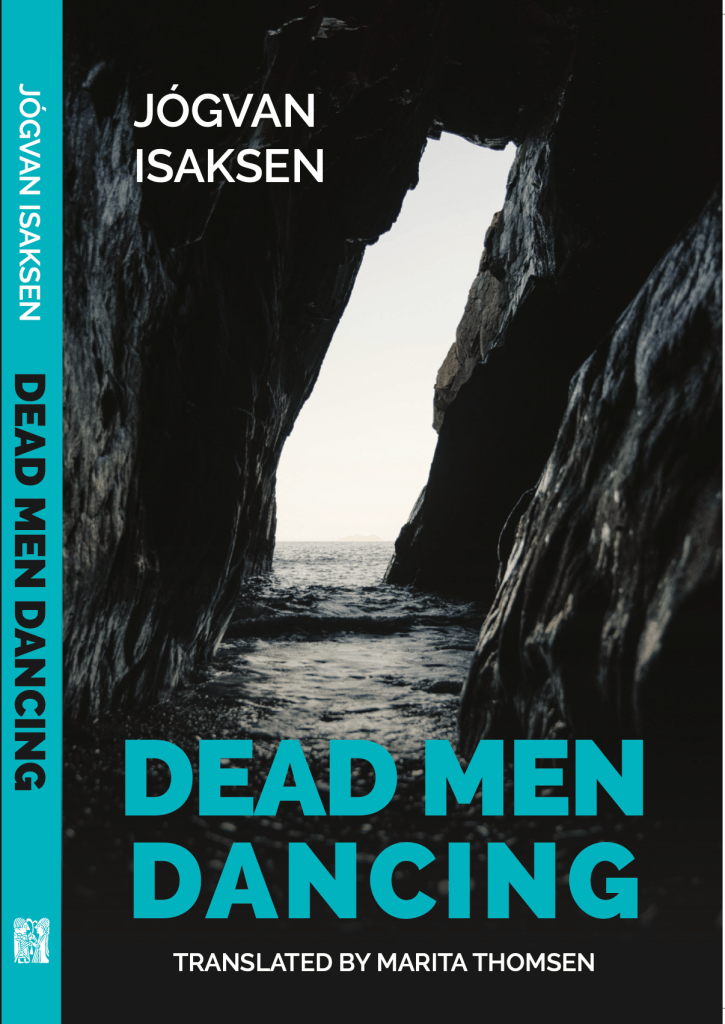
Jógvan Isaksen – DEAD MEN DANCING translated by Marita Thomsen (Faroe Islands (Kingdom of Denmark), Norvik Press)

Similar to the story of the ancient god Prometheus, a man has been shackled to rocks and left to drown on the beach. But this time it happens on the Faroe Islands. The discovery of his body throws the local community into an unsettling chaos. As the journalist Hannis Martinsson investigates, he comes across evidence of similar deaths. He realises they are linked to the events in Klaksvik in the 1950s, and a local revolt which tore the community apart. As Martinsson digs into the past, he learns about his country’s history, and the reader has a chance to discover what makes the Faroes intriguing and spellbinding.

This is only Isaksen’s second novel to be translated into English. The contemporary Faroese crime fiction writer places his characters in the wild, beautiful, and unforgiving environment and allows them to search for truth. Dogged and uncompromising, Martinsson is a superb creation.

Åsa Larsson – THE SINS OF OUR FATHERS translated by Frank Perry (Sweden, MacLehose Press)

Rebecka Martinsson, disillusioned with her challenging job as a prosecutor, initially has no intention of looking into a fifty-year-old case involving the missing father of Swedish Olympic boxing champion, Börje Ström. Agreeing, however, to the dying wish of her forensic pathologist friend she begins to follow links when a body is found in a freezer at the house of a deceased alcoholic. The grim realities of life in the area years ago, and the current influx of criminals attracted by developments in Kiruna make for a tough investigation and difficult soul-searching, coupled with Rebecka’s own history in a foster family.

Larsson remains a wise observant social commentator and creator of a gripping, suspenseful and utterly moving series, with her eye to the past and the future, and emotive style. Delicate and  relevant humour adds hope to the fragile lives of the main characters.

Yrsa Sigurðardottir – THE PREY translated by Victoria Cribb (Iceland, Hodder & Stoughton)

Kolbeinn has been called to his old home as the new owners have uncovered some photos, and a muddied child’s shoe bearing the name ‘Salvor’. A name Kolbeinn doesn’t recognise. Soon after, his mother’s carers say that she has been asking for her daughter, Salvor.

Jóhanna is working with the search and rescue team in Höfn to find two couples from Reykjavik. Their phones’ last location, the road leading up into the highlands. In a harsh winter, the journey is treacherous, and they soon find the first body.

Hjörvar works at the Stokksnes Radar Station in the highlands. He’s alone when the phone connected to the gate rings: the first time it’s ever done so. Above the interference he can hear a child’s voice asking for her mother.

How are these events connected?

Sigurðardottir balances these three storylines, each with her trademark creeping sense of unease, in this dark and disturbing standalone.

The judges

Jackie Farrant – creator of RAVEN CRIME READS and a bookseller/ Area Commercial Support for a major book chain in the UK. Ewa Sherman – translator and writer, and blogger at NORDIC LIGHTHOUSE. The Award administrator is Karen Meek – owner of the EURO CRIME blog and website.

Further information on the history of the Award and the previous winners can be found on the Petrona Award website.

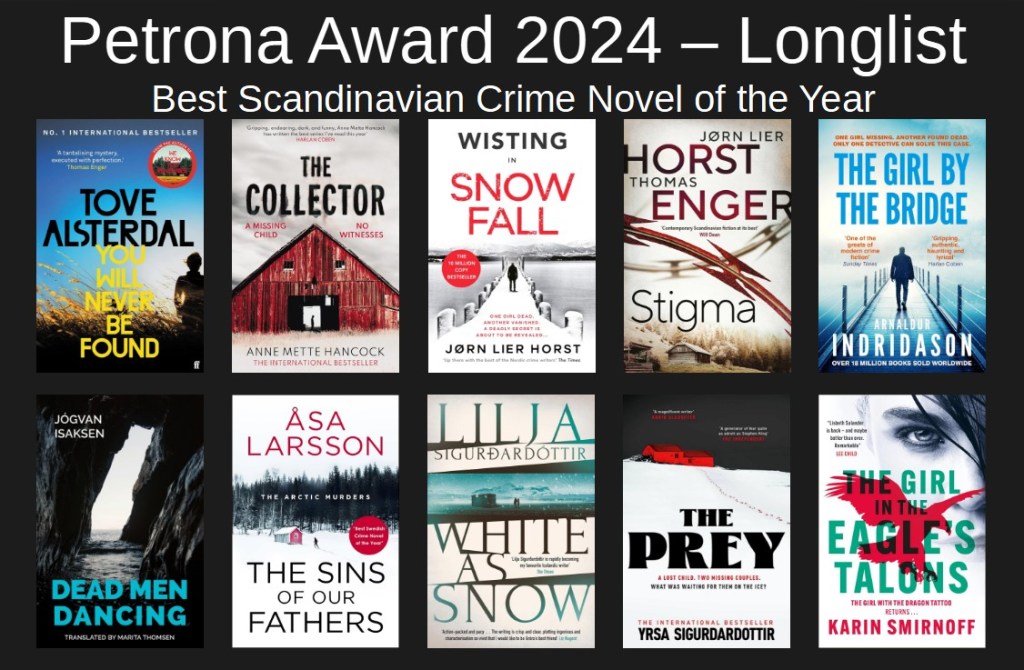
Petrona Award 2024 – Longlist

OUTSTANDING CRIME FICTION FROM DENMARK, ICELAND, NORWAY, AND SWEDEN LONGLISTED FOR THE 2024 PETRONA AWARD

Ten crime novels from Denmark, Iceland, Norway and Sweden have made the longlist for the 2024 Petrona Award for the Best Scandinavian Crime Novel of the Year. They are:

o   Tove Alsterdal – You Will Never Be Found tr. Alice Menzies (Sweden, Faber & Faber)

o   Anne Mette Hancock – The Collector tr. Tara F Chace (Denmark, Swift Press)

o   Jørn Lier Horst – Snow Fall tr. Anne Bruce (Norway, Michael Joseph)

o   Jørn Lier Horst and Thomas Enger – Stigma tr. Megan E Turney (Norway, Orenda Books)

o   Arnaldur Indriðason – The Girl by the Bridge tr. Philip Roughton (Iceland, Harvill Secker)

o   Jógvan Isaksen – Dead Men Dancing tr. Marita Thomsen (Faroe Islands (Denmark), Norvik Press)

o   Åsa Larsson – The Sins of our Fathers tr. Frank Perry (Sweden, MacLehose Press)

o   Lilja Sigurðardottir – White as Snow tr. Quentin Bates (Iceland, Orenda Books)

o   Yrsa Sigurðardottir – The Prey tr. Victoria Cribb (Iceland, Hodder & Stoughton)

o   Karin Smirnoff – The Girl in the Eagle’s Talons tr. Sarah Death (Sweden, MacLehose Press)

The longlist contains a mix of newer and more established authors, including previous Petrona Award winners Jørn Lier Horst and Yrsa Sigurðardottir. Both large and small publishers are represented on the longlist, with Orenda Books and MacLehose Press both having two entries, and the breakdown by country is Iceland (3), Sweden (3), Denmark (2) and Norway (2).

The shortlist will be announced on 10 October 2024.

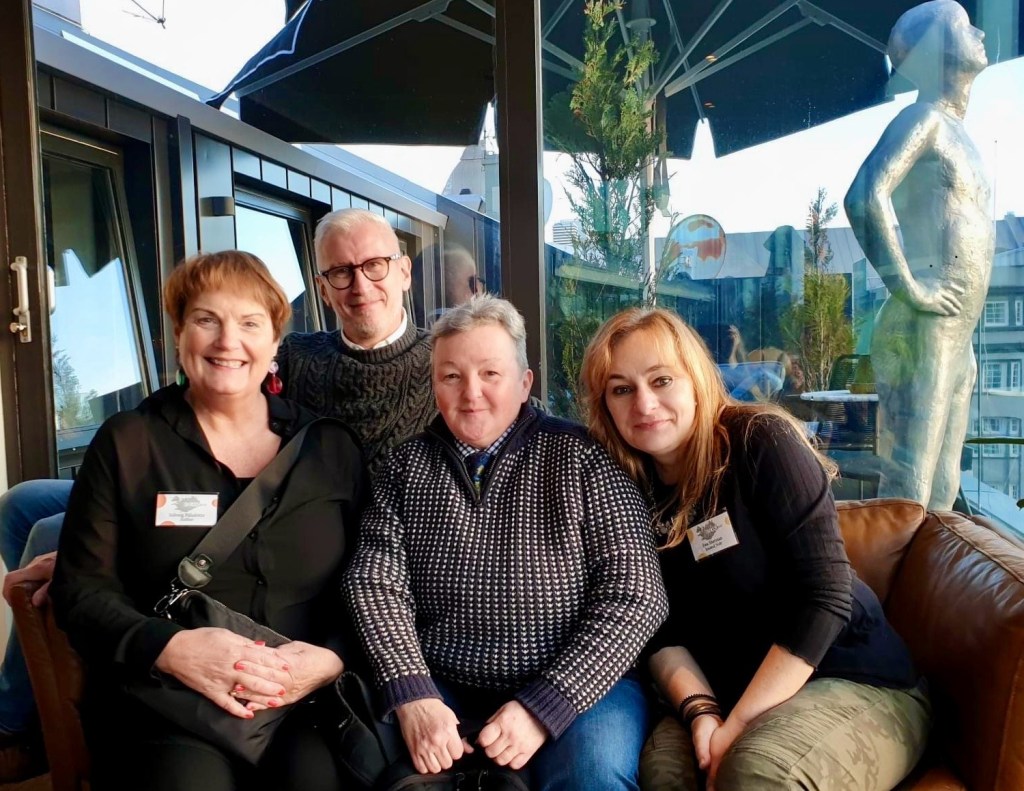
The Petrona Award 2024 judging panel comprises Jackie Farrant, the creator of RAVEN CRIME READS and a bookseller / Area Commercial Support for a major book chain in the UK and Ewa Sherman, translator and writer, and blogger at NORDIC LIGHTHOUSE, with additional help from Sarah Ward, author, former Petrona Award judge and current CWA Crime Fiction in Translation Dagger judge. The Award administrator is Karen Meek, owner of the EURO CRIME blog and website.

The Petrona team would like to thank both our sponsor David Hicks for his continuing support of the Petrona Award and the CWA, in particular Maxim Jakubowski, for allowing Sarah to step in following the very unexpected death of our much missed judge and friend Miriam Owen.

The Petrona Award was established to celebrate the work of Maxine Clarke, one of the first online crime fiction reviewers and bloggers, who died in December 2012. Maxine, whose online persona and blog was called Petrona, was passionate about translated crime fiction but in particular that from the Scandinavian countries. The award is open to crime fiction in translation, either written by a Scandinavian author or set in Scandinavia and published in the UK in the previous calendar year. More information on the history of the Award and previous winners can be found at the Petrona Award website


Sólveig Pálsdóttir: ‘Books that influenced me’

A retired, reclusive woman is found on a bitter winter morning, clubbed to death in Reykjavik’s old graveyard. Detectives Guðgeir and Elsa Guðrún face one of their toughest cases yet, as they try to piece together the details of Arnhildur’s austere life in her Red House in the oldest part of the city. Why was this solitary, private woman attending séances, and why was she determined to keep her severe financial difficulties so secret? Could the truth be buried deep in her past and a long history of family enmity, or could there be something more? Now a stranger keeps a watchful eye on the graveyard and Arnhildur’s house. With the detectives running out of leads, could the Medium, blessed and cursed with uncanny abilities, shed any light on Arnhildur’s lonely death?

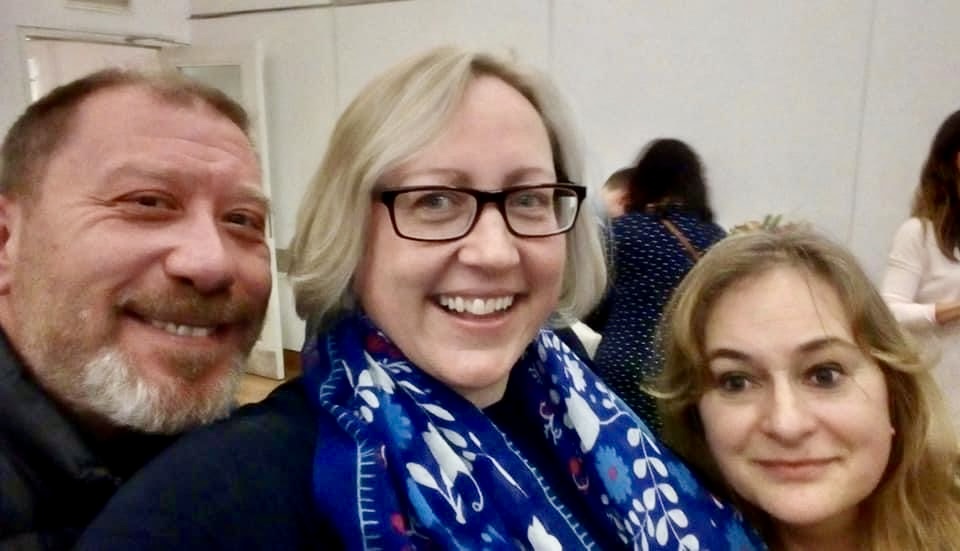
Sólveig Pálsdóttir and her fellow Icelandic author Óskar Guðmundsson, and two of her biggest fans: Jacky Collins and Ewa Sherman. Iceland Noir 2021.

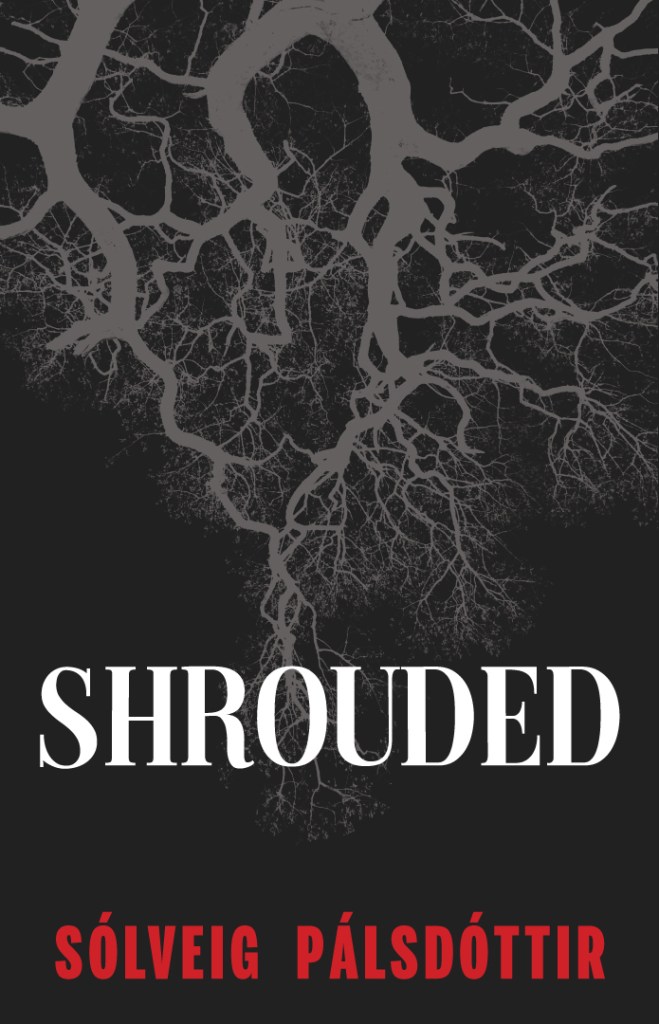
Sólveig Pálsdóttir’s latest gripping intriguing novel Shrouded in Quentin Bates’ translation from Icelandic has been published by Corylus Books last month, and received some excellent reviews from the readers. Here she talks about books that have made impression on her, over the years and quite recently.

‘I have always been a big reader, with an interest in literature of many kinds. My choice of reading depends on how I am feeling, as well as what I’m working on. I was a voracious reader of crime fiction before I started writing it myself. Swedish author Henning Mankell is my absolute favourite, a great stylist with strong social awareness and a highly versatile writer, as in addition to his crime fiction (featuring his most famous creation, Kurt Wallander) he wrote children’s books, plays, novels and powerful works based on his own life. Then I became a strong admirer of Stieg Larsson and his Millennium books. The Icelandic novelist Arnaldur Indriðason’s first books caught me in their grip, and as a student I naturally read Edgar Allan Poe and Umberto Eco, both of whom have been strong influences.

Since writing my own crime fiction, this is a genre I read less and find myself choosing other varieties of literature. I probably read half a dozen crime novels a year, just enough to keep up, and more of other books such as poetry, biographies and other fiction. I’m sure the reason for this is the concern that my work could be influenced by other authors’ crime stories and I want to avoid that happening. So I mustn’t read crime when I’m working on a book of my own.

There are more books than I can count that have been a strong influence on me, and many are by Icelandic authors who are mostly little known elsewhere. I have to include Iceland’s Bell by Nobel Prize winner Halldór Laxness.

I played a part in a dramatisation of Crime and Punishment by Fyodor Dostoevsky which was highly thought-provoking in a way that has stayed with me ever since.

Other authors who moved me deeply in my younger years and shaped my thinking were Margaret Atwood and Doris Lessing. I was captivated by The Grass is Singing and A Diary of a Good Neighbour. I haven’t read this again, but the feeling remains strong of what a curse restraint can be and how important it is to allow oneself fondness for others.

I can’t fail to mention Íslenskar þjóðsögur og dulrænar frásagnir / Icelandic Tolk Tales and Accounts of the Uncanny. I used to devour books like this well into adulthood, and listened carefully to people’s accounts of folk tales, the hidden people and ghosts. This can be clearly seen in The Fox and Shrouded, and probably in other books.

Of the more recent memorable books, I would like to mention The End of Loneliness by  Benedict Wells. This seductive, low-key narrative technique has stayed in my mind. I read the book again recently and wasn’t disappointed. Now I mean to track down his latest book Hard Land. I recently read two novellas by Claire Keegan that I would wholeheartedly recommend, Small Things Like These and Foster. I have also been reading La Place by French Nobel Prize winner Annie Ernaux, which has recently been translated into Icelandic. This taut, almost cold, text was almost repelling, but it somehow stays with you, and I find myself again and again thinking about this book. Educated by Tara Westover also sticks in the mind. Her parents belonged to an isolated Mormon sect which believes the end of the world is imminent, living completely isolated from the outside world. It is an astonishing autobiography in every way. It’s shot through with the author’s powerful will to live, independence and belief in better things to come.’

You can buy Shrouded – Indie Press Network or the link above.

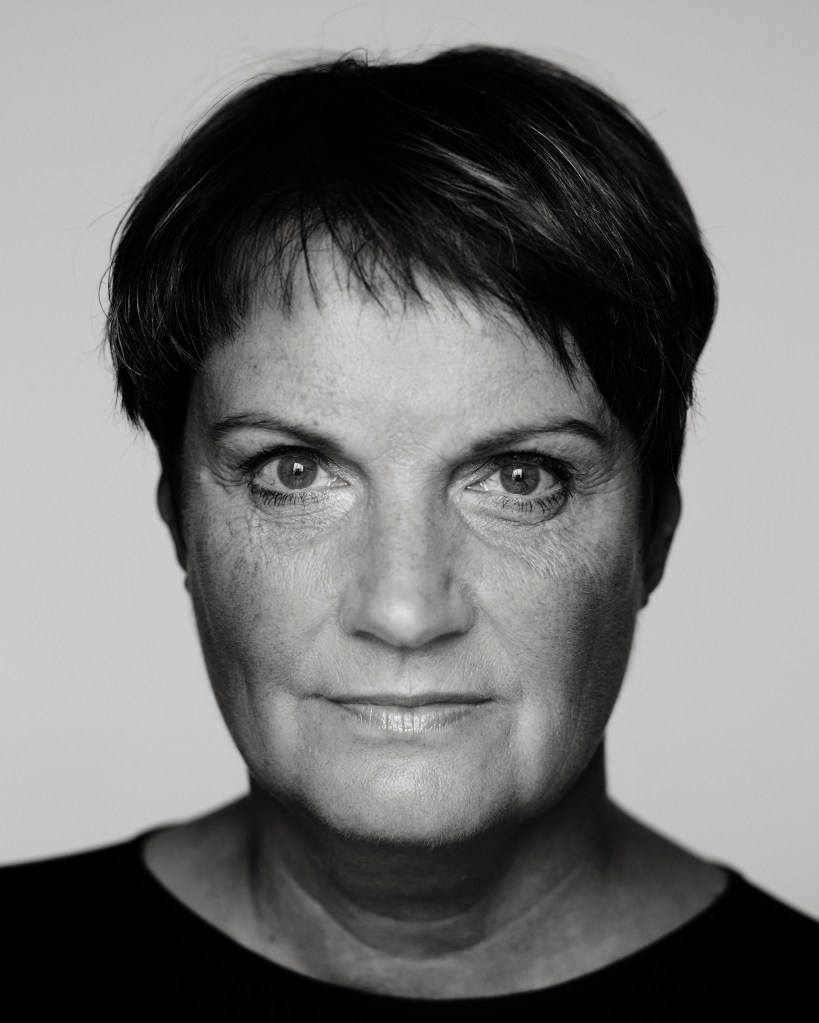
Sólveig Pálsdóttir trained as an actor and has a background in the theatre, television and radio. In a second career she studied for degrees in literature and education, and has taught literature and linguistics, drama and public speaking; she has also produced both radio programmes and managed cultural events. Her first novel appeared in Iceland in 2012 and went straight to the country’s bestseller list. Her memoir Klettaborgin was a 2020 hit in Iceland. Sólveig Pálsdóttir has written seven novels featuring Reykjavík detectives Guðgeir Fransson and Elsa Guðrún in the series called Ice and Crime. Silenced received the 2020 Drop of Blood award for the best Icelandic novel of the year and was Iceland’s nomination for the 2021 Glass key award for the best Nordic crime novel of the year. Shrouded is the series’ fourth book to appear in English. Sólveig lives in Reykjavík.

Quentin Bates has personal and professional roots in Iceland that go very deep. He is an author of series of nine crime novels and novellas featuring the Reykjavik detective Gunnhildur (Gunna) Gísladóttir. In addition to his own fiction, he has translated many works of Iceland’s coolest writers into English, including books by Lilja Sigurðardóttir, Guðlaugur Arason, Einar Kárason, Óskar Guðmundsson, Sólveig Pálsdóttir, Jónína Leosdottir, Ragnar Jónasson and elusive Stella Blomkvist. Quentin was instrumental in launching Iceland Noir in 2013, the crime fiction festival in Reykjavik.

Remembering Miriam, always and for ever

My dear friend Miriam V Owen died suddenly last month; today was her funeral which I joined online. It was a beautiful touching but heart-breaking occasion. I can’t even imagine how her family must feel… All her friends are deeply sad but want to cherish the moments spent together. I don’t feel I can express well anything that goes through my mind as I think of Miriam, one of the #ScandiGang’s original members. So just this short post for now… We met in London in 2013, and clicked straight away, and shared love of Scandinavian and Nordic things: literature, food, landscapes mood. We talked about bringing up boys, about work and life, about crime fiction, travel, writing. She sent recipes. She was always there… We’ve been together at different book events and festivals in Iceland and the UK but haven’t managed to meet in Bergen in Norway. The plan was to follow in the footsteps of Varg Veum, the fictional PI created by Gunnar Staalesen, whom Miriam adored. Her passion for #NordicNoir was shown in her informative views as my fellow judge for Petrona Award and on the pages of the fascinating blog from which I copy the words below.

Nordic Noir blog – Iceland Noir 2014 ‘This film is all about experience at a crime writing festival in Reykjavik, Iceland. It contains interviews with authors, fans and one of the festival organisers as well as images, music and some text. It was made as piece of academic work in 2014 to allow me to explore videography as a tool for research. I loved the experience of making a film, editing it and working with a musician on some of the soundtrack. The piece has been well received at two conferences. One around the theme of Community Memory at the University of Stirling and also at the Academy of Marketing Arts and Heritage Colloquium 2016 held at Royal Holloway in London. The Icelandic Ambassador in London has also viewed it. When I made this I did not have any really fancy tools […] This piece would not have been such positive experience without the support of the crime fiction community as well as the academic community that has supported me. Thank you all.’

I will write more but not today. We miss you, Miriam.

ScandiGang underground. 13 October 2013