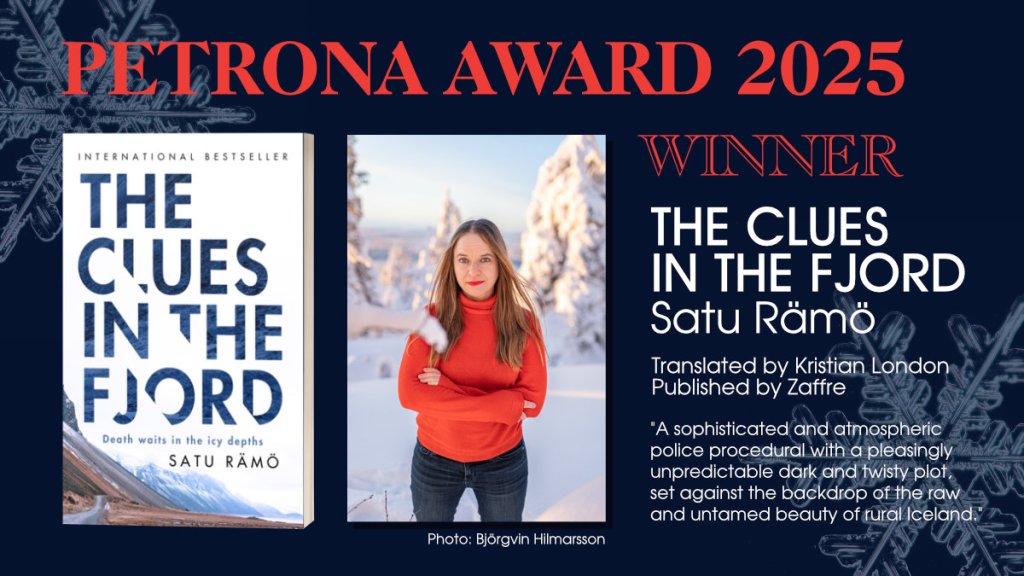
It is so exciting to annonce the winner of the Petrona Award 2025 for the Best Scandinavian Crime Novel of the Year:
THE CLUES IN THE FJORD by Satu Rämö translated from the Finnish by Kristian London and published by Zaffre. Satu Rämö will receive a trophy, and both the author and translator will receive a cash prize. The Petrona team would like to thank David Hicks for his sponsorship of the Petrona Award.
The judges’ statement on THE CLUES IN THE FJORD:
THE CLUES IN THE FJORD is a sophisticated and atmospheric police procedural with a pleasingly unpredictable dark and twisty plot, set against the backdrop of the raw and untamed beauty of rural Iceland.
Providing the local detective with a Finnish side-kick allows the author to contrast Icelandic and Finnish traits, adding authenticity to an original story. The intriguing back-stories of both characters leave the reader anticipating the next instalments.
In the ever-increasing Icelandic crime fiction scene, Satu Rämö has carved out a unique position between traditional mysteries and the darker end of crime fiction.
Statements from the winning author, translator and publisher:
Satu Rämö:
I am deeply honoured to receive this award, and I want to thank the jury and the organizers of the Petrona Award. I also want to acknowledge the incredible writers nominated alongside me. To be included among such talented writers is a reward in itself. Your words have inspired me a lot!
This award reminds me of a conversation I had with a reader, a ninety-five-year-old woman, who shared how the book, the first part in the Hildur crime book series, THE CLUES IN THE FJORD, made her feel. She told me that she knows she is getting very old but after reading this book, she hoped she would live long enough to read the sequel, to know what happened to the two little girls who got lost on their way from school. When the sequel came out, I sent it to her and called her after a few weeks. She was still as happy and joyful as last time, waiting for the next book in the series to come out…
It is the readers who keep stories alive. Thank you for reading. I want to thank you also, my British publisher Zaffre and my translator Kristian London. Great teamwork! Thank you jury from the bottom of my heart, this award means so much to me.
Kristian London:
When I first took on translating Satu Rämö’s THE CLUES IN THE FJORD, the book’s incredible success in Finland suggested it had a high chance of connecting with audiences abroad as well. I’m gratified to see this is the case. It has been a privilege to act as an intermediary between Rämö’s imagination and those of her English-speaking readers as they enter Hildur’s world of human quirks and foibles, familial traumas and inheritances. For me, the work’s slow power springs from its true protagonist: that isolated land in the North Atlantic that serves as the setting, and the terrain and culture and people we’re introduced to through an outsider’s keen eyes. Many thanks to the Petrona Award jury for this honor.
Kasim Mohammed (editor at Zaffre):
Being Satu’s English-language publisher is a real honour. She has such an eye for crafting stories about real people, and a real heart to her writing that is hard to find these days. Bringing authors’ dreams to life is a privilege and moments like this are wonderful to experience. To know Satu’s work is resonating with so many readers, worldwide, brings the team here at Bonnier so much pride. Thank you to the Petrona Award jury for this honour – we will treasure this as we continue to publish Satu!
The judges
Jackie Farrant – creator of RAVEN CRIME READS and a bookseller for a major book chain in the UK.
Ewa Sherman – translator and writer, and blogger at NORDIC LIGHTHOUSE.
Sonja van der Westhuizen – book critic for print and online publications in the UK and South Africa, as well as a blogger at WEST WORDS REVIEWS.
Award administrator
Karen Meek – owner of the EURO CRIME blog and website.
Petrona Award 2025 shortlist in full is here and further information can be found on The Petrona Award website.
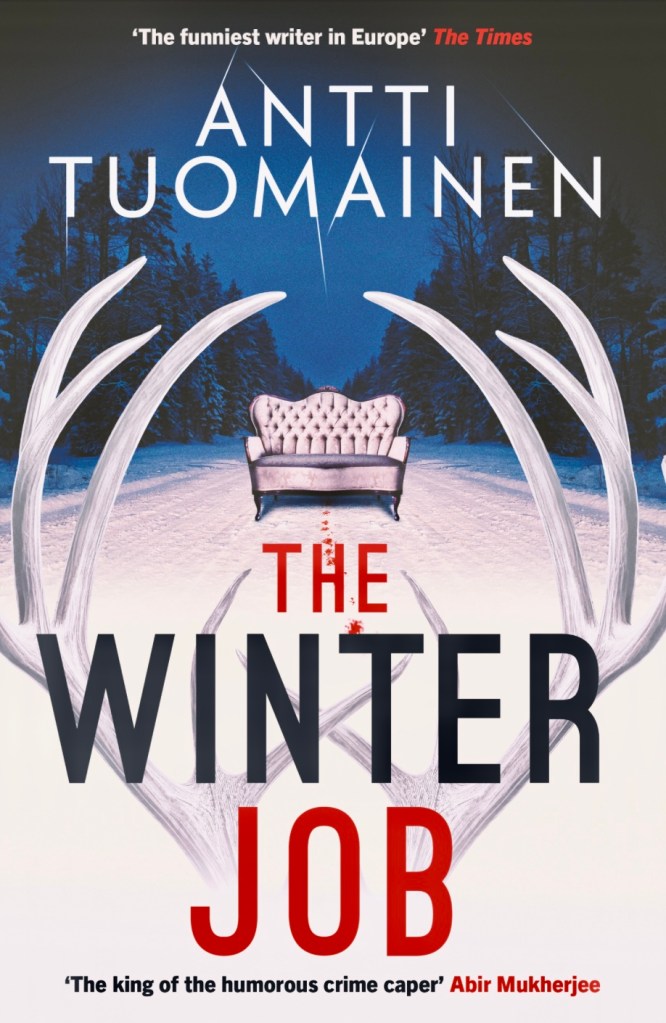
Helsinki, 1982. Recently divorced postal worker Ilmari Nieminen has promised his daughter a piano for Christmas, but with six days to go – and no money – he’s desperate.
A last-minute job offers a solution: transport a valuable antique sofa to Kilpisjärvi, the northernmost town in Finland. With the sofa secured in the back of his van, Ilmari stops at a gas station, and an old friend turns up, offering to fix his faulty steering wheel, on the condition that he tags along. Soon after, a persistent Saab 96 appears in the rearview mirror. And then a bright-yellow Lada. That’s when Ilmari realises that he is transporting something truly special. And when he realises he might be in serious trouble…
A darkly humorous and warmly touching suspense novel about friendship, love and death, The Winter Job flies a hundred and twenty kilometres an hour straight into the darkest heart of a Finnish winter night.
Just as indicated by its title, the book The Winter Job, published by Orenda books, is about working in winter conditions, and Antti Tuomainen honed his writing craft so well over the years in ten books I’ve read so far that my expectations are reasonably high. Well, there’s snow, and quite a lot of it in different stages of movement across the country because that’s where the quiet hero Ilmari Nieminen is driving in a very unsatisfactory vehicle. Others follow him and his valuable cargo and battle with the harsh weather conditions. Then there is a powerful and dangerous snowplough which could have appeared straight from the Norwegian movie In Order of Disappearance. If you haven’t seen it, please do as it definitely shows how to deal both with the snowstorms AND the emotions.
Other motifs in the novel also appealed to me. For example the egg-yolk-yellow of the iconic Soviet-era Lada, a car popular in the Eastern Bloc and quite reliable on the tough snowy Finnish roads. The colour – yellow – always makes me smile; however, tension and suspense in the sofa-pursuit tale didn’t feel so safe, especially as two people in the Lada seemed to have extremely revolutionary ideas. Yet, to be fair, if you’re a diehard communist and plotting a Marxist-Leninist revolution, you must be clear about your values: none of that ‘imperialist rubbish’ which also applies to the car makes.
The motivational song Eye of the Tiger keeps popping throughout the story, which I must admit is also on my Spotify list, but for completely unrelated reasons. I do not wish to get pumped up like Otto Puolanka. This particular cold-blooded man, one of Ilmari’s pursuers, is also keen on sharing his life philosophy, for example: ‘People were like warts: always in the wrong place at the wrong time and always unpleasant.’ Difficult to argue against this point if you’re on the road from the civilised cultural Helsinki to the village of Kilpisjärvi, famous for spectacular Northern Lights and a school fire that destroyed thousands of euro banknotes. This event is well ahead of The Winter Job’s timeline; but who knows, baddies are capable of various misdemeanours in different time zones.
Otto’s interesting views on human existence as such remind me of the enigmatic Icelandic author and protagonist Stella Blómkvist – Corylus Books quoting various wisdoms delivered by her mother. They all make sense of course. However, here wisdoms are more brash and straight to the brutal point, and they work in this harsh setting.
As Ilmari zigzags with his cargo there are two persons always on his mind: Helena, his twelve-year-old daughter, and ex-wife Tuulikki. He finds the whole journey across the country and just before Christmas a massive inconvenience. Ilmari has also an unexpected travelling companion: his old friend Antero Kuikka whom he hasn’t seen for many years, due to lack of communication and unfinished business dating back to their school days. Over the stressful hours of driving in the snow, in the dark and in the atmosphere of mistrust, both men open a little bit to each other. The process is quite painful but written by Tuomainen with empathy and humour. And then we can understand what real decent male friendship is and what could it mean exactly. This also gently explores loneliness as every character in the novel is affected by it. Are we able to deal with this feeling, this state of mind, this sad reality?
‘Seems you still don’t have many friends,’ he said.
Ilmari stopped in his tracks. ‘What’s that supposed to mean?’
‘Something happens that’s a bit difficult or uncomfortable, and even though it has nothing to do with the people around you, you start blaming them for the problem and insult them in the most profound and personal way.’
‘But why do we always show our worst sides to those nearest to us?’
Are you ready for the latest dose of dark humour, clever plotting, great characterisation and touching insights into the human soul? As always David Hackston translated Antti Tuomainen’s work in the most perfect nuanced way, and I can assure you that it will be a joy to read the novel any season of the year. The Winter Job (Bookshop.org UK) is out next week on 23rd October 2025.
In September my review (below) was published on the pages of European Literature Network, run by Rosie Goldsmith, Anna Blasiak and West Camel. It’s always an honour and a plasure to contribute to this exciting and super interesting project / venture. I’d encourage you to read Elin Anna Labba’s book and also other works reviewed and recommended by European Literature Network’s team.
‘The elders spoke of how they used to greet the land when they came here, the mountains, the dwelling places, and the paths, but I dare not. Just where do I belong? What is my home? I have discussed this with other grandchildren of forcibly displaced people.’
Before I focus on The Rocks Will Echo Our Sorrow, allow me to begin with mentioning a different novel: Petra Rautiainen’s Land of Snow and Ashes (translated from the Finnish by David Hackston), which is set after World War Two and affected me profoundly. One strand of this novel deals with Finland’s fairly recent traumatic history of forcing Sámi people to abandon their heritage, culture and identity to become ‘pure’ Finnish citizens.
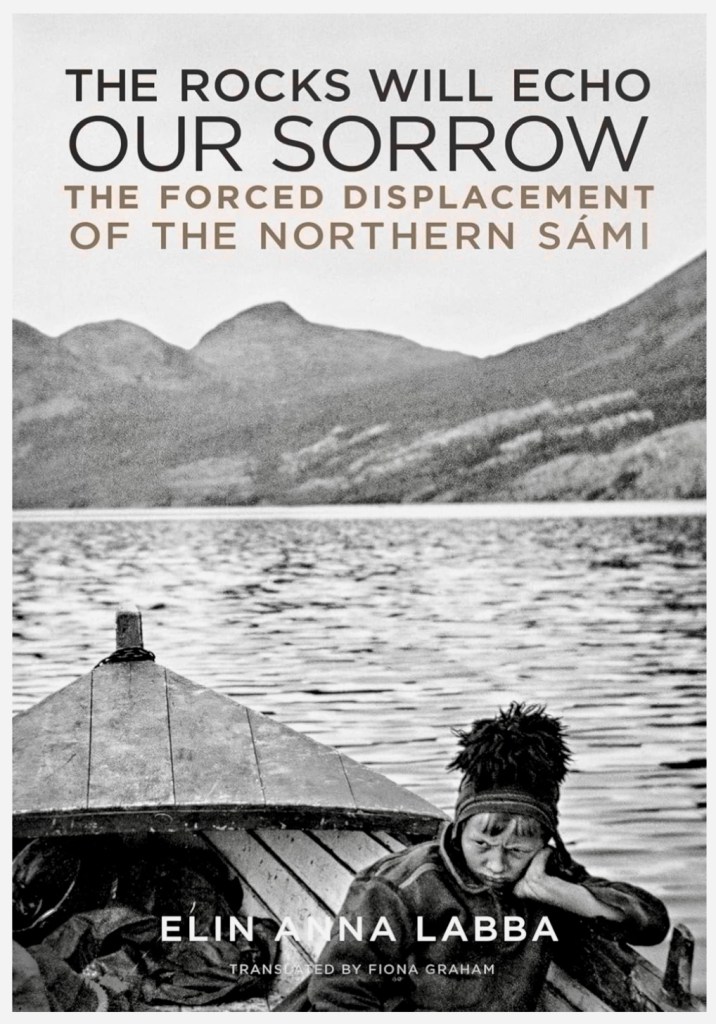
Elin Anna Labba’s deeply personal and somehow universal The Rocks Will Echo Our Sorrow: The Forced Displacement of the Northern Sámi therefore stopped me in my tracks. It is a truly heart-wrenching examination of the new rules that were imposed in the early twentieth century on the indigenous people who had lived for centuries in northern Scandinavia. Their forced removal remains a deeply painful memory. Shame, injustice and hurt prevail in this book, alongside lyrical images of longing, and of the irreplaceable human costs borne in the harsh but ultimately stunning natural world of the region.
The author travels to this lost homeland of her ancestors, aiming to reclaim their place in the history of both Norway and Sweden. Labba, a Sámi journalist and previously editor-in-chief of the magazine Nuorat, asks herself: ‘Do I have the right to mourn for a place that has never been mine?’, and is of course aware that ‘boundaries have always existed, but they used to follow the edges of marshes, valleys, forests, and mountain ranges’.
Nature and its seasons, the environment and tradition, had dictated the way people lived, organised their work and travel in winter and summer, how they grazed their reindeer in specific areas and drove them across the straits between the islands and the mainland. They had roots, connections, customs, and different methods of grazing the strong animals, all essential for their existence. The lives of forest Sámi and mountain Sámi were shaped across the generations by the weather. And there were always real emotional and physical ties to places even if they moved between them: ‘We carry our homes in our hearts.’
On 5 February 1919, the reindeer-grazing convention that sparked the forced displacement of the Sámi was signed by the foreign ministers of Sweden and Norway. Soon after, the era of ‘racial biology’ research started in Sweden. The Lapp Authority then followed newly established laws on the reduction of reindeer numbers and decided which of the Sámi could stay on their land and who must move to a different area. The displacements ensued. The legislation was unclear to the ordinary Sámi people, and therefore the appeals they made failed to protect their families.This meant women and children were the most vulnerable members of the community. ‘Family ties are the most precious thing anyone can have, apart from reindeer’ and without them ‘a man who’s left his lands no longer has a home. He no longer has his feet on the ground’.
‘For many, recounting the tale is a way to heal’ and so The RocksWill Echo Our Sorrow contains fragments of letters, conversations and poems, in excellent translation from Swedish by Fiona Graham, as well as old photographs showing difficult yet beautiful living conditions, and the nature of the Sámi existence: ‘You bear your hurt alone, for breaking down won’t make your daily life any easier. This philosophy of life revolves around the word birget – surviving and coping. Each year the reindeer must survive the winter: that is what matters, not people’s feelings.’ Fiona Graham translated also 1947: When Now Begins by Elisabeth Åsbrink, another book that affected me profoundly, from human, political and historical perspectives, and has been on my mind for the last two years.
Choosing and being in the culture of joiking, the goahti (tent) protecting them ‘against the wind, the darkness, and everything that can’t be seen’, against rain, snow and sun, and living according to tradition, should always have been the Sámi’s decision to make.
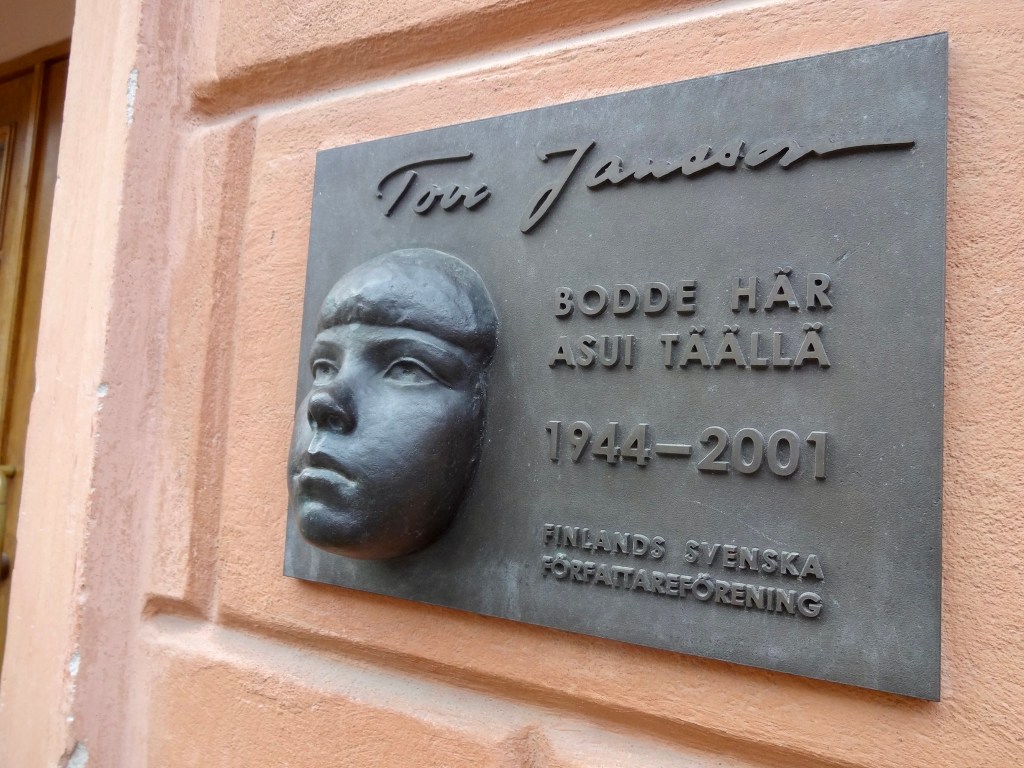
Today it’s Moomin Day… But really it’s one hundred and ten years since Tove Jansson was born in Helsinki and I was thinking of a very special trip which was ten years ago exactly. I wrote about it some time later, and below is the text originally published on Nordic Noir website run by my wonderful friend, late Miriam Owen. So here it is…
More than three years ago, in 2014 I was on a ‘pilgrimage’ in Finland, following in the footsteps of an incredible writer and fine artist Tove Marika Jansson, a woman who has created a completely new universe inhabited by wise philosophical trolls (Moomins), and who hugely influenced my outlook on life. Tove Jansson’s multi-dimensional works overflow with humour and creativity.
In Finland you can see a permanent exhibition of Tove Jansson’s works at Moomin Museum in Tampere, or visit Moomin World created for children in Turku. Moomin Official constantly expands the variety of experiences. My own experience came from the first Polish editions of Muminki, full of humour and warmth, published in the 1970’s, beautifully translated from Swedish and including original drawings by the author. My mother, as a ‘special regular’ customer at the bookshop, had the copies set aside specially for me. I knew all Finn Family Moomintroll, Moominsummer Madness, Moominland Winter and Talesfrom Moominvalley by heart. As well as other children’s books by Scandinavian authors. Astrid Lindgren wrote about practical kids of The Six Bullerby Children, and crazy Pippi Langstrumpf / Longstocking. Over the years I read all these books again in English yet the Polish translation of names and places appeal more to me. At the time Tove Jansson visited Poland when work on adapting her books for the small screen was in full swing. In 1977 Łódź film-based Se-ma-for created the TV series Tales of the Moomins. The cartoon was made with the use of semi-flat animated puppets on glass and it still has quite a surreal feel and quality to it.
The characters from the world of Moomins do not pretend that life is always okay. Yet, despite the storms, turmoil, evil desires and problems there was always a happy ending in these tales. I wanted to be like Moomin Mama, carrying a handbag. She is compassionate, has a sense of humour and, very important, has a sense of her own worth. More visitors: we will make pancake batter in the bathtub because the kitchen is too small. Moomin Papa lacking inspiration: maybe a plate of boiled sweets will help. Forest creatures lost their house: there is always space to sleep. And The Groke whom everyone feared is one of my favourites. Yes, she’s scary and freezes everything she touches but only because she wants love and acceptance. Like all of us.
Later I discovered Tove Jansson’s modest book for adults The Field of Stones which contains a lot of reflections on the writer’s struggle with the word. Searching for more I found books translated into Polish and English. The Summer Book is always available in English but there are no further reprints in Polish. I have Sculptor’s Daughter, an autobiographical novel for adults, The True Deceiver, and Stone Field, adorned with the letter Y on the cover (a symbol of character with whose biography the book’s hero is struggling). A Winter Book and Fair Play show more of Jansson’s talent for writing. Now Sort Of Books published the new collection of short stories originally published in 1991, and translated for the first time by Thomas Teal. Understated, elegant, beautiful simplicity in delicate yet powerful short stories collected in Letters from Klara written when Tove Jansson was in her seventies, at the height of her fame. She has truly mastered the form. Balancing harshness of world and sharpness of the words, the stories also demonstrate love and compassion and a delicate sense of humour. They are philosophical, sarcastic and timeless:
‘…but if you’re odd, you’re odd, and that’s all there is to it.’
‘You’re hurt that I forgot your ancient birthday. You’re being unreasonable. I know you’ve always expected me to make a special fuss, simply because I’m three years younger. But it’s time you realized that the passage of years per se is no feather in anyone’s cap.’
I followed all Tove Jansson-related news and in 2013 I managed to find a hefty tome ToveJansson. Moomin’s Mum, a comprehensive biography by Boel Westin, which had been translated from Swedish into Polish. In the UK, the same biography titled Life, Art, Words:The Authorised Biography was published a year later.
In 2014, the hundredth anniversary of her birth, the summer presented various events which I attended. The Finnish Institute in London opened a photo exhibition at the Institute of Contemporary Arts (ICA) under the title Tove Jansson: Tales from theNordic Archipelago. I loved the beautiful photographs by C-G Hagström, reflecting the simplicity and beauty of the hardships of life, and at the same time the severity of the conditions of existence on the islands, to which Tove and her long-term life companion Tuulikki Pietila responded with joy.
Helsinki’s Ateneum Art Museum, previously the Finnish Art Society’s drawing school which she had attended in Helsinki, organised a brilliant retrospective exhibition of paintings, drawings and sketches, as well as everything related to Moomins before the Japanese machine began to create animations. Next stop for the exhibition is at Dulwich Gallery which opened in October 2017 and runs until28th January 2018 and I cannot wait to see it again.
Moomin troll first appeared as a long snouted ‘Snork’ in 1943 at the time when young Tove drew cartoons for the satirical political anti-Hitler paper Garm. His first formal outing was in The Moomins and the Great Flood published in 1945, and then through further books and comic strips, translations and slowly but steadily growing Moomin emporium. His modest beginnings and frequent cameo appearances in the drawings and paintings eventually demanded proper presence in a book.
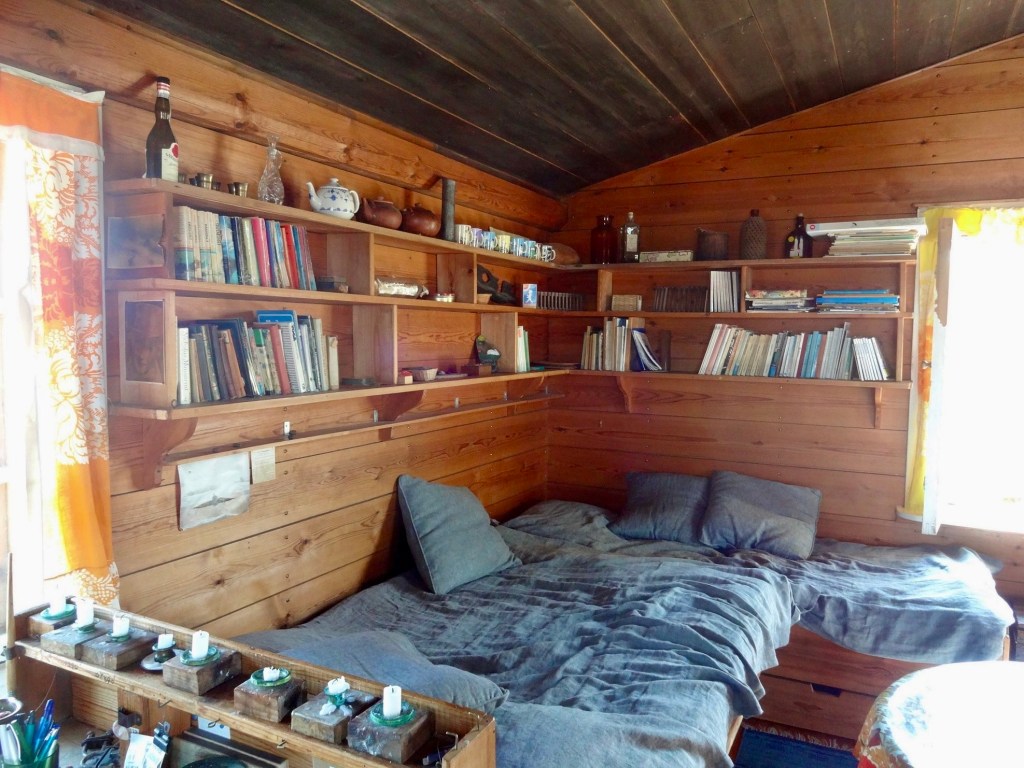
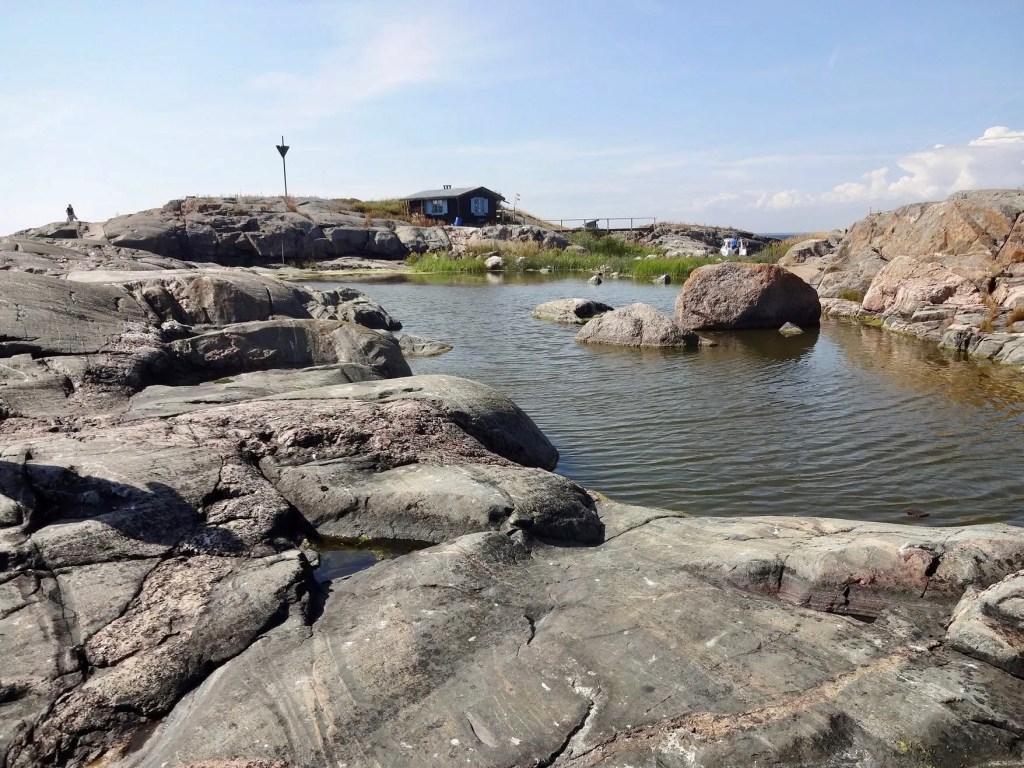
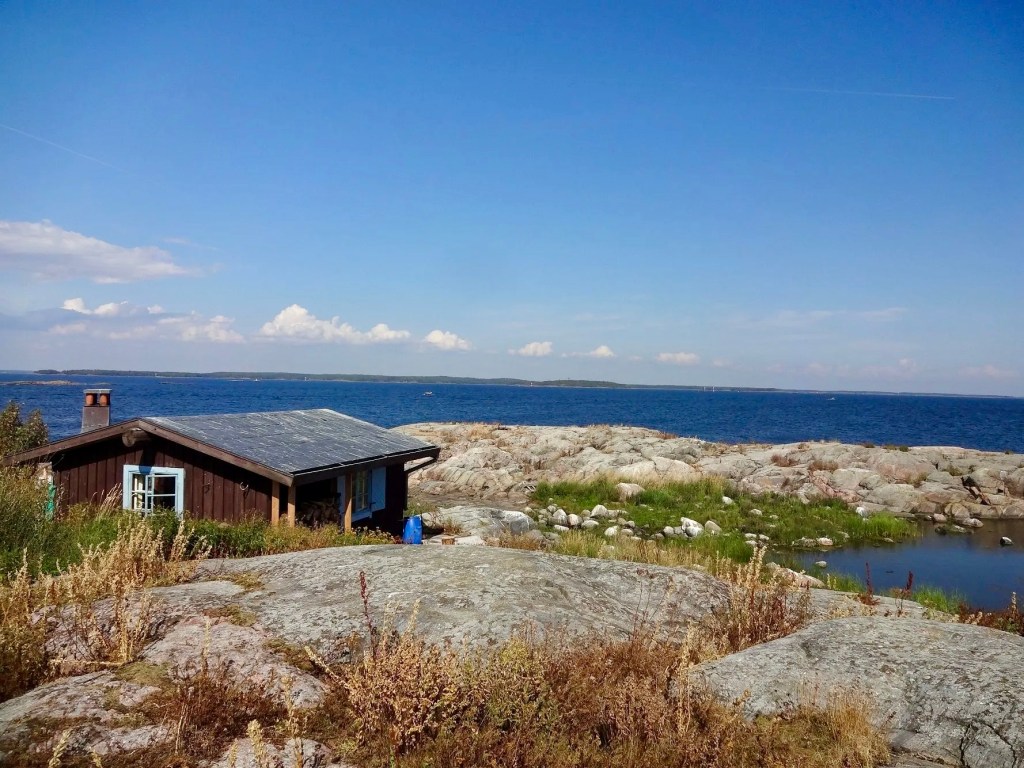
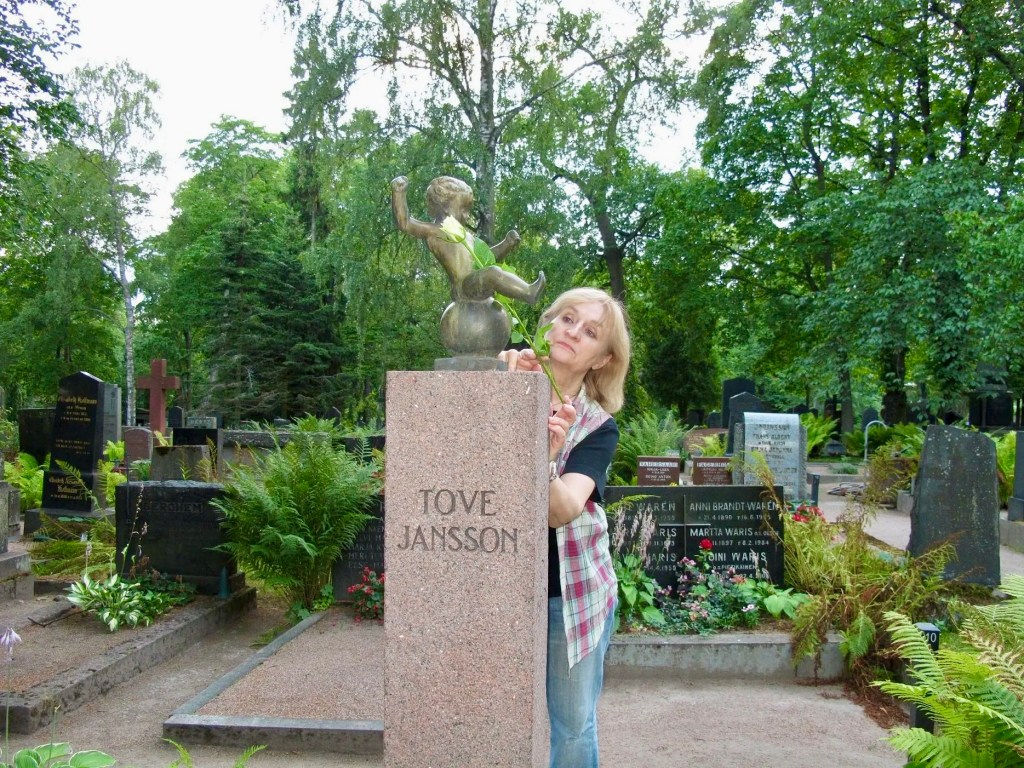
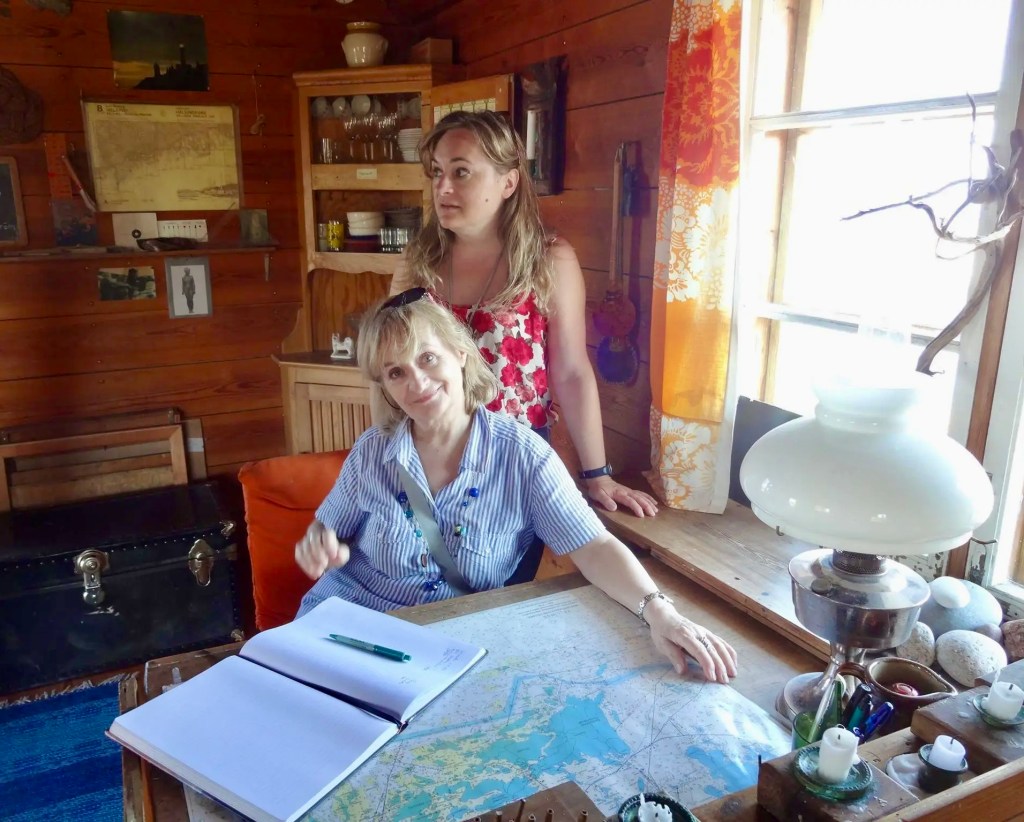
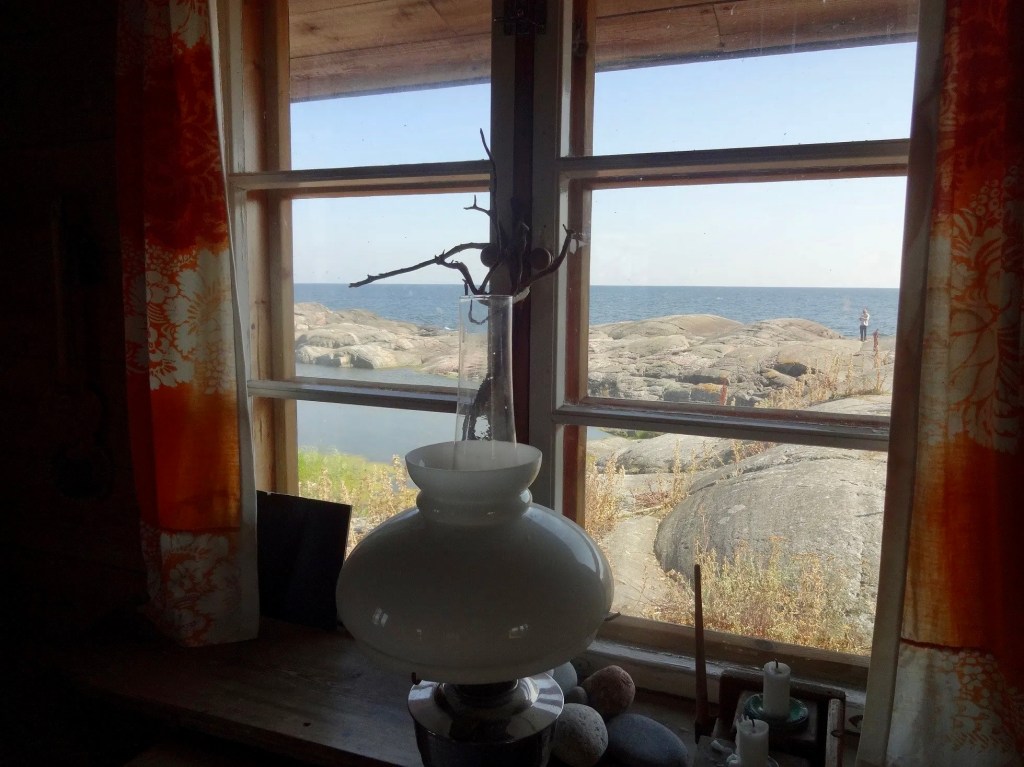
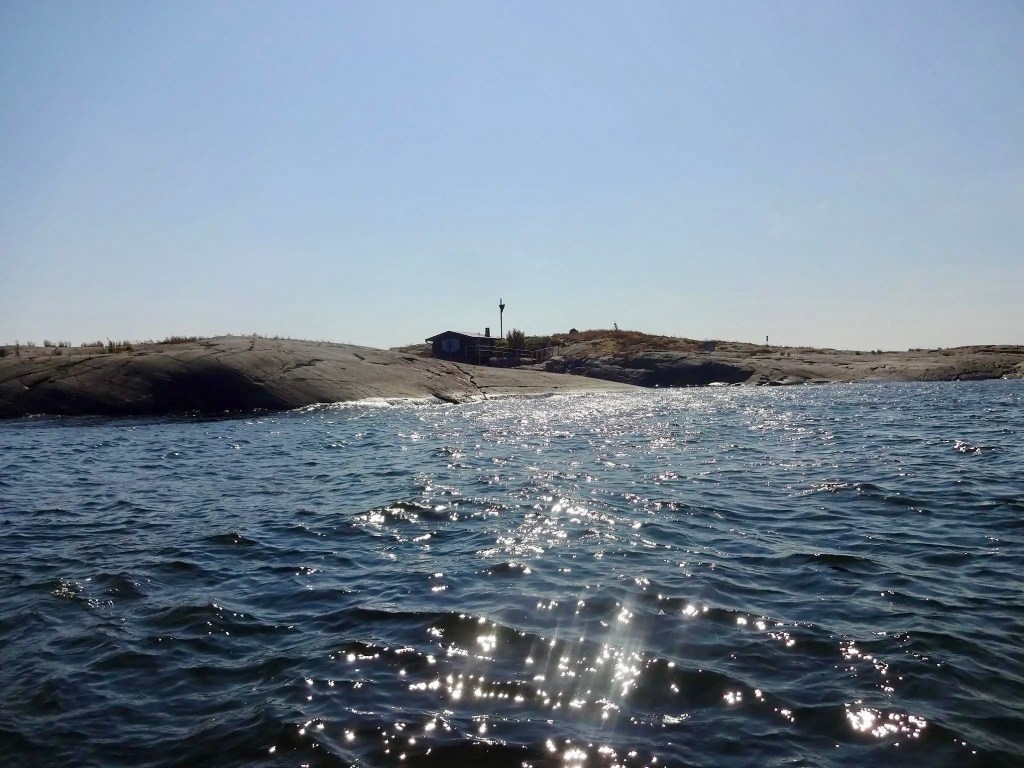
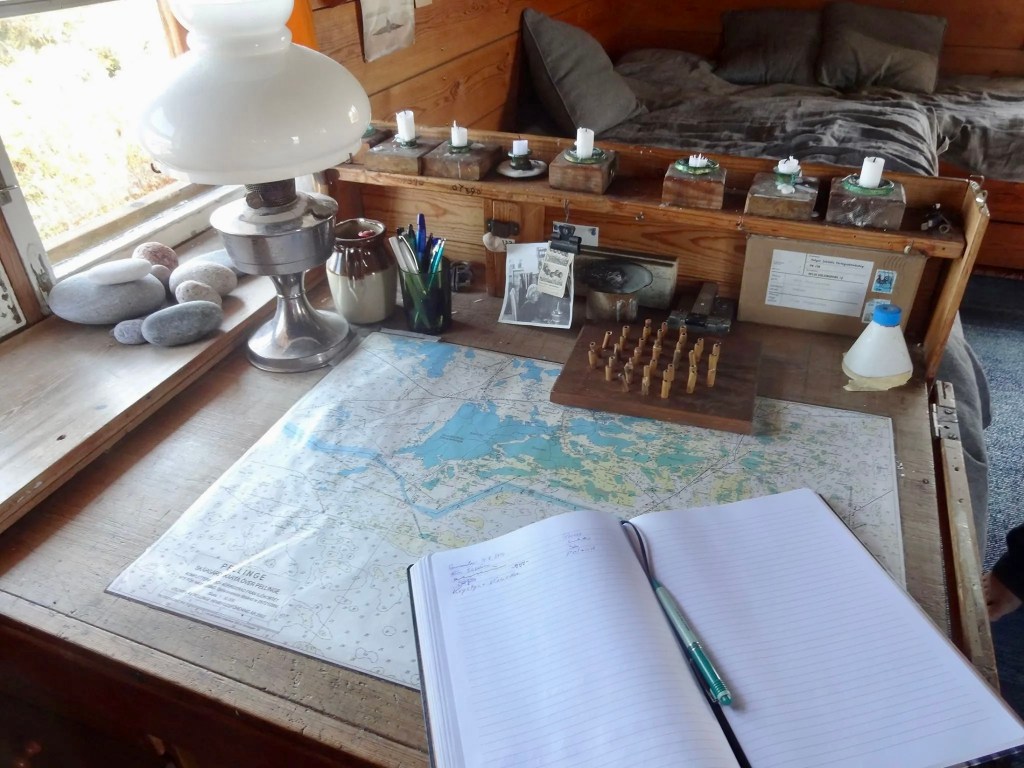
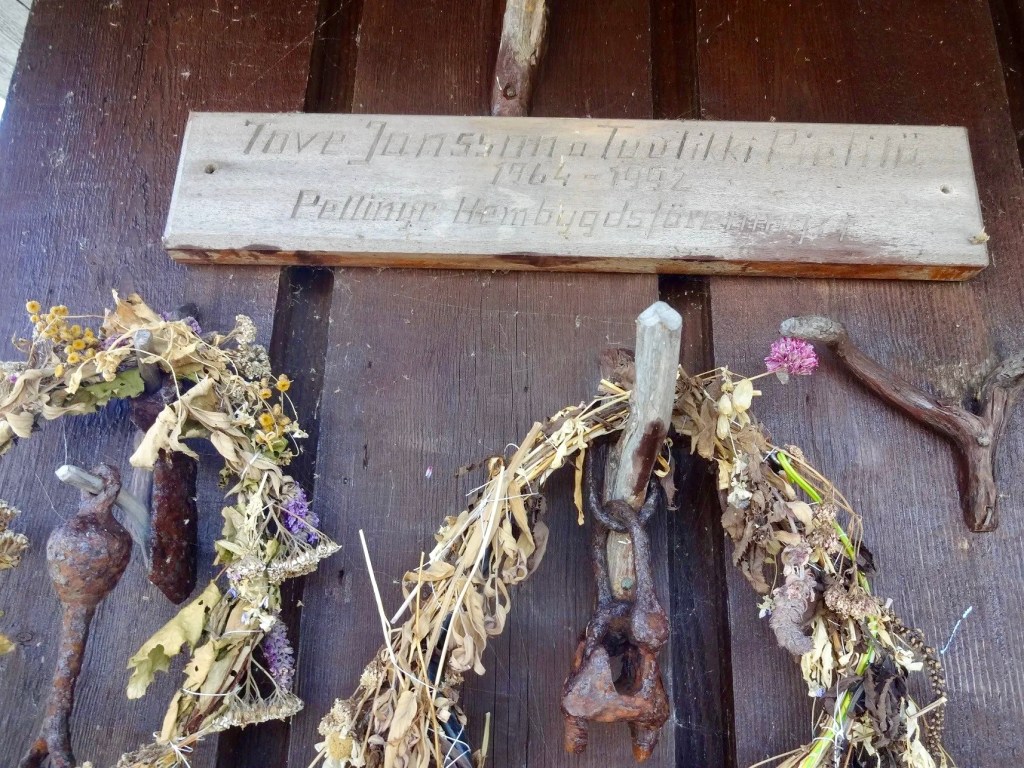
In August 2014 I travelled with my mum Krystyna Konecka, another fan of Tove Jansson, and our adventure started at the Hietaniemi cemetery at the family grave exactly on a day of Tove’s hundredth birthday. Her mother was the Swedish artist and graphic designer Signe Hammarsten, called Ham, and the father was the Finnish sculptor Victor Jansson, known in the family as Faffan. Afterwards we travelled by bus to Porvoo, 50 km east of Helsinki, and then to the island Klovharun in the Gulf of Finland. Even though it was incredibly hot and all arrangements have been confirmed weeks in advance, the trip could have been cancelled because of strong winds. And that’s how it was for Tove and her partner Tuulikki – when they left the bustle of the Capital life and moved to the island for the entire summer for nearly thirty years. Harsh reality of isolated island living, friends, uninvited guests and creativity.
In Porvoo we received a booklet with the Moomin Troll on the cover, made by Polish studio Se-ma-for. This was presented by Liisa Vähäkylä, Managing Director of Finnanimation. She and other members of Tove Jansson Society, along with the head Annikki Vähätalo attended, and we joined them at the opening of the exhibition of photographs of the artist by her friend of many years, artist C-G Hagström, whom I met earlier in London, and Tove’s younger brother Per Olov Jansson who is now 97 years old.
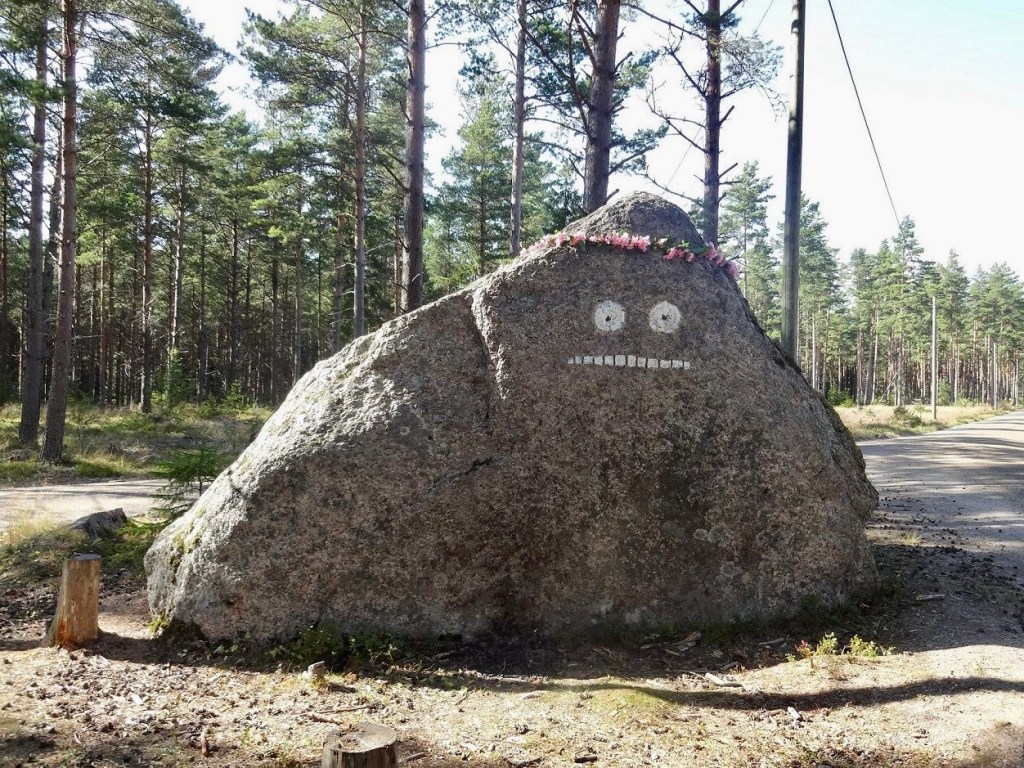
Another adventure awaited in a form of Gerd, wonderful Finnish Swede, living on one of the islands of the archipelago Pellinki, who had arrived in a big taxi to collect us. We made online arrangements for our trip from Porvoo to the small place on the coast. Gerd knew the archipelago, its history, people, roads, landscape. She stopped at the village store where Tove used to do basic shopping, coming by boat from her island Klovharun. On the way back, taking a slightly different route, she suggested stopping for a moment to see ‘Mårran’. And so we drove into the woods and suddenly there was a huge boulder in an unusual shape, a wreath of flowers on its top, with luminous painted eyes and teeth, and it was a happy Groke! A new Finnish word to add to my limited vocabulary.
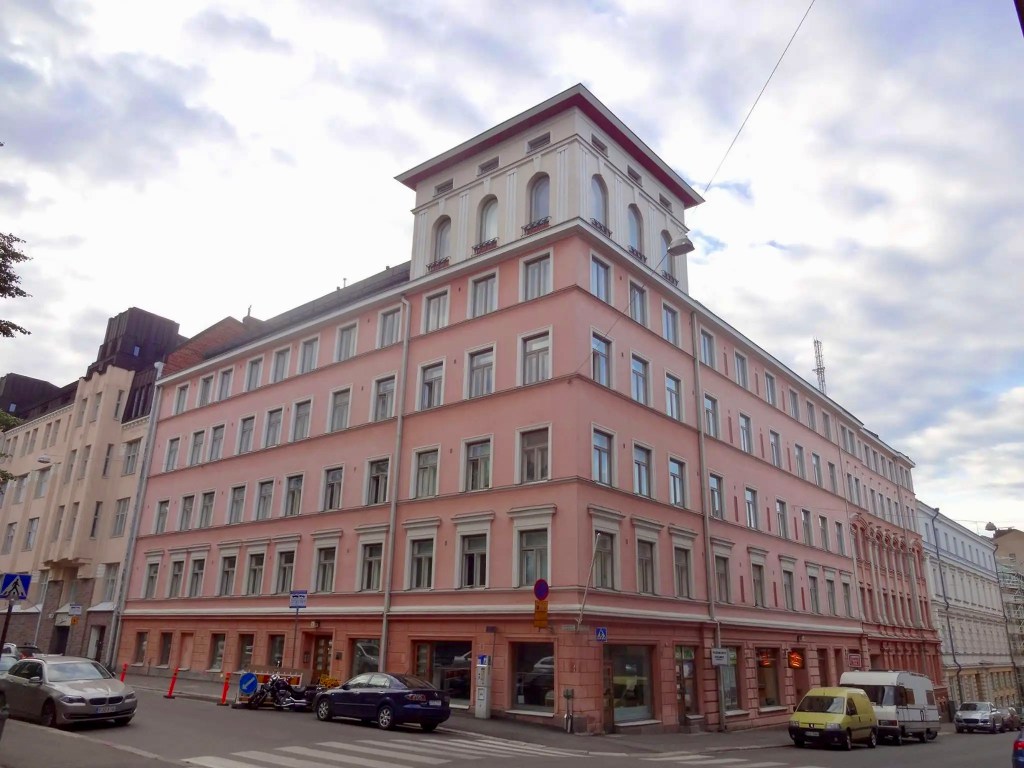
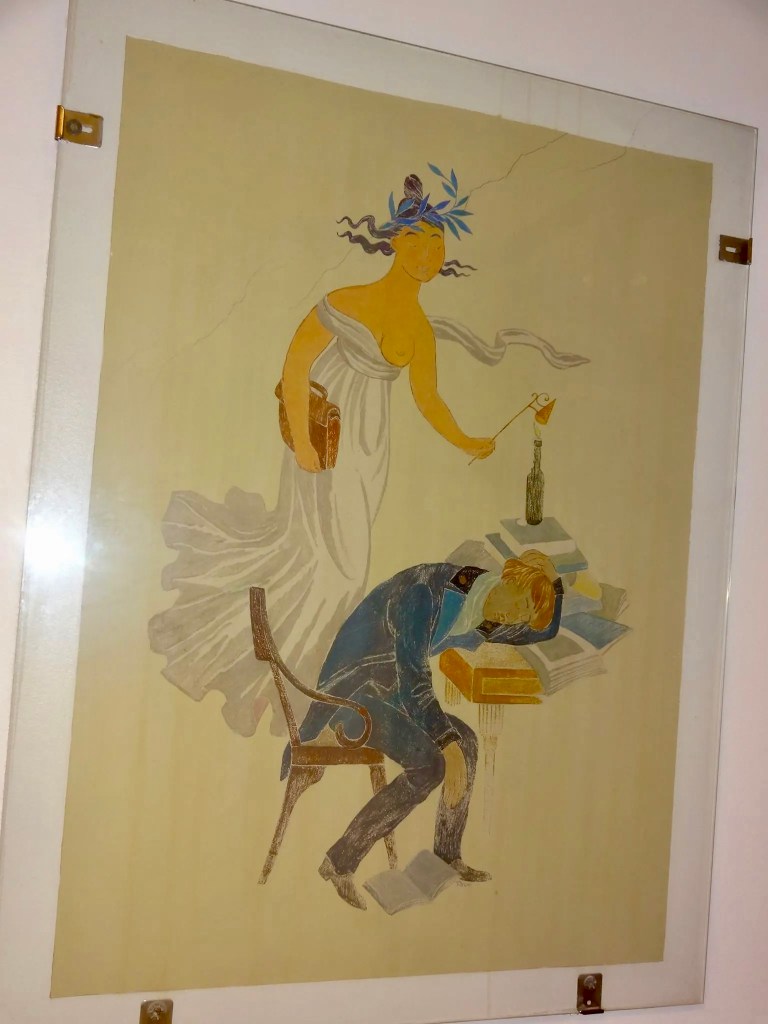
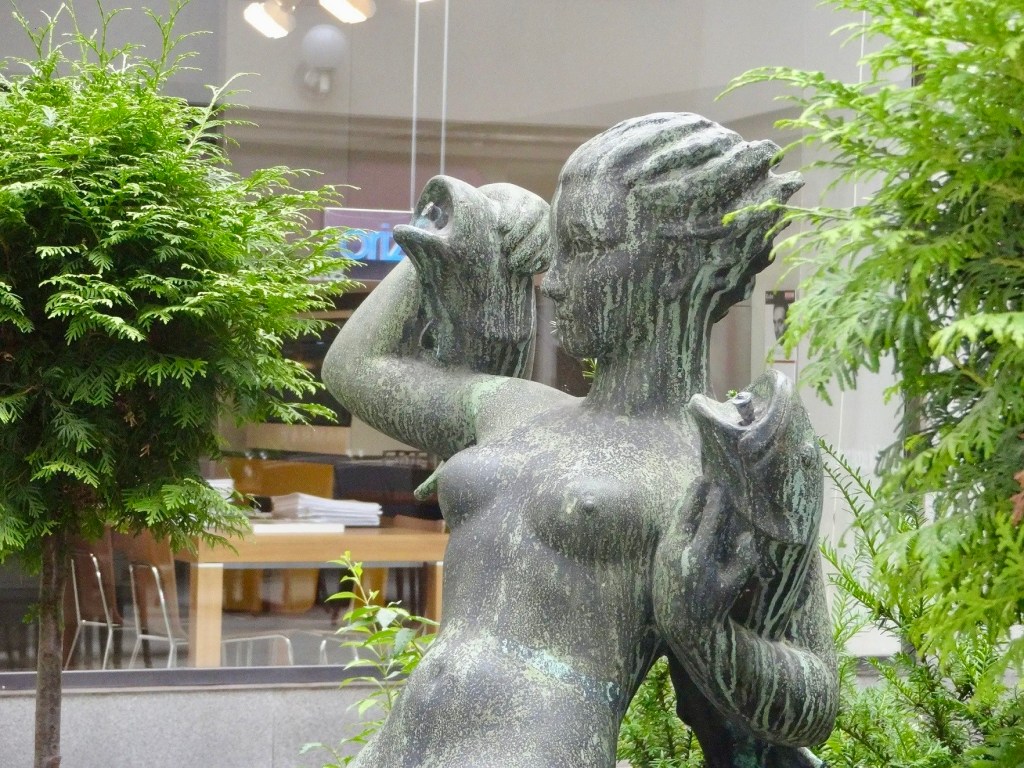
Walking all day in Helsinki added flavour and substance to what I’ve learnt about Tove’s life. The imposing building at Luotsikatu 4 was the childhood home and her parents’ studio. From there she often walked around the corner to buy tobacco for her father to what is now a tiny Café Signora. Then she lived at the House of Artists Lallukka from 1933 until 1942 when she moved to her first studio nearby, and two years later to a tower of a building at Ullanlinnankatu 1. The top floor flat was cold and drafty, the building hit in the bombings but the upper window showed a strip of sea. Tove lived and worked in this oasis until her death. The little gems scattered around the town include Domus Academica (providing student accommodation) which hosts two original murals painted by Tove, or a modest courtyard surrounded by modern office buildings. Hiding amongst the greenery a Viktor Jansson’s sculpture of Mermaid, modelled on young Tove, is standing in an empty fountain.
Various Finnish places have memories of the artist and she has a special place in many hearts, not only those who love Moomins.

 Nordic Lighthouse