The Winter Job by Antti Tuomainen

Helsinki, 1982. Recently divorced postal worker Ilmari Nieminen has promised his daughter a piano for Christmas, but with six days to go – and no money – he’s desperate.

A last-minute job offers a solution: transport a valuable antique sofa to Kilpisjärvi, the northernmost town in Finland. With the sofa secured in the back of his van, Ilmari stops at a gas station, and an old friend turns up, offering to fix his faulty steering wheel, on the condition that he tags along. Soon after, a persistent Saab 96 appears in the rearview mirror. And then a bright-yellow Lada. That’s when Ilmari realises that he is transporting something truly special. And when he realises he might be in serious trouble…

A darkly humorous and warmly touching suspense novel about friendship, love and death, The Winter Job flies a hundred and twenty kilometres an hour straight into the darkest heart of a Finnish winter night.

Just as indicated by its title, the book The Winter Job, published by Orenda books, is about working in winter conditions, and Antti Tuomainen honed his writing craft so well over the years in ten  books I’ve read so far that my expectations are reasonably high. Well, there’s snow, and quite a lot of it in different stages of movement across the country because that’s where the quiet hero Ilmari Nieminen is driving in a very unsatisfactory vehicle. Others follow him and his valuable cargo and battle with the harsh weather conditions. Then there is a powerful and dangerous snowplough which could  have appeared straight from the Norwegian movie In Order of Disappearance. If you haven’t seen it, please do as it definitely shows how to deal both with the snowstorms AND the emotions.

Other motifs in the novel also appealed to me. For example the egg-yolk-yellow of the iconic Soviet-era Lada, a car popular in the Eastern Bloc and quite reliable on the tough snowy Finnish roads. The colour – yellow – always makes me smile; however, tension and suspense in the sofa-pursuit tale didn’t feel so safe, especially as two people in the Lada seemed to have extremely revolutionary ideas. Yet, to be fair, if you’re a diehard communist and plotting a Marxist-Leninist revolution, you must be clear about your values: none of that ‘imperialist rubbish’ which also applies to the car makes.

The motivational song Eye of the Tiger keeps popping throughout the story, which I must admit is also on my Spotify list, but for completely unrelated reasons. I do not wish to get pumped up like Otto Puolanka. This particular cold-blooded man, one of Ilmari’s pursuers, is also keen on sharing his life philosophy, for example: ‘People were like warts: always in the wrong place at the wrong time and always unpleasant.’ Difficult to argue against this point if you’re on the road from the civilised cultural Helsinki to the village of Kilpisjärvi, famous for spectacular Northern Lights and a school fire that destroyed thousands of euro banknotes. This event is well ahead of The Winter Job’s timeline; but who knows, baddies are capable of various misdemeanours in different time zones.

Otto’s interesting views on human existence as such remind me of the enigmatic Icelandic author and protagonist Stella Blómkvist – Corylus Books quoting various wisdoms delivered by her mother. They all make sense of course. However, here wisdoms are more brash and straight to the brutal point, and they work in this harsh setting.

As Ilmari zigzags with his cargo there are two persons always on his mind: Helena, his twelve-year-old daughter, and ex-wife Tuulikki. He finds the whole journey across the country and just before Christmas a massive inconvenience. Ilmari has also an unexpected travelling companion: his old friend Antero Kuikka whom he hasn’t seen for many years, due to lack of communication and unfinished business dating back to their school days. Over the stressful hours of driving in the snow, in the dark and in the atmosphere of mistrust, both men open a little bit to each other. The process is quite painful but written by Tuomainen with empathy and humour. And then we can understand what real decent male friendship is and what could it mean exactly. This also gently explores loneliness as every character in the novel is affected by it. Are we able to deal with this feeling, this state of mind, this sad reality?

‘Seems you still don’t have many friends,’ he said.

Ilmari stopped in his tracks. ‘What’s that supposed to mean?’

‘Something happens that’s a bit difficult or uncomfortable, and even though it has nothing to do with the people around you, you start blaming them for the problem and insult them in the most profound and personal way.’

‘But why do we always show our worst sides to those nearest to us?’

Are you ready for the latest dose of dark humour, clever plotting, great characterisation and touching insights into the human soul? As always David Hackston translated Antti Tuomainen’s work in the most perfect nuanced way, and I can assure you that it will be a joy to read the novel any season of the year. The Winter Job (Bookshop.org UK) is out next week on 23rd October 2025.
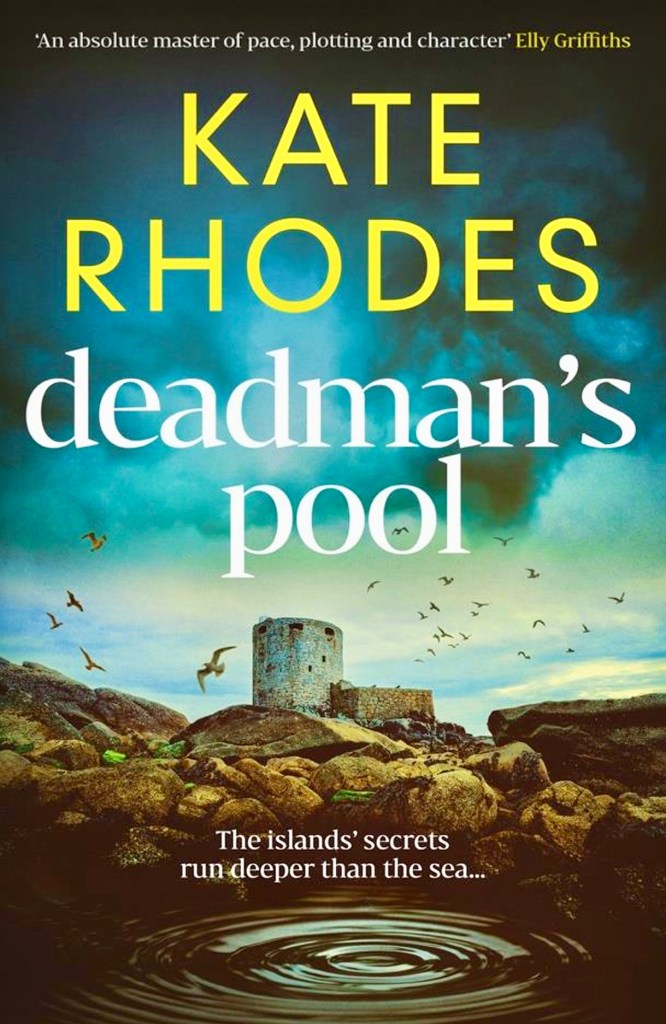
Deadman’s Pool by Kate Rhodes

Winter storms lash the Isles of Scilly, when DI Ben Kitto ferries the islands’ priest to St Helen’s. Father Michael intends to live as a pilgrim in the ruins of an ancient church on the uninhabited island, but an ugly secret is buried among the rocks. Digging frantically in the sand, Ben’s dog, Shadow, unearths the emaciated remains of a young woman.

The discovery chills Ben to the core. The victim is Vietnamese, with no clear link to the community – and her killer has made sure that no one will find her easily.

The storm intensifies as the investigation gathers pace. Soon Scilly is cut off by bad weather, with no help available from the mainland. Ben is certain the killer is hiding in plain sight. He knows they are waiting to kill again – and at unimaginable cost.

Screenshot

I made a basic rookie mistake, accidentally of course, and for first time since my teenage years, I read the last paragraph of Deadman’s Pool. However, I managed to keep it at the back of my mind as I got pulled into the unknown world of the Scilly Islands which after a while felt like the landscapes and realities of the distant Nordic areas. That was a strange experience as I’ve been to distant edges of Cornwall before but no further. My non-existent knowledge of the tightly knit communities on the archipelago ‘You can’t sneeze without someone knowing round here’ changed as I followed the story. The unique  location, shaped by unforgiving nature, sea and wind, becomes a character of its own in the series featuring my new favourite policeman / investigator. The islands are beautiful. Harsh living conditions make their inhabitants and the visitors truly appreciate the atmosphere, fauna and flora. They also created self-assured groups of people who feel they can trust and support one another as they’re bound by the same values, similar hardships, hope for the future. In this context of being close together, and dependable on the weather to reach mainland, it seems impossible that anything truly bad can happen: ‘Tight communities offer you protection, unless you have something to hide.’ Sure, past historical events never neglected the archipelago, perfect for pirates and smugglers. There were death, disease, riches, conflicts… But times and things change, yes?  Well…

DI Ben Kitto is a solid character and I would absolutely spend time in his company. In a way this is my chance to read seven earlier novels in Kate RhodesIsles of Scilly Mysteries series. The snippets of background information of how he had developed as a person and a professional were scattered around the story and inviting to reach for previous books. Having left  for London years ago and then returned home to settle down with his wife Nina and a year-old son, Ben feels deep connection to the place and the locals: ‘Reassurance is our biggest role in a community like this, where policing often feels more like social work.’  The most recent events shake his beliefs, though.

Second in command at the police station, he takes charge of the investigation as his superior (and sadly a micromanager) DCI Madron has to withdraw due to health reasons. Finding a young woman’s body on the uninhabited island, followed by  discovery of a barely alive baby left to die, push Ben to the brink as the hunt for the killer unfolds, and his personal life is affected in a terrible way. The difficult process of police work among friends, colleagues and neighbours forces him also to rethink the role of people with authority and whether trust can be given or earned: ‘The islands’ mindset of rugged individualism doesn’t sit well with law and order.’ Additionally, islands’ youngsters claim that there is danger lurking underneath the surface of safe environment, local power holders and conspiracy theories about human trafficking. They talk about children brought from poor countries and then sold as slaves. Which in itself is horrifying.

Kate Rhodes brilliantly creates strong characters, believable crimes and realistic island locations that perfectly evoke Cornwall’s complex history and stunning geography. Haunting mood of Deadman’s Pool brings other distinct locations to mind, such as Faroe Islands or isolated places in Iceland or northern Norway. The plotting is superb, with many strands of emotion that culminate in chilling realisation that evil might live very near us. Deadman’s Pool, published by Orenda Books, is out on 25th September and can be pre-ordered now.  

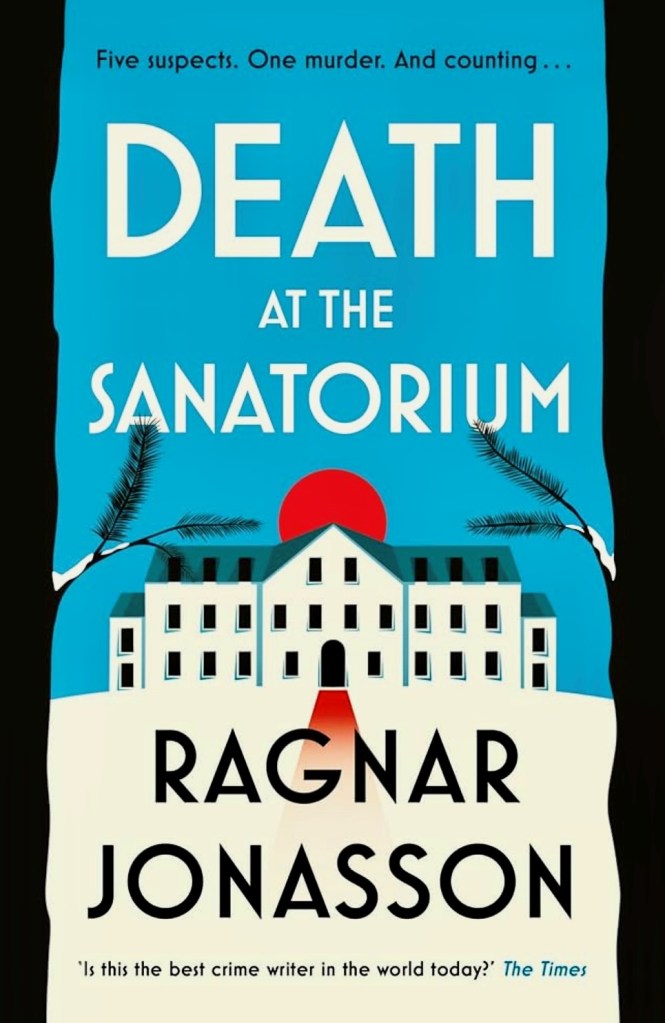
Death at the Sanatorium by Ragnar Jónasson

A young criminologist Helgi Reykdal is finishing his MA dissertation on so called ‘deaths at the sanatorium’, a thirty-years-old case. Stuck in an unhappy relationship and unable to decide on own future in the UK or in Iceland, Helgi focuses instead on what he thinks were murders and begins to follow his far-fetched theory.

Old sanatoria are not fun places, especially if they are in quite isolated locations and provide care for very ill or dying people. Akureyri tuberculosis sanatorium was such a place, as it stood high up in the mountains in the northern Iceland, surrounded by beautiful nature and very dark memories. In the 1950’s there were still many cases of TB and the medical staff did the best they could to ease their patients’ pain, though death and suffering were always present. In 1983 only one wing of the hospital building remained open to allow conducting of the research, and only six employees worked there: two doctors, two nurses, a caretaker and a young research assistant. When one of them, nurse Yrsa, was found dead in horrible circumstances in her office, others initially became suspects, and an ambitious detective Sverrir Eggertsson was called from Reykjavik. He conducted investigation, assisted by more experienced Hulda Hermannsdóttir, also from CID in the capital, aiming to wrap up the case as quickly as possible. Hulda, known from a previous series of Ragnar Jónasson’s books, wasn’t so keen to follow flaky evidence from a nurse Tinna but had no say. A caretaker Broddi was arrested. Then a body of a doctor was found on the ground. It seemed a suicide, and so Sverrir concluded the investigation. Case was closed but not exactly forgotten.

Nearly thirty years later Helgi Reykdal, a young criminologist finishing his MA dissertation on so called ‘deaths at the sanatorium’, had decided to re-examine a cold case from a purely academic perspective, armed with the latest criminological theories. Fascinated by the classic whodunnit detective stories, Helgi started digging through old documents and news reports, and reluctantly made contact with the sanatorium’s members of staff who in a meantime moved to Reykjavik. Although his intention wasn’t to become an investigator in this situation, his dedication proved very useful.

I appreciated the complex intertwined history between the main characters in the story spanning nearly sixty years and shown from different perspectives. Here the author brilliantly places opinions and thoughts in the social context. Personal experiences and feelings at the time influenced the explanation of possible reasons behind two deaths which Helgi considered to be murders. Small clues are thrown around the novel and any self-respecting fan of Agatha Christie would be able to draw lines between them. Aided by the unsettling connections between people now and then, the sense of foreboding and danger never leaves the reader, and as Helgi keeps working on his semi-investigation, the tension steadily grows. I must admit it was difficult to warm up to the main characters but I understood why they behaved the way they did, regardless of what their moral compasses could have shown. For example Helgi’s uneasy relationship with his girlfriend Bergthóra affects his indecisiveness and how he deals with life generally, or why Braggi’s sense of injustice and despair colour the novel’s mood. Overall Death at the Sanatorium, translated by Victoria Cribb, is an engaging read in Jónasson’s trademark style, combining classic solid ‘technical’ analysis of crime and the strong sense of place.