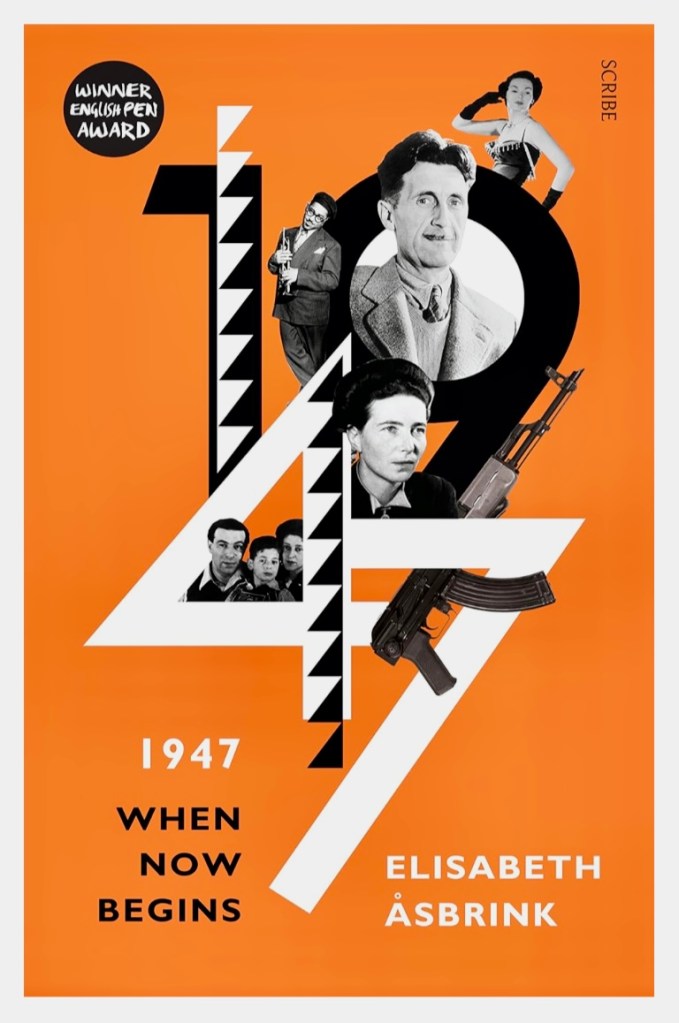
1947: When Now Begins by Elisabeth Åsbrink

My first ever review for European Literature Network – 1947: When Now Begins by Elisabeth Åsbrink was published eight years ago. I’m feeling a touch nostalgic as I look through old reviews but I must also admit that Elisabeth Åsbrink‘s book has been on my mind for the last two years. Hence I would like to recommend it again. The world is changing rapidly and we must learn from the past – to do good.

In 1947, everything is changing. The world is set to become a very different place …

Christian Dior is designing his fabulous, sumptuous New Look dresses. Thelonius Monk is playing his ground-breaking jazz compositions and Billie Holliday is singing the blues. Grace Hopper, appointed as a mathematician in the US Navy, finds an actual computer bug: a moth stuck in a massive mainframe. Simone de Beauvoir longs for her American lover and writes The Second Sex, later hailed as feminist bible. Eric Arthur Blair, better known as George Orwell, is coughing his guts out as he works on 1984 on the Scottish island of Jura.

On the other side of the still invisible East – West border, Mikhail Kalashnikov finally gets the go-ahead to mass produce his deadly invention: a gas-operated machine gun. The Cold War map is reduced to black and white … nuances of grey: non-existent. British and American powers decide the fate of thousands of Jews and fight against communist influence. The Soviet Union hardens its ideology.

While the world tries to heal itself and for the most part cries ‘never again, never again’, the Nuremberg Trials are in full swing and finally there is a chance that a new crime of genocide will be recognised. Other opinions and thoughts allow the continuing flight of old Nazis to Argentina, thanks to their new sympathisers, who often gather in the Swedish town of Malmö, and spread the written Fascist credo like fire. Anxiety, cynicism, cold legal calculations, power games and deeply-rooted convictions provoke the creation of the CIA and underlie the origins of the Muslim Brotherhood and ISIS, based on Hassan Al-Banna’s ideology. The UN Committee has only four months to decide future of Palestine and in these tumultuous times must consider diametrically conflicting wishes and demands.

Amid the post war chaos and pain, amongst thousands of refugees, liberated prisoners and emaciated Jews, a ten-year-old Hungarian boy, Joszef, once called György, is in Ansbach in southern Germany, in the American zone. In a camp for children whose parents have been killed by Nazis, he needs to decide whether to travel to Palestine and start a new ‘Zionist’ life, or to return to Budapest, the city that was his home as well as the source of his persecution. His is also the personal story of the author: Joszef will eventually escape to Sweden where his daughter Elisabeth will be born.

The story moves through a devastated Europe, to the mighty US, which is launching the Marshall Plan, to a fragile Middle East, a torn-apart Indian subcontinent with millions of hurting Muslims, Hindus and Sikhs; it carries us seamlessly along. It’s a fascinating piece of non-fiction that reads like a vivid novel: the evolution of the world on a huge scale reveals small fissures through which we observe tiny moments in private lives.

Swedish author and journalist Elisabeth Åsbrink has written four books which have, between them, won the August Prize, the Danish-Swedish Cultural Fund Prize, and Poland’s Kapuscinski Prize. 1947: When Now Begins is her first book to appear in English, superbly translated by Fiona Graham, a winner of the English Pen Award. Åsbrink has created an exceptional and gripping chronicle of this one momentous post-Second World War year; it combines major events with small, individual histories of the people affected by what had happened only a few years previously, and what would continue to affect future generations. Åsbrink uses both snapshots and longer musings to ask important questions; yet she keeps her own emotions in check, barely allowing them to surface in the sea of pain, despair, unspeakable crimes and the occasional hope. She admits to attempting to define herself and her own authenticity through her detailed survey of the events of 1947: Grief over violence, shame over violence, grief over fame. In this 70th anniversary year, the book is in no way just a historical record: instead its themes are contemporary, valid, and urgent.

1947: When Now Begins is an extraordinary book, based on an incredible amount of research, presented in a very sober, sensitive way. It invites us to go in search of even more information. A highly recommended must-read.

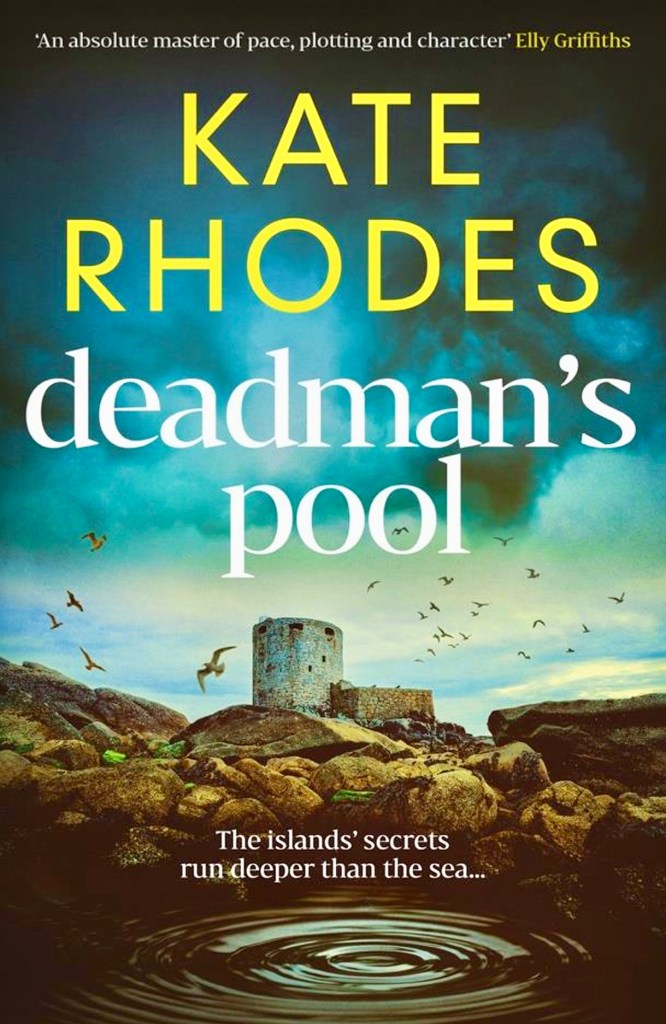
Deadman’s Pool by Kate Rhodes

Winter storms lash the Isles of Scilly, when DI Ben Kitto ferries the islands’ priest to St Helen’s. Father Michael intends to live as a pilgrim in the ruins of an ancient church on the uninhabited island, but an ugly secret is buried among the rocks. Digging frantically in the sand, Ben’s dog, Shadow, unearths the emaciated remains of a young woman.

The discovery chills Ben to the core. The victim is Vietnamese, with no clear link to the community – and her killer has made sure that no one will find her easily.

The storm intensifies as the investigation gathers pace. Soon Scilly is cut off by bad weather, with no help available from the mainland. Ben is certain the killer is hiding in plain sight. He knows they are waiting to kill again – and at unimaginable cost.

Screenshot

I made a basic rookie mistake, accidentally of course, and for first time since my teenage years, I read the last paragraph of Deadman’s Pool. However, I managed to keep it at the back of my mind as I got pulled into the unknown world of the Scilly Islands which after a while felt like the landscapes and realities of the distant Nordic areas. That was a strange experience as I’ve been to distant edges of Cornwall before but no further. My non-existent knowledge of the tightly knit communities on the archipelago ‘You can’t sneeze without someone knowing round here’ changed as I followed the story. The unique  location, shaped by unforgiving nature, sea and wind, becomes a character of its own in the series featuring my new favourite policeman / investigator. The islands are beautiful. Harsh living conditions make their inhabitants and the visitors truly appreciate the atmosphere, fauna and flora. They also created self-assured groups of people who feel they can trust and support one another as they’re bound by the same values, similar hardships, hope for the future. In this context of being close together, and dependable on the weather to reach mainland, it seems impossible that anything truly bad can happen: ‘Tight communities offer you protection, unless you have something to hide.’ Sure, past historical events never neglected the archipelago, perfect for pirates and smugglers. There were death, disease, riches, conflicts… But times and things change, yes?  Well…

DI Ben Kitto is a solid character and I would absolutely spend time in his company. In a way this is my chance to read seven earlier novels in Kate RhodesIsles of Scilly Mysteries series. The snippets of background information of how he had developed as a person and a professional were scattered around the story and inviting to reach for previous books. Having left  for London years ago and then returned home to settle down with his wife Nina and a year-old son, Ben feels deep connection to the place and the locals: ‘Reassurance is our biggest role in a community like this, where policing often feels more like social work.’  The most recent events shake his beliefs, though.

Second in command at the police station, he takes charge of the investigation as his superior (and sadly a micromanager) DCI Madron has to withdraw due to health reasons. Finding a young woman’s body on the uninhabited island, followed by  discovery of a barely alive baby left to die, push Ben to the brink as the hunt for the killer unfolds, and his personal life is affected in a terrible way. The difficult process of police work among friends, colleagues and neighbours forces him also to rethink the role of people with authority and whether trust can be given or earned: ‘The islands’ mindset of rugged individualism doesn’t sit well with law and order.’ Additionally, islands’ youngsters claim that there is danger lurking underneath the surface of safe environment, local power holders and conspiracy theories about human trafficking. They talk about children brought from poor countries and then sold as slaves. Which in itself is horrifying.

Kate Rhodes brilliantly creates strong characters, believable crimes and realistic island locations that perfectly evoke Cornwall’s complex history and stunning geography. Haunting mood of Deadman’s Pool brings other distinct locations to mind, such as Faroe Islands or isolated places in Iceland or northern Norway. The plotting is superb, with many strands of emotion that culminate in chilling realisation that evil might live very near us. Deadman’s Pool, published by Orenda Books, is out on 25th September and can be pre-ordered now.  

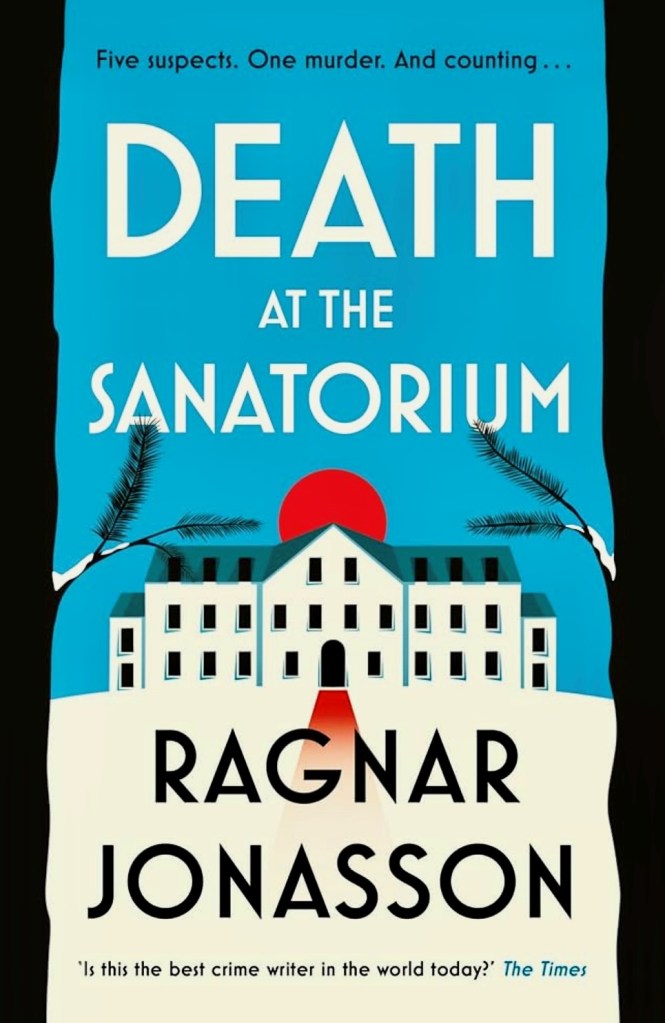
Death at the Sanatorium by Ragnar Jónasson

A young criminologist Helgi Reykdal is finishing his MA dissertation on so called ‘deaths at the sanatorium’, a thirty-years-old case. Stuck in an unhappy relationship and unable to decide on own future in the UK or in Iceland, Helgi focuses instead on what he thinks were murders and begins to follow his far-fetched theory.

Old sanatoria are not fun places, especially if they are in quite isolated locations and provide care for very ill or dying people. Akureyri tuberculosis sanatorium was such a place, as it stood high up in the mountains in the northern Iceland, surrounded by beautiful nature and very dark memories. In the 1950’s there were still many cases of TB and the medical staff did the best they could to ease their patients’ pain, though death and suffering were always present. In 1983 only one wing of the hospital building remained open to allow conducting of the research, and only six employees worked there: two doctors, two nurses, a caretaker and a young research assistant. When one of them, nurse Yrsa, was found dead in horrible circumstances in her office, others initially became suspects, and an ambitious detective Sverrir Eggertsson was called from Reykjavik. He conducted investigation, assisted by more experienced Hulda Hermannsdóttir, also from CID in the capital, aiming to wrap up the case as quickly as possible. Hulda, known from a previous series of Ragnar Jónasson’s books, wasn’t so keen to follow flaky evidence from a nurse Tinna but had no say. A caretaker Broddi was arrested. Then a body of a doctor was found on the ground. It seemed a suicide, and so Sverrir concluded the investigation. Case was closed but not exactly forgotten.

Nearly thirty years later Helgi Reykdal, a young criminologist finishing his MA dissertation on so called ‘deaths at the sanatorium’, had decided to re-examine a cold case from a purely academic perspective, armed with the latest criminological theories. Fascinated by the classic whodunnit detective stories, Helgi started digging through old documents and news reports, and reluctantly made contact with the sanatorium’s members of staff who in a meantime moved to Reykjavik. Although his intention wasn’t to become an investigator in this situation, his dedication proved very useful.

I appreciated the complex intertwined history between the main characters in the story spanning nearly sixty years and shown from different perspectives. Here the author brilliantly places opinions and thoughts in the social context. Personal experiences and feelings at the time influenced the explanation of possible reasons behind two deaths which Helgi considered to be murders. Small clues are thrown around the novel and any self-respecting fan of Agatha Christie would be able to draw lines between them. Aided by the unsettling connections between people now and then, the sense of foreboding and danger never leaves the reader, and as Helgi keeps working on his semi-investigation, the tension steadily grows. I must admit it was difficult to warm up to the main characters but I understood why they behaved the way they did, regardless of what their moral compasses could have shown. For example Helgi’s uneasy relationship with his girlfriend Bergthóra affects his indecisiveness and how he deals with life generally, or why Braggi’s sense of injustice and despair colour the novel’s mood. Overall Death at the Sanatorium, translated by Victoria Cribb, is an engaging read in Jónasson’s trademark style, combining classic solid ‘technical’ analysis of crime and the strong sense of place.

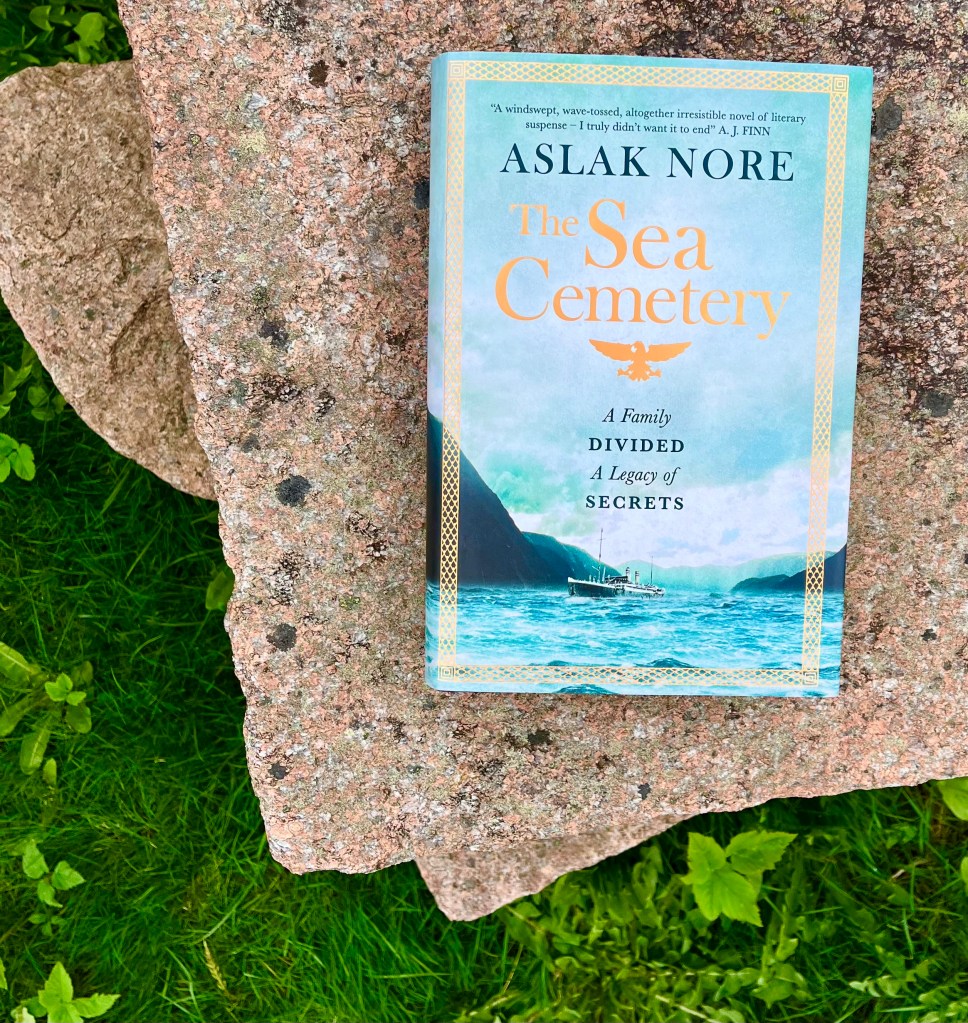
The Sea Cemetery by Aslak Nore

What an incredible novel! From the very first pages I knew that The Sea Cemetery / Havets kirkegård, a literary thriller and family saga combined in one huge tome, would take me on an unforgettable voyage through the recent history of Norway and its connections with the Europe, and questions about individual choices made by the main characters. The universal human issues are hidden just below the surface of the dramatic story about legacy and control, and consequences of hidden secrets in the thriller set among the harsh Norwegian natural beauty.

Aslak Nore’s inspiration came from the authentic sea disaster during the WWII when Norway was under German occupation. Sinking of the Norwegian passenger ship DS Prinsesse Ragnhild in 1940 was the worst wartime tragedy. The ship struck a mine and disappeared under the water between Bodø and Lofoten in the North, with loss of many lives.

Vera Lind, writer and matriarch of a rich and powerful dynasty, commits suicide on the family stunning estate near Oslo. She has been writing memoirs while trying to deal with her own and family’s trauma, going back to the times of wartime shipping disaster in October 1940 that had killed her husband and hundreds of other passengers and German soldiers. However, her earlier attempts to publish the novel were met with fierce opposition by Olav, her son and heir to the fortune. Forty years later in 1970 the manuscript vanished and Vera was placed under a Guardianship Order. Something strange has taken place.  

Not everyone wants to dig into the past to uncover shocking truth but her granddaughter Sasha (Alexandra) is determined to find out what has happened to Vera. Her husband Mads and siblings Sverre and Andrea don’t want to rock the boat, so to speak, and so she does it alone, although Johnny Berg, a journalist and discredited Norwegian secret service agent, decides to help her along the way. This semi-professional relationship is tricky. Sasha is torn between loyalty to her strong-willed father Olav and the family, and the need to ‘avenge’ her grandmother. Berg, apart from his personal motives to search for the manuscript, has also signed the contract to write biography of Hans Falck, a charismatic doctor and an adventurer, notorious for his personal life and famous for his humanitarian work in the Middle East. Sasha’s cousin Hans is from Bergen and convinced that Vera bequeathed the fortune to him and his children. There is no love lost between two branches of the Falck family: in Bergen on the beautiful Norwegian coast and in Oslo, close to the country’s financial centre.  

So far so complex regarding the family ties. However, the power struggles and different sentiments become much more evident as the novel unravels. I enjoyed the occasionally uneven tempo of this epic tale. Hunt for Vera’s missing testament and manuscript was shown through eyes of main players and as a novel-in-novel process, and my view of various people shifted. It’s right to say that ‘History is power. Control the narrative, and you wield the power.’ Chapters exploring conflict in Kurdistan and Afghanistan added both clarity and some confusion necessary to paint a picture of intertwined connections within the family, known only to those who make the decisions. The geopolitical context is relevant as the author also took on the most sacred Norwegian values, such as patriotism and trust, and explored them in the view of family secrets.

The Sea Cemetery, in superb translation by Deborah Dawkin, culminates in a brilliant and completely unexpected twist that paves the way for the second part of this trilogy. It was published by MacLehose Press in 2024. Now I am really looking forward to reading The Heirs of the Arctic / Ingen skal drukne.

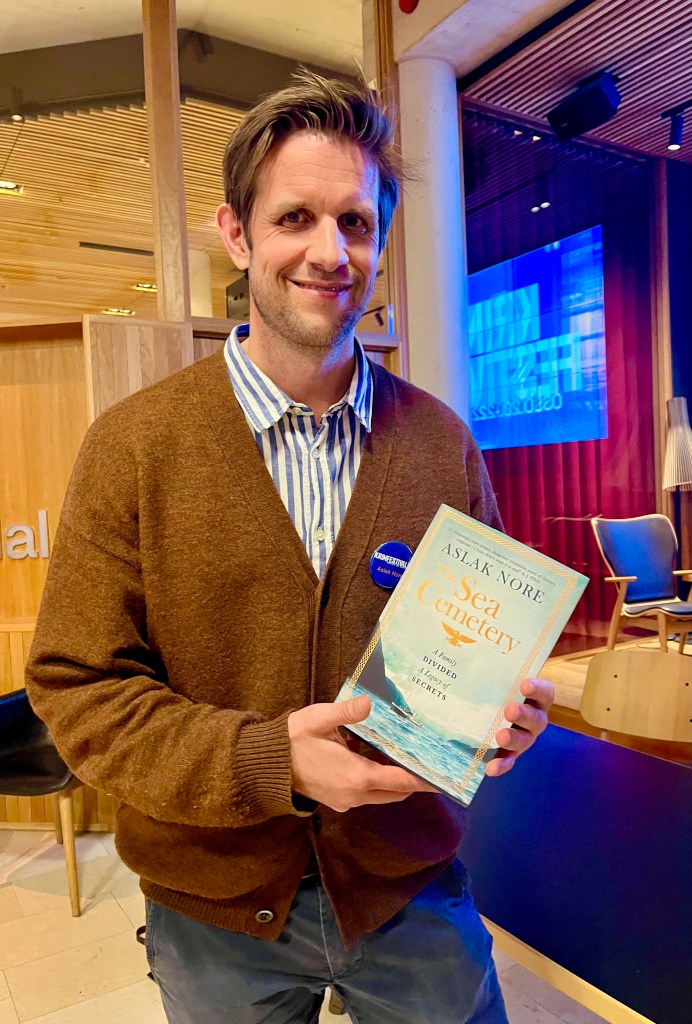
Aslak Nore with The Sea Cemetery during Krimfestivalen 2025

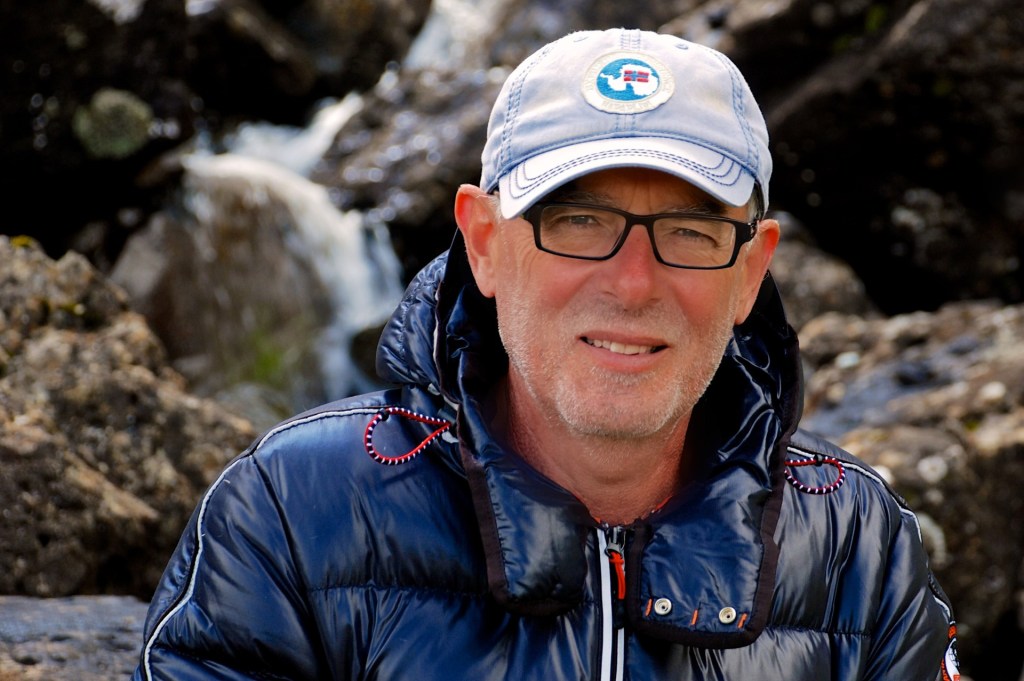
Aslak Nore (b. 1978) grew up in Oslo. He was educated at the University of Oslo and the New School for Social Research in New York and has served in Norway’s elite Telemark Battalion in Bosnia. A modern-day adventurer, Nore has lived in Latin America and worked as a journalist in the Middle East and Afghanistan. He has published several non-fiction books and four novels. Wolfsangel (2017) was a national bestseller and won the Riverton Prize for best crime novel in Norway in 2018. The Cemetery of the Sea (2021) is the first novel in an epic literary thriller series and a huge international success and bestseller. Nore lives in Provence, France. © Winje Agency

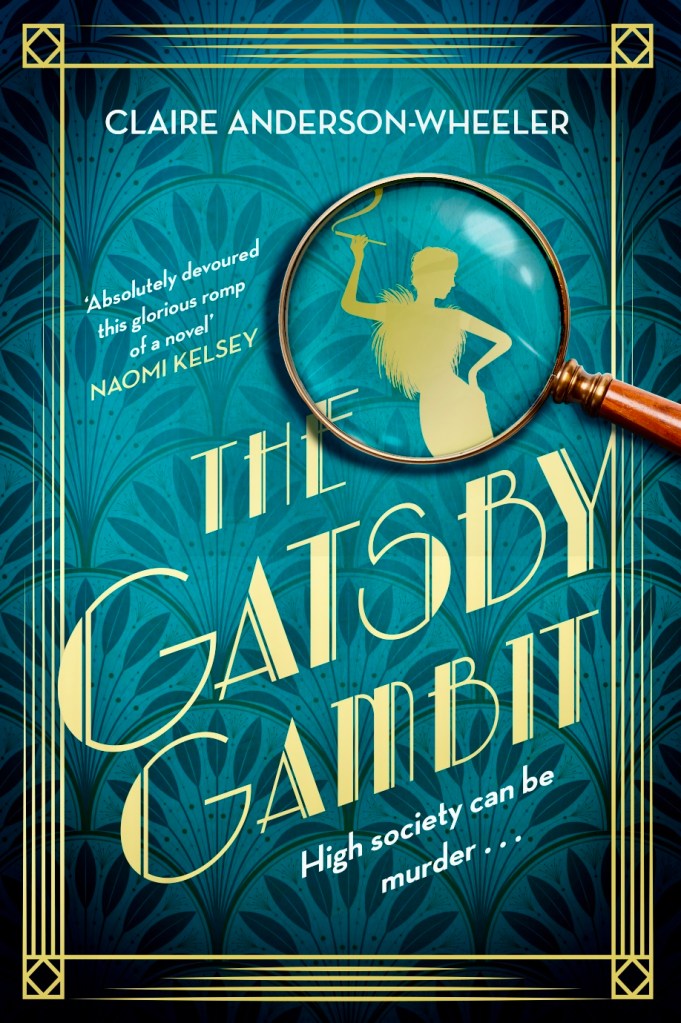
The Gatsby Gambit by Claire Anderson-Wheeler

Freshly twenty-one and sporting a daring new bob, Greta Gatsby – younger sister to the infamous Jay – is finally free of finishing school. An idyllic summer stretches ahead of her at the Gatsby Mansion, the jewel of West Egg. But when Greta arrives at the secluded white-stone estate bathed in the late-afternoon light, she finds she isn’t the only visitor. Jay is hosting an intimate gathering of New York’s fashionable set: Daisy and Tom Buchanan, along with his brother Edgar, Nick Carraway and Jordan Baker.

That evening, the guests enjoy a candelabra-lit dinner party. That night, they dance to the lilt of the gramophone. The next morning, one of them is missing. Murder has come to West Egg, the warm breeze tainted by scandal, betrayal and secrets. Turning sleuth isn’t how Greta meant to spend her summer – but what choice does she have when one of them could be next?

Many of us fell in love with Jay Gatsby and the opulent crazy world he represented, with the social issues bubbling under the surface of Jazz Age fun and apparent freedom. While reading The Gatsby Gambit it will be impossible not to refer to the original classic which was published exactly a hundred years ago in April1925. Francis Scott Fitzgerald’s The Great Gatsby had romance, unattained love, sharp look at social class, conflict between inherited and self-made wealth. And most of all drama and inspiration. However, the novel by Claire Anderson-Wheeler is a beauty of storytelling in its own right.

Here, this environment, seen from Greta’s perspective, acquires more depth and clarity away from the music, illegal drinking, dancing and flapper dresses which were reserved mostly for the rich at the time. Of course the glitz is not far away. She discovers how divided the society is by its norms, racial attitudes and money, mostly by people convinced of their own greatness, for example Tom Buchanan who was above rules and laws, and a fan of: ‘the American Protective League […] a self-appointed group of vigilantes who had organized “slacker raids” during the war, rounding up other civilians they suspected of draftdodging.’

Greta Gatsby’s existence has been quite sad, secure and privileged, and lacking in deep meaningful relationships, apart from the one with her brother Jay, seven years older than her: ’Greta had lived under Jay’s guardianship since their parents had died fifteen years ago.’ Completing her formal education and returning to Gatsby home, a fabulous mansion at West Egg brings contrasting emotions: joy of returning to her brother, a thrilling possibility of freedom and fearing ‘for a new set of restrictions – the world Jay had bought them entry into had already shown itself to be heavy with codes and rules.’ Her concern is the possible boring future as a trophy wife, married into the family with strict rules, just like Daisy Buchanan’s existence.

Rich, charming and inscrutable Jay has always been in love with Daisy and now it’s the time that Greta realises how strong his devotion is. In the hours and days following a discovery of a dead body on his yacht, she learns of secrets and scandals, and of intricacies of his relationships with his friends and people around him, mostly those who take advantage of his wealth: spectacular parties and the influence. Death of person in Jay’s close circle sends shock waves. Initially everyone, including the police, assumes it was suicide. Greta feels that something is not quite right, begins to think of all tiny details that don’t fit and follows her intuition to try and explain what has happened. Her ‘investigation’ makes her experience some dangerous situations but that doesn’t stop her. Her parents brought her up to believe that ‘mind was a terrible thing to waste’ and she is also convinced that life shouldn’t be wasted either. She also remembers that her ‘ mother had been a keenly intelligent woman, and one of those lucky, all-too-rare ones whose intelligence had been welcomed – cherished, even – by her spouse. But she had never failed to remind her daughter that the world wasn’t always so accommodating. A woman’s mind is her sword, she’d say to Greta […] Keep it sharp, she’d add, and keep it hidden.’

Claire Anderson-Wheeler’s take on the dazzling and dangerous era and revisiting a famous location where the iconic hero played with his life is a fantastic example of passion and knowledge. I loved the strong determined heroine who wanted to find the truth and create a purpose for herself. In a process she also learnt of the way the less privileged people had to ascertain their place in the society, and fight for basic existence. This mix of historical context and fun jazzy murder investigation, plus clever twisted plotting sparkled with Agatha Christie’s comments from the men in the story, makes The Gatsby Gambit a very interesting homage to the classic masterpiece, and a joy to read.   

Thank you to Hannah Born of FMcM for the invitation to join the blog tour.

Happy New Year 🥳

Good evening to you all… Hope 1st January has been a good relaxing day. I went for a long walk in the forest with my son, we fell down several times on the icy paths covered by new not-snowman-type snow, then we helped our best friends with snow shovelling and had hot dogs by a fire in the cold white garden. Feeling lazy and content I want to recommend links to the pages that you should or could follow, pages by wonderful bloggers who enjoyed the novel below…

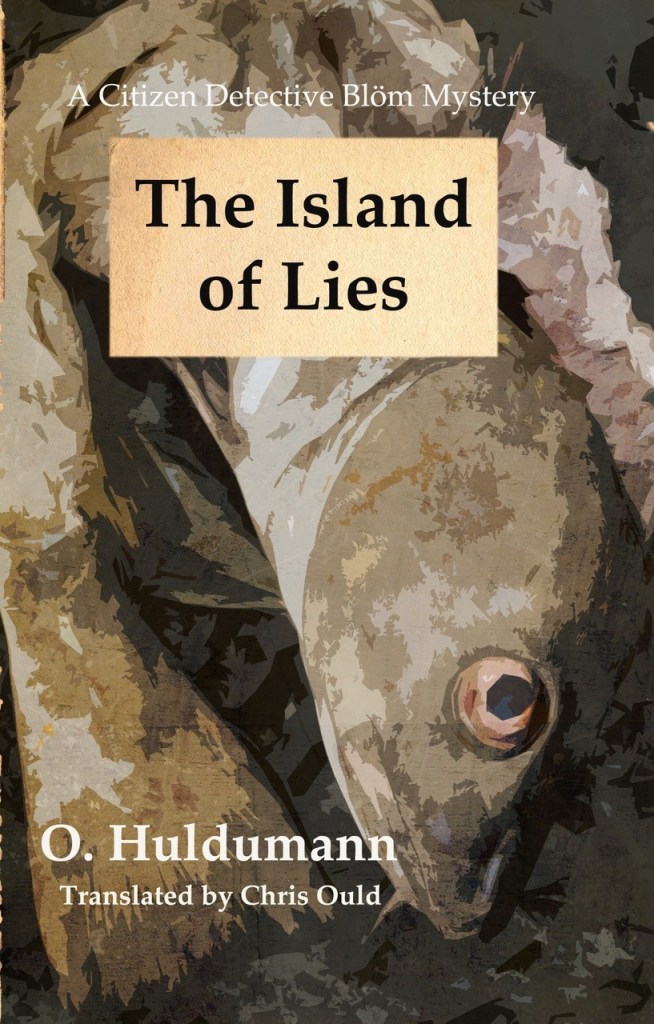
The new year 2025 is very young and full of promises for all of us as we look into the future and want the goodness of the world to win. Again and again. Just like it often happens in the books of various types, and especially in the crime fiction genre. And right now I want to go back to the recent past for long enough to enjoy the strange marvellous beauty of Chris Ould’s latest translation: The Island of Lies by the mysterious O. Huldumann, published a couple of months ago. I organised a blogtour for this Nordic Noir book and so did not write a review for my own blog. However, if I may I would love to share what our favourite Scandi Brit / Icelander Quentin Bates wrote here: The Huldumann Enigma.

The Island of Lies follows Citizen DetectiveCitizen Detective, also translated by Chris Ould who is much better known among crime fiction fans as the author of the fantstic Faroese Trilogy, set, yes, in the Faroe Islands and seen from the perspective of a semi-ousider. Details and reviews can be found in the links.

This is also a perfect occassion to thank brilliant bloggers who support books in all forms, and spread the word about titles and authors that they find interesting, and who are not afraid to read the unusual. I’m sure you are familiar with their insightful posts but I will list them here as a reminder. Thank you Peter turns the pageBrown Flopsy’s Book Burrow, Angry AlgonquinShots BlogWild Writing LifeLove Books, Read Books and West Words Reviews. Happy New Year!

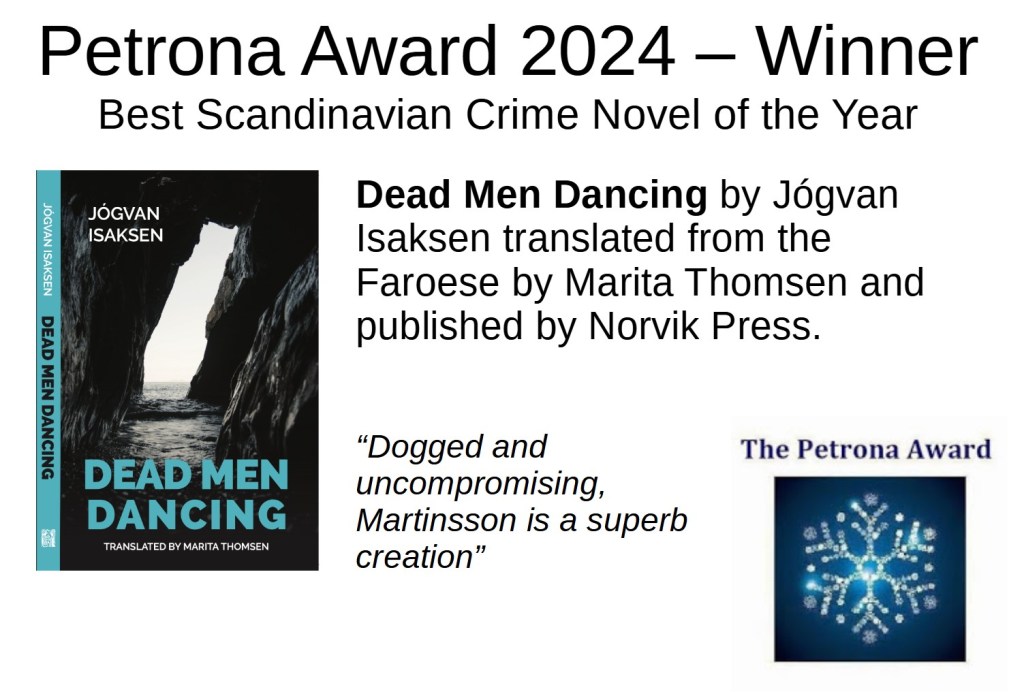
Winner of Petrona Award 2024

The winner of the 2024 Petrona Award for the Best Scandinavian Crime Novel of the Year is:

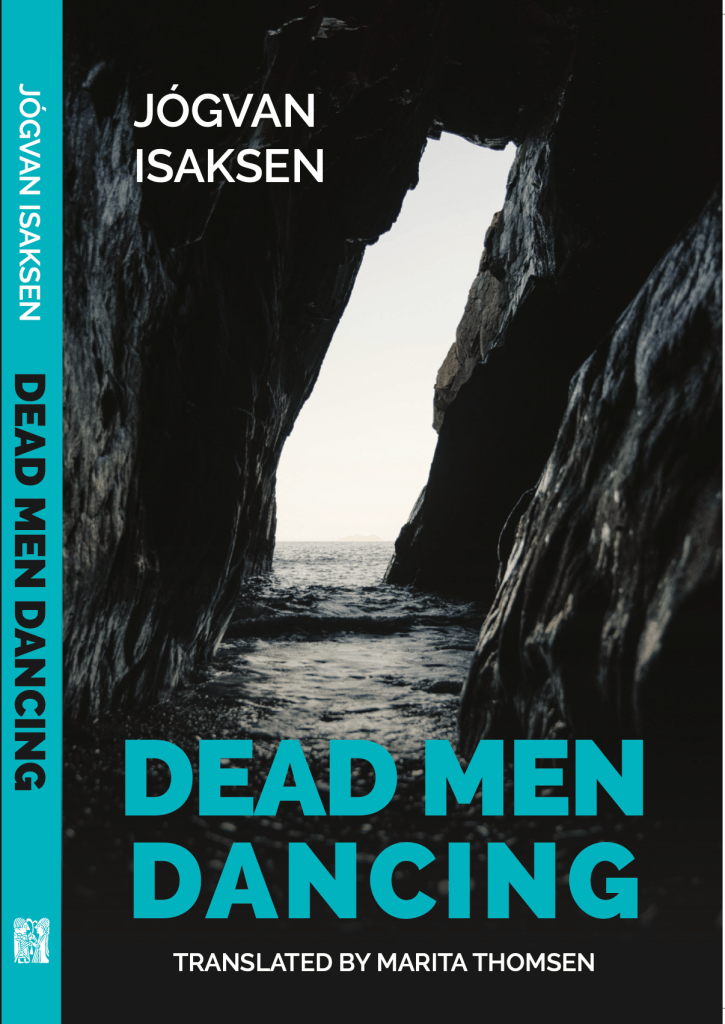
DEAD MEN DANCING by Jógvan Isaksen, translated from the Faroese by Marita Thomsen and published by Norvik Press. Jógvan Isaksen will receive a trophy, and both the author and translator will receive a cash prize.

The judges’ statement on DEAD MEN DANCING:

Similar to the story of the ancient god Prometheus, a man has been shackled to rocks on the Faroe Islands, and left to drown on the beach. The discovery of his body throws the local community into an unsettling chaos, and as the journalist Hannis Martinsson investigates, he comes across evidence of similar deaths. He realises they are linked to the events in Klaksvík in the 1950s, and a local revolt which tore the community apart. As Martinsson digs into the troubled past, he learns about his country’s history, and also gives the reader a chance to discover what makes the Faroes intriguing and spellbinding. Being a largely unknown territory to most, Dead Men Dancing includes a useful introduction to the modern reality of these islands by the CEO of the Faroese Broadcasting Corporation, mirrored by the social commentary that lies at the heart of the book itself, and the portrayal of the relationship with Denmark throughout the years.

This is only Isaksen’s second novel to be translated into English following Walpurgis Tide. This contemporary Faroese crime fiction writer places his characters in the wild, beautiful, and unforgiving environment and allows them to search for truth. The judges found the location to be absolutely integral to the unfolding of the plot, and how the raw natural beauty of the Faroes served as a reflection of the thoughts and actions of the characters.

Dogged and uncompromising, Martinsson is a superb creation, similar in his ‘detective’ thinking and approach to Gunnar Staalesen‘s lonely wolf PI Varg Veum, which the judging panel found very appealing. Martinsson’s gloomy demeanour and natural cynicism was beautifully balanced throughout with the more empathetic side of his nature, and in the age-old tradition of crime fiction his personal and professional relationships are fraught with tension.

The translation by Marita Thomsen is both accomplished and a little unusual, drawing as she does on the vernacular and intonation of the Scottish dialect. Again, the judges found this to be refreshingly different, and enjoyed the unique cadence and rhythm this gave to the book overall, an essential quality of any book in translation.

The judges agreed that in Dead Men Dancing the balance between location, plot and characterisation worked well, incorporating some of the familiar tropes of crime fiction, but also providing a refreshingly different reading experience. This was achieved by the depiction of the Faroes themselves and their history, working in symmetry with the narrative, and also by the characterisation of Martinsson, reminiscent of the traditional spare style in Nordic crime fiction. The assured and distinctive translation was also a significant factor in the judges’ overall decision.

Statements from the winning author, translator and publisher:

Jógvan Isaksen (author):

I feel it is a great honour to win this award, especially when I see that the competition includes several of my favourite Scandinavian authors. I am also proud to represent my country, the Faroe Islands, a self-governing part of the Danish Kingdom with its own language and traditions. Furthermore there are special bonds between the UK and The Faroes since the friendly occupation during World War II. I personally became a member of Collins Crime Club when I was only thirteen, and fought my way through crime novels I could hardly read. But at last I got there and have for many years been an admirer of Agatha Christie, Dorothy Sayers, Eric Ambler, Colin Dexter, Ian Rankin and many, many more.

Marita Thomsen (translator):

It was thrilling to translate the Faroese novel Dead Men Dancing and a great honour to receive the Petrona Award. I am privileged to find myself in the company of the master crafters of stories and languages shortlisted this year, congratulations to all! My thanks first and foremost to Jógvan Isaksen for keeping us in suspense, as he navigates the rugged outlines of the psychology and wild shores of the Faroe Islands. This book offers a fascinating window into regional tensions in the archipelago and historical tensions in the Kingdom of Denmark. Thank you to the passionate Norvik team for expert guidance and editorial advice. And to Richard and Jane for your patience and boundless enthusiasm for everything, even the difference between rowing boats and oared boats.

Janet Garton (Norvik Press Commissioning Editor):

We are delighted that Dead Men Dancing has won this year’s Petrona Award. Jógvan Isaksen is a master of suspense, and his maverick amateur sleuth Hannis Martinsson takes the reader on hair-raising trips by land and sea before – of course – solving the mystery before the frustrated police. The Martinsson series was the basis of the successful TV series TROM, and this is the second of the series to be published by Norvik Press, after Walpurgis Tide in 2016. Hopefully there will be more to come!

The Petrona team would like to thank David Hicks for his continuing sponsorship of the Petrona Award. Petrona Award 2024 – shortlist

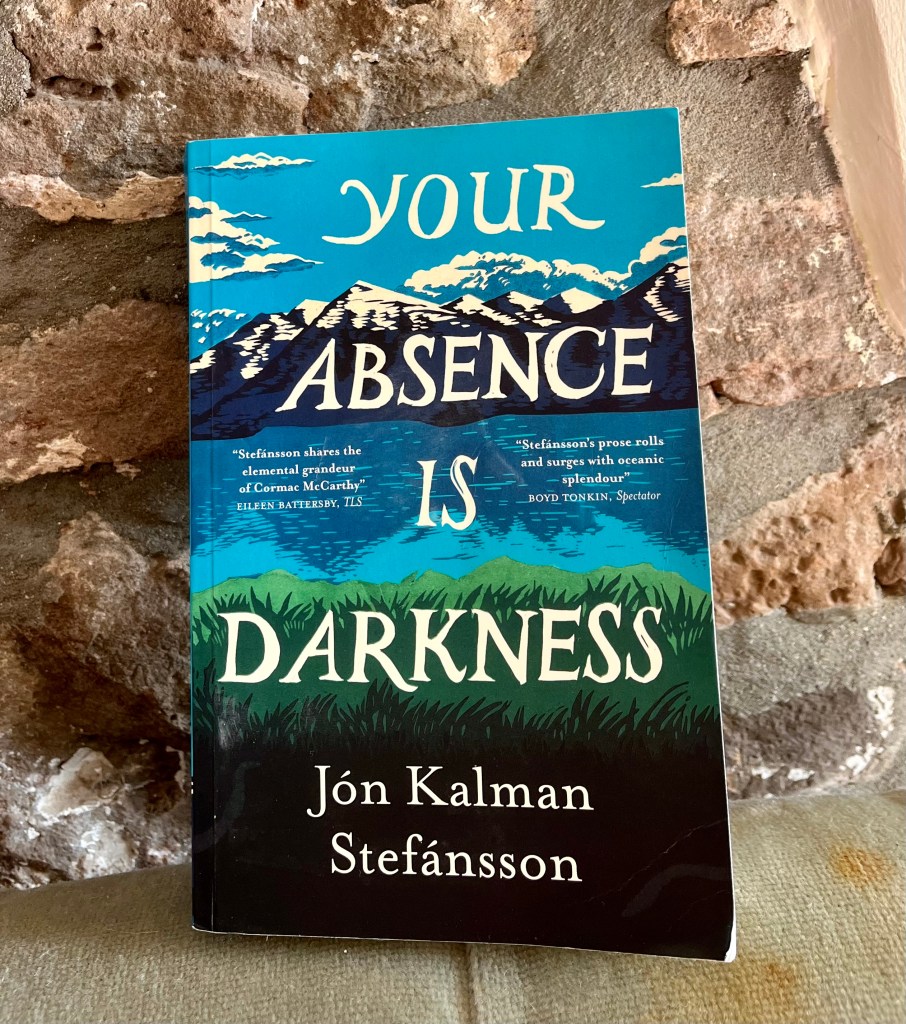
Your Absence is Darkness by Jón Kalmann Stefánsson

I am very very lucky to have some of my reviews published on the pages of European Literature Network. This particular review is available there as well but I wanted to share it on my blog, too. Here’s the link to Your Absence is Darkness. And I would absolutely recommend that you check other interesting articles written by extraordinary people who contribute #RivetingReviews.

Have you ever seen photographs of rivers and streams meandering through the rugged terrain of Iceland? The way they create their own space, take ownership of obstacles and thrive in the beautiful, unexplored countryside? As I was reading Jón Kalmann Stefánsson’s latest audacious novel Your Absence is Darkness, I was reminded of this Icelandic landscape. I fell under the spell of the storytelling, which meanders through time and locations, taking in life and death, punctuated by raw love of many kinds, and leading the reader to a perfect conclusion. 

The powerful narrative, which is both stoic and emotional in equal parts, moves at a pace dictated by both the weather and the speed at which memories come to the surface. An unnamed man finds himself awake in a church in rural Iceland. He remembers nothing – he has completely lost his bearings – but he knows the presence of a stranger makes him feel uncomfortable. 

This mysterious shape-shifting figure will accompany him on a journey of discovery. First a local woman helps him reunite with his sister. Then, as he listens to her stories about previous generations, he slowly submerges himself in a history that spans centuries, telling tales of the people who have loved, lost, fought, survived and died in the isolated, windswept farms and small villages on the Snæfellsnes Peninsula in western Iceland, whose stunning, unforgiving landscape has been influencing the ordinary lives of its inhabitants for centuries. 

As the narrator begins to question this correlation between the natural environment and the economic situation of the inhabitants of these villages, which have changed very little over the years – ‘Blessed darkness, accursed damp – the history of Iceland?’ – we get to know the fates of the members of one particular family. Eirikur, a musician abandoned as a child by his mother, is running away from his Icelandic past, but suffers from loneliness and cannot connect with his father. A girl, chasing after the memory of one, intense blue-eyed gaze, moves from Reykjavik to the fjords. An uneducated farmer’s wife writes an essay on the earthworm, ‘the blind poet of the soil’ and unwillingly changes the course of two families’ lives. Petur, a pastor, neglects his wife, writes to a dead poet and falls in love with a stranger. An alcoholic father leaves those close to him and follows the starry night sky. We see dramatic events forcing men and women either to abandon their homes or stay firmly put, emigrate to Canada or settle for compromise, moved by love, pride or sense of duty. Just like in Iceland’s ancient sagas, the novel’s characters are bound together in a family history that spans around two hundred years.

Human tragedy links these individual stories, each of which deserves attention and patience from the reader. It seems that these characters cannot escape a brutal, often inexplicable destiny, but even as the natural world around them guides their daily existence, and even their morality, they also crave joy and a sense of belonging. Tenderness appears in the most unexpected places, humour provides some light, while Danish philosopher Søren Kierkegaard reminds the characters that they are loved: ‘Your memory is light, your absence darkness’.

Philip Roughton’s translation is superb, with the novel’s rhythm and tempo beautifully executed, especially when it comes to the way repetitions of words and phrases add to the overall sense of uncontrollable fate and the tensions between faith and biological fact. Stefánsson’s style – complex, intriguing, nuanced – in this translation flows like those Icelandic rivers. 

Travels in Moominland – Tove Jansson’s Islands

Today it’s Moomin Day… But really it’s one hundred and ten years since Tove Jansson was born in Helsinki and I was thinking of a very special trip which was ten years ago exactly. I wrote about it some time later, and below is the text originally published on Nordic Noir website run by my wonderful friend, late Miriam Owen. So here it is…

More than three years ago, in 2014 I was on a ‘pilgrimage’ in Finland, following in the footsteps of an incredible writer and fine artist Tove Marika Jansson, a woman who has created a completely new universe inhabited by wise philosophical trolls (Moomins), and who hugely influenced my outlook on life. Tove Jansson’s multi-dimensional works overflow with humour and creativity.

In Finland you can see a permanent exhibition of Tove Jansson’s works at Moomin Museum in Tampere, or visit Moomin World created for children in Turku. Moomin Official constantly expands the variety of experiences. My own experience came from the first Polish editions of Muminki, full of humour and warmth, published in the 1970’s, beautifully translated from Swedish and including original drawings by the author. My mother, as a ‘special regular’ customer at the bookshop, had the copies set aside specially for me. I knew all Finn Family MoomintrollMoominsummer MadnessMoominland Winter and Tales from Moominvalley by heart. As well as other children’s books by Scandinavian authors. Astrid Lindgren wrote about practical kids of The Six Bullerby Children, and crazy Pippi Langstrumpf / Longstocking. Over the years I read all these books again in English yet the Polish translation of names and places appeal more to me. At the time Tove Jansson visited Poland when work on adapting her books for the small screen was in full swing. In 1977 Łódź film-based Se-ma-for created the TV series Tales of the Moomins. The cartoon was made with the use of semi-flat animated puppets on glass and it still has quite a surreal feel and quality to it.

The characters from the world of Moomins do not pretend that life is always okay. Yet, despite the storms, turmoil, evil desires and problems there was always a happy ending in these tales. I wanted to be like Moomin Mama, carrying a handbag. She is compassionate, has a sense of humour and, very important, has a sense of her own worth. More visitors: we will make pancake batter in the bathtub because the kitchen is too small. Moomin Papa lacking inspiration: maybe a plate of boiled sweets will help. Forest creatures lost their house: there is always space to sleep. And The Groke whom everyone feared is one of my favourites. Yes, she’s scary and freezes everything she touches but only because she wants love and acceptance. Like all of us.

Later I discovered Tove Jansson’s modest book for adults The Field of Stones which contains a lot of reflections on the writer’s struggle with the word. Searching for more I found books translated into Polish and English. The Summer Book is always available in English but there are no further reprints in Polish. I have Sculptor’s Daughter, an autobiographical novel for adults, The True Deceiver, and Stone Field, adorned with the letter Y on the cover (a symbol of character with whose biography the book’s hero is struggling). A Winter Book and Fair Play show more of Jansson’s talent for writing. Now Sort Of Books published the new collection of short stories originally published in 1991, and translated for the first time by Thomas Teal. Understated, elegant, beautiful simplicity in delicate yet powerful short stories collected in Letters from Klara written when Tove Jansson was in her seventies, at the height of her fame. She has truly mastered the form.  Balancing harshness of world and sharpness of the words, the stories also demonstrate love and compassion and a delicate sense of humour. They are philosophical, sarcastic and timeless:

‘…but if you’re odd, you’re odd, and that’s all there is to it.’

‘You’re hurt that I forgot your ancient birthday. You’re being unreasonable. I know you’ve always expected me to make a special fuss, simply because I’m three years younger. But it’s time you realized that the passage of years per se is no feather in anyone’s cap.’

I followed all Tove Jansson-related news and in 2013 I managed to find a hefty tome Tove Jansson. Moomin’s Mum, a comprehensive biography by Boel Westin, which had been translated from Swedish into Polish. In the UK, the same biography titled Life, Art, Words: The Authorised Biography was published a year later.

In 2014, the hundredth anniversary of her birth, the summer presented various events which I attended. The Finnish Institute in London opened a photo exhibition at the Institute of Contemporary Arts (ICA) under the title Tove Jansson: Tales from the Nordic Archipelago. I loved the beautiful photographs by C-G Hagström, reflecting the simplicity and beauty of the hardships of life, and at the same time the severity of the conditions of existence on the islands, to which Tove and her long-term life companion Tuulikki Pietila responded with joy.

Helsinki’s Ateneum Art Museum, previously the Finnish Art Society’s drawing school which she had attended in Helsinki, organised a brilliant retrospective exhibition of paintings, drawings and sketches, as well as everything related to Moomins before the Japanese machine began to create animations. Next stop for the exhibition is at Dulwich Gallery which opened in October 2017 and runs until 28th January 2018 and I cannot wait to see it again.

Moomin troll first appeared as a long snouted ‘Snork’ in 1943 at the time when young Tove drew cartoons for the satirical political anti-Hitler paper Garm. His first formal outing was in The Moomins and the Great Flood published in 1945, and then through further books and comic strips, translations and slowly but steadily growing Moomin emporium. His modest beginnings and frequent cameo appearances in the drawings and paintings eventually demanded proper presence in a book.

In August 2014 I travelled with my mum Krystyna Konecka, another fan of Tove Jansson, and our adventure started at the Hietaniemi cemetery at the family grave exactly on a day of Tove’s hundredth birthday. Her mother was the Swedish artist and graphic designer Signe Hammarsten, called Ham, and the father was the Finnish sculptor Victor Jansson, known in the family as Faffan. Afterwards we travelled by bus to Porvoo, 50 km east of Helsinki, and then to the island Klovharun in the Gulf of Finland. Even though it was incredibly hot and all arrangements have been confirmed weeks in advance, the trip could have been cancelled because of strong winds. And that’s how it was for Tove and her partner Tuulikki – when they left the bustle of the Capital life and moved to the island for the entire summer for nearly thirty years. Harsh reality of isolated island living, friends, uninvited guests and creativity.

In Porvoo we received a booklet with the Moomin Troll on the cover, made by Polish studio Se-ma-for. This was presented by Liisa Vähäkylä, Managing Director of Finnanimation. She and other members of Tove Jansson Society, along with the head Annikki Vähätalo attended, and we joined them at the opening of the exhibition of photographs of the artist by her friend of many years, artist C-G Hagström, whom I met earlier in London, and Tove’s younger brother Per Olov Jansson who is now 97 years old.

Another adventure awaited in a form of Gerd, wonderful Finnish Swede, living on one of the islands of the archipelago Pellinki, who had arrived in a big taxi to collect us. We made online arrangements for our trip from Porvoo to the small place on the coast. Gerd knew the archipelago, its history, people, roads, landscape. She stopped at the village store where Tove used to do basic shopping, coming by boat from her island Klovharun. On the way back, taking a slightly different route, she suggested stopping for a moment to see ‘Mårran’. And so we drove into the woods and suddenly there was a huge boulder in an unusual shape, a wreath of flowers on its top, with luminous painted eyes and teeth, and it was a happy Groke! A new Finnish word to add to my limited vocabulary.

Walking all day in Helsinki added flavour and substance to what I’ve learnt about Tove’s life. The imposing building at Luotsikatu 4 was the childhood home and her parents’ studio. From there she often walked around the corner to buy tobacco for her father to what is now a tiny Café Signora. Then she lived at the House of Artists Lallukka from 1933 until 1942 when she moved to her first studio nearby, and two years later to a tower of a building at Ullanlinnankatu 1. The top floor flat was cold and drafty, the building hit in the bombings but the upper window showed a strip of sea. Tove lived and worked in this oasis until her death. The little gems scattered around the town include Domus Academica (providing student accommodation) which hosts two original murals painted by Tove, or a modest courtyard surrounded by modern office buildings. Hiding amongst the greenery a Viktor Jansson’s sculpture of Mermaid, modelled on young Tove, is standing in an empty fountain.

Various Finnish places have memories of the artist and she has a special place in many hearts, not only those who love Moomins.

Paris Pages by Shelley Day

‘If I could make an effective plan I would write exquisite prose, multiply embedded, like W G Sebald, Modiano, Per Petterson. I’d tell it like it is, like Ernaux. I’d knock people over like Beckett; soothe like Tove Jansson; counsel, insightful, brave, and strong, like Maya Angelou; go dark-deep melancholy desperate beautiful like Plath. I’d meditate poetically like Toni Morrison, tantalise and annoy like Gertrude Stein. Like Clara, I’m never certain how well I get on with Stein; perhaps I see her more as a pivot, a queen bee, choreographing minions. I’d lead myself astray like Malte Laurids Brigge, or Anne in Astragale. I’d be capable of cruel shocking things, like those twins in Ágota Kristof.

My plan was to lose myself in a fast-paced thriller or a crime fiction novel as the Norwegian tradition encourages everyone during the long Easter break. However, a completely different story pulled me into its core and påskekrim might have to wait, although Shelley Day, author of The Confession of Stella Moon is no stranger to the genre. (What Are You Like shows her another writing style). Paris Pages, published by Postbox Press / Red Squirrel Press, is both a universal and a deeply personal book that deals with the importance of art in everyday life and Art with a capital ‘A’, and what it truly means to be an artist. The quote above is just a tiny indication of the richness in the book. Through one hundred pieces of sublime lyrical prose which often becomes poetry, Paris Pages explore essence of the creative process. This in itself is a complicated meandering journey through opinions, thoughts and emotions. As the book is focusing on three main characters, the understanding of what Art is, or should be, and how it could relate to our existence and living, it contemplates various artistic forms and styles, reaching into the real historical events while absorbing atmosphere of the city which has always been an inspiration to many. Shelley Day knows Paris well, having lived there, visiting various galleries and museums, walking the streets, looking at the buildings and breathing the air. She made notes and made inquiries, asked questions and asked herself, and kept writing. The result is a stunning story, quite urgent in its message, and painfully contemporary. 
Very private experiences are also relevant to the intertwined lives of Clara Delaney, Sadie Sarrazin and László Száműzetés, three people who found themselves in the French capital for different reasons. The psychotherapist Clara feels she’s nearly done with her job and profession, and is determined to become a biographer of the barely known, nearly completely forgotten and possibly disgraced Max Zuniga, a psychoanalyst and one of Freud’s colleagues. It seems as if he had never existed. She is still processing breakup with her partner Johannes from Oslo.
The young photographer Sadie as a volunteer worked with traumatised migrants at Sangatte, a commune on the northern coast of France, a place which we might heard about as the Jungle near Calais. She struggles with powerlessness, unable to be creative, to find this special spark and continue her work as a witness to the events that had happened during this particular refugee crisis. Her own trauma paralyses her; and therapy sessions with Clara seem to increase anxiety and sense of failure. And László, a mysterious man linking both women and somehow guiding them through complex emotions, represents the spirit and soul of Art. He is the personification of the Exile, a state of mind, a situation that is both physical and intellectual, and conveyed beautifully in Paris Pages. ‘Where is Home?’ will resonate with many readers.
The author makes so many references to writers, painters, sculptors, thinkers – Beckett, Edith Piaf, Louise Bourgeois, Ai Wei Wei, Rothko, Picasso, Cocteau, Patti Smith, Keats – all those creative giants who made their mark in Paris and who had also shaped her own relationship with art. I loved this element of the book as it forced me to pause, go back to a paragraph or sentence, read again, reflect on what I had learnt about them before and what I now wanted to check, find out again, put in context. The abundance of delicately distributed knowledge is like that extra sprinkling of dark chocolate in otherwise ordinary coffee. Not that there is anything ordinary about Day’s writing, a firm believer in the true concept that ‘The story is everything and everything is the story and it’s all inter-connected.’

Let me leave you with this thought as you hopefully reach for Paris Pages: ‘There is and never can be anything worthwhile in any manifestation of Art as long as human beings are suffering and humanity itself is imperilled on the verge of planetary self-destruction. Some things are of crucial importance. Art is an irrelevance in a world as troubled as this.’