Animal Life by Auður Ava Ólafsdóttir

Do you remember getting lost in the Arnaldur Indriðason’s series featuring detective Erlendur Sveinsson who is unable to let go of hope to find his missing younger brother? Erlendur knows there is no chance of finding the boy who had disappeared during bitter winter many years ago. But he longs for some closure to quieten his own guilt. That’s what I kept thinking about: snowdrifts, cold, darkness, unpassable roads, while reading the moving and tender Animal Life in which death is also mentioned but in a different context: ‘In order to be able to die, a human first has to be born.’

Auður Ava Ólafsdóttir’s latest book is definitely not an example in the crime fiction genre but a slow burner of an exploration of life and nature of humans. It tells a story of a midwife Dómhildur, with sixteen years on maternity ward behind her, as she delivers her 1,922nd baby and contemplates life and death in the days leading up to Christmas. This period often brings quietness or chaos and in her case these two are entwined. A terrible storm approaches Reykjavik and people are preparing for possible devastation. Dómhildur, forced to take unused holidays, decides to make some changes in her apartment, inherited from her grandaunt of the same name, renowned for her unconventional methods and down-to-earth logic, and discovers decades worth of letters and manuscripts hidden amongst her grandaunt’s clutter. While the weather gets worse, the mood in the real and symbolic four walls lifts. Questions and answers float around, and the archives are surprising.

The first Dómhildur embarked on a project to write about practices and skills of midwives whom she started interviewing during her summer holidays. What began as simple conversations in 1970, continued for another quarter of a century, and meant to become a published book on ‘living experiences of seven female midwives and one male midwife in the north-west of the country. the father of light Gísli Raymond Guðrúnarson, known as Nonni.’ It amazed the narrator: the old interviews, full of descriptions and original thoughts, ‘were mostly of my great-grandmother’s generation, born between the end of the nineteenth century and the beginning of the twentieth, and shared the common practice of travelling by foot or on horseback to attend to birthing women. A midwife could say she had seen other horizons, said one of the interviewees about her vocation.’ And here the connection to Erlendur comes: ‘Most of the accounts described the hardships of travelling in bad winter weather. The midwives were escorted by sturdy young men, who according to their accounts, often gave up due to fear of the dark or exhaustion, so the women would carry on alone, getting lost in blizzards, and having to grope their way, trying to find a familiar rock, sinking into the snow up to their waists, then climbing over or down a mountain pass. They waded across unbridged rivers, trudged over barriers of ice, barely crawled out of avalanches alive, and when they finally arrived at their destination and unwrapped all their shawls, the child was often already born, either dead or alive, because the weather doesn’t always bend to the requirements of a woman in need.’ Harsh nature, difficult living conditions, everyday hardships are common threads in the past; however, they can still be found in modern times in the country where darkness takes over the soul. The query about sunshine, light and warmth is never far: ‘Is there any light to be found in this country, is there any light in this world?’ Light is essential for Kristín Marja Baldursdóttir’s Karitas and for the ordinary Icelanders who in 2013 ‘voted for the most beautiful word in their language. They chose a nine-lettered one, the job title of a healthcare worker, the Icelandic term for midwife: ljósmóðir. In its reasoning, the jury stated that the word is a composite of the two most beautiful words: móðir (mother) and ljós (light).’ It is not a secret that metaphorically speaking ‘man grows in the dark like a potato’ and needs a lot of help and care to grow and develop after being born.

Light and darkness. Warmth and coldness. Past and present. Here I focused only on some of the themes in Animal Life which is so much richer, deeply moving, immersed in the Icelandic folklore and filled with delicate humour and touching recollections on human nature. Above all, it brings some joy and some calm and stops you to wonder how subtly and masterfully Auður Ava Ólafsdóttir composes her stylistic wordy world, and how beautifully and sensitively Brian FitzGibbon translated these thoughts into English. Let me leave you with this one, positive and wise:‘For even in the depths of an Icelandic winter, new life will find a way.’

Auður Ava Ólafsdóttir is a prize-winning novelist, playwright and poet. Auður Ava’s novels have been translated into over 25 languages, and they include Butterflies in NovemberHotel Silence and Miss Iceland, also published by Pushkin Press. Hotel Silence won the Nordic Council Literature Prize, the Icelandic Literary Prize, and was chosen Best Icelandic Novel in 2016 by the booksellers in Iceland. Miss Iceland won the Prix Médicis Étranger and the Icelandic Booksellers Prize. 

Brian FitzGibbon translates from Italian, French and Icelandic. Recent translations include Woman at 1000 Degrees by Hallgrímur Helgason as well as Hotel Silence and Miss Iceland by Auður Ava Ólafsdóttir.

Thank you to Pushkin Press for the early copy of the book and for the invitation to join the blog tour.
Jólabókaflóð – The Christmas book flood, part 7

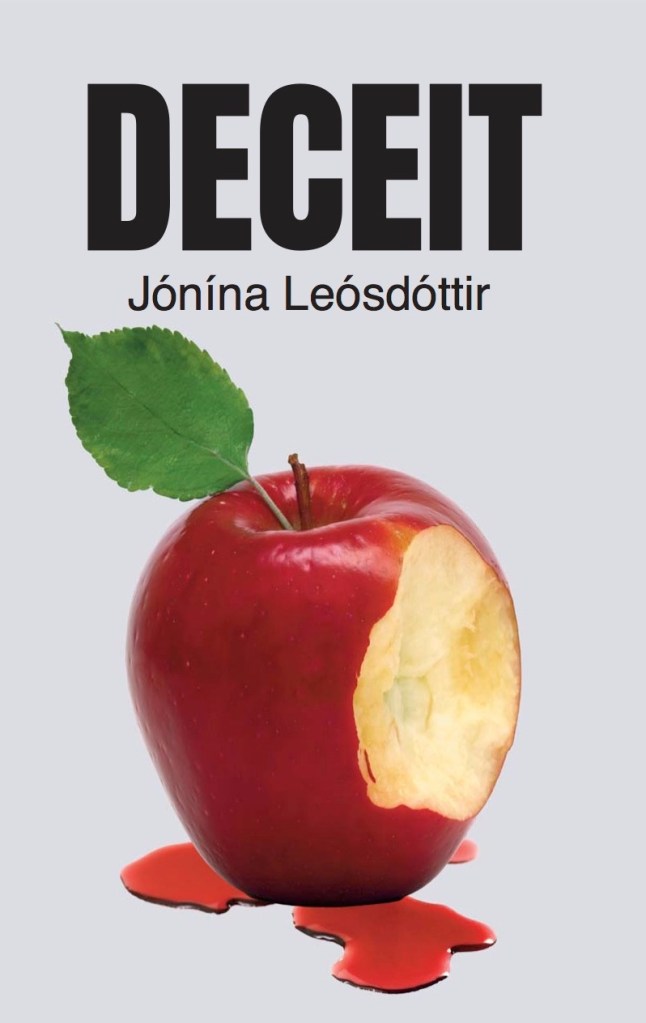
Jónína Leósdóttir is one of Iceland’s best-loved writers, with a career behind her as an award-winning journalist, playwright, translator, biographer and writer of novels for young adults, before turning to crime fiction with her Edda series that has proved highly popular in Iceland. Deceit is the first in a new series of crime novels featuring Reykjavík detective Soffía and her ex-husband, English psychologist Adam. Deceit is also the first of her books translated into English by Quentin Bates. Jónína was instrumental in establishing The Icelandic Women’s Literary Prize in 2007 and is now an honorary member of the association that awards the prize. In 2013, she published Jóhanna and I, a memoir of life with her partner Jóhanna Sigurðardóttir, Iceland’s former Prime Minister.

Here Jónína Leósdóttir shares her thoughts about Jólabókaflóð.

For me, books and Christmas have always been linked. Entwined, really, as I have never experienced Christmas without books, lots of books, from as early on as I can remember.

Books were at the top of my wish list for Father Christmas, as the annual ‘book flood’ in early winter was publication time for at least two new translations of Enid Blyton stories (and I was an avid collector), novels by Astrid Lindgren and other Scandinavian authors and, naturally, also books by Icelandic writers. My haul was usually four or five books and everyone in my family got books, too. Anything else would have been unthinkable.

As presents are exchanged after the evening meal on Christmas Eve, I took the books to bed with me and never heeded the ‘reading curfew’ set by my parents (I had a torch hidden under my pillow). And during the holidays, when I had finished my own books, I started on my sibling’s presents, although we didn’t share the same taste… my brother being four years younger than me and my sister nine years older. But, as an Icelandic saying goes, ‘when times are hard, you feed on whatever you can lay your hands on’. And then it was time to skim through the books that the adults in the family had been given for Christmas – until the library opened again at the beginning of January.

Late autumn is still the time when most books are published in Iceland and I still feel the same excitement about ‘the Christmas book flood’ as I did as a child. Now, however, I don’t have to wait until Christmas Eve. That’s one of the great things about being a grown-up. I can buy exciting books as soon as they hit the stores and read all night if I feel like it. And if I run out of reading material during the holiday season, there is always Amazon.

I also love giving and lending new books to my friends and family and then have long and often heated discussions about them. That’s a huge part of the pleasure of books; talking about them at length. Oh, don’t get me started!

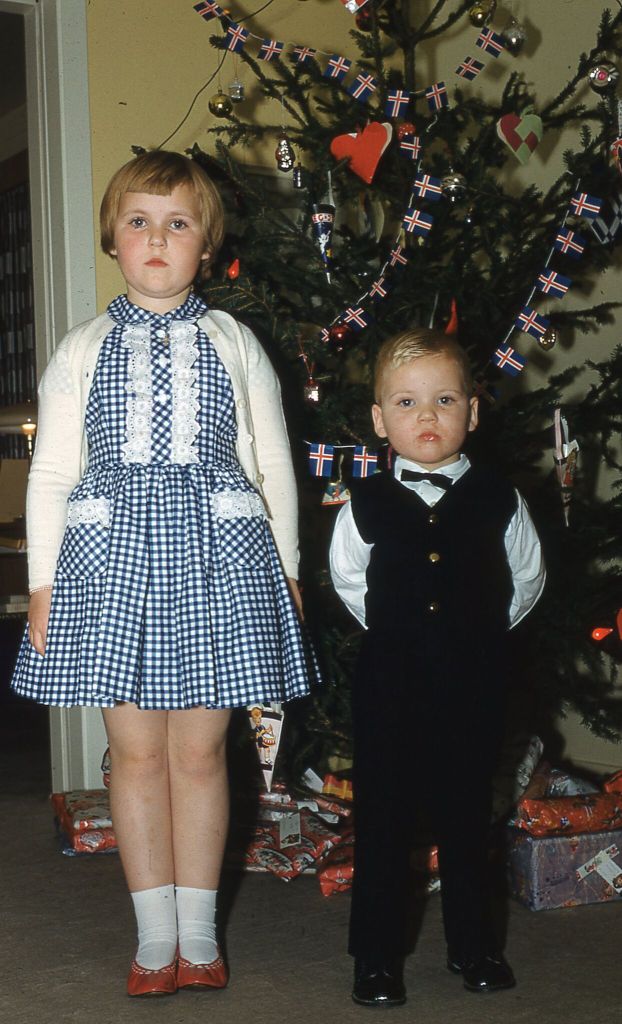
‘When can we open our presents?’ Jónína and little brother, Árni.

According to recent statistics, each Icelander still receives / buys three books at Christmas. I find that both wonderful and amazing, considering the competition books now have from all kinds of media. There was no television in Iceland until I was twelve…

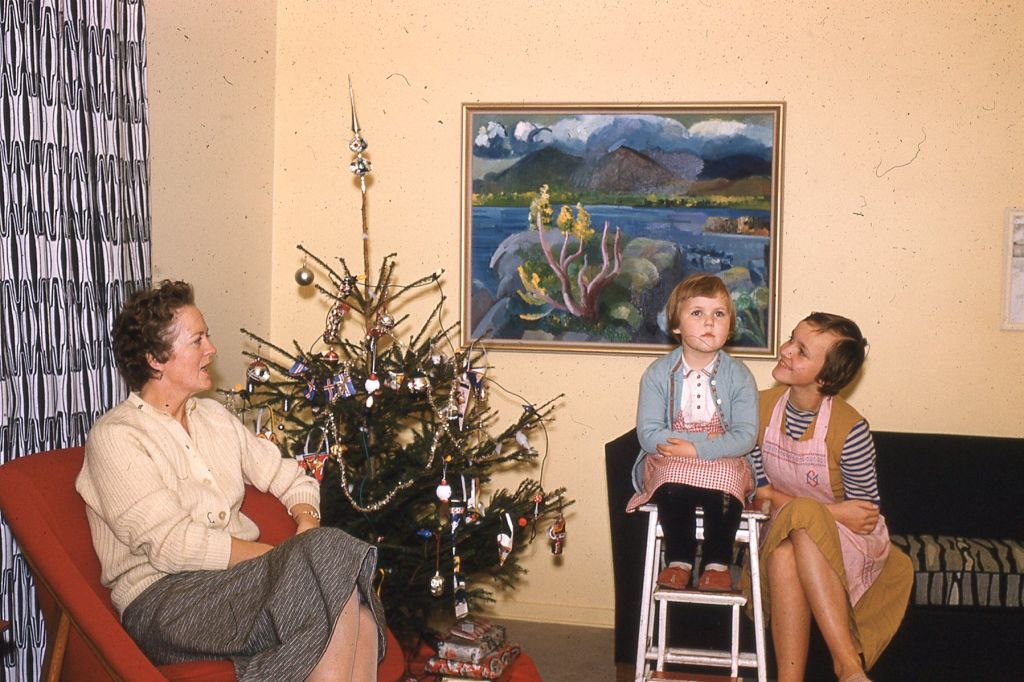
Christmas Eve. There are obviously books under the tree,
but my sister and aunt make sure I don’t touch the presents.
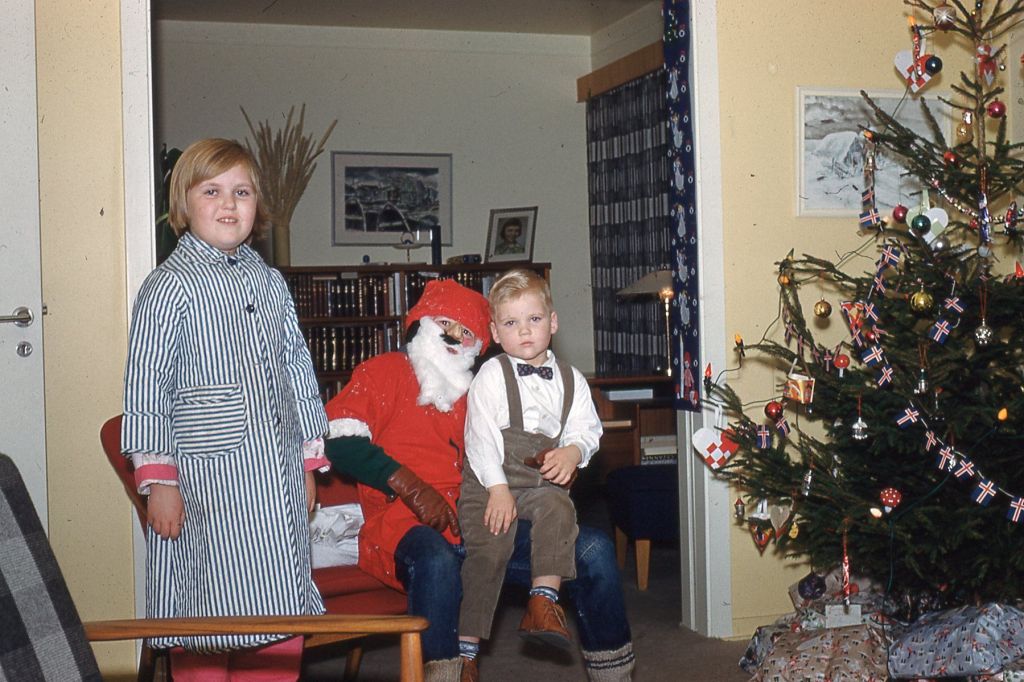
An older cousin turns up, dressed as Father Christmas, with more presents.

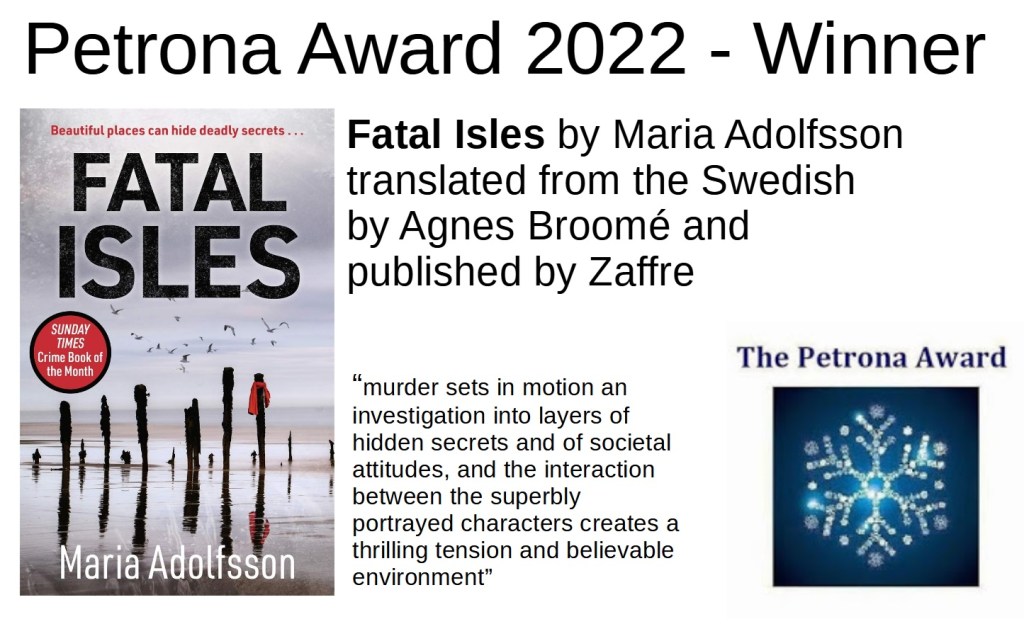
Winner of the Petrona Award 2022

Winner of 2022 Petrona Award announced

The winner of the 2022 Petrona Award for the Best Scandinavian Crime Novel of the Year is:

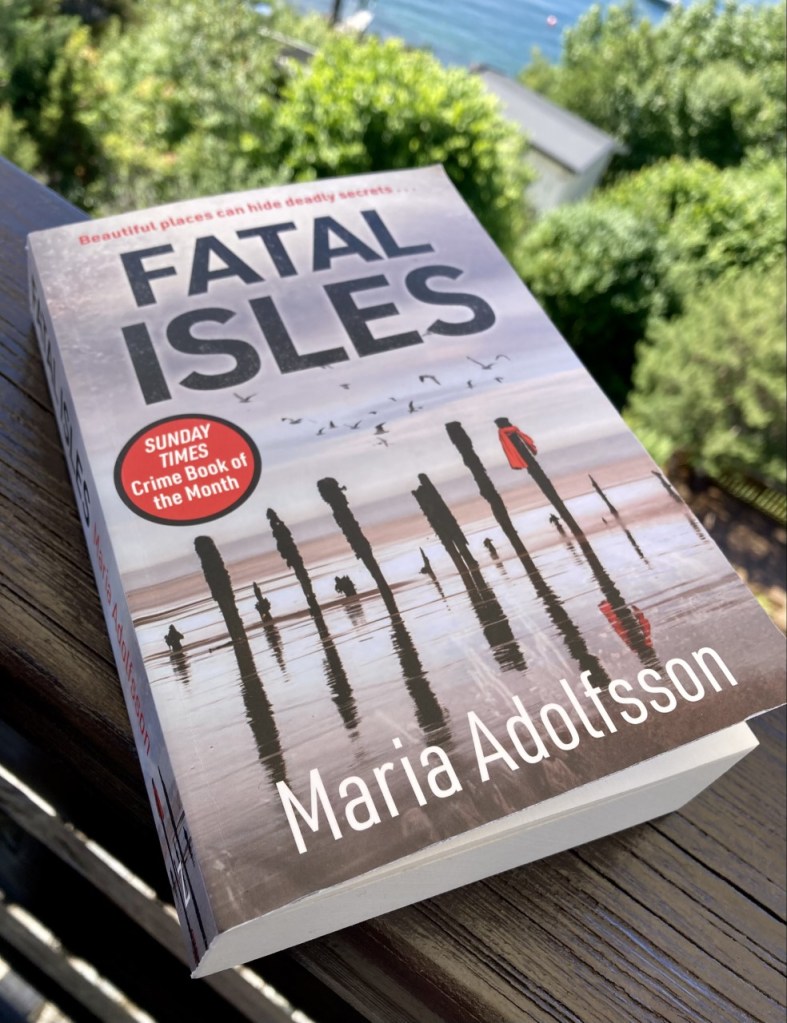
FATAL ISLES by Maria Adolfsson, translated from the Swedish by Agnes Broomé and published by Zaffre. Maria Adolfsson will receive a trophy, and both the author and translator will receive a cash prize.

The judges’ statement on FATAL ISLES:

This captivating winning novel is the first in a proposed trilogy featuring the beautifully flawed protagonist Detective Inspector Karen Eiken Hornby, whose take on life and work make for a strong down-to-earth and modern heroine in the relicts of a man’s world.

Set in the fictional yet completely credible location of Doggerland, this three-islands archipelago in the North Sea, reflects Scandinavian, North European and British heritages. Doggerland is shaped and influenced by its geographical position; the  atmospheric setting, akin to the wind- and history-swept Faroe and Shetland Islands, and Nordic climes, enhances the suspenseful and intriguing plot of a police procedural that combines detailed observations and thoughts on the human condition. A brutal murder sets in motion an investigation into layers of hidden secrets and of societal attitudes, and the interaction between the superbly portrayed characters creates a thrilling tension and believable environment.

Comments from the winning author, translator and publisher:

Maria Adolfsson (author):

I feel so honoured and want to send my warmest thanks to the Petrona Award jury. This appreciation for my work means a lot to me!

For me it is especially exciting that the British readers enjoy exploring Doggerland together with me. I’ve always been interested in what unites people in Scandinavia and the British Isles, how we are culturally linked, and what sets us apart. To me, Doggerland is – or at least might have been – the link between us. Or to quote Herman Melville: “It’s not down on any map; true places never are.”

Agnes Broomé (translator):

I am deeply honoured to receive the Petrona Award 2022. With such an impressive shortlist it is truly humbling to be chosen. I am grateful to the jury for their unswerving commitment to bringing Scandinavian crime literature to an English-speaking readership. My warmest thanks to everyone at Zaffre for their support along this journey and, above all, to Maria Adolfsson for introducing me to Detective Inspector Karen Eiken Hornby.

Zaffre (publisher):

Many thanks to the jury for choosing Fatal Isles as the worthy winner of this year’s Petrona Award. It’s wonderful to see Maria’s brilliantly imaginative crime debut, expertly realised in English by Agnes Broomé, recognised for its excellence. DI Karen Eiken Hornby is a universally relatable character and Adolfsson’s vividly drawn island nation, Doggerland, is a perfectly picturesque place for the darkest deeds to occur. It is such a pleasure to publish this internationally bestselling series.

Maria Adolfsson (b. 1958) lives in Stockholm where she writes full-time.
The Doggerland series has fast become an international bestseller.
Photo © Caroline Andersson Renaud, Bonnier Rights website

The Petrona team would like to thank the following: firstly, David Hicks, for his generous sponsorship of the Petrona Award; secondly the co-creators and original judges of the Award: Barry Forshaw, Dr. Kat Hall and Sarah Ward and thirdly, Adrian Muller for his support via the CrimeFest platform. The Petrona team are: Jackie Farrant (Raven Crime Reads), Miriam Owen (Nordic Noir blog), Ewa Sherman (me) Nordic Lighthouse, and Karen Meek Euro Crime website & blog.

Petrona Award 2022 – longlist and Petrona Award 2022 – shortlist

FATAL ISLES is the tenth winner of the Petrona Award. Previous winners are Liza Marklund for LAST WILL, translated by Neil Smith; LINDA, AS IN THE LINDA MURDER by Leif G.W. Persson, also translated by Neil Smith; THE SILENCE OF THE SEA by Yrsa Sigurđardóttir, translated by Victoria Cribb; THE CAVEMAN by Jørn Lier Horst, translated by Anne Bruce; WHERE ROSES NEVER DIE by Gunnar Staalesen, translated by Don Bartlett; QUICKSAND by Malin Persson Giolito, translated by Rachel Willson-Broyles; THE KATHARINA CODE by Jørn Lier Horst, translated by Anne Bruce; LITTLE SIBERIA by Antti Tuomainen, translated by David Hackston, and TO COOK A BEAR by Mikael Niemi, translated by Deborah Bragan-Turner.

Jólabókaflóð – The Christmas book flood, part 6

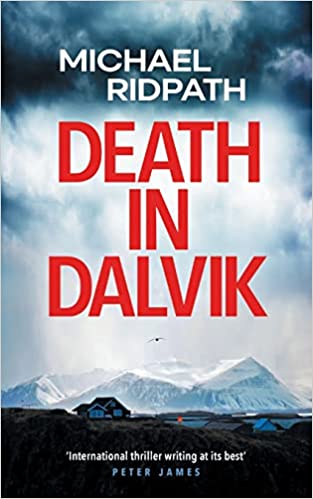
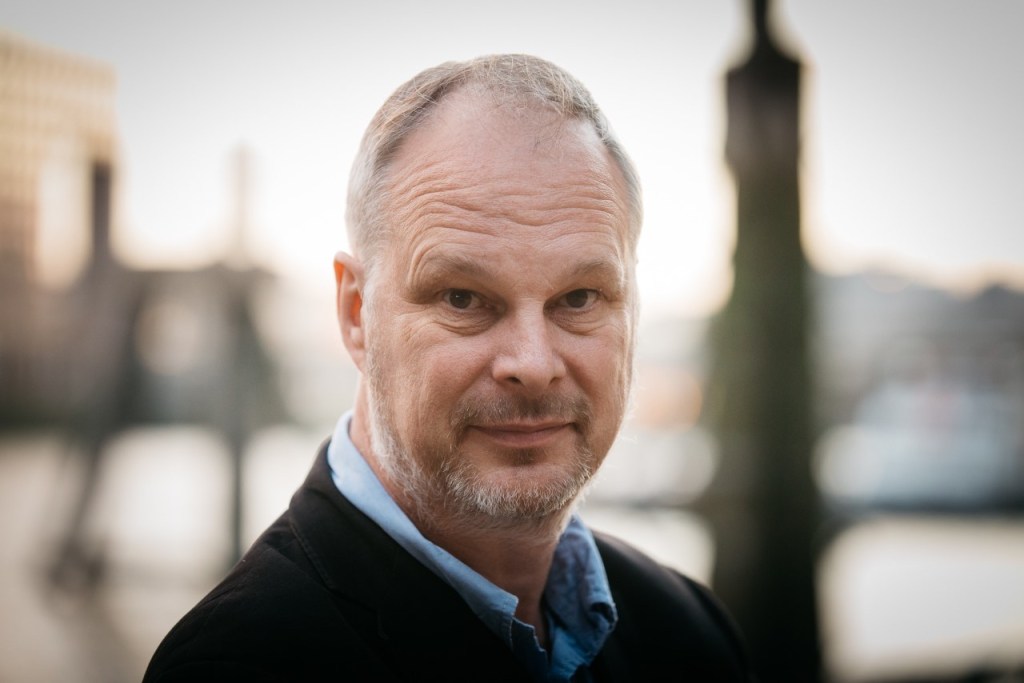
Michael Ridpath is the author of the Magnus Iceland Mysteries, the most recent of which is Death in Dalvik. His blog is Writing In Ice: A Crime Writer’s Guide to Iceland. Below Michael recommends three books that should definitely find their way under your Christmas tree.

Sadly, I have not yet spent a Christmas in Iceland, so I haven’t experienced Jólabókaflóð, the Christmas Book Flood. As a writer and reader it sounds wonderful. I do receive a fair few books each Christmas, and I make sure to place them at the top of my reading pile. I find the quiet few days between Christmas and New Year a wonderful time to devour books.

So what do you give someone who, like me, reads English and is fascinated by Iceland? Well, there is an ever-growing list of Icelandic fiction writers, especially in the crime genre, but here are three recently published non-fiction books that I found fascinating, informative and entertaining.

How Iceland Changed the World by Egill Bjarnarson is the most accessible account of Iceland’s history and is also very funny. To understand a country, you need to understand its history: I wish this book had been written when I started out on my own Icelandic crime series fourteen years ago. Egill covers the whole of Iceland’s history from Ingólfur throwing his home pillars into the sea in 874 to decide where he should land, to the great women’s strike of 1975 when 90 per cent of Icelandic women stopped doing what they were expected to do, and the country came to a complete halt. 

It has some useful tips for understanding today’s Iceland, including the best suggestion I have come across for English speakers wrestling with pronouncing that notorious volcano Eyjafjallajökull – “Hey I forgot your yoghurt” – spoken quickly, confidently and defiantly. 

Egill recounts my favourite bit of Icelandic history: on 9 May 1940 Hitler invaded Belgium and Holland and that same day Britain invaded Iceland, an action so mildly embarrassing that we never really talk about it. Egill does, though.

Looking for the Hidden Folk by Nancy Marie Brown, deals with that thorniest of Icelandic subjects, the hidden people. The question isn’t simply do they exist? but, do modern Icelanders really believe that they exist? Like me, Nancy has fallen in love with Iceland, and also like me she has a hard-headed, sceptical view of superstition. A rational person might ask how can so many people in a modern, well-educated society like Iceland’s entertain the concept of hidden people or elves? This book is her answer, and it’s fascinating. She shows how the stories of Iceland’s hidden people are a natural human response to the island’s extraordinary landscape, and makes the reader question whether dismissing such belief as irrational is itself irrational. 

It’s also the narrative of how Nancy Marie Brown, who is a keen owner of Icelandic horses as well as a writer, fell in love with Iceland. She has visited the country thirty times since 1986 and has an acute ability to observe Iceland’s ever-changing landscape of lava, glacier, rock and moss, and to record it for the rest of us. Her story resonates with me, as I am sure it will resonate with many who find themselves drawn back there.

Finally, Secrets of the Sprakkar by Eliza Reid is the story of Icelandic women. The Sprakkar of the title is an old Icelandic word for outstanding or extraordinary women. Eliza Reid is a Canadian (and now Icelandic) journalist who has spent most of her adult life in Iceland. She married a historian who in 2016 became President of Iceland, giving her the perfect vantage point to write about Iceland’s remarkable women. 

And they are remarkable. Iceland has one of the most gender-equal societies in the world, thanks partly to favourable legislation, but in a greater part to the can-do attitude of its sprakkar. Women have climbed to the highest rungs of Icelandic society: President, Prime Minister, Bishop (there is only one) and National Police Commissioner. There is much that the rest of the world can learn from them. But Eliza is clear-eyed enough to admit to and dissect continuing problems: domestic abuse being perhaps the most striking.

This is also a collection of warm and often wry portraits of a range of different women in Icelandic society, from politicians to knitters, from football players to fishermen. Fisherwomen? 

Eliza allows her own story to seep through into her narrative: how a Canadian farmer’s daughter met an Icelandic fellow graduate student in Oxford, how they married, and how she became Iceland’s “first lady”. She is a likeable guide to a likeable country.

I mentioned earlier that to understand a country you need to understand its history. Maybe you need to understand its women, too.

Petrona Award 2022 – Shortlist

Exceptional crime fiction from Finland, Iceland, Norway and Sweden shortlisted for the 2022 Petrona Award.

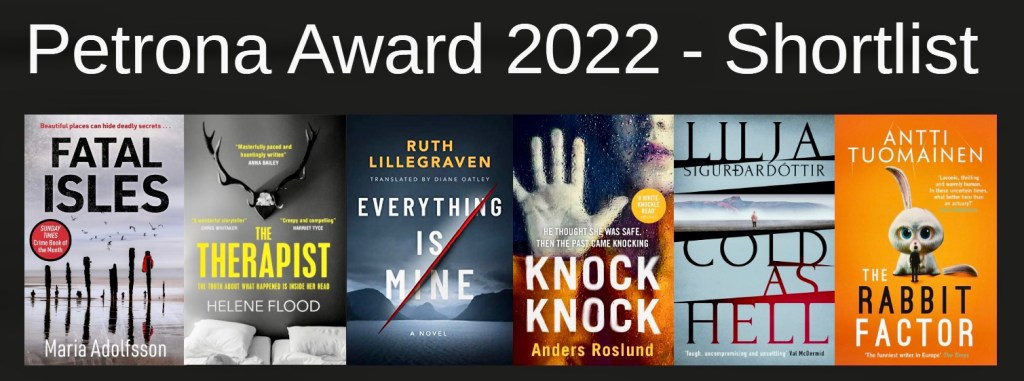
Six outstanding crime novels from Finland, Iceland, Norway and Sweden have been shortlisted for the 2022 Petrona Award for the Best Scandinavian Crime Novel of the Year. The shortlist is announced today, Wednesday 16 November and is as follows:

Maria Adolfsson – FATAL ISLES tr. Agnes Broomé (Sweden, Zaffre)

Helene Flood – THE THERAPIST tr. Alison McCullough (Norway, MacLehose Press)

Ruth Lillegraven – EVERYTHING IS MINE tr. Diane Oatley (Norway, AmazonCrossing)

Anders Roslund – KNOCK KNOCK tr. Elizabeth Clark Wessel (Sweden, Harvill Secker)

Lilja Sigurðardóttir – COLD AS HELL tr. Quentin Bates (Iceland, Orenda Books)

Antti Tuomainen – THE RABBIT FACTOR tr. David Hackston (Finland, Orenda Books)

The winning title will be announced on Thursday 8 December 2022. The winning author and the translator of the winning title will both receive a cash prize.

The Petrona Award is open to crime fiction in translation, either written by a Scandinavian author or set in Scandinavia, and published in the UK in the previous calendar year.

The Petrona team would like to thank our sponsor, David Hicks, for his continued generous support of the Petrona Award. 

The judges’ comments on the shortlist:

There were 31 entries for the 2022 Petrona Award from five countries (Denmark, Finland, Iceland, Norway, Sweden). The novels were translated by 23 translators and submitted by 14 publishers/imprints. There were 16 female, 14 male and one male/male pair of authors.

This year’s Petrona Award shortlist sees Norway represented with two novels; Sweden with two and Finland and Iceland with one each. The judges selected the shortlist from a particularly strong pool of candidates with the shortlisted titles ranging from police procedural and domestic noir to the darkly comic. 

As ever, we are extremely grateful to the six translators whose expertise and skill have allowed readers to access these outstanding examples of Scandinavian crime fiction, and to the publishers who continue to champion and support translated fiction. The significantly increasing number of female writers being translated is also to be commended. 

The judges’ comments on each of the shortlisted titles:

Maria Adolfsson – FATAL ISLES tr. Agnes Broomé (Sweden, Zaffre)

Maria Adolfsson’s gripping debut, FATAL ISLES, set in Doggerland – a group of islands in the North Sea between Denmark and the United Kingdom –  paints a vivid picture of a northern island community with traditions, rich and poor families, and a stormy climate. Doggerland comes alive on the pages so much that you would never guess it is totally fictional. DI Karen Eiken Hornby is tasked with investigating the murder of her boss’s ex-wife. Does the motive have any connection to a secretive commune that existed on the island in the past? FATAL ISLES is a high tension, character driven, atmospheric police procedural.

Helene Flood – THE THERAPIST tr. Alison McCullough (Norway, MacLehose Press)

A man goes missing under mysterious circumstances. Police detective Gundersen is officially working the case whilst therapist Sara tries to understand where her husband is. Set in the leafy Oslo outskirts, THE THERAPIST is a tense read that keeps us intrigued with unsettling twists and turns. Sara is constantly analysing herself and the people around her as her whole life is turned upside down. At the same time she fears for her own safety and tries to remain professional with her clients. Author Helene Flood is a trained psychologist who has used her experience to inform the characters and the narrative in this page-turning debut thriller. 

Ruth Lillegraven – EVERYTHING IS MINE tr. Diane Oatley (Norway, AmazonCrossing)

EVERYTHING IS MINE is the story of two happily married professionals, Clara an ambitious child rights activist at the Ministry of Justice, and Henrik, a compassionate paediatrician. Dedication to their twin sons and their respective causes begins to crack when they are faced with cases of murder and abuse and an unravelling of a tangled web of emotional secrets follows. A powerful narration and detailed observations show a stark contrast between social standing and geographical differences in Norwegian life, and leave the readers with questions of how, and if, individuals can deal with unfairness and pain. EVERYTHING IS MINE combines important issues, thrilling action and a smart intricate plot, with a strong focus on social injustice and complex family relations.

Anders Roslund – KNOCK KNOCK tr. Elizabeth Clark Wessel (Sweden, Harvill Secker)

Anders Roslund has published nine novels to date as part of the successful writing duos of Roslund & Hellström and Roslund & Thunberg, as Anton Svensson, and has been the recipient of numerous, prestigious international awards. Since the death of Börge Hellström, Roslund has continued their Ewert Grens series and KNOCK KNOCK is his first solo venture. Set over the course of three days, KNOCK KNOCK is another fine example of Roslund’s talent for seamlessly blending together a solid police procedural with a high octane thriller, leading to a gritty and fast-paced read set against his astute observations on the societal and political issues of contemporary Sweden. 

Lilja Sigurðardóttir – COLD AS HELL tr. Quentin Bates (Iceland, Orenda Books)

COLD AS HELL, the first novel in a new slick series, introduces Áróra who returns from UK to her homeland Iceland following the disappearance of her estranged sister Ísafold. She uncovers a corrupted world of dark secrets but needs help from her policeman uncle to navigate an Icelandic society with which she is now unfamiliar. The author creates a chilling and tense atmosphere where the midnight sun hides crimes and all relations are tested. The richness and intensity of the writing makes the investigative accountant Áróra, who will stop at nothing to understand and trace her sibling, a thoroughly modern and captivating protagonist in a league of her own.  

Antti Tuomainen – THE RABBIT FACTOR tr. David Hackston (Finland, Orenda Books)

Antti Tuomainen was shortlisted for the Petrona Award twice before winning it in 2020 with, LITTLE SIBERIA. THE RABBIT FACTOR, which was also shortlisted for this year’s CWA Dagger for Crime Fiction in Translation, superbly demonstrates Tuomainen’s singular gift for dark, absurd crime fiction undercut with poignancy. THE RABBIT FACTOR puts at its heart an ordinary man drawing on his previously undiscovered and extraordinary resolve, to carve out and keep his place in a hostile world, with often darkly funny results. 

The judges

Jackie Farrant – creator of RAVEN CRIME READS and a bookseller/Area Commercial Support for a major book chain in the UK

Miriam Owen – founder of the NORDIC NOIR blog and creator of content for communities

Ewa Sherman – translator and writer, and blogger at NORDIC LIGHTHOUSE. 

Award administrator


Karen Meek
 – owner of the EURO CRIME website and blog.


Further information can be found on the Petrona Award website: http://www.petronaaward.co.uk

Iceland Noir 2022

I’m in Reykjavik again. Home from home. Going from one cold climate country to another. This is my fifth time at the crime fiction festival, now with a slightly different dark twist, and my twelfth (thirteenth?) trip to Iceland. The country and the island that caught me and my my heart, and luckily will not let go.

‘Iceland Noir was born in 2013 over a curry in one of Reykjavík’s finer Indian restaurants. Yrsa Sigurðardóttir, Ragnar Jónasson and Quentin Bates were idly wondering why Iceland had never had its own crime fiction festival. The idea gelled and by the time we all met again Crimefest in Bristol a few weeks later, it seemed we had all been thinking much the same thoughts and Iceland Noir was born on the spot.’

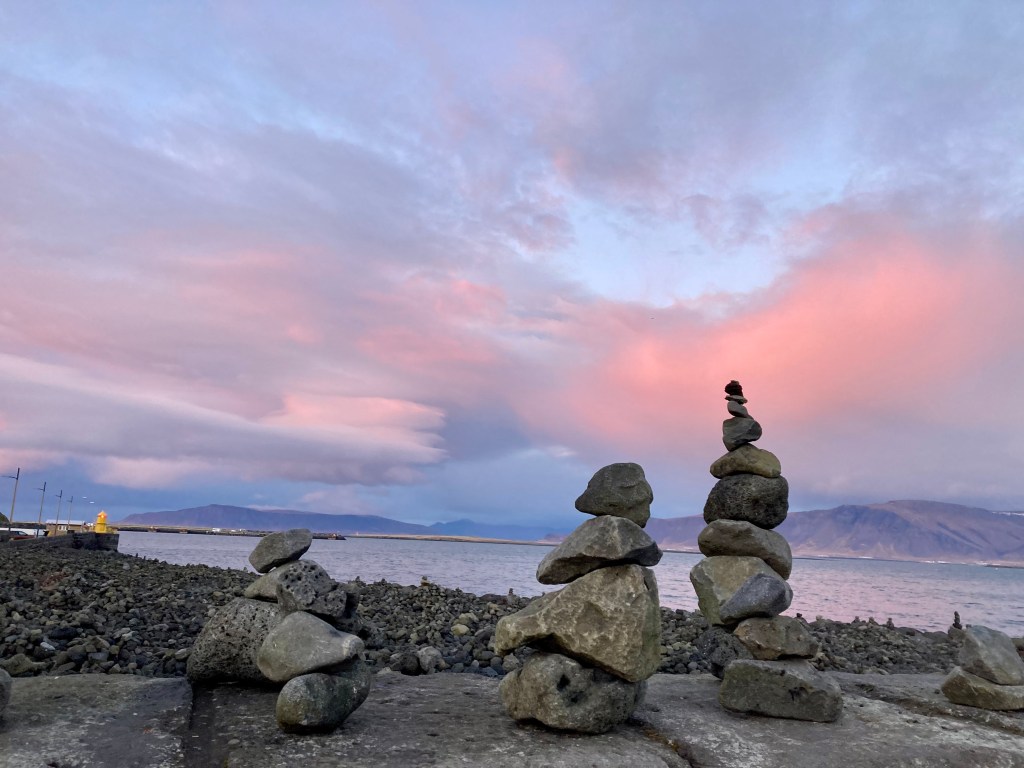
Iceland Noir’s programme is packed with darkness of all types: http://www.icelandnoir.com/programme2022. The authors and readers, the excitement, the books, the conversations, and the unique atmosphere of this piece of land that combines magic, traditions, stunning landscapes, fantastic creativity, ‘book floods’ as well as modern ills and controversies. But before the festival starts officially for most of the guests, although some events are already happening, I’m getting ready to chair my first panel with Louise Mangos, Jeff Siger, Paul Cleave and Thomas Fecchio, and enjoying silence of the chilly day. Yesterday sunshine painted the skies in incredible shades of pink. Today strong winds and cold rains might remind us that you don’t mess with nature, and have to respect whatever the Norse gods throw at you.

Crimes and Punishments

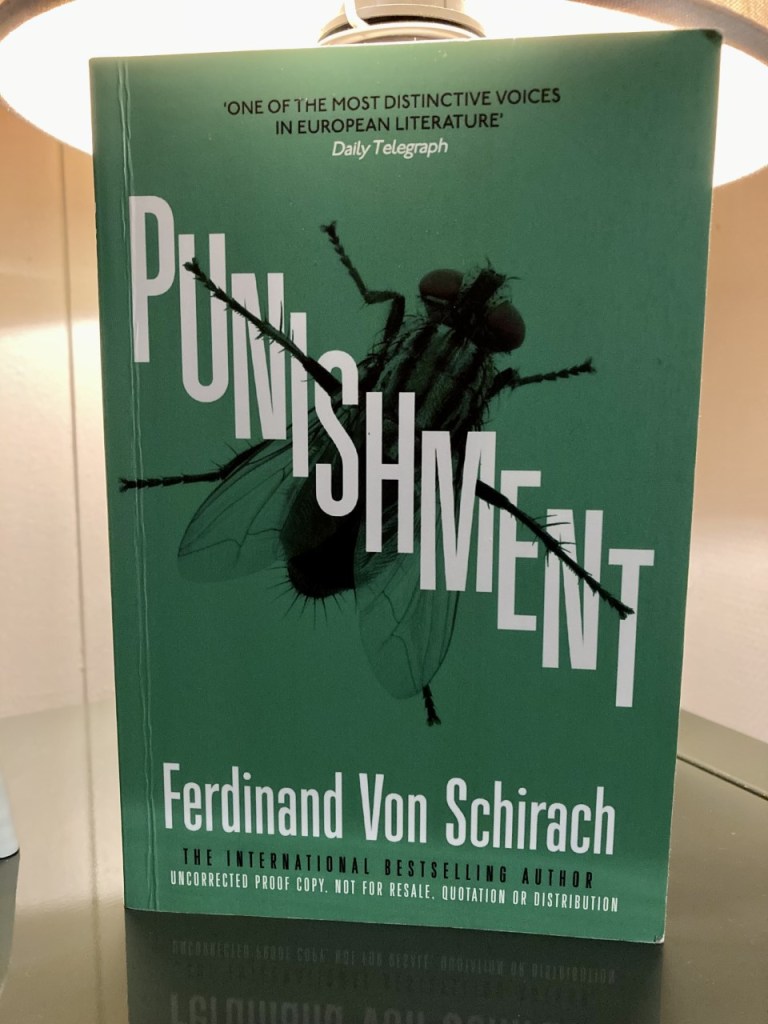
Punishment is a delight. The lightness of phrase, the floating of words, the strange yet highly charged calmness, and atmosphere of the unique legal language that connects ordinary people with the well-educated legal profession and makes the complex themes easy to understand. The way that translator Kat Hall brings the potential complicated German concepts to English, thus proving that she has not only talent for the context, nature and music of the language but also that she is best placed to work with the author. Her translation of von Schirach’s gripping prose is crisp and precise, and a joy to read.

Punishment is also a nightmare of loneliness, alienation, misunderstanding, desire to serve justice, and finding a way in the morally-skewed world. Redemption and revenge. Making choices and facing consequences. A man who values silence is driven to murder by his noisy neighbours. A cheated wife wanting revenge. People who feel no remorse and are not sorry. People who resign themselves to ‘fate’. They did what they had to do or so they thought…

All twelve compelling short stories seem unique. They are connected by the main character called Schlesinger, counsel for the defence who used to be a brilliant criminal lawyer but ‘had long since viewed himself as a ruin of a man’, even if his brain remains sharp (occasionally). Or does it? ‘He made a living from small cases – neighbourhood disputes, pub brawls and drug offences. His clients were street dealers who swallowed the little bags of heroin they had stashed in their mouths when the police came after them.’ Eleven stories made my brain wake up and enjoy the themes though of course I would have never wished to be in position of the main players. One story about sex-trafficking destroyed me. On one level I wished I have never read it, on another – I was so impressed by the reserved method of showing the incomprehensible cruelty of the world which is still there, and could affect anyone when power changes hands. I will not divulge anything more about Subbotnik which had such a huge impact on me and although I could not get images out of my head, I would recommend that readers absorb every word. The title taken from Russian ‘tradition’ has a different meaning here. I know you are getting curious.

Reading Punishment reminded me of another short story collection: An Elderley Lady is Up to No Good (Soho Press). The tone seems to be similar, intelligent and seemingly light; however, I don’t think the Swedish writer Helene Torsten based her stories on real life experience. But I can’t be sure. Here the author Ferdinand von Schirach makes no secrets about source of his inspiration. He was born in Munich, lives in Berlin now, and worked as a criminal defence lawyer for twenty years. He drew motives and situations from his professional career and created suspenseful tales precariously balancing between fiction and truth, and meandering between various legal paths which do not always help the victim. Legal loopholes exist in each system, in every country, and surviving difficulties in life means in real terms that it is the money that often takes precedence over fairness.

The bleakness of the crimes does not mean that moments of dark stoic humour and real compassion cannot coexist in this collection. Ferdinand von Schirach writes with passion and empathy, and I will definitely reach for his previous books. Here you can listen to the translator Katharina Hall reading from von Schirach’s Punishment, published by Baskerville in August 2022.  

Harm versus trust and sense of security.

When wealthy doctor Ríkharður Magnússon goes to sleep in his luxurious caravan and doesn’t wake up, detectives Guðgeir Fransson and Elsa Guðrún are called to the Westman Islands to investigate what looks like murder. Suspicion immediately falls on Ríkharður’s young, beautiful and deeply troubled girlfriend – but there are no easy answers in this case as they are drawn into family feuds, disgruntled friends and colleagues, and the presence of a group of fitness-obsessed over-achievers with secrets of their own.
As their investigation makes progress, Guðgeir and Elsa Guðrún are forced to confront their own preconceptions and prejudices as they uncover the sinister side of Ríkharður’s past.

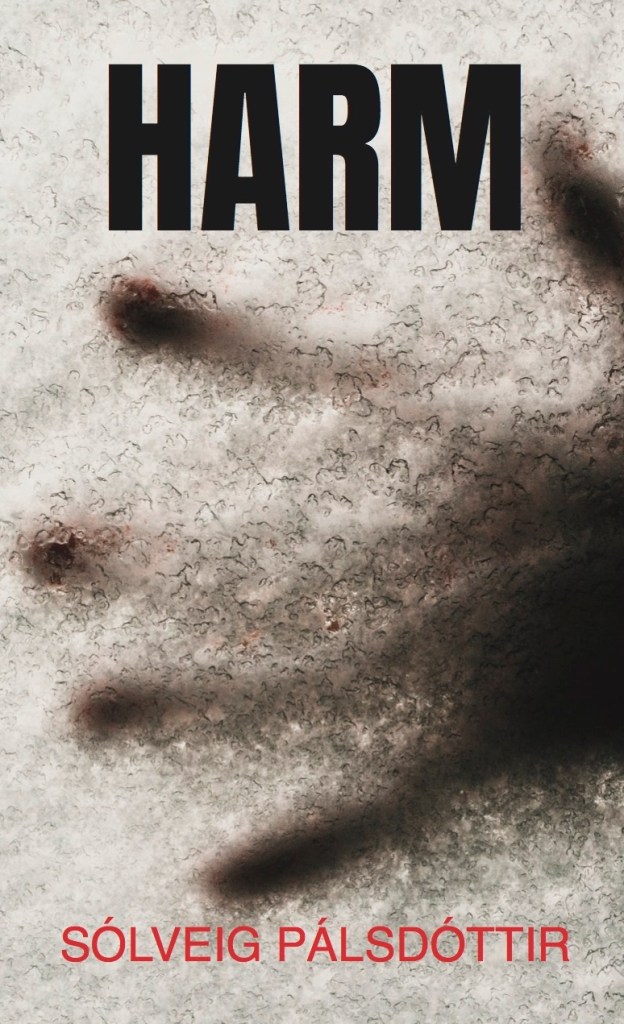
Iceland is such a small stunning country, with magnificent out-of-this world landscapes, inspiration and creativity flowing from the nature and presenting themselves in unique art and culture, the society based on equality and with the perception that everyone is fairly happy and satisfied. And of course all that is and can be true. Yet as we have already gleaned over the years from the literature and the films, the glossy surface of any environment often hides secrets, big and small, shocking or embarrassing, personal trauma or issues that nobody really wants to talk about. In Harm / Skaði, published in October 2021 in Iceland, and the third novel from Sólveig Pálsdóttir now available in English in Quentin Bates’ superb translation, these perceptions and stereotypes are examined sensitively and in detail.

Pálsdóttir’s calm unhurried trademark style flows throughout her writing. However, it does not mean that it impacts pace or narration. Instead, the right tempo, combined with the insights into psychology of individuals and groups creates an absorbing intriguing literary journey into past and present of complicated personal and familial relationships. She takes an incident or an event that must be resolved by the police and analyses it on all levels, as it reverberates in various circles of affected people. Her main protagonist detective Guðgeir Fransson oversees the investigation into the suspicious death of a wealthy confident doctor, fifty-two-year-old Ríkharður who was found dead in his luxurious caravan at the camp site on a beautiful island. His two decades younger girlfriend Diljá Sigurðardóttir becomes an obvious and typically a logical suspect: she fled from the scene and her personal history indicates serious mental health issues. Here the first red flag appears: immediately everybody is convinced that the young woman had murdered her much older partner. Guðgeir and his colleague informally question four close friends who were on holidays with the pair: two couples who are health and wellness fanatics, sure of own physical prowess and way to live their lives. Although shocked by death, Ingi Thór and Eygló, plus Ásmundur and Katrín, don’t appear to be very concerned as Ríkharður was a new member of this established group, had different interests, and drank too much anyway. Guðgeir takes everything into account, consults with his superior Særós, and thinks. And that he does to perfection. Facts, evidence, statements, reactions are important as they form the basis of exhaustive investigation. Open mind and compassion provide extra layer to the process. Diljá’s past included many problems that affected her mental state and self-confidence, and relationship with her daughter Maríu Líf, leading to losing trust in people in position of authority. Her friends have seemingly sorted lives yet are drawn to the alternative rituals to assist them in dealing with complex personal issues: ‘people genuinely believe that they are in touch with some higher power and that they are cleaning up their lives.’ But the evident order in life or wealth-induced respect don’t guarantee contentment: ‘They were all searching for something on a spiritual level, and all of them either had a difficult youth or had suffered a trauma of some kind, or both.’ By linking current grim reality of murder in Westman Islands of the Vestmannaeyjar archipelago and the South American spiritual fantasy of ayahuasca experience, the author weaves a complicated but vital thread to understand what really matters.

Pálsdóttir’s earlier novels in English translation are The Fox and Silenced. All three show another side to the Icelandic society, and an affable rational and sympathetic detective who is not afraid to query his own ways of thinking, and the ingrained opinions that he might have acquired over the years. Through that prism the author makes us also stop and reflect for a moment on how we see others. Guðgeir might not be in the mavericks’ police league but as an astute human being he is best placed to support his family, colleagues and any victims of crime. And that’s we need in the turbulent times.

Harm was published on 27th August by Corylus Books.


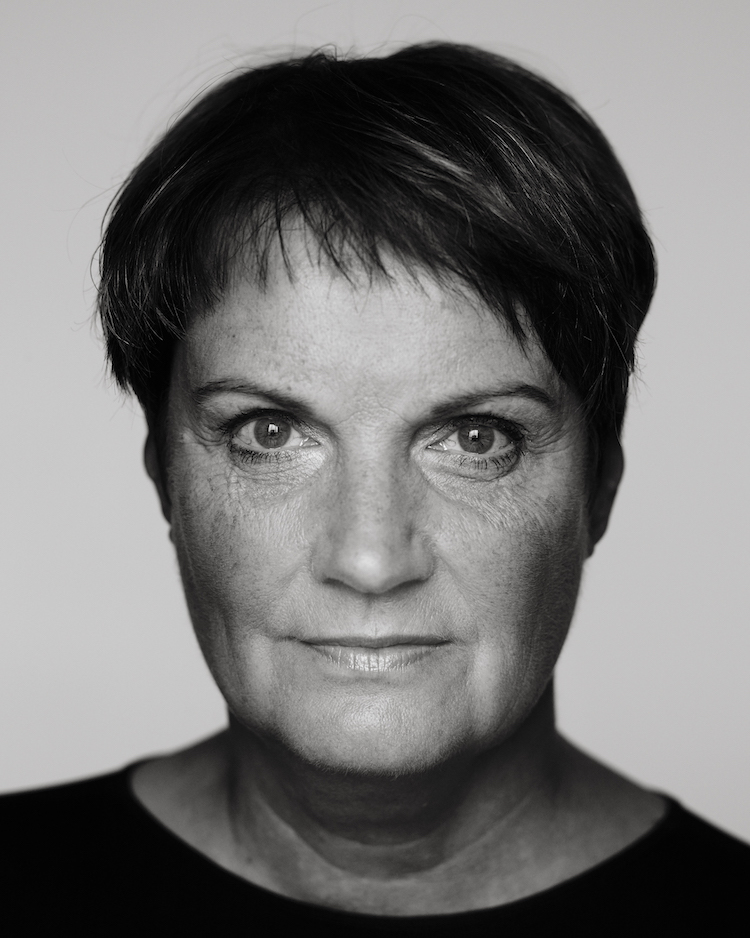
Sólveig Pálsdóttir
trained as an actor and has a background in the theatre, television and radio. In a second career she studied for degrees in literature and education, and has taught literature and linguistics, drama and public speaking. She has also produced both radio programming and managed cultural events. Her first novel appeared in Iceland in 2012 and went straight to the country’s bestseller list. She has written six novels with Reykjavík detective Guðgeir Fransson as the central character, and a memoir Klettaborgin which was a 2020 hit in Iceland. Silenced / Fjötrar received the 2020 Drop of Blood award for the best Icelandic novel of the year and was Iceland’s nomination for the 2021 Glass key award for the best Nordic crime novel of the year. She took part in several crime fiction and literary festivals such as Bristol’s CrimeFest, Newcastle Noir, Aberdeen’s Granite Noir and Iceland Noir. Sólveig lives in Reykjavík.

Quentin Bates has professional and personal roots in Iceland that run very deep. He worked as a seaman before turning to maritime journalism. He is an author of series of nine crime novels and novellas featuring the Reykjavik detective featuring Gunnhildur (Gunna) Gísladóttir. In addition to writing his own fiction, he has translated books by Lilja Sigurðardóttir, Guðlaugur Arason, Einar Kárason, Óskar Guðmundsson and Ragnar Jónasson. Quentin was instrumental in establishing Reykjavík’s crime fiction festival Iceland Noir.

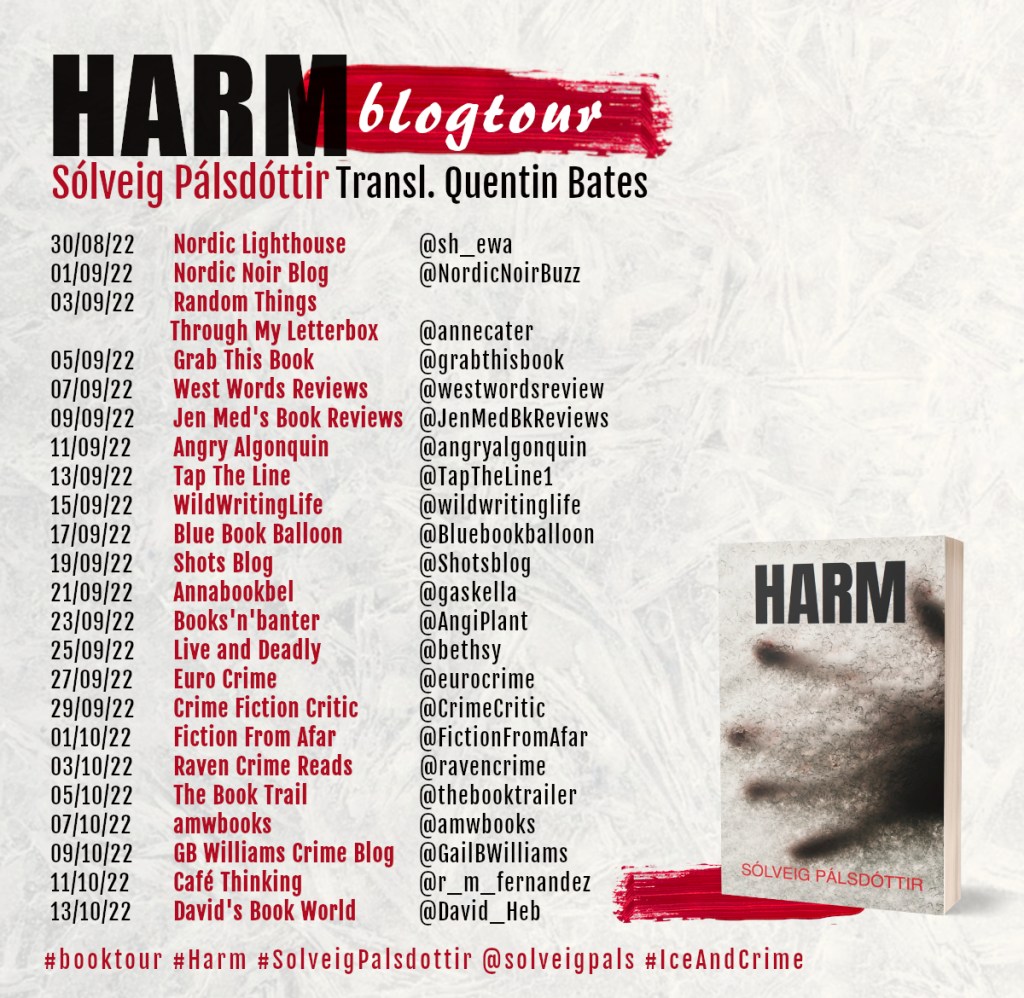
I’m delighted to share my thoughts at the start of the blog tour for Harm. Please follow the other bloggers, and enjoy the third novel in the Ice and Crime series by Sólveig Pálsdóttir.

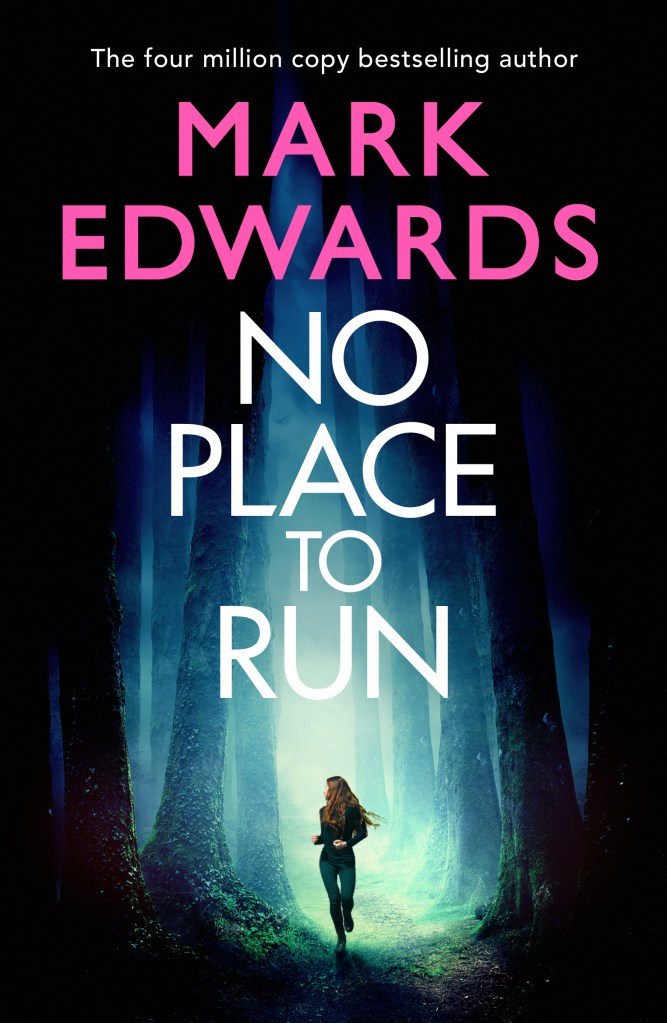
No Place to Run by Mark Edwards

Scarlett Faith was fifteen when she travelled across the world from the UK to visit her big brother Aidan in USA. She was curious and excited, but also bored to the back of her teeth with their parents’ inability to understand what she had wanted to achieve in life. She has not seen Aidan for a long time and hoped that he would appreciate her passion for protecting the Earth, for trying to save it for the next generations in the face of incoming destruction.

First outing in Seattle and she was nearly lost in the all-encompassing powerful demonstration where protesters wanted more climate action, waving slogans like ‘There is no planet B’ and ‘Our house is on fire’. Pilgrimage to Nirvana and Kurt Cobain’s place proved quite thrilling, until her brother got involved when a man talked about a special tribute gig. Yet, the music didn’t feel as urgent as the environmental issues. Then Scarlett vanished from the city, totally and completely disappeared which created a huge irreplaceable hole in the family’s life. Two years of fruitless investigations and searches and still no sign of the young woman. Aidan never gave up, feeling both guilty and responsible for what has happened under his watch; he still believes she is alive.

Lana Carrera refuses to believe that her younger brother Samuel has died in a recent wildfire. She wants answers and hopes to find him but the locals in the area hate her ‘loose cannon’ determination, warning her to forget conspiracy theories, or else. But Lana continues to question everything as she suspects police cover-up and the unexpected hostility of those who should be supportive in the face of growing occurrences of missing teenagers.

After an invitation to join a secret WhatsApp group, student Kristin Fox travels to Eaglewood. She wants to become part of the conscientious team with other environmental activists who take the climate change seriously. She is ready to train and work with them at the Ranch, and to complete important drastic missions to save the Earth. Soon though she notices that abundance of drugs and various reckless dangerous men have too much presence in the environment meant to be clean and inspiring.

And Shannon Reinhardt, charismatic leader of the Ranch where together with her wingman Jimmy she has been recruiting eco-warriors. She is a passionate visionary, strong independent woman, who after a spiritual awakening made her life mission to fight climate threats. And even though she would definitely not chosen that word herself, Shannon leads a cult.

Mark Edwards

The action of No Place to Run is set in and around a fictional Californian town where the undercurrent of secrecy and violence runs under the surface of ordinary life. The Mayor Christopher Hood seems to have all under control. However, as Aidan follows the vague trail based on a possible sighting of a young woman looking like Scarlett, he meets strange characters and unreliable police force, and begins to realise that lofty ideas and business deals hide something very sinister.

There are futuristic concepts which actually take us back to the nearly biblical notions of survival of the strongest and the best who would be able to take care of the planet and its resources in the future. Mark Edwards takes the original idea to the extreme. In this case fires, rather than melting glaciers, symbolise the apocalypse. Female characters, including a small appearance of an older lady Francesca who gave Aidan new hope, drive the story, even though it’s Aidan’s personal ‘detective’ investigation. Mark Edwards pulls all threads and weaves a tight net of emotions that capture your attention and stop your breathing when the tension and terror take over. And the visual aspects of his writing style make his latest novel an intensive AND slightly disturbing treat with the adventurous elements to boot. Read it at your peril. In fact, just read it!

Mark Edwards’ No Place to Run – Bookshop.org No Place to Run – Amazon is out on the summer solstice 21st June 2022, published by Thomas & Mercer. Huge thanks to Rhiannon Morris of FMcM Associates for the opportunity to join the blog tour.
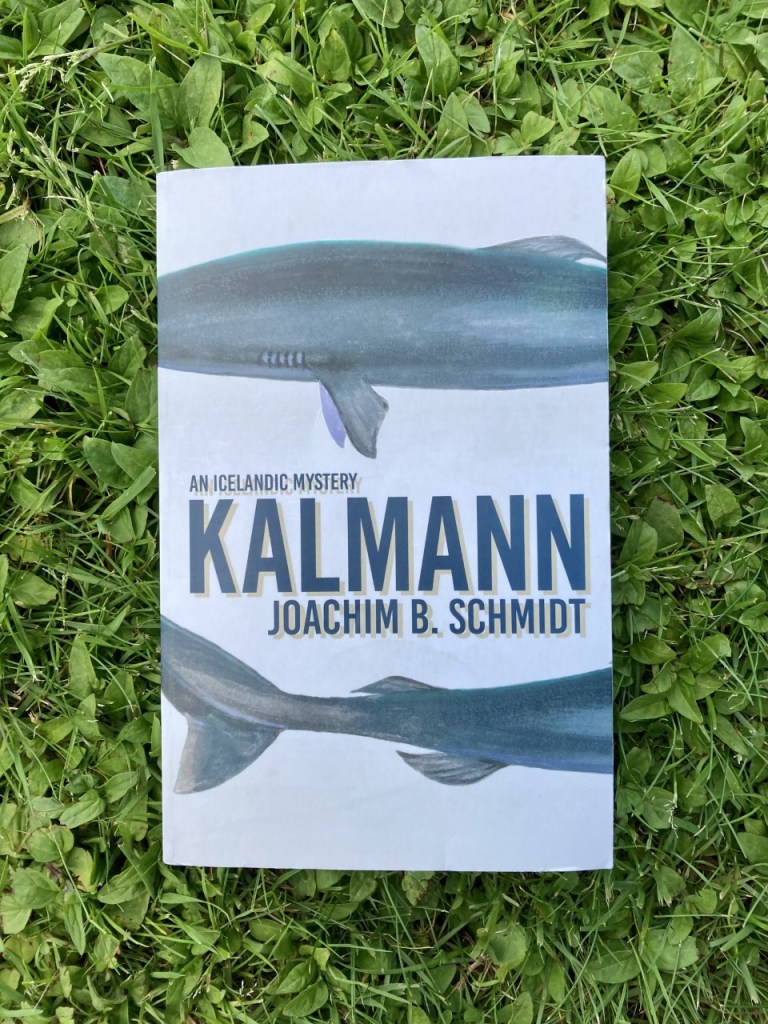
Kalmann by Joachim B. Schmidt

‘The Greenland shark is a miracle of nature, even though it wouldn’t win any beauty contest. It has a marvelous sense of smell, probably better than that if a dog […] is far down on the seabed, two hundred metres deep or two thousand metres deep, it doesn’t matter to the shark.’

The above information is essential if you are serious about catching sharks. Also, you need to be aware of their various habits, and what they like to eat to make a success of hunting for these enormous creatures. By the way: ‘it’s a complete nonsense that red-haired children used to be used as bait – even though you could use them if you really wanted.’ It’s not a job for the faint of heart or those who cannot properly commit and just want an easy catch. But of course, Kalmann knows everything about this subject and that’s why he is also the best shark-catcher in the tiny village located on the northeastern tip of the Melrakkaslétta peninsula, in the north of the country. In fact, he’s renowned for producing the best hákarl, the fermented shark meat delicacy which could easily kill people with its powerful stink. But it doesn’t kill. Hákarl is appreciated only by some connoisseurs, and Kalmann is fine about it. He is familiar with how the village inhabitants live, react and deal with life; he feels responsible for them; after all he is the self-appointment Sheriff of Raufarhöfn; complete with a cowboy hat, a sheriff badge and an ancient Mauser, physical memories of his American father. Wise and courageous, he takes pride in protecting people and every day he treks across wide plains, hunts Arctic foxes and keeps an eye on any reckless polar bears that might feel inclined to swim from Greenland to Iceland. His routine keeps him grounded and relatively happy, though he makes no secret of his wish to find a wife urgently, OK, his first girlfriend. Basically things are fine. Well, sometimes his brain works in a truly strange way but at the age of nearly thirty-four he is definitely not a village idiot even if he didn’t spend much time at school and was called a retard, and eats too much of Cocoa Puffs (but ‘never for lunch. That was my rule’). He relies on his gut feeling, in times of need wants his mother who works as a nurse in Akureyri, and desperately misses his Grandfather who slowly withers away in a residential home in Húsavík. Yes, that Húsavík of Eurovision Song Contest: The story of Fire Saga fame. And Akureyri that you might have read about in Oskar Guðmundsson’s The Commandments.

Back to the small community… When one day towards end of the winter Kalmann discovers a pool of blood in the snow, the sequence of very small events threatens to overwhelm him. He accidentally tells someone about his discovery, police are notified, and he realises that local businessman Robert McKenzie, otherwise known as the King of Raufarhöfn, is missing. But is there any connection between this disappearance and what Kalmann has seen? Is the existence of almost deserted village in peril? Was Robert eaten by a large animal or killed by the East European mafia? Detective Birna arrives from Reykjavik, and suddenly the remote isolated spot on the Icelandic map, 609 kilometres from the capital, becomes more news-worthy than a political summit.

Just to be clear: grass does not feature in Kalmann

If you had no interest in Icelandic flora and fauna before then now it’s time to get acquainted through Kalmann’s eyes and his simple but wise thoughts. Joachim B. Schmidt’s mission seems to be enlighten us in the manner of glorious madness akin to TV series Fargo or the Finnish author Antti Tuomainen’s fictional universe. We have snow, cold and some darkness; weird characters and formal protocols; gossip and stereotypes; tenderness and compassion. What we don’t have is the corpse or the visual evidence of the crime, and we’re not totally sure about the motive as speculations get wild. As the police investigation progresses and Kalmann’s head begins to explode from the contradicting theories and invasion into his calm naïve existence, we also get rough dark humour and realisation that we might live in parallel worlds where events can be seen and understood in contrasting ways. The background of serious issues such as losing fish quotas and impact of the changes on the lives of people dependent on stable climate: social and meteorological, adds to the beauty of this unusual and rich novel superbly translated by Jamie Lee Searle. You will love Kalmann.

People need rules in life, that’s important, because otherwise there would be anarchy, and anarchy is when there are no police and no rules and everyone does whatever they want. Like setting fire to a house, for example.

The author Joachim B. Schmidt was born in Grisons, Switzerland in 1981 and emigrated to Iceland in 2007, where he now lives with his family in Reykjavík and works as a journalist, writer and tour guide.

Kalmann – bookshop.org / Kalmann – amazon was published by Bitter Lemon Press in May 2022.