Paris Pages by Shelley Day

‘If I could make an effective plan I would write exquisite prose, multiply embedded, like W G Sebald, Modiano, Per Petterson. I’d tell it like it is, like Ernaux. I’d knock people over like Beckett; soothe like Tove Jansson; counsel, insightful, brave, and strong, like Maya Angelou; go dark-deep melancholy desperate beautiful like Plath. I’d meditate poetically like Toni Morrison, tantalise and annoy like Gertrude Stein. Like Clara, I’m never certain how well I get on with Stein; perhaps I see her more as a pivot, a queen bee, choreographing minions. I’d lead myself astray like Malte Laurids Brigge, or Anne in Astragale. I’d be capable of cruel shocking things, like those twins in Ágota Kristof.

My plan was to lose myself in a fast-paced thriller or a crime fiction novel as the Norwegian tradition encourages everyone during the long Easter break. However, a completely different story pulled me into its core and påskekrim might have to wait, although Shelley Day, author of The Confession of Stella Moon is no stranger to the genre. (What Are You Like shows her another writing style). Paris Pages, published by Postbox Press / Red Squirrel Press, is both a universal and a deeply personal book that deals with the importance of art in everyday life and Art with a capital ‘A’, and what it truly means to be an artist. The quote above is just a tiny indication of the richness in the book. Through one hundred pieces of sublime lyrical prose which often becomes poetry, Paris Pages explore essence of the creative process. This in itself is a complicated meandering journey through opinions, thoughts and emotions. As the book is focusing on three main characters, the understanding of what Art is, or should be, and how it could relate to our existence and living, it contemplates various artistic forms and styles, reaching into the real historical events while absorbing atmosphere of the city which has always been an inspiration to many. Shelley Day knows Paris well, having lived there, visiting various galleries and museums, walking the streets, looking at the buildings and breathing the air. She made notes and made inquiries, asked questions and asked herself, and kept writing. The result is a stunning story, quite urgent in its message, and painfully contemporary. 
Very private experiences are also relevant to the intertwined lives of Clara Delaney, Sadie Sarrazin and László Száműzetés, three people who found themselves in the French capital for different reasons. The psychotherapist Clara feels she’s nearly done with her job and profession, and is determined to become a biographer of the barely known, nearly completely forgotten and possibly disgraced Max Zuniga, a psychoanalyst and one of Freud’s colleagues. It seems as if he had never existed. She is still processing breakup with her partner Johannes from Oslo.
The young photographer Sadie as a volunteer worked with traumatised migrants at Sangatte, a commune on the northern coast of France, a place which we might heard about as the Jungle near Calais. She struggles with powerlessness, unable to be creative, to find this special spark and continue her work as a witness to the events that had happened during this particular refugee crisis. Her own trauma paralyses her; and therapy sessions with Clara seem to increase anxiety and sense of failure. And László, a mysterious man linking both women and somehow guiding them through complex emotions, represents the spirit and soul of Art. He is the personification of the Exile, a state of mind, a situation that is both physical and intellectual, and conveyed beautifully in Paris Pages. ‘Where is Home?’ will resonate with many readers.
The author makes so many references to writers, painters, sculptors, thinkers – Beckett, Edith Piaf, Louise Bourgeois, Ai Wei Wei, Rothko, Picasso, Cocteau, Patti Smith, Keats – all those creative giants who made their mark in Paris and who had also shaped her own relationship with art. I loved this element of the book as it forced me to pause, go back to a paragraph or sentence, read again, reflect on what I had learnt about them before and what I now wanted to check, find out again, put in context. The abundance of delicately distributed knowledge is like that extra sprinkling of dark chocolate in otherwise ordinary coffee. Not that there is anything ordinary about Day’s writing, a firm believer in the true concept that ‘The story is everything and everything is the story and it’s all inter-connected.’

Let me leave you with this thought as you hopefully reach for Paris Pages: ‘There is and never can be anything worthwhile in any manifestation of Art as long as human beings are suffering and humanity itself is imperilled on the verge of planetary self-destruction. Some things are of crucial importance. Art is an irrelevance in a world as troubled as this.’

Remembering Miriam, always and for ever

My dear friend Miriam V Owen died suddenly last month; today was her funeral which I joined online. It was a beautiful touching but heart-breaking occasion. I can’t even imagine how her family must feel… All her friends are deeply sad but want to cherish the moments spent together. I don’t feel I can express well anything that goes through my mind as I think of Miriam, one of the #ScandiGang’s original members. So just this short post for now… We met in London in 2013, and clicked straight away, and shared love of Scandinavian and Nordic things: literature, food, landscapes mood. We talked about bringing up boys, about work and life, about crime fiction, travel, writing. She sent recipes. She was always there… We’ve been together at different book events and festivals in Iceland and the UK but haven’t managed to meet in Bergen in Norway. The plan was to follow in the footsteps of Varg Veum, the fictional PI created by Gunnar Staalesen, whom Miriam adored. Her passion for #NordicNoir was shown in her informative views as my fellow judge for Petrona Award and on the pages of the fascinating blog from which I copy the words below.

Nordic Noir blog – Iceland Noir 2014 ‘This film is all about experience at a crime writing festival in Reykjavik, Iceland. It contains interviews with authors, fans and one of the festival organisers as well as images, music and some text. It was made as piece of academic work in 2014 to allow me to explore videography as a tool for research. I loved the experience of making a film, editing it and working with a musician on some of the soundtrack. The piece has been well received at two conferences. One around the theme of Community Memory at the University of Stirling and also at the Academy of Marketing Arts and Heritage Colloquium 2016 held at Royal Holloway in London. The Icelandic Ambassador in London has also viewed it. When I made this I did not have any really fancy tools […] This piece would not have been such positive experience without the support of the crime fiction community as well as the academic community that has supported me. Thank you all.’

I will write more but not today. We miss you, Miriam.

ScandiGang underground. 13 October 2013

The Bad Weather Friend by Dean Koontz

The Bad Weather Friend, set in Orange Country, California, is as far from removed from Nordic Noir atmosphere as possible, even though I found this sentence that quite rightly stopped me in my tracks: ‘The driver’s door opened, like a Norse god being born out of rock, Spike emerged from the Explorer.’ But who is the towering Spike, and why does he even drive a flash Ford car in the wide American streets in the warm October dark night? Why is he frightening and sweet in equal measures? He does have a presence of a powerful yet forgiving god after all.

Well, nobody had any idea of what this manifestation would entail, especially a super nice twenty-three-year-old man called Benjamin Catspaw whose sunny disposition and positive attitude to anything that world throws at him made him a truly unique individual. That was until something odd begins to unravel. One day he loses his job as a licensed real-estate agent, his promising career and glowing reputation, and his fiancé Jill Swift swiftly finishes their relationship. Even his favourite chair is destroyed while his ultra-modern spotless white decor house shows subtle signs of agitation. He is not paranoid but severely tested and begins to feel convinced that someone is really out to get him. To calm his nerves and trying to understand why bad things are in his path, Benny turns to cleaning. And more cleaning. Help and answers don’t come from his friends and acquittances. Then he receives a huge crate which apparently holds rare books from Talmadge Clerkenwell, an eccentric uncle he had never heard of. The accompanying video message says: All will be well in time. Alas, reading matter does not materialise. Instead a seven-foot-tall self-described ‘bad weather friend’ Spike appears and declares himself for ever in service to his new master. Menacing presence and terrifying intimidation techniques are his trademarks, as well as ‘shock and awe’. He is a craggle, ‘your bodyguard, lifeguard, paladin, defender.’

Dean Koontz’s latest novel is a mad enjoyable ride into bizarre and unknown, a gloriously weird mixture of hardcore thriller and fantastical adventure with touches of Harry Potter for grownups. Three Musketeers come to mind, too, as three main characters face the ruthlessness of the world which wants to destroy nice Benny. Well, Spike deals with the enemies of various calibre, while Benny deals with his memories of his peculiar childhood and teenage years to say the least, and many strange events that had shaped him. The fascinated silver-quick and lovely Harper, a waitress and a trainee Private Investigator, soaks in the mood of his-speed story and begins to fall for the human and for the craggle.

What starts with the trio visiting Benny’s ex-boss Hanson ‘Handy’ Duroc to get answers and then crashing a party at the slimy attorney’s reminded me so much about another revenge-seeking story, though motives are different. In my favourite movie, a black comedy In Order of Disappearance set in the snowy Norwegian cold whiteness, a father looks for those responsible for his son’s death, and eliminates the baddies one by one. Spike does a similar job.  

‘You remind me of John Wayne.’

‘That’s a high compliment, ma’am.’

‘Do you date?’ she asked.

‘Indeed. I date back eighteen hundred and fifty years.’

Harper frowned. ’What’s that mean?’

‘It means I’m eighteen hundred and fifty years old.’

‘Huh. You sure don’t look it.’

‘A craggle is what he always was. We always are how we came into the world. The year I came into the world was a bad year for nice people. They needed us.’

I enjoyed the in-jokes and the flowery language: ‘The situation in his kitchen was like one of those cockroach-pleasing disasters.’ Although the suspense and thriller elements are present throughout, I found it funny and touching, more like a tale about friendship, with the main theme of being kind and decent in the current times. I don’t know if The Bad Weather Friend is an antidote to the unrest in different parts of the globe as the year 2024 begins to roll. However, it will give you some surreal breathing space from the reality of upsetting news, and some laughs. And the hope that good must prevail. Just like in Koontz’s earlier novel After Death.

Dean Koontz‘s latest thriller The Bad Weather Friend – Bookshop.org / The Bad Weather Friend – amazon.co.uk is published by Thomas & Mercer on 1st February 2024. Thank you to Antara Patel of FMcM Associates for the invitation to join the blog tour.

Jólabókaflóð – The Christmas book flood, part 8

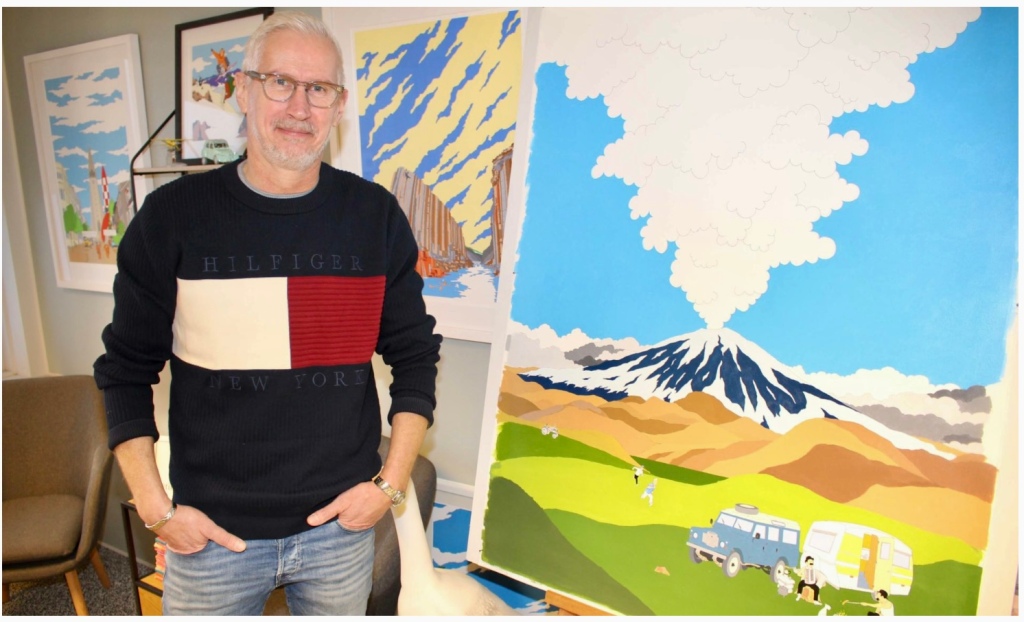
If you have met Óskar Guðmundsson at a book festival, maybe at Granite Noir, CrimeFest or Newcastle Noir in the UK, or on his home turf in Reykjavík at Iceland Noir, you would know that he is a charming friendly sweetness-and-light type of man, allowing darkness to enter his books. Easy to talk with and definitely artistic, crating beautiful images of some familiar and surprising themes. You can follow him on Instagram Tinnamyndir and read more here (Google translate might help) from which I used the photo below.

Music is also important for Óskar who says: I listen a lot to music while I write, and choose what to listen to depending on what kind of chapters or scenes I’m writing. For the more laid-back chapters I go for softer music such as Shade Shade or GDRN and for the action chapters I need something with a harder beat, and listen a lot to Kaleo

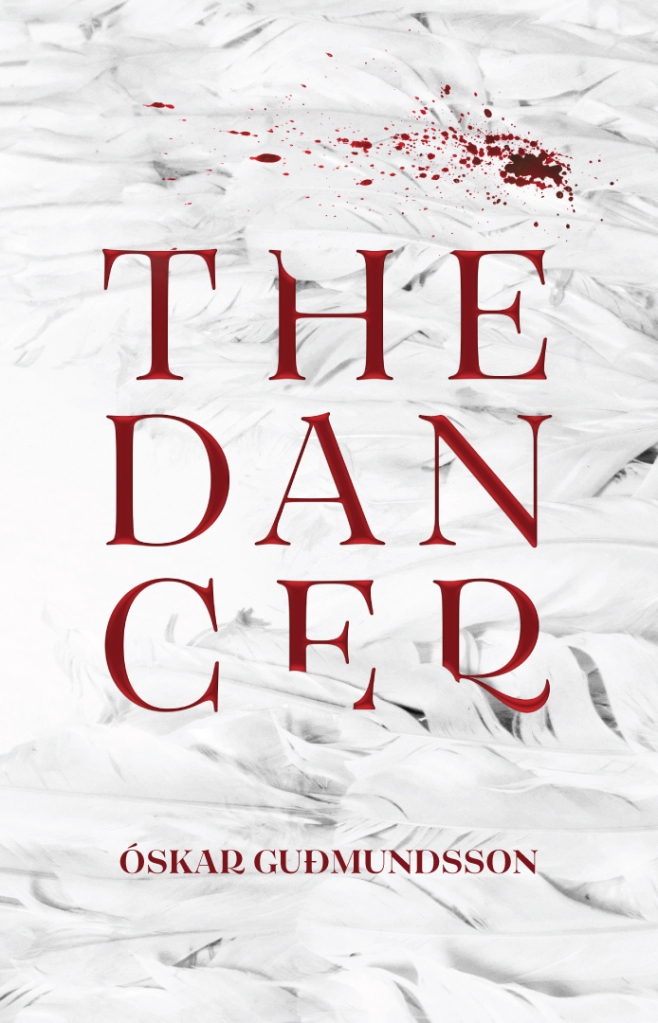
In November 2021 The Dancer was published in Iceland. It tells of a young man Tony, always been on the losing side in life. He was brought up by his troubled, alcoholic mother who had a past of her own as a talented ballerina, until a life-changing accident brought her dreams to a sudden end. As her own ambitions for fame and success were crushed, she used cruel and brutal methods to project them onto her young son – with devastating consequences. There is also a case handed to veteran detective Valdimar, supported by Ylfa taking her tentative first steps as a police officer with the city’s CID while coping with her own family difficulties. The duo search for a vicious killer after a discovery made on Reykjavík’s Öskjuhlíð hillside revealed that the body found has been there for a long time.

‘The way the idea for The Dancer came to me was quite special, and let’s say that it pushed its way into my head. We had been spending time in the countryside and I was driving back to the city in the evening, with the family asleep in the car. I switched on the radio and there was a Rolling Stones song playing, and all of a sudden I had an image of a young man ballet dancing to the song. Forty-five kilometres later, I parked the car outside our house and I had practically the whole story in my mind so the first thing I did was to jot down its outline. It was almost unbelievable that nearly the whole time I was working on it, I knew where the story was going. I’ve often thought how great it would be – and how convenient – if every idea could come floating through the air without having to be persuaded.

With this idea I knew right away that it would not take place in the present day. I was delighted because I had thought over whether it would be interesting to write a story set before the age of computers. It’s challenging but also satisfying to get to grips with a story that doesn’t have any of those gadgets. Another reason for setting the story at that time, 1983, is that this was precisely when I was a teenager and knew the centre of Reykjavík very well. It was fantastic to be able to travel back in time, revisiting all those places and the shops that aren’t there any longer. All the research work was great fun, as it meant checking on the clothes fashions of the time, what kitchen appliances were in use, and so on. At that time microwaves were the latest thing, and I enjoyed allowing this technology to irritate my detective, Valdimar, although his wife loved it.’

The Dancer was an immediate bestseller, released during Jólabókaflóð or book flood simultaneously as an eBook, audiobook and paperback. It was accompanied by an original song in which Óskar’s words have been put to music featuring some of Iceland’s leading musicians Daniel Agust, Bomarz, Doctor Victor: Dansarinn. Now this first instalment of a new series will be available in English from 5th January 2024, published by Corylus Books. Óskar Guðmundsson is delighted: ‘I have a great relationship with my translator Quentin Bates, and we are good friends. I’m fortunate he’s so good at what he does, and our conversations aren’t that often about how to translate this or that. When we need to discuss anything to do with a translation, it’s normally about passages that need some attention, or to do with people’s names and that kind of detail. It’s a fantastic feeling to be able to relax, knowing that the book is in good hands.’

Óskar Guðmundsson keeps writing and creating: ‘The next story in the trilogy has been published in Iceland and it’s called The Puppet Master. In The Dancer we got to know that Ylfa was struggling with family problems, and in The Puppet Master we get to find out more about that. She and Valdimar are given a case to investigate that involves hostel for boys in Hvalfjörður, as those connected to the place begin to disappear one by one. The investigation touches on a ten-year-old murder case that was never solved, when young siblings were found murdered and tied beneath a buoy in Reykjavík harbour. The story takes on how society dealt with youngsters who found themselves excluded from the mainstream and who were sent to these hostels, with horrific consequences. It also deals with an eternal problem here in Iceland, of the personal relationships and nepotism that have led to a great deal of corruption within government.’

Gleðileg jól!

My Blue Peninsula by Maureen Freely

In Maureen Freely’s own words: ‘It’s about an old Istanbul family that derives its prestige from the patriotic ancestor who served next to Mustafa Kemal in Turkey’s War of Independence. His wildly bohemian descendants have been in the news ever since, often for less noble reasons. But no one ever speaks about how they came into their money – until Dora, Pasha’s granddaughter, takes it upon herself to investigate her family’s past. Whereupon her world unravels.’

There is so much I still don’t know about history in this region, about the culture and the people, even though I did pay attention at school, especially in relation to the Polish situation, as we learnt the King Jan III Sobieski of Poland had saved the rest of Europe from the Ottoman Empire’s influence. Battle of Vienna in 1683 was the defining moment for the combined forces of the Holy Roman Empire, led by the Habsburg monarchy, and the Polish-Lithuanian Commonwealth. The Ottoman Empire, founded around the year 1299, controlled much of Southeast Europe, West Asia and North Africa. It was the largest political entity in this part of the world until its demise and eventual the dissolution by treaties after the end of WWI. The modern Turkish Republic was established. But I digress a bit.

My Blue Peninsula by Maureen Freely, published by Linen Press, is her fourth novel set in Istanbul which she knows very well after spending childhood there while her father taught physics at an American University in the city. Curious about the author and academic Maureen Freely, I began searching for information about her work as an acclaimed writer and a translator of books from Turkish, including five written by Orhan Pamuk who was awarded Nobel Prize in Literature in 2006. That led me to read about other Turkish authors whose books Maureen Freely brought into English, and about the fairly recent tragic history of the country. For more than a century the Turkish state refused to acknowledge the Armenian genocide in 1915. Even mentioning the word could have led to prosecutions, and it did. However, history cannot be ignored and forgotten as it still affects generations of people whose own personal history needs its own voice. The geopolitical context, ‘moving’ borders and dealing with the shameful past gives My Blue Peninsula a truly epic feel, especially as various characters come from different countries. Yet personal drama makes it intimate and heartbreaking. This vivid powerful book focuses on Dora Giraud’s search for truth, as her extended family is just one of thousands that experienced the shameful and tragic past.

The novel’s strong precise prose of seven notebooks, akin to confessions, chart life of Dora from her upbringing and childhood in America into late middle age, taking in numerous locations and the enormously complex legacy. This personal journal is meant for her adult daughters Maude and Clementine; an exploration of the turbulent past and explanation of her decision to remain in Istanbul and risk her life to continue campaign to record and acknowledge the Greek, Armenian and Assyrian genocides. In the capital city she has survived an extremist attack which killed Tallis, her American ex-husband, and yet she is unable to leave the past behind.

That process is difficult. Dora uncovers strands of family heritage linked to the past and constantly influencing her choices. She is part-Ottoman, part-Armenian, part-American, and a descendant of the genocide, having both the victims and the perpetrators in the genealogical line. At first she is curious and confused when suddenly her quiet life in New York turns into an international adventure across the ocean. Bohemian and mysterious spy drama awaits when her beautiful secretive mother Delphine decides to move to Istanbul in the 1960s and then the realisation that she has two passports hits her. Getting to know relatives and making friends while embracing free artistic atmosphere in her grandmother Hermine’s city apartment, she begins to discover the reality of conflicts, although she is often unaware of real events, decisions, reasons. And as she learns more, she also grows more determined to untangle strands and to understand what’s happening in the Cold War context, its aftermath, and the rise of Islamic fundamentalism.

Although the search for identity, belonging and comprehension proves to be a painful emotional journey, Dora must do that, and she seeks love and assurance, too. She needs her family, her people. Her story is rich, complicated, violate and engrossing. It cannot exist in limbo as relationships between various members of her huge family are so entwined and dependent on the actions of previous generations. There are many white lies, and unspoken secrets, hidden issues. Cousins are not always who they seem and might not be related by blood. Generations do not follow a standard pattern. Betrayal and confusing connections are everywhere. But this is her cultural and historical inheritance:

‘I’d try to imagine what I could say. That my mother was a spy, and my father the son of a Pasha? That my grandmother, a brilliant but scandal-prone artist, had only learned to love her husband after shooting him in the neck?’ ‘How was I to explain that tangled roots like these had not been unusual in the ruling classes of this vanished empire that my lovely new friends had probably never heard of? Or that I nevertheless felt disappointment on discovering these roots, because it meant that my father could not therefore be a Soviet spy of whom I was so very fond? How could I convey how jarring it had been [..] to realise that my cousin Sinan was in actual fact my nephew?’

Yes to Jessheim!

How many people are familiar with the Norwegian town Jessheim which lies round the corner from Gardermoen airport, within easy reach to the capital, and close to the forests – if you feel like searching for dark and mysterious things… However, if you are into a dark, dramatic, murderous and criminally good experience indoors, then Jessheim was the right place to be on a cold snowy and frosty November weekend. I knew that Thomas Enger grew up here and even if he didn’t showcase the exact location in his books, the atmosphere of a small town and the nuances of relationships formed there can be sensed in some of his writing. Then there is Oslo, too. So fast forward (seriously)… and after attending many crime fiction festivals both in Norway and abroad (I had a pleasure of meeting him at Newcastle Noir, CrimeFest, Bloody Scotland and Iceland Noir) Thomas Enger began to think of creating his ‘own’ festival, or rather a re-creating the wonderful experience that writers and readers get from meeting and talking, reading and writing, sharing passion for books. Organising any event takes time, energy and resources, and tons of passion. Thirteen years after his debut and having travelled the world with his books, and I hope I got the number right, the author felt he had an understanding of what readers want from such events when they meet their heroes. The idea of Thomas Engers Krim Festival was born long ago and embraced by the local community, with generous support and enthusiasm. Miriam V Owen of Nordic Noir Buzz recently wrote about the origins of Thomas Enger’s Krim Festival. Two packed evenings of conversations and a full day of events took lots of planning; invitations to authors to join the festival were sent and everyone who was able to appear on these days said yes. Yes to Jessheim!

The program (16th – 18th November 2023) was packed with respected names and loved authors, most of them recognised by the English readers also, even if we might still wait for the English translations of their books. The lineup on Thursdays and Friday included stars of the Nordic Noir firmament: Kjell Ola Dahl, Sigbjørn Mostue, Helene Flood,  Silje Ulstein, Ørjan N. Karlsson, Ingar Johnsrud, Jørgen Jæger, Chris Tvedt, Jørn Lier Horst, Tove Alsterdal, Jan-Erik Fjell, Derek B Miller (honorary Nordic author), Antti Tuomainen, Sofie Sarenbrant and Gunnar Staalesen.

Quick, so called ‘revolver’ interviews, conducted by Tom Egeland. With Sofie Sarenbrant, Tove Alsterdal, Alex Dahl, Jan Mehlum and Ingrid Berglund

I didn’t go to dinner at the old stylish Herredshuset where magnificent Rein Alexander provided entertainment. I am sure it was a fabulous event judging by the mood present all Saturday in the cosy room of Kulturbanken Kreti & Pleti, smelling of freshly made waffles which seemed to lull us into a false or imagined sense of security while the red and blue lights amplified the unsettling nature of some themes. The top Nordic Noir authors from Norway and Sweden talked about issues and situations they are inspired by, the writing process, the issues and problems they want to expose, the challenges, the pure joy of creating a good engaging novel. It was fantastic to listen to these deep interesting conversations, followed by short sharp interviews conducted by Tom Egeland. It was serious and honest, and inspiring and so tempting to spend even more money at the pop-up bookshop. Because why not? So to summarise Thomas Engers Krim Festival – what a success to put Jessheim on the map of literary events and making people want more books and more close encounters with brilliant authors who create them. So huge thanks to Thomas Enger who made his idea a reality. Same place next year then?

Thomas Enger

Here are some photos from the day. I am happy to have been there, especially as my language skills are getting better and I could talk to Norwegians who are also incredibly good in English. I even understood Swedish! Thank you Norse gods for translations while I’m getting closer to read more Norwegian Noir books in original.

Gunnar Staalesen with Øistein Borge and Torkil Damhaug
Elisabeth Kjensli Johansen with Trude Teige and Hanne Kristin Rohde
Elisabeth Kjensli Johansen and Anne Holt
Karen Sullivan of Orenda Books sharing ‘inside information’ with her two international authors: Norwegian Thomas Enger and Finn Antti Tuomainen – and with the audience

White as Snow by Lilja Sigurðardóttir

I heard about Lilja Sigurðardóttir’s writing long before her books became available in English, and I was intrigued by the mixture of her sophisticated yet down-to-earth attitude, curiosity about life, and gloriously stylish flowing words. Then the good rumours became reality. Each year a new exciting novel appeared in perfect smooth translation by Quentin Bates, while the publisher Orenda Books kept on feeding our addiction. I have read Reykjavik Noir Trilogy (Snare, Trap and Cage), the standalone Betrayal, and now the latest offering in the Áróra Investigation series. In Cold as Hell and Red as Blood we got to know the main people and the setting of apparently peaceful calm country, but with the dark undertones and dangerous criminals running their businesses of money laundering and brutality on the Icelandic soil with tentacles spreading to several countries. It is a fantastic feeling to know that every time I begin to read, there will be richness of themes, complex relationships and interesting well-drawn believable characters. All these essential elements bathed in the atmospheric Icelandic light that moves into the unsettling darkness in a beat of a heart.

Winter in Iceland can be beautiful, crisp and refreshing but not when mental turmoil takes precedence. White as Snow focuses on the intriguing duo of people who are equally strong and vulnerable, confident professionally and a little touch insecure emotionally. Áróra works as a tough independent financial investigator, unafraid of digging into the murky world of money crooks. However, she is sensible enough not to cross certain borders when threatened by ruthless thugs. She still struggles with the aftermath of disappearance and death of her younger sister. She is preparing herself emotionally and mentally to search for the possible resting place of missing Ísafold, with maps of the country and a drone on standby. The experience of failing to support and save her from far afar as she used to live in the UK haunts her constantly. At that point a vaguely familiar woman Elín asks her to find out more about her Russian boyfriend Sergei who puts pressure to get married quickly while keeping big angry secrets. The suspicious? man’s background leads Áróra to a shocking discovery that their paths have crossed already. Elín turns out to be Daniel’s ex wife, and very insecure about that sudden love with a younger man, which immediately bring back unsettling memories of Ísafold’s relationship with her abusive husband: ‘Ísafold had been through a never-ending carousel of denial and crisis, depending on whether Björn had beaten her or was at his most penitent, with gifts and romance.’

At the same time the police detective Daníel faces his toughest investigation yet: the incomprehensible horrors of human trafficking. He is determined to find those responsible for abandoning a shipping container on the outskirts of Reykjavik – and causing multiple deaths. The discovery of the bodies of five young women, one of them barely alive, in the metal container shook him and the whole investigative team to the core. The brutality and violence of this case take over his life in a way, with a sense that he must hunt the killer, or killers, to ensure that they are brought to justice. It’s not easy to deal with this as Daniel and his colleagues soon realise: ‘What you call insight is really working against me right now.’ Of course the professional emotions become secondary compared to what the Nigerian woman Bisi Babalola had to endure. She was lucky to survive the ordeal of being treated like goods and ‘shipped’ from France to Iceland, in yet another unfortunate case which shows how easy it is for powerless or marginalised people to be manipulated into believing that others want to help them.

The plot moves smoothly between big and small issues: writing is urgent, ingenious, relevant. Compact, yet generous story, and the precise prose make huge impact on the reader. Vivid characterisation of everyone who plays even a small part, plus intelligent and compassionate writing that keeps the tension going, are Lilja Siguardardottir’s stylistic trademarks, and I am sure that White as Snow would look brilliant on a screen. With the darkness of criminal underworld, international links, and Áróra and Daniel becoming a very close duo indeed. Their relationship is nuanced and complicated as they both want to keep things professional but are so attracted to each other on personal level. And even if this statement refers to Daniel: ‘your deep understanding – your insight and sympathy’, I would say that it could also apply to Áróra, the determined but sensitive Nordic heroine.

The North Light by Hideo Yokoyama

The elusive new mystery titled The North Light, by the Sunday Times bestselling author of Six FourHideo Yokoyama (translated by Louise Heal Kawai) was published by Riverrun on 12th October. I had an opportunity to get a copy beforehand. And I read it while house-sitting, accompanied only by two cats that had no interest in literature but were confident about the place where they belong. Being in a different space with different routines made me all the more appreciate the overwhelming sense of  importance of location to Minoru Aose, the main character in the novel. As well as his professional preoccupation with utilising space and creating an amazing experience for the future inhabitants of the houses or offices, he also is completely focused on the setting that is or could have been his, embracing memories of itinerant childhood and an unfulfilled dream of building his own house. 

Minoru Aose does not seem to be a happy man: in his mid-forties, fearing loneliness, lacks motivation and ambition. His divorce to Yukari eight years earlier resulted in a simplified structured life, with monthly meetings with his daughter, lots of soul searching, and a feeling of failure. After the initial period of sinking into despair and drink, he was offered some kind of salvation. His university friend Akihiko Okajima gave him a job at his own architectural firm Okajima Design Company. However, stability and routine of work does not bring much joy. One of the reasons is that Aose cannot replicate sense of exhilaration after designing and supervising construction and completion of his crowning achievement: an awe-inspiring innovative modernist private residence built in the shadow of Mount Asama. ‘Aose had believed that the Y Residence was intended as a symbol of hope – an attempt to reunite the family.’ The question remains though: whose family.

He feels insecure, and very disappointed when there is no post-design feedback and no contact at all from the owners. Then discovers that his clients and now owning the Yoshino House have never moved in. The beautiful unique property has been empty for several months, and although clean, also it is also neglected and unloved. He decides to visit the house to make sure that nothing bad has happened to the Yoshino family. His boss accompanies him, and there in the pristine building the emptiness encompasses everything. A lone single wooden chair standing in a middle of a room and facing the mountain’s north light is another mystery. Okajima recognises it as an iconic piece of furniture created by Bruno Taut, a German designer who fled his home country in the 1930s to escape Nazi persecution, and had come to Japan. By introducing a factual person into the story, Hideo Yokoyama anchors it in the fictionalised search into the disappearance of Yoshino and his family, and so pushes Aose to dig into the real history of architecture, and to ask uncomfortable personal questions. This process shakes Aose’s own fragile confidence. Yet he is drawn to the unknown situation, and must try to connect words and emotions. Very slowly he uncovers links that finally force him to acknowledge who he is, and how the sense of not belonging and being rootless has been following him since early years. Childhood spent in several places around the country as the family moved according to the national plans for building dams, and then his father’s sudden death made a huge impact: ‘Migration: staying at a place was not the same as living somewhere.’

The North Light flows slowly past the modern buildings, ancient structures, the past and the present. The novel has two contradictory motions at the same time: it’s both calm and reflective as well as intensely urgent and inquisitive. Aose’s personal story intertwines with the professional side of his life as his boss Okajima pushes the team to get shortlisted for the competition to design a memorial gallery for Haruko Fujimiya, ‘a reclusive painter who made a living selling postcards on a Paris street…Not a soul had ever set eyes on her incredible body of work, not until she had died, at the age of seventy.’ This commercial venture is marred with criminal investigation threatening honour and good name of all involved, yet somehow it also allows Aose to breathe.  And so invites the readers to tune into the mood of this stunning book.

Born in 1957, Hideo Yokoyama worked for twelve years as an investigative reporter with a regional newspaper north of Tokyo, before becoming one of Japan’s most acclaimed fiction writers. The North Light is his fourth novel to be translated into the English language. His first, Six Four, was a Sunday Times bestseller in hardback and paperback, became the first Japanese novel to be shortlisted for the CWA International Dagger, was named in the Crime and Thrillers of 2016 roundups in each of The GuardianTelegraphFinancial Times and Glasgow Herald, and has since been translated into thirteen languages worldwide. Louise Heal Kawai is from Manchester in the UK and holds an MA in Advanced Japanese Studies from the University of Sheffield. She has lived in Japan for over twenty years and been a literary translator for the past ten. Her Japanese translations include Seicho Matsumoto’s murder mystery, A Quiet Place, and Mieko Kawakami’s Ms Ice Sandwich.

Winner of Petrona Award 2023

The winner of the 2023 Petrona Award for the Best Scandinavian Crime Novel of the Year is:

FEMICIDE (original title Råttkungen) by Pascal Engman, translated from the Swedish by Michael Gallagher, and published by Legend Press. Pascal Engman will receive a trophy, and both the author and translator will receive a cash prize.

The judges’ statement on FEMICIDE:

This year’s Petrona Award winner is a page-turning, absorbing and uncomfortable Swedish thriller. FEMICIDE tells of a young woman, Emilie, who is found murdered in her Stockholm apartment in the same week that her violent ex-boyfriend is released from prison. Detective Vanessa Frank is assigned the case. Meanwhile, we hear the story of young journalist Jasmina, the survivor of a recent, severe sexual assault. Author Pascal Engman dives into the world of incels through Tom, a very believable character who is part of a weaponised gender war brought about by, amongst other things, misguided hatred, feelings of being ignored by society, and sexual frustration. FEMICIDE comes to a pinnacle as the attacks against women escalate on a huge scale.

Continuing in the tradition of fellow Swedish authors Sjöwall and Wahlöö, and Henning Mankell, Pascal Engman uses his writing to comment on societal values making FEMICIDE an interesting, fictional take on the multifaceted topic of violence against women. The book stood out to all the Petrona judges for several reasons. The way FEMICIDE opens the reader’s eyes to the steadily increasing threat of the incel movement and what makes these men tick was felt by all the judges. FEMICIDE is a challenging read that broadens thinking. The writing is well informed, the book has a good sense of urban space, and it picks up pace in a satisfying manner. There is a cast of interesting, and sometimes unconventional, characters for the reader to get to know. All the judges felt this book offered something creatively original that captured the zeitgeist of the early twenty-first century and it is a deserved winner.

Pascal Engman (author):

It feels incredibly significant to win this award. Several of my major idols and heroes in this genre have been recipients of it. I consider it an honour, a great honour. Writing FEMICIDE was a unique experience. The research on the incel movement was very challenging. I was pulled towards their darkness in many ways. Therefore, I also want to thank Linnea, my fiancée, for putting up with me then, as she does now.

Michael Gallagher (translator):

FEMICIDE was a fantastic book to work on. Pascal Engman certainly belongs to the Nordic Noir tradition, but his writing and his characters deftly reflect the tectonic shifts underway in Sweden and the wider world. Always unsettling and compelling, he is not bound by conventions or old clichés. I am delighted that the jury has recognised his talent and that my translation seems to have done it justice!

Cari Rosen (Legend Press Commissioning Editor):

We are so thrilled that FEMICIDE has been chosen as the winner of this year’s Petrona Award. The novel delves into the world of incels after a series of brutal attacks against women, and perfectly encapsulates the pace, drama and drive of Pascal’s writing. The Vanessa Frank series has sold more than a million copies worldwide and everyone at Legend is delighted to be able to bring this, the first of three books, to an English-speaking audience thanks to Michael Gallagher’s expert translation.

Pascal Engman Photo (c) Alexander Donka

The Petrona team would like to thank David Hicks for his continuing sponsorship of the Petrona Award. More information can be found on the Petrona Award website (http://www.petronaaward.co.uk). Petrona Award 2023 – shortlist and Petrona Award 2023 – longlist  

Val Penny: My Five Favourite Books

Thank you for inviting me to your blog today, Ewa to discuss one of my favourite topics, books. You have made things difficult for me by asking me to choose just five books that I would count amongst the most memorable or enjoyable I have read. This has not been easy! I write crime fiction thrillers. My first series, the DI Hunter Wilson Crime Thrillers are set in Edinburgh and the Jane Renwick Thrillers are set throughout Scotland. It is because of this that I have started with the books that first inspired my interest in crime fiction and work forward from there.

  1. Five on a Treasure Island by Enid Blyton

The first of the twenty-one Famous Five books that Enid Blyton wrote was Five on a Treasure Island, first published in 1942, and I was seven when I read it. I thought it was the most exciting story I had ever read. The novel featured three siblings, Julian, Dick, Anne and their tomboy cousin Georgina, who liked to be called George, and George’s dog, Timmy. Thinking about it now, the book was quite progressive as George was insistent that she should be known as George and thought of herself as a boy. I’m sure, if the book were written today, George would be portrayed as openly transgender. I deal with transgender issues in Hunter’s Secret.  I read Five on a Treasure Island several times until my mother relented and bought me other books in the series.

  • Death on the Nile by Agatha Christie

I have read many books by Agatha Christie in my time, as I’m sure most people who enjoy crime fiction have done, but the first novel of hers that I read was lent to me by my grandmother. I felt so grown up as this was the first ‘adult’ book I had read. I was probably about ten years old. The story takes place on a boat cruising down the river Nile. Now I know it is a typical ‘closed room’ book where the number of suspects is limited by the setting of the story, in this case the guests on the cruise. Christie uses this device in several of her novels including another of her most well-known books, Murder on the Orient Express. The idea of writing a novel with a ‘closed room’ scenario has stayed with me all these years. Maybe it will happen.

  • Children of the Revolution by Peter Robinson

I was very blessed to count the late great Peter Robinson amongst my writing mentors. I remember the first time I met him; he had already written 21 books in his DCI Banks series, and I asked him if I should start at the beginning. Peter just laughed and said he though I should start with his most recent book and go back to read others if I liked it. He hoped his books had improved with time. I did indeed start with Children of the Revolution, which he signed to me. I treasure it still. This is a story that starts with a disgraced lecturer being found dead and proceeds to explore university politics from thirty years previously. It is a beautifully woven story. It was Peter’s influence that made me want each of my books, from Hunter’s Chase onwards, capable of standing alone.

  • The Poison Tree by Erin Kelly

Another author who has been most supportive of my writing is the talented psychological thriller writer, Erin Kelly. I first met Erin at The Writers’ Summer School which takes place in Swanwick, Derbyshire in August each year. She was teaching a course and took time to read and revise the first three chapters of my first novel Hunter’s Chase. While I do not aspire to write psychological thrillers, I find the complexity and draughtsmanship of Erin’s novels gripping and could not put The Poison Tree down. I tease her that she owes me a night’s sleep. 

  • Born a Crime by Trevor Noah

My last choice must be from a different genre altogether, it is Born a Crime, an autobiography by Trevor Noah. He was born, mixed race, in apartheid South Africa at a time when it was illegal for people from different ethnic backgrounds to intermingle or marry. This is a mind-set which I have never understood, and Noah educates his reader, explaining his early life so vividly that it made me laugh and cry. This book so influenced me that I try to inject humour, albeit dark humour into my novels, no matter how serious the main topic of the book.

Detective Inspector Hunter Wilson is called to the scene of a murder. DCs Tim Myerscough and Bear Zewedu found a corpse, but when Hunter arrives it has disappeared, and all is not as it seems. Hunter recalls the disappearance of a dead body thirty years earlier. The Major Incident Team is called in but sees no connection – it is too long ago. Hunter is determined to investigate the past and the present with the benefit of modern DNA testing.
Tim has other problems in his life. His father, Sir Peter Myerscough, is released from jail. He, too, remembers the earlier murder. There is no love lost between Hunter and Sir Peter. Will Hunter accept help from his nemesis to catch a killer? Hunter’s own secret is exciting and crucial to his future. Will it change his life? And can he keep Edinburgh safe?

Val Penny‘s latest sharp novel Hunter’s Secret is published by SpellBound Books, and I would like to thank Reading Between The Lines for the opportunity to read it in advance.

Val Penny an American author living with her husband and their cat in SW Scotland. She has two adult daughters of whom she is justly proud. She has an LLB degree from the University of Edinburgh and MSc degree from Napier University. She has had many various jobs, such as hairdresser, waitress, banker, azalea farmer and lecturer but has not yet achieved either of her childhood dreams of being a ballerina or owning a candy store. Until those dreams come true, she has turned her hand to writing poetry, short stories, nonfiction books, and novels.