Winner of Petrona Award 2025

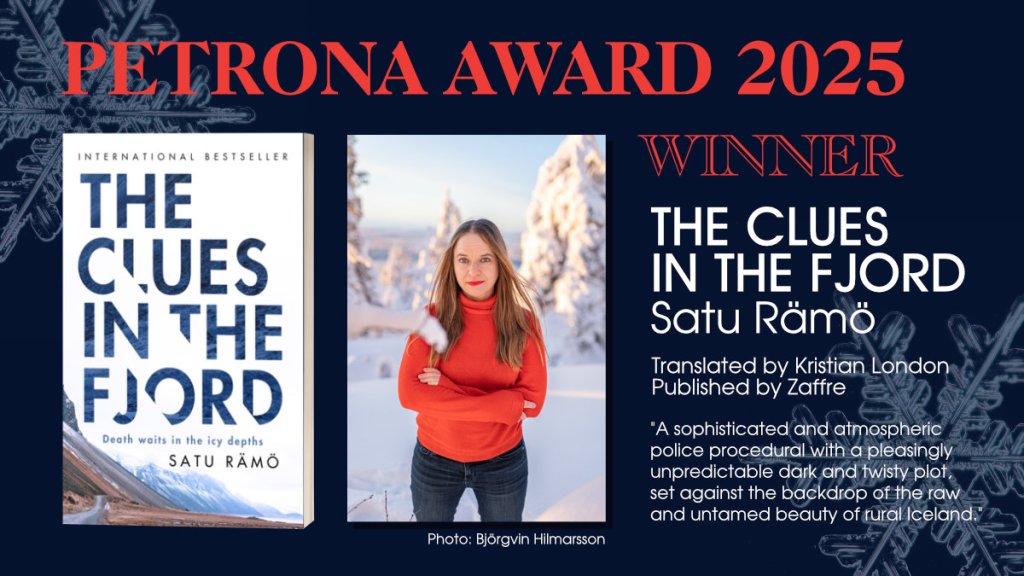
It is so exciting to annonce the winner of the Petrona Award 2025 for the Best Scandinavian Crime Novel of the Year:

THE CLUES IN THE FJORD by Satu Rämö translated from the Finnish by Kristian London and published by Zaffre. Satu Rämö will receive a trophy, and both the author and translator will receive a cash prize. The Petrona team would like to thank David Hicks for his sponsorship of the Petrona Award.

The judges’ statement on THE CLUES IN THE FJORD:

THE CLUES IN THE FJORD is a sophisticated and atmospheric police procedural with a pleasingly unpredictable dark and twisty plot, set against the backdrop of the raw and untamed beauty of rural Iceland.

Providing the local detective with a Finnish side-kick allows the author to contrast Icelandic and Finnish traits, adding authenticity to an original story. The intriguing back-stories of both characters leave the reader anticipating the next instalments.

In the ever-increasing Icelandic crime fiction scene, Satu Rämö has carved out a unique position between traditional mysteries and the darker end of crime fiction.

Statements from the winning author, translator and publisher:

Satu Rämö:

I am deeply honoured to receive this award, and I want to thank the jury and the organizers of the Petrona Award. I also want to acknowledge the incredible writers nominated alongside me. To be included among such talented writers is a reward in itself. Your words have inspired me a lot!

This award reminds me of a conversation I had with a reader, a ninety-five-year-old woman, who shared how the book, the first part in the Hildur crime book series, THE CLUES IN THE FJORD, made her feel. She told me that she knows she is getting very old but after reading this book, she hoped she would live long enough to read the sequel, to know what happened to the two little girls who got lost on their way from school. When the sequel came out, I sent it to her and called her after a few weeks. She was still as happy and joyful as last time, waiting for the next book in the series to come out…

It is the readers who keep stories alive. Thank you for reading. I want to thank you also, my British publisher Zaffre and my translator Kristian London. Great teamwork! Thank you jury from the bottom of my heart, this award means so much to me.

Kristian London:

When I first took on translating Satu Rämö’s THE CLUES IN THE FJORDthe book’s incredible success in Finland suggested it had a high chance of connecting with audiences abroad as well. I’m gratified to see this is the case. It has been a privilege to act as an intermediary between Rämö’s imagination and those of her English-speaking readers as they enter Hildur’s world of human quirks and foibles, familial traumas and inheritances. For me, the work’s slow power springs from its true protagonist: that isolated land in the North Atlantic that serves as the setting, and the terrain and culture and people we’re introduced to through an outsider’s keen eyes. Many thanks to the Petrona Award jury for this honor.

Kasim Mohammed (editor at Zaffre):

Being Satu’s English-language publisher is a real honour. She has such an eye for crafting stories about real people, and a real heart to her writing that is hard to find these days. Bringing authors’ dreams to life is a privilege and moments like this are wonderful to experience. To know Satu’s work is resonating with so many readers, worldwide, brings the team here at Bonnier so much pride. Thank you to the Petrona Award jury for this honour – we will treasure this as we continue to publish Satu! 

The judges

Jackie Farrant – creator of RAVEN CRIME READS and a bookseller for a major book chain in the UK.

Ewa Sherman – translator and writer, and blogger at NORDIC LIGHTHOUSE.

Sonja van der Westhuizen – book critic for print and online publications in the UK and South Africa, as well as a blogger at WEST WORDS REVIEWS.

Award administrator

Karen Meek – owner of the EURO CRIME blog and website.

Petrona Award 2025 shortlist in full is here and further information can be found on The Petrona Award website.

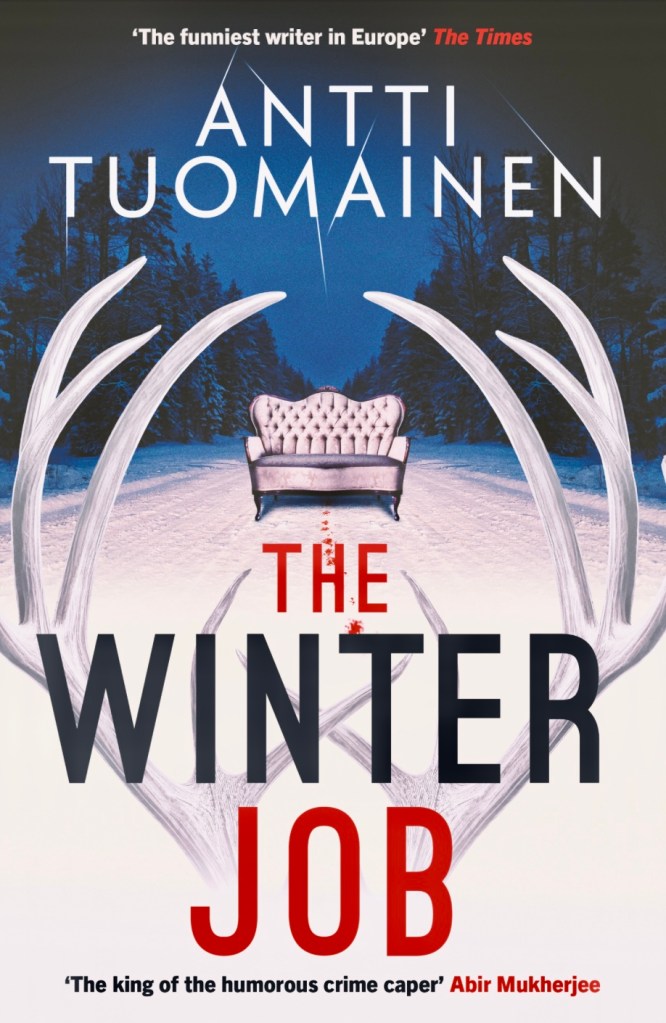
The Winter Job by Antti Tuomainen

Helsinki, 1982. Recently divorced postal worker Ilmari Nieminen has promised his daughter a piano for Christmas, but with six days to go – and no money – he’s desperate.

A last-minute job offers a solution: transport a valuable antique sofa to Kilpisjärvi, the northernmost town in Finland. With the sofa secured in the back of his van, Ilmari stops at a gas station, and an old friend turns up, offering to fix his faulty steering wheel, on the condition that he tags along. Soon after, a persistent Saab 96 appears in the rearview mirror. And then a bright-yellow Lada. That’s when Ilmari realises that he is transporting something truly special. And when he realises he might be in serious trouble…

A darkly humorous and warmly touching suspense novel about friendship, love and death, The Winter Job flies a hundred and twenty kilometres an hour straight into the darkest heart of a Finnish winter night.

Just as indicated by its title, the book The Winter Job, published by Orenda books, is about working in winter conditions, and Antti Tuomainen honed his writing craft so well over the years in ten  books I’ve read so far that my expectations are reasonably high. Well, there’s snow, and quite a lot of it in different stages of movement across the country because that’s where the quiet hero Ilmari Nieminen is driving in a very unsatisfactory vehicle. Others follow him and his valuable cargo and battle with the harsh weather conditions. Then there is a powerful and dangerous snowplough which could  have appeared straight from the Norwegian movie In Order of Disappearance. If you haven’t seen it, please do as it definitely shows how to deal both with the snowstorms AND the emotions.

Other motifs in the novel also appealed to me. For example the egg-yolk-yellow of the iconic Soviet-era Lada, a car popular in the Eastern Bloc and quite reliable on the tough snowy Finnish roads. The colour – yellow – always makes me smile; however, tension and suspense in the sofa-pursuit tale didn’t feel so safe, especially as two people in the Lada seemed to have extremely revolutionary ideas. Yet, to be fair, if you’re a diehard communist and plotting a Marxist-Leninist revolution, you must be clear about your values: none of that ‘imperialist rubbish’ which also applies to the car makes.

The motivational song Eye of the Tiger keeps popping throughout the story, which I must admit is also on my Spotify list, but for completely unrelated reasons. I do not wish to get pumped up like Otto Puolanka. This particular cold-blooded man, one of Ilmari’s pursuers, is also keen on sharing his life philosophy, for example: ‘People were like warts: always in the wrong place at the wrong time and always unpleasant.’ Difficult to argue against this point if you’re on the road from the civilised cultural Helsinki to the village of Kilpisjärvi, famous for spectacular Northern Lights and a school fire that destroyed thousands of euro banknotes. This event is well ahead of The Winter Job’s timeline; but who knows, baddies are capable of various misdemeanours in different time zones.

Otto’s interesting views on human existence as such remind me of the enigmatic Icelandic author and protagonist Stella Blómkvist – Corylus Books quoting various wisdoms delivered by her mother. They all make sense of course. However, here wisdoms are more brash and straight to the brutal point, and they work in this harsh setting.

As Ilmari zigzags with his cargo there are two persons always on his mind: Helena, his twelve-year-old daughter, and ex-wife Tuulikki. He finds the whole journey across the country and just before Christmas a massive inconvenience. Ilmari has also an unexpected travelling companion: his old friend Antero Kuikka whom he hasn’t seen for many years, due to lack of communication and unfinished business dating back to their school days. Over the stressful hours of driving in the snow, in the dark and in the atmosphere of mistrust, both men open a little bit to each other. The process is quite painful but written by Tuomainen with empathy and humour. And then we can understand what real decent male friendship is and what could it mean exactly. This also gently explores loneliness as every character in the novel is affected by it. Are we able to deal with this feeling, this state of mind, this sad reality?

‘Seems you still don’t have many friends,’ he said.

Ilmari stopped in his tracks. ‘What’s that supposed to mean?’

‘Something happens that’s a bit difficult or uncomfortable, and even though it has nothing to do with the people around you, you start blaming them for the problem and insult them in the most profound and personal way.’

‘But why do we always show our worst sides to those nearest to us?’

Are you ready for the latest dose of dark humour, clever plotting, great characterisation and touching insights into the human soul? As always David Hackston translated Antti Tuomainen’s work in the most perfect nuanced way, and I can assure you that it will be a joy to read the novel any season of the year. The Winter Job (Bookshop.org UK) is out next week on 23rd October 2025.

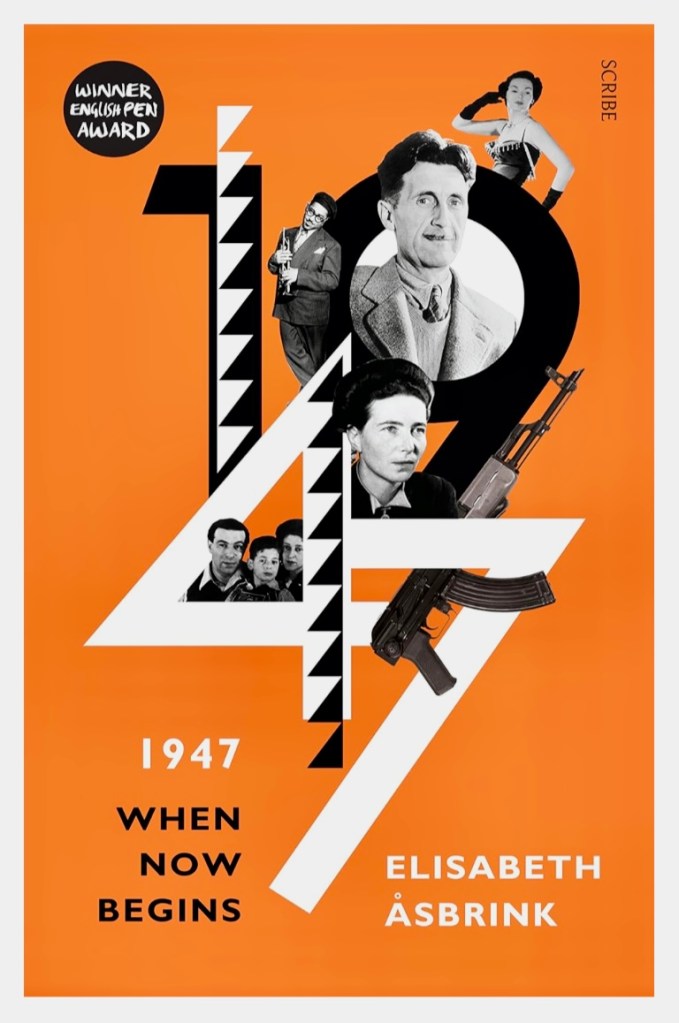
1947: When Now Begins by Elisabeth Åsbrink

My first ever review for European Literature Network – 1947: When Now Begins by Elisabeth Åsbrink was published eight years ago. I’m feeling a touch nostalgic as I look through old reviews but I must also admit that Elisabeth Åsbrink‘s book has been on my mind for the last two years. Hence I would like to recommend it again. The world is changing rapidly and we must learn from the past – to do good.

In 1947, everything is changing. The world is set to become a very different place …

Christian Dior is designing his fabulous, sumptuous New Look dresses. Thelonius Monk is playing his ground-breaking jazz compositions and Billie Holliday is singing the blues. Grace Hopper, appointed as a mathematician in the US Navy, finds an actual computer bug: a moth stuck in a massive mainframe. Simone de Beauvoir longs for her American lover and writes The Second Sex, later hailed as feminist bible. Eric Arthur Blair, better known as George Orwell, is coughing his guts out as he works on 1984 on the Scottish island of Jura.

On the other side of the still invisible East – West border, Mikhail Kalashnikov finally gets the go-ahead to mass produce his deadly invention: a gas-operated machine gun. The Cold War map is reduced to black and white … nuances of grey: non-existent. British and American powers decide the fate of thousands of Jews and fight against communist influence. The Soviet Union hardens its ideology.

While the world tries to heal itself and for the most part cries ‘never again, never again’, the Nuremberg Trials are in full swing and finally there is a chance that a new crime of genocide will be recognised. Other opinions and thoughts allow the continuing flight of old Nazis to Argentina, thanks to their new sympathisers, who often gather in the Swedish town of Malmö, and spread the written Fascist credo like fire. Anxiety, cynicism, cold legal calculations, power games and deeply-rooted convictions provoke the creation of the CIA and underlie the origins of the Muslim Brotherhood and ISIS, based on Hassan Al-Banna’s ideology. The UN Committee has only four months to decide future of Palestine and in these tumultuous times must consider diametrically conflicting wishes and demands.

Amid the post war chaos and pain, amongst thousands of refugees, liberated prisoners and emaciated Jews, a ten-year-old Hungarian boy, Joszef, once called György, is in Ansbach in southern Germany, in the American zone. In a camp for children whose parents have been killed by Nazis, he needs to decide whether to travel to Palestine and start a new ‘Zionist’ life, or to return to Budapest, the city that was his home as well as the source of his persecution. His is also the personal story of the author: Joszef will eventually escape to Sweden where his daughter Elisabeth will be born.

The story moves through a devastated Europe, to the mighty US, which is launching the Marshall Plan, to a fragile Middle East, a torn-apart Indian subcontinent with millions of hurting Muslims, Hindus and Sikhs; it carries us seamlessly along. It’s a fascinating piece of non-fiction that reads like a vivid novel: the evolution of the world on a huge scale reveals small fissures through which we observe tiny moments in private lives.

Swedish author and journalist Elisabeth Åsbrink has written four books which have, between them, won the August Prize, the Danish-Swedish Cultural Fund Prize, and Poland’s Kapuscinski Prize. 1947: When Now Begins is her first book to appear in English, superbly translated by Fiona Graham, a winner of the English Pen Award. Åsbrink has created an exceptional and gripping chronicle of this one momentous post-Second World War year; it combines major events with small, individual histories of the people affected by what had happened only a few years previously, and what would continue to affect future generations. Åsbrink uses both snapshots and longer musings to ask important questions; yet she keeps her own emotions in check, barely allowing them to surface in the sea of pain, despair, unspeakable crimes and the occasional hope. She admits to attempting to define herself and her own authenticity through her detailed survey of the events of 1947: Grief over violence, shame over violence, grief over fame. In this 70th anniversary year, the book is in no way just a historical record: instead its themes are contemporary, valid, and urgent.

1947: When Now Begins is an extraordinary book, based on an incredible amount of research, presented in a very sober, sensitive way. It invites us to go in search of even more information. A highly recommended must-read.

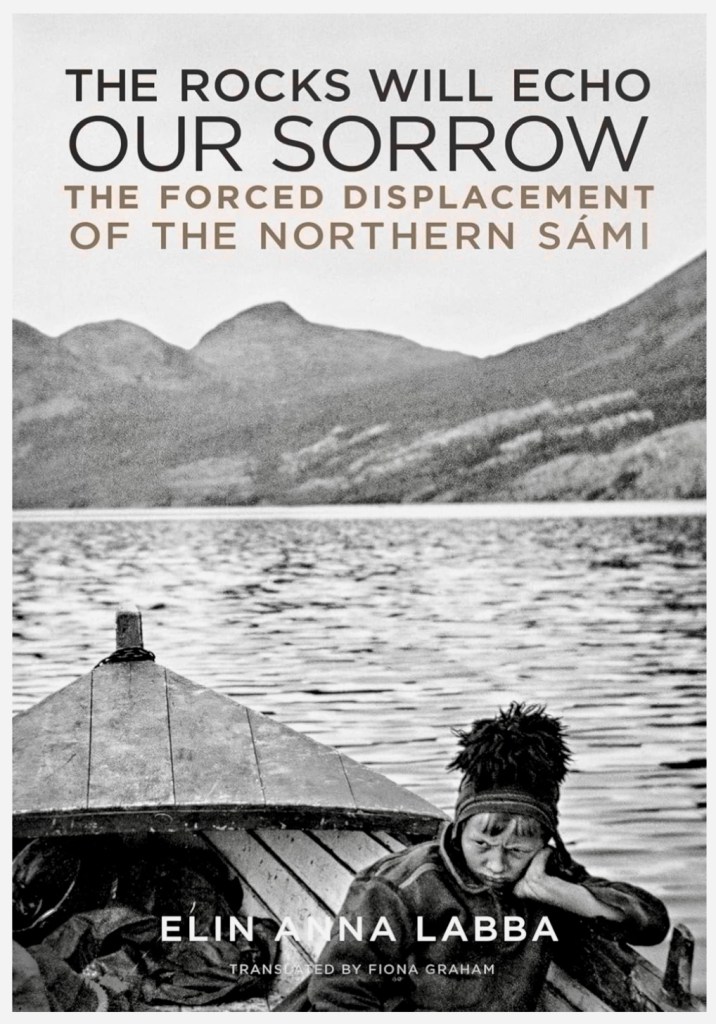
The Rocks Will Echo Our Sorrow: by Elin Anna Labba

In September my review (below) was published on the pages of European Literature Network, run by Rosie Goldsmith, Anna Blasiak and West Camel. It’s always an honour and a plasure to contribute to this exciting and super interesting project / venture. I’d encourage you to read Elin Anna Labba’s book and also other works reviewed and recommended by European Literature Network’s team.

‘The elders spoke of how they used to greet the land when they came here, the mountains, the dwelling places, and the paths, but I dare not. Just where do I belong? What is my home? I have discussed this with other grandchildren of forcibly displaced people.’

Before I focus on The Rocks Will Echo Our Sorrow, allow me to begin with mentioning a different novel: Petra Rautiainen’s Land of Snow and Ashes (translated from the Finnish by David Hackston), which is set after World War Two and affected me profoundly. One strand of this novel deals with Finland’s fairly recent traumatic history of forcing Sámi people to abandon their heritage, culture and identity to become ‘pure’ Finnish citizens. 

Elin Anna Labba’s deeply personal and somehow universal The Rocks Will Echo Our Sorrow: The Forced Displacement of the Northern Sámi therefore stopped me in my tracks. It is a truly heart-wrenching examination of the new rules that were imposed in the early twentieth century on the indigenous people who had lived for centuries in northern Scandinavia. Their forced removal remains a deeply painful memory. Shame, injustice and hurt prevail in this book, alongside lyrical images of longing, and of the irreplaceable human costs borne in the harsh but ultimately stunning natural world of the region.

The author travels to this lost homeland of her ancestors, aiming to reclaim their place in the history of both Norway and Sweden. Labba, a Sámi journalist and previously editor-in-chief of the magazine Nuorat, asks herself: ‘Do I have the right to mourn for a place that has never been mine?’, and is of course aware that ‘boundaries have always existed, but they used to follow the edges of marshes, valleys, forests, and mountain ranges’. 

Nature and its seasons, the environment and tradition, had dictated the way people lived, organised their work and travel in winter and summer, how they grazed their reindeer in specific areas and drove them across the straits between the islands and the mainland. They had roots, connections, customs, and different methods of grazing the strong animals, all essential for their existence. The lives of forest Sámi and mountain Sámi were shaped across the generations by the weather. And there were always real emotional and physical ties to places even if they moved between them: ‘We carry our homes in our hearts.’ 

On 5 February 1919, the reindeer-grazing convention that sparked the forced displacement of the Sámi was signed by the foreign ministers of Sweden and Norway. Soon after, the era of ‘racial biology’ research started in Sweden. The Lapp Authority then followed newly established laws on the reduction of reindeer numbers and decided which of the Sámi could stay on their land and who must move to a different area. The displacements ensued. The legislation was unclear to the ordinary Sámi people, and therefore the appeals they made failed to protect their families. This meant women and children were the most vulnerable members of the community. ‘Family ties are the most precious thing anyone can have, apart from reindeer’ and without them ‘a man who’s left his lands no longer has a home. He no longer has his feet on the ground’. 

‘For many, recounting the tale is a way to heal’ and so The Rocks Will Echo Our Sorrow contains fragments of letters, conversations and poems, in excellent translation from Swedish by Fiona Graham, as well as old photographs showing difficult yet beautiful living conditions, and the nature of the Sámi existence: ‘You bear your hurt alone, for breaking down won’t make your daily life any easier. This philosophy of life revolves around the word birget – surviving and coping. Each year the reindeer must survive the winter: that is what matters, not people’s feelings.’ Fiona Graham translated also 1947: When Now Begins by Elisabeth Åsbrink, another book that affected me profoundly, from human, political and historical perspectives, and has been on my mind for the last two years.

Choosing and being in the culture of joiking, the goahti (tent) protecting them ‘against the wind, the darkness, and everything that can’t be seen’, against rain, snow and sun, and living according to tradition, should always have been the Sámi’s decision to make. 

Bloody Scotland 2025 kick off

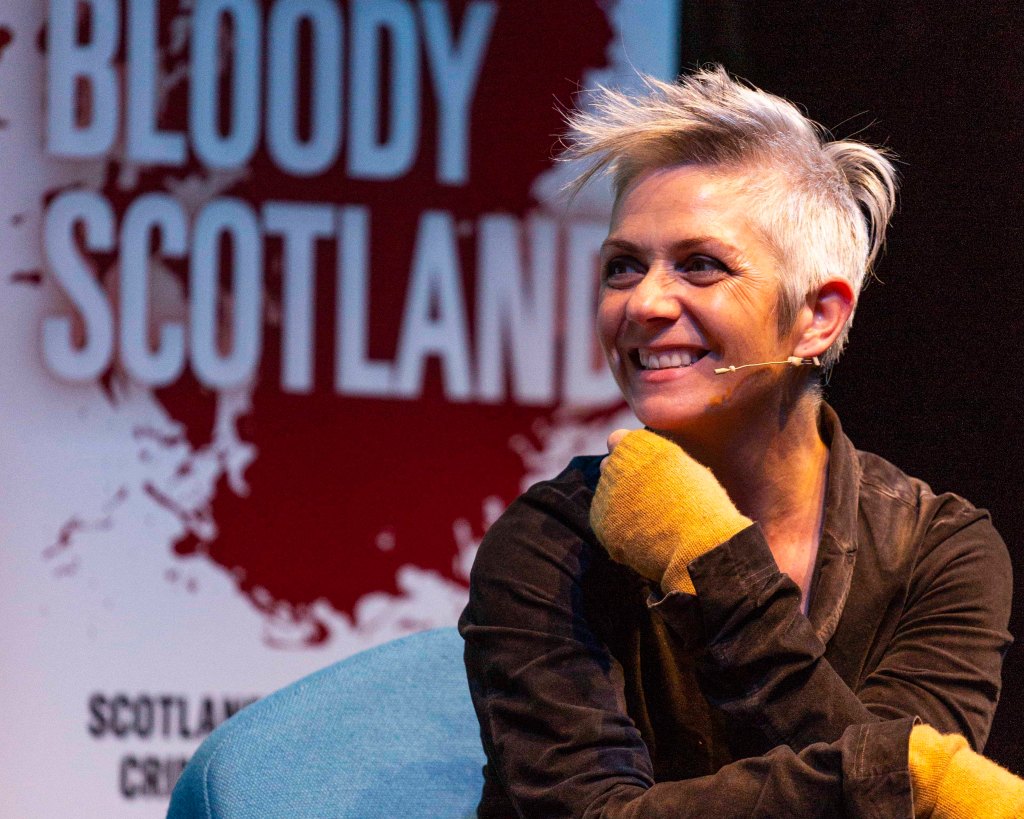
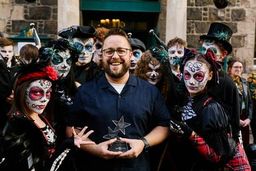
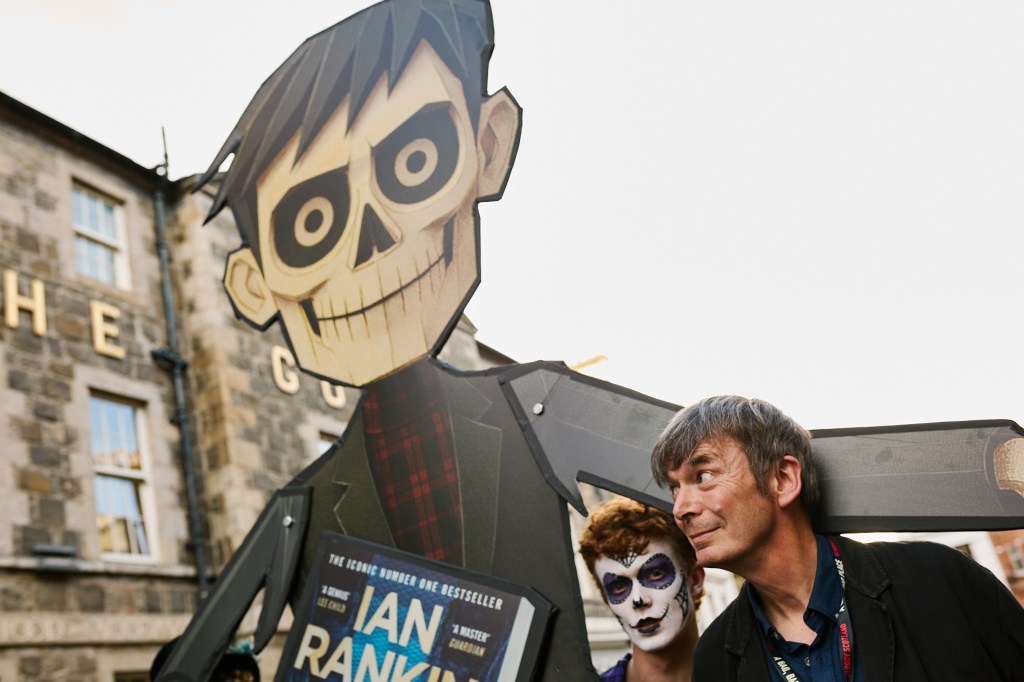
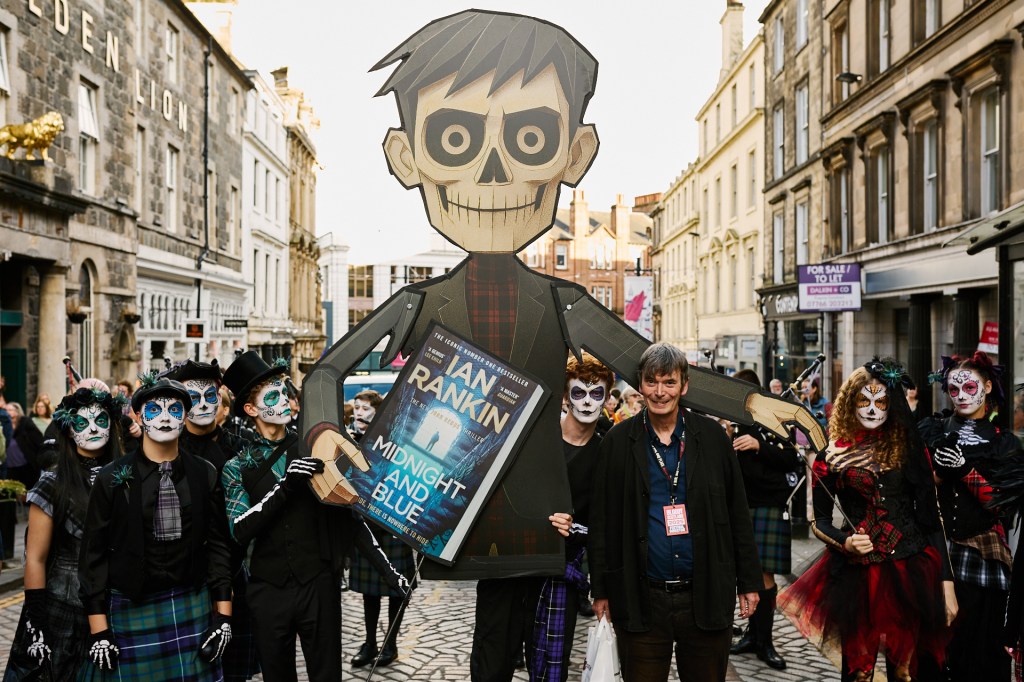
Bloody Scotland Internatonal Crime Festival kicked off with the prize announcements, a Day of the Deid parade led by an effigy of Sir Ian Rankin, and the big reveal of the mystery crime writer.

Dreich weather (is that the correct word?) outside my windows and I might be suffering from a serious case of FOMO but Bloody Scotland always has criminally good news. Here are some highlights straight from the people who are in Stirling.

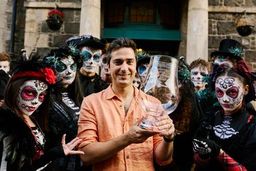
The winner of the McIlvanney Prize was revealed – in the ballroom with a giant crystal glass – to be Tariq Ashkanani with The Midnight King. It was presented to him on stage on the opening night – Friday 12th September – of the Bloody Scotland International Crime Writing Festival by the winner of the 2024 McIlvanney Prize Chris Brookmyre. Tariq, a solicitor from Edinburgh, appeared as a support act for Ian Rankin in Crime in the Spotlight at the 2021 festival and went on to win the Bloody Debut Prize in 2022. The McIlvanney Prize win brings the process of nurturing authors at Bloody Scotland full circle.

The judges who included broadcaster Nicola Meighan, journalist and writer Arusa Qureshi and crime reviewer Gordon McGhie said: ‘Tariq Ashkanani manages to create an atmosphere of dread while uniquely exploring the theme of nature vs nurture… When we speak about thrillers being page turners (this) should be used an example of how it should be done.’

The winner of the 2025 Bloody Scotland Debut Prize was revealed to be David Goodman with A Reluctant Spy (Headline). Like Tariq, he was previously selected for Crime in the Spotlight, and appeared as a support act for thriller writer Frank Gardner at Bloody Scotland last year. This year it is he who takes centre stage. He also won the inaugural Theakston Old Peculier McDermid Debut Award in July. He lives in East Lothian with his family.  

The 2025 prize was judged by crime writer and Bloody Scotland founder Alex Gray, broadcaster Bryan Burnett and Kenny Tweeddale from The Glencairn Glass. They said: ‘Everything about this feels authentic. In fact, the only thing that’s not believable is that this could be a debut novel.’ Kirsty Nicholson, Design and Marketing Manager at the awards sponsor Glencairn Crystal, said: ‘A huge congratulations to Tariq Ashkanani on winning the McIlvanney Prize with his page-turning thriller The Midnight King, and to David Goodman on receiving the Debut Prize for his gripping first novel A Reluctant Spy.  Being a Scottish family company, we are proud to sponsor these distinguished annual awards with the Glencairn Glass, the official glass for whisky – both of which are deeply rooted in Scotland. It is an honour to help celebrate and shine a spotlight on such exceptional authors in the wonderful world of crime fiction.’

The prize giving was followed by the inaugural Bloody Scotland Day of the Deid procession with actors and local pipeband in full make up led by the two winners and an effigy of Sir Ian Rankin. It concluded at the Albert Halls where the ‘mystery authors’ behind Evelyn Clarke’s, The Ending Writes Itself, (HQ, 7 April 2026) were finally revealed to be #1 Sunday Times bestselling author, V.E. Schwab and longtime friend and screenwriter Cat Clarke. V.E. Schwab is best known for The Invisible Life of Addie LaRue and Bury Our Bones. HarperCollins acquired rights in a nine publisher auction and will be publishing simultaneously in the US and Australia.

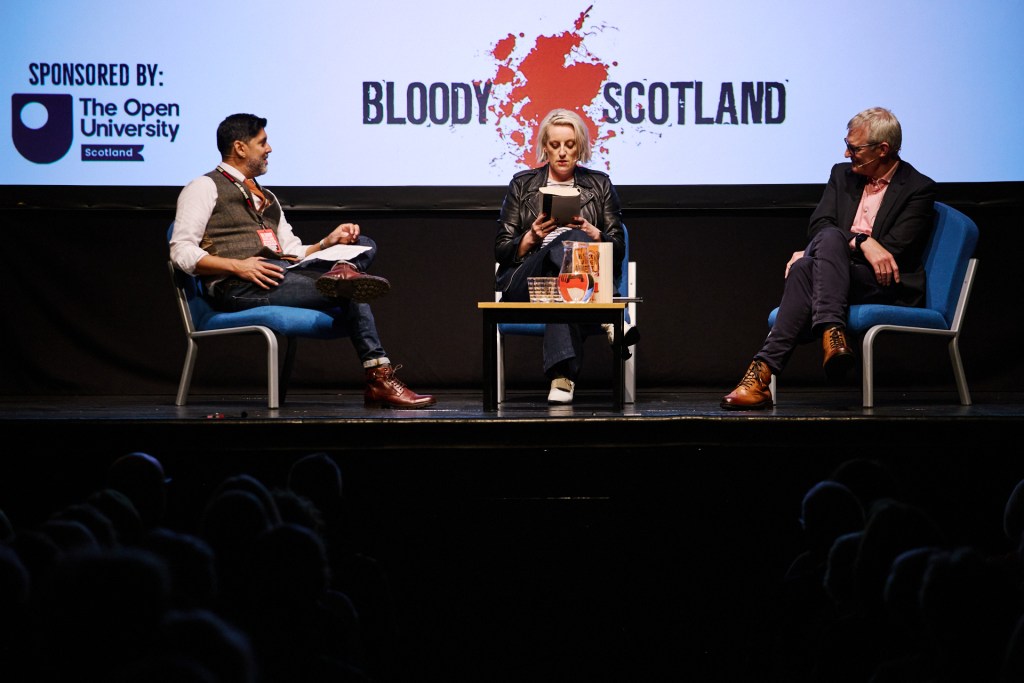
Highlights on Saturday included Mick Herron (author behind TV series Slow Horses), broadcasters Steph McGovern, Jeremy Vine and The Reverend Richard Coles, bestselling writer Kate Atkinson, actor Richard Armitage and superstar of American crime fiction Kathy Reichs. The day concluded with a Bloody Scotland take on Crime Family Fortunes and the sold-out Karaoke at the Coo where famous authors took to the mic.

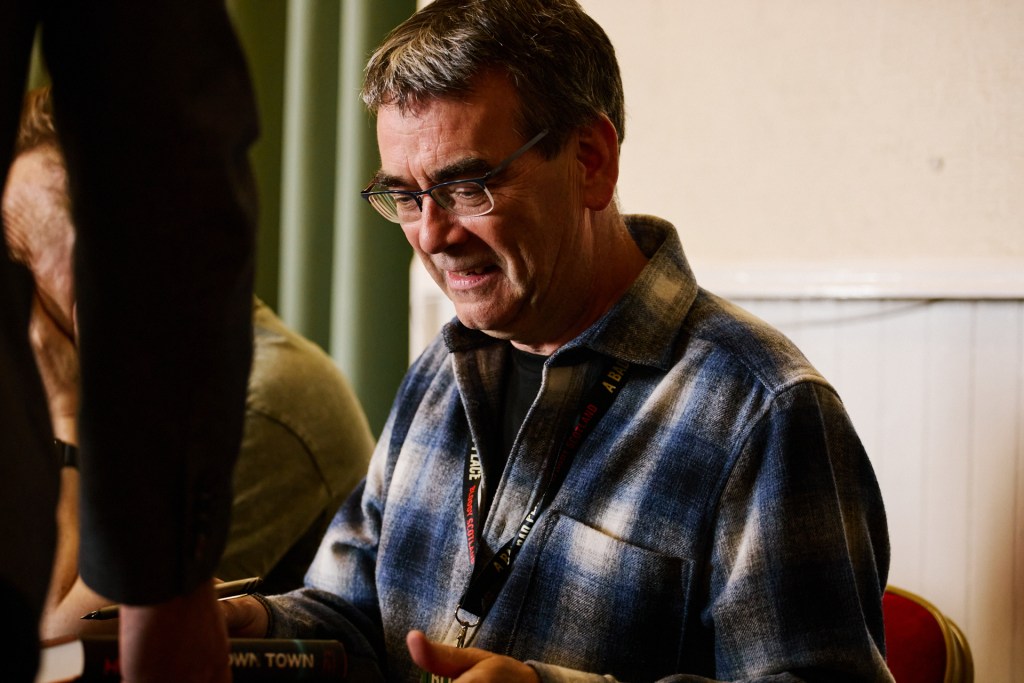
All photos (c) Bloody Scotland International Crime Festival

Deadman’s Pool by Kate Rhodes

Winter storms lash the Isles of Scilly, when DI Ben Kitto ferries the islands’ priest to St Helen’s. Father Michael intends to live as a pilgrim in the ruins of an ancient church on the uninhabited island, but an ugly secret is buried among the rocks. Digging frantically in the sand, Ben’s dog, Shadow, unearths the emaciated remains of a young woman.

The discovery chills Ben to the core. The victim is Vietnamese, with no clear link to the community – and her killer has made sure that no one will find her easily.

The storm intensifies as the investigation gathers pace. Soon Scilly is cut off by bad weather, with no help available from the mainland. Ben is certain the killer is hiding in plain sight. He knows they are waiting to kill again – and at unimaginable cost.

Screenshot

I made a basic rookie mistake, accidentally of course, and for first time since my teenage years, I read the last paragraph of Deadman’s Pool. However, I managed to keep it at the back of my mind as I got pulled into the unknown world of the Scilly Islands which after a while felt like the landscapes and realities of the distant Nordic areas. That was a strange experience as I’ve been to distant edges of Cornwall before but no further. My non-existent knowledge of the tightly knit communities on the archipelago ‘You can’t sneeze without someone knowing round here’ changed as I followed the story. The unique  location, shaped by unforgiving nature, sea and wind, becomes a character of its own in the series featuring my new favourite policeman / investigator. The islands are beautiful. Harsh living conditions make their inhabitants and the visitors truly appreciate the atmosphere, fauna and flora. They also created self-assured groups of people who feel they can trust and support one another as they’re bound by the same values, similar hardships, hope for the future. In this context of being close together, and dependable on the weather to reach mainland, it seems impossible that anything truly bad can happen: ‘Tight communities offer you protection, unless you have something to hide.’ Sure, past historical events never neglected the archipelago, perfect for pirates and smugglers. There were death, disease, riches, conflicts… But times and things change, yes?  Well…

DI Ben Kitto is a solid character and I would absolutely spend time in his company. In a way this is my chance to read seven earlier novels in Kate RhodesIsles of Scilly Mysteries series. The snippets of background information of how he had developed as a person and a professional were scattered around the story and inviting to reach for previous books. Having left  for London years ago and then returned home to settle down with his wife Nina and a year-old son, Ben feels deep connection to the place and the locals: ‘Reassurance is our biggest role in a community like this, where policing often feels more like social work.’  The most recent events shake his beliefs, though.

Second in command at the police station, he takes charge of the investigation as his superior (and sadly a micromanager) DCI Madron has to withdraw due to health reasons. Finding a young woman’s body on the uninhabited island, followed by  discovery of a barely alive baby left to die, push Ben to the brink as the hunt for the killer unfolds, and his personal life is affected in a terrible way. The difficult process of police work among friends, colleagues and neighbours forces him also to rethink the role of people with authority and whether trust can be given or earned: ‘The islands’ mindset of rugged individualism doesn’t sit well with law and order.’ Additionally, islands’ youngsters claim that there is danger lurking underneath the surface of safe environment, local power holders and conspiracy theories about human trafficking. They talk about children brought from poor countries and then sold as slaves. Which in itself is horrifying.

Kate Rhodes brilliantly creates strong characters, believable crimes and realistic island locations that perfectly evoke Cornwall’s complex history and stunning geography. Haunting mood of Deadman’s Pool brings other distinct locations to mind, such as Faroe Islands or isolated places in Iceland or northern Norway. The plotting is superb, with many strands of emotion that culminate in chilling realisation that evil might live very near us. Deadman’s Pool, published by Orenda Books, is out on 25th September and can be pre-ordered now.  

Petrona Award 2025 – Longlist

Outstanding crime fiction – twelve crime novels from Finland, Iceland, Norway and Sweden have made the longlist for the 2025 Petrona Award for the Best Scandinavian Crime Novel of the Year. They are:

  1. Samuel BjørkDead Island tr. Charlotte Barslund (Norway, Bantam)
  2. Stella BlómkvistMurder Under the Midnight Sun tr. Quentin Bates (Iceland, Corylus Books)
  3. Pascal EngmanThe Widows tr. Neil Smith (Sweden, Legend Press)
  4. Malin Persson GiolitoDeliver Me tr. Rachel Willson-Broyles (Sweden, Simon & Schuster)
  5. Óskar GuðmundssonThe Dancer tr. Quentin Bates (Iceland, Corylus Books)
  6. Jørn Lier Horst and Thomas EngerVictim tr. Megan E Turney (Norway, Orenda Books)
  7. Jo NesbøBlood Ties tr. Robert Ferguson (Norway, Harvill Secker)
  8. Aslak NoreThe Sea Cemetery tr. Deborah Dawkin (Norway, MacLehose Press)
  9. Sólveig PálsdóttirShrouded tr. Quentin Bates (Iceland, Corylus Books)
  10. Satu RämöThe Clues in the Fjord tr. Kristian London (Finland, Zaffre)
  11. Max SeeckGhost Island tr. Kristian London (Finland, Mountain Leopard Press)
  12. Gunnar StaalesenPursued by Death tr. Don Bartlett (Norway, Orenda Books)

The longlist contains a mix of newer and more established authors including previous Petrona Award winners Pascal Engman, Malin Persson Giolito, Jørn Lier Horst, and Gunnar Staalesen. Both large and small publishers are represented on the longlist, with Corylus Books having an impressive three entries. The breakdown by country is Norway (5), Iceland (3), Finland (2) and Sweden (2).

The shortlist will be announced on 18 September 2025.

The Petrona Award 2025 judging panel comprises Jackie Farrant, the creator of RAVEN CRIME READS and a bookseller for a major book chain in the UK; Ewa Sherman, translator, writer and blogger at NORDIC LIGHTHOUSE, and Sonja van der Westhuizen, a book critic for print and online publications in the UK and South Africa, as well as a blogger at WEST WORDS REVIEWS. The Award administrator is Karen Meek, owner of the EURO CRIME blog and website.

The Petrona team would like to thank our sponsor, David Hicks, for his continuing support of the Petrona Award.

The Petrona Award was established to celebrate the work of Maxine Clarke, one of the first online crime fiction reviewers and bloggers, who died in December 2012. Maxine, whose online persona and blog was called Petrona, was passionate about translated crime fiction but in particular that from the Scandinavian countries. The award is open to crime fiction in translation, either written by a Scandinavian author or set in Scandinavia and published in the UK in the previous calendar year. More information on the history of the Award and previous winners can be found at The Petrona Award website.

Death at the Sanatorium by Ragnar Jónasson

A young criminologist Helgi Reykdal is finishing his MA dissertation on so called ‘deaths at the sanatorium’, a thirty-years-old case. Stuck in an unhappy relationship and unable to decide on own future in the UK or in Iceland, Helgi focuses instead on what he thinks were murders and begins to follow his far-fetched theory.

Old sanatoria are not fun places, especially if they are in quite isolated locations and provide care for very ill or dying people. Akureyri tuberculosis sanatorium was such a place, as it stood high up in the mountains in the northern Iceland, surrounded by beautiful nature and very dark memories. In the 1950’s there were still many cases of TB and the medical staff did the best they could to ease their patients’ pain, though death and suffering were always present. In 1983 only one wing of the hospital building remained open to allow conducting of the research, and only six employees worked there: two doctors, two nurses, a caretaker and a young research assistant. When one of them, nurse Yrsa, was found dead in horrible circumstances in her office, others initially became suspects, and an ambitious detective Sverrir Eggertsson was called from Reykjavik. He conducted investigation, assisted by more experienced Hulda Hermannsdóttir, also from CID in the capital, aiming to wrap up the case as quickly as possible. Hulda, known from a previous series of Ragnar Jónasson’s books, wasn’t so keen to follow flaky evidence from a nurse Tinna but had no say. A caretaker Broddi was arrested. Then a body of a doctor was found on the ground. It seemed a suicide, and so Sverrir concluded the investigation. Case was closed but not exactly forgotten.

Nearly thirty years later Helgi Reykdal, a young criminologist finishing his MA dissertation on so called ‘deaths at the sanatorium’, had decided to re-examine a cold case from a purely academic perspective, armed with the latest criminological theories. Fascinated by the classic whodunnit detective stories, Helgi started digging through old documents and news reports, and reluctantly made contact with the sanatorium’s members of staff who in a meantime moved to Reykjavik. Although his intention wasn’t to become an investigator in this situation, his dedication proved very useful.

I appreciated the complex intertwined history between the main characters in the story spanning nearly sixty years and shown from different perspectives. Here the author brilliantly places opinions and thoughts in the social context. Personal experiences and feelings at the time influenced the explanation of possible reasons behind two deaths which Helgi considered to be murders. Small clues are thrown around the novel and any self-respecting fan of Agatha Christie would be able to draw lines between them. Aided by the unsettling connections between people now and then, the sense of foreboding and danger never leaves the reader, and as Helgi keeps working on his semi-investigation, the tension steadily grows. I must admit it was difficult to warm up to the main characters but I understood why they behaved the way they did, regardless of what their moral compasses could have shown. For example Helgi’s uneasy relationship with his girlfriend Bergthóra affects his indecisiveness and how he deals with life generally, or why Braggi’s sense of injustice and despair colour the novel’s mood. Overall Death at the Sanatorium, translated by Victoria Cribb, is an engaging read in Jónasson’s trademark style, combining classic solid ‘technical’ analysis of crime and the strong sense of place.

Broken by Jón Atli Jónasson: Setting a new standard for Nordic crime fiction

Jón Atli Jónasson is a new name among the crime writers from Iceland appearing in translation, and his English-language debut Broken definitely pushes this genre in a new direction.

The pair of two cops who probably shouldn’t be on the force, let alone working together, isn’t a new idea, but the supremely damaged Dóra and second-generation immigrant Rado as the cop duo is brilliantly done. They fit together, but at the same time they don’t. Then there’s the cast of characters Jón Atli has woven into this story who give it such bright colours. There’s chain-smoking Elliði, Dóra’s boss and former patrol partner who was present when she was so badly injured, and the cast of other cops who don’t hide their suspicion and dislike of the foreign guy in their ranks.

Rado’s family and his shady in-laws, also immigrants, are sharply drawn, highlighting the rootlessness and the conflictedness of people finding a foothold in a new, strange country, and how their children cope (or fail to cope) with this double identity. It doesn’t help that in this new home they’ve rebuilt the criminal empire they were forced to abandon back in the old country… Jón Atli shows us an Iceland that’s so far removed from the version visitors see that it’s barely recognisable, but at the same time scarily familiar.

Then the criminals, both the old-school homegrown variety with their clunky methods, and a new generation of villains who don’t sample their own merchandise and look up to business figure, seeing themselves as entrepreneurs who have the unfortunate disadvantage of operating on the wrong side of the law. And then there’s the sinister and mysterious Groke, the consummate professional who takes no prisoners, and who comes with a backstory of his own that hits so painfully close to home.

Jón Atli Jónasson is an acclaimed screenwriter and playwright. Broken is his first novel to appear in English, translated by Quentin Bates and published by Corylus Books. A TV adaptation is already in the works, and shooting is scheduled to start next year.

Here’s a short sample of Jón Atli Jónasson’s writing:

The fishing lodge couldn’t be seen from the road, and hardly even from the rutted track that led down to it. If he hadn’t got the jeep stuck in the soft ground then he wouldn’t be standing here in a pair of rubber boots and a shovel in his hands, trying to fill in the deep tyre tracks. It was as well there was nobody about. There was a farmhouse on the far side of the ravine, but he was fairly sure it had been long abandoned.

Shovelling was tiring, but he didn’t mind that. The cool air was invigorating. It was April and the snow was melting, freeing water to stream down from the highlands. It was difficult to see where the meltwater was going, until you put a foot on the ground and the gravel gave way into the slush beneath. This aroused his interest more than anything else. It didn’t trouble the Groke in the least. He had never seen any point in letting himself be angered by nature or its laws. In fact, he lived closer to nature than most people – close to the border with death and decomposition. He was a ferryman of a kind, leading all sorts of people, understandably not always willing, to that border and across it.

The two corpses he had conscientiously buried behind the fishing lodge were prime examples. This couple lived in Reykjavík, in one of the new districts that had sprouted up over the last decade. In these sprawling, soulless boxes where vast flat screens cast their blue glare on the walls and the big picture windows. The couple had stolen money. This was an amount that would have been worth negotiating, if only they’d showed a little inclination. But they hadn’t. They thought they would get away with it. They hadn’t realised that this was too much money to simply shrug off. Their attitude had been such that threats, beatings and even torture hadn’t done the trick. Some people had to have their hands held to the border between life and death, while others failed to understand that their own behaviour brought the border to them. Their deaths would serve as a warning to others. He knew that wasn’t true. Man as a species is too cross-grained for that to be the case.

Neither of them had been able to say a word before they died. The man had been coming out of the bathroom. The Groke sank the needle deep into his neck, and he sank down against the wall of this house that looked as if it had been cut from the pages of a piece of property porn. They had great taste, which perhaps was the reason for their downfall. In the end it had all been too costly, all the beautiful art on the walls, the expensive furniture and wardrobes crammed with designer goods.

Just moments after the man slipped to the floor, his wife parked her new electric car in front of the house and wondered who owned the jeep with tinted windows standing in the drive, and which she didn’t recall having seen before. She went indoors, called out, but didn’t get a response.

The Groke waited patiently in the corridor upstairs. He heard her potter around the kitchen, putting groceries away and calling her husband. The low hum from the man’s phone carried from the bedroom. He eventually heard her come up the stairs. When she appeared in the corridor and saw her husband lying there, she was about to scream. But the blow he gave her to the solar plexus punched all the breath out of her. He didn’t like this. It felt amateurish. But there was no other option. Then he grabbed her by the back of the neck and sank the needle deep into it. A few seconds later she lay on the floor beside her husband. If anyone were to wonder about them, then border control would inform them that the couple had left the country on a charter flight to Portugal. Their social media accounts had been hacked into. There would be a few pictures posted of landscapes and Southern European cuisine before their trails would disappear for good.

The Groke descended the stairs and went into the kitchen, where he opened the fridge and checked out the contents. The same luxury was on offer there. He glanced at the clock, and sent a Signal message from his phone. 2-0.

The Palace at the End of the Sea by Simon Tolkien

‘He was eleven when he was taken. On a day of early summer from almost outside his apartment house out into the bustle of the Village, and then east across Third Avenue under the webbed iron feet of the roaring El into regions of the great city that he had never seen before, smelling of garbage and horse dung and thick, acrid smoke.

And all the time, the old man held Theo’s hand in an iron grip and kept up a quick pace, pulling him along the sidewalk, so he had almost to run if he wasn’t to fall over. He had seen the old man several times in recent weeks, waiting under the spreading chestnut tree at the corner of his street in the early evening. He’d stared at Theo and his mother as they went past with his eyes glowing like coals under the rim of his battered old derby hat, which he wore as if it were an upturned soup bowl, pulled down over his ears like Charlie Chaplin.

He had the hat on now and the same long black alpaca coat, shiny at the elbows, which he was wearing over a clean but frayed white shirt buttoned to the collar with no tie, and Theo could see that in the side of his scuffed shoe there was a small hole that opened and closed as he walked, as if it were another beady eye.

He told Theo that he was his grandfather, speaking slowly in a thick guttural accent, and Theo thought he probably was. He didn’t look like someone who told lies, and besides, there was something about the old man that reminded Theo of his father. Four days before, they’d been walking home and his father had stopped hard in his tracks, telling him sharply to get on home to his mother. But Theo had turned back at the stoop and had seen his father arguing, waving his hands in the air but seeming to have no effect on the old man, who stood there as immobile as the tree behind him. And maybe it was then that Theo had noticed the resemblance.

Afterward, his parents had talked in hushed voices and his mother had cried as she often did, and his father had gotten hot under the collar and said that there were laws to stop people being harassed in the street, and that he had a good mind to complain to the authorities if it happened again. Authorities was one of Theo’s father’s favorite words—he was a great believer in law and order. But it seemed like there was no need to get them involved this time. There were no further sightings of the old man, and today Theo’s mother had woken up with another of her terrible headaches—the curse she called la jaqueca—and had sent him to the pharmacy on MacDougal with a quarter to get some more of her yellow pills. And on the way, without any warning, it had happened.

The old man had not been in his usual place under the tree; instead, it was as if he had appeared out of nowhere like a circus magician, and Theo was so surprised that he didn’t try to resist, at least at first, allowing himself to be led away with his small hand still clutching his mother’s coin, all enclosed inside the old man’s huge calloused palm.’

If you are intrigued by the opening paragraphs of The Palace at the End of the Sea then I am sure that you will love the sweeping tale of a young man who comes of age and crosses continents in search of an identity and a cause at the dawn of the Spanish Civil War. This is a thrilling, timely and emotional historical saga, bringing to life real historical events and creating authentic characters:

New York City, 1929. Young Theo Sterling’s world begins to unravel as the Great Depression exerts its icy grip. He finds it hard to relate to his parents: His father, a Jewish self-made businessman, refuses to give up on the American dream, and his mother, a refugee from religious persecution in Mexico, holds fast to her Catholic faith. When disaster strikes the family, Theo must learn who he is. A charismatic school friend and a firebrand girl inspire him to believe he can fight Fascism and change the world, but each rebellion comes at a higher price, forcing Theo to question these ideologies too.

From New York’s Lower East Side to an English boarding school to an Andalusian village in the foothills of the Sierra Nevada, Theo’s harrowing journey from boy to man is set against a backdrop of societies torn apart from within, teetering on the edge of a terrible war to which Theo is compulsively drawn like a moth to a flame.

Simon Tolkien is the author of No Man’s Land, Orders from Berlin, The King of Diamonds, The Inheritance, and Final Witness. He studied modern history at Trinity College, Oxford, and went on to become a London barrister specializing in criminal defence. Simon is the grandson of J.R.R. Tolkien and is a director of the Tolkien Estate. In 2022 he was named as series consultant to the Amazon TV series The Rings of Power. He lives with his wife, vintage fashion author Tracy Tolkien, and their two children, Nicholas and Anna, in Southern California.

The Palace at the End of the Sea was published on 1st June 2025. Thank you Hannah Born and FMcM Associates for the invitation to join the blogtour.