Petrona Award 2025 – Shortlist

Outstanding crime fiction from Finland, Iceland, Norway and Sweden shortlisted for the 2025 Petrona Award

Seven impressive crime novels from Finland, Iceland, Norway and Sweden have been shortlisted for the 2025 Petrona Award for the Best Scandinavian Crime Novel of the Year. The shortlist is announced today, Thursday 18 September and is as follows:

1.     Samuel Bjørk – Dead Island tr. Charlotte Barslund (Norway, Bantam)

2.     Pascal Engman – The Widows tr. Neil Smith (Sweden, Legend Press

3.     Malin Persson Giolito – Deliver Me tr. Rachel Willson-Broyles (Sweden, Simon & Schuster)

4.     Óskar Guðmundsson – The Dancer tr. Quentin Bates (Iceland, Corylus Books)

5.     Aslak Nore – The Sea Cemetery tr. Deborah Dawkin (Norway, MacLehose Press)

6.     Satu Rämö – The Clues in the Fjord tr. Kristian London (Finland, Zaffre)

7.     Gunnar Staalesen – Pursued by Death tr. Don Bartlett (Norway, Orenda Books)

The winning title will be announced on 16 October 2025.

The Petrona Award is open to crime fiction in translation, either written by a Scandinavian author or set in Scandinavia, and published in the UK in the previous calendar year. The Petrona team would like to thank our sponsor, David Hicks, for his generous support of the Petrona Award.

The judges’ comments on the shortlist:

There were 31 entries for the 2025 Petrona Award from six countries (Denmark, Finland, Iceland, Norway, Sweden and Switzerland). This year’s shortlist sees Norway represented with three novels, Sweden with two and Finland and Iceland with one novel each. The judges selected the shortlist from a strong pool of candidates with the seven shortlisted authors including three previous Petrona Award winners: Pascal Engman, Malin Persson Giolito and Gunnar Staalesen.

As ever, we are extremely grateful to the seven translators whose expertise and skill have allowed readers to access these outstanding examples of Scandinavian crime fiction, and to the publishers who continue to champion and support translated fiction.

The judges’ comments on each of the shortlisted titles:

Samuel Bjørk – DEAD ISLAND translated by Charlotte Barslund (Norway, Bantam)

DEAD ISLAND, the fifth instalment in the Mia Krüger and Holger Munch series, sees the duo away from their stomping grounds in Oslo, pondering their future. Both police investigators are dealing with separate professional and personal traumas yet cannot escape the violent events and aftermath of those, on the picturesque island of Hitra in northern Norway. While Mia re-examines a cold case of a missing boy, a teenage girl is brutally murdered. Convinced that the cases are connected, she digs deep into the individual stories of people living behind the sheen of a respectable community. The idyllic surface crumbles to show deceit, danger and darkness as the plot delves into psychological and cunning ways of using violence. A focus on personal dynamics and processing the nuanced information creates tension and a gripping story with empathy and depth, affecting everyone in the vicinity of the crimes.

Pascal Engman – THE WIDOWS translated by Neil Smith (Sweden, Legend Press)

In THE WIDOWS, two bodies are discovered in a Stockholm park, one a policeman and the other an unidentified young woman. With the police believing the woman to be nothing more than unfortunate collateral damage, they focus on the murder of the police officer. But Detective Vanessa Frank takes a different approach and her investigation turns out to be more personal than she could have imagined. Frank must tread carefully as she moves into the world of terrorist networks operating deep within the shadows, where society’s fears make her job more chaotic and dangerous than ever. A previous winner of the Petrona Award with FEMICIDE, Pascal Engman once again produces a high-octane thriller which impressed the judges with its complex plotting, nerve wracking tension and strong characterisation throughout.

Malin Persson Giolito – DELIVER ME translated by Rachel Willson-Broyles (Sweden, Simon & Schuster)

DELIVER ME is a harrowing crime thriller that explores the devastating impact of gang violence and class differences on two childhood friends in suburban Stockholm. The story centres on Billy and Dogge, two boys from different backgrounds whose friendship is tested by the allure of gang activity. Recruited as drug runners, their lives spiral out of control, leading to a tragic confrontation.

The novel is a gritty and uncompromising look at a topical social problems such as restrictive immigration policies, corrupt law enforcement, and economic inequality. Giolito’s account of the boys lives and circumstances is so convincing it might as well have been a true account. A lawyer herself, she poses questions about justice for children who commit crimes in a society that has failed to protect them. DELIVER ME is a powerful, yet unsettling, examination of the dark underbelly of suburban Stockholm and the real victims of gang violence and social inequality.

Óskar Guðmundsson – THE DANCER translated by Quentin Bates (Iceland, Corylus Books)

Tony is a young man who has always been on the losing side in life. He was brought up by his troubled, alcoholic mother who had a past of her own as a talented ballerina, until a life-changing accident brought her dreams to a sudden end. As her own ambitions for fame and success were crushed, she used cruel and brutal methods to project them onto her young son – with devastating consequences. There’s no doubt that a body found on Reykjavik’s Öskjuhlíð hillside has been there for a long time and when the case is handed to veteran detective Valdimar, and his new partner Ylfa, it’s not long before it’s clear a vicious killer is on the loose – and very little about the case is what it appears to be at first glance. THE DANCER is an incredibly dark and uncompromising crime read, that plays with the reader’s perceptions from the outset, alternating between empathy and horror, balanced out by the enjoyable repartee between the police protagonists.

Aslak Nore – THE SEA CEMETERY translated by Deborah Dawkin (Norway, MacLehose Press)

THE SEA CEMETERY is a suspenseful literary thriller and complex family saga moving through Norway’s recent history, its links to Europe and the Middle East, and questioning individual choices made by the main characters. The universal human issues are hidden just below the surface of the dramatic story about trust, legacy and control, and consequences of untruths. Set in the dramatic harsh Norwegian natural beauty and inspired by a devastating maritime disaster during World War II, it follows the fate of two warring branches of the powerful Falck dynasty. The death of its writer matriarch, intestate, and with secrecy surrounding her manuscript confiscated by the secret police decades earlier, sets in motion an inheritance dispute between families in Oslo and Bergen. Private investigation into the affairs, connections and conflicts between those in power are painted with astute detail, making this ambitious novel both a historical and contemporary tale with strong message about Norwegian values and delivering a thrilling mix of espionage, tension and seduction.

Satu Rämö – THE CLUES IN THE FJORD translated by Kristian London (Finland, Zaffre)

Hildur Rúnarsdottir is the only police detective working on the isolated west coast of Iceland. She is desperate to forget her traumatic past by burying herself in her cases alongside her new trainee, Jakob Johanson. Jakob’s life has its own complications however, and it soon becomes clear that neither can run from their pasts for long. When a local man is found with his throat slit, underneath an avalanche that has buried much of the evidence, Hildur and Jakob must set their own problems aside and unravel the dark secrets to expose a killer. THE CLUES IN THE FJORD is a sophisticated and atmospheric police procedural with a pleasingly unpredictable dark and twisty plot, set against the backdrop of the raw and untamed beauty of rural Iceland.

Gunnar Staalesen – PURSUED BY DEATH translated by Don Bartlett (Norway, Orenda Books)

PURSUED BY DEATH, the latest in the long-running Varg Veum series, is a hard-boiled noir that tackles contemporary social issues in Norway. The plot begins when private investigator Varg Veum reads a newspaper article about the missing Jonas Kleiva, a man he recognises as the driver of a camper van he noticed at a bus stop. Kleiva disappeared after attending a demonstration in Solvik against the powerful salmon-farming corporation, Sunfjord Salmon. This case leads Veum to investigate not only the missing protestor but also a cold case from the past that was originally dismissed by the police.

The novel, told through a first-person narrative, showcases Veum’s wry, deadpan observations. Staalesen consistently creates fully fleshed-out, vibrant, and lively characters, with Veum standing out as an unforgettable protagonist. The story is set against a compressed history of Norway’s salmon-farming industry, while also providing a critical look at the environmental and social conflicts surrounding it. Staalesen, again, masterfully blends a traditional detective story with a commentary on modern issues, making the novel a relevant, topical, and thoroughly engaging read.

The judges:

Jackie Farrant – creator of RAVEN CRIME READS and a bookseller for a major book chain in the UK.

Ewa Sherman – translator and writer, and blogger at NORDIC LIGHTHOUSE.

Sonja van der Westhuizen – book critic for print and online publications in the UK and South Africa, as well as a blogger at WEST WORDS REVIEWS.

Award administrator
Karen Meek
– owner of the EURO CRIME blog and website.

Further information can be found on the Petrona Award website.
Winner of Petrona Award 2024

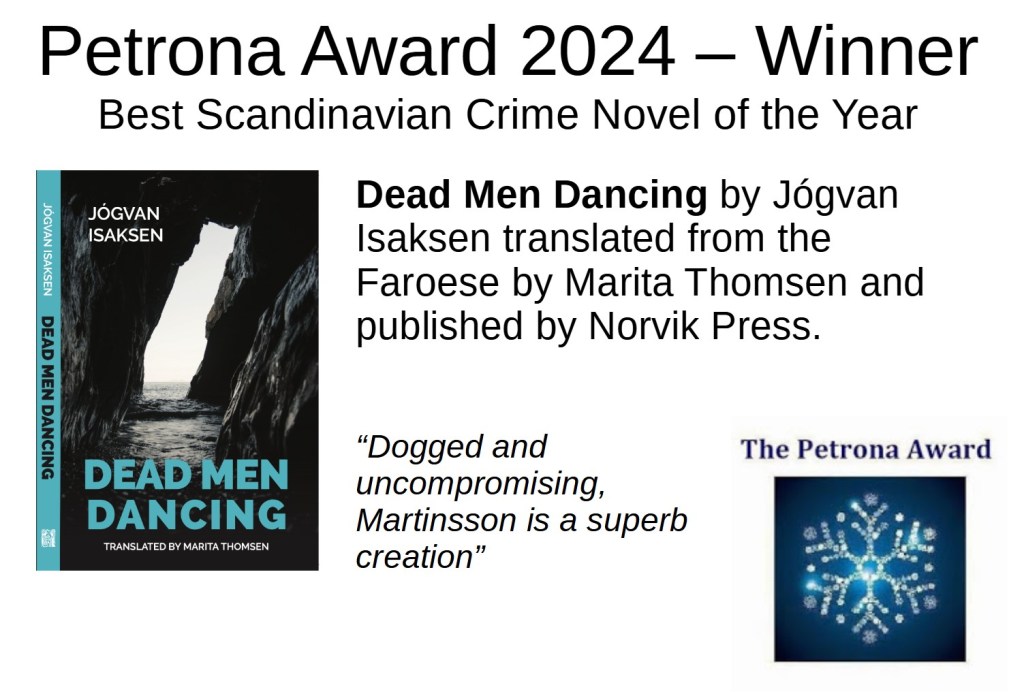
The winner of the 2024 Petrona Award for the Best Scandinavian Crime Novel of the Year is:

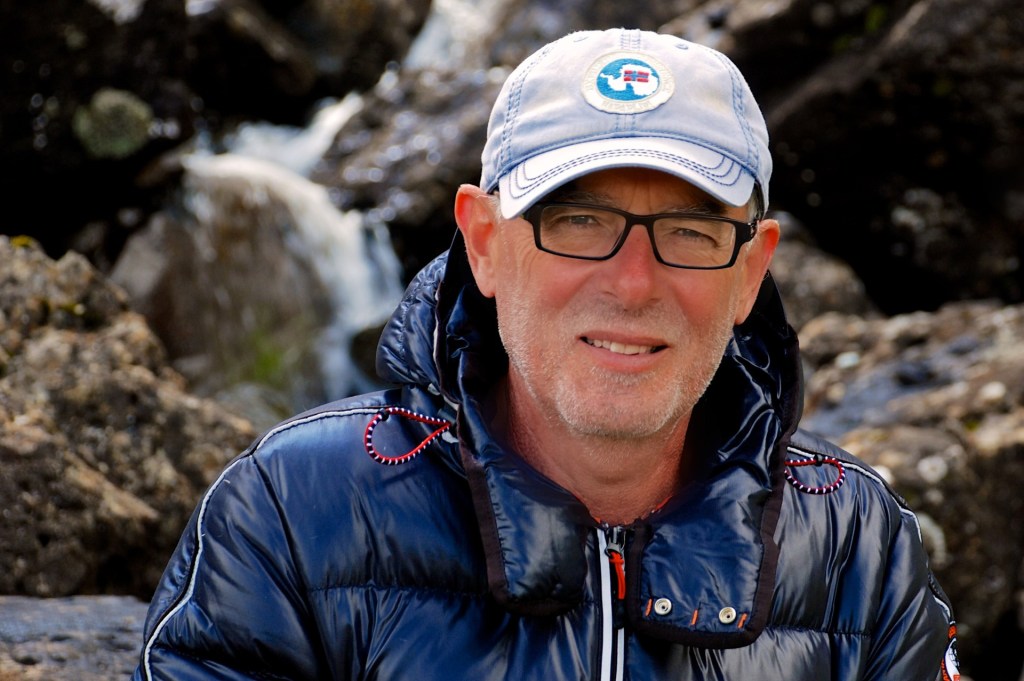
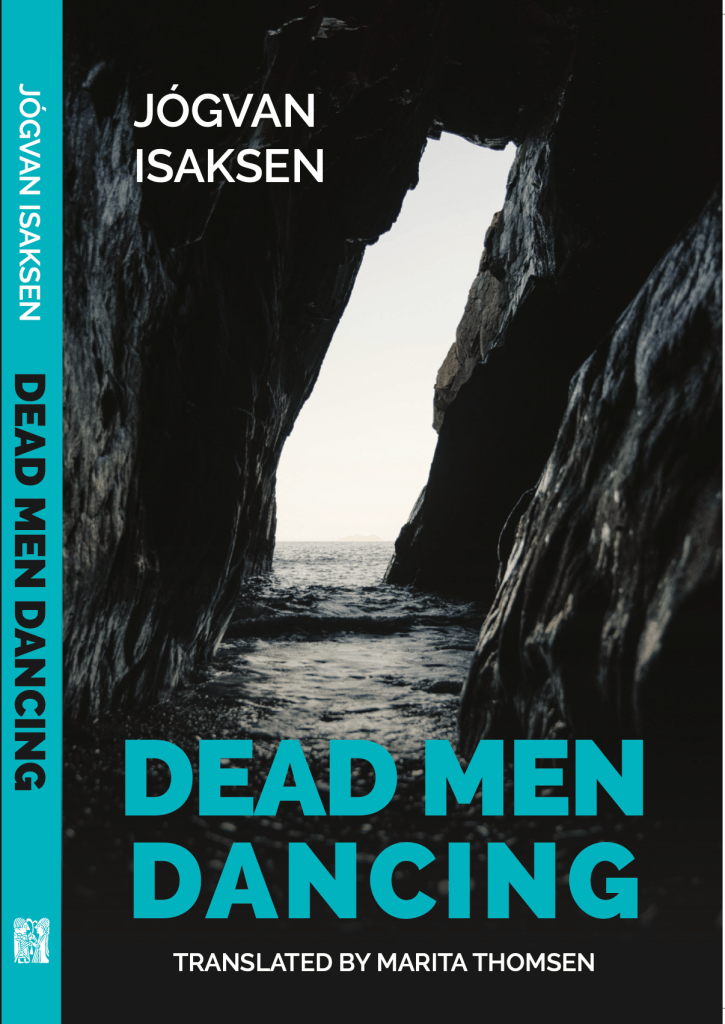
DEAD MEN DANCING by Jógvan Isaksen, translated from the Faroese by Marita Thomsen and published by Norvik Press. Jógvan Isaksen will receive a trophy, and both the author and translator will receive a cash prize.

The judges’ statement on DEAD MEN DANCING:

Similar to the story of the ancient god Prometheus, a man has been shackled to rocks on the Faroe Islands, and left to drown on the beach. The discovery of his body throws the local community into an unsettling chaos, and as the journalist Hannis Martinsson investigates, he comes across evidence of similar deaths. He realises they are linked to the events in Klaksvík in the 1950s, and a local revolt which tore the community apart. As Martinsson digs into the troubled past, he learns about his country’s history, and also gives the reader a chance to discover what makes the Faroes intriguing and spellbinding. Being a largely unknown territory to most, Dead Men Dancing includes a useful introduction to the modern reality of these islands by the CEO of the Faroese Broadcasting Corporation, mirrored by the social commentary that lies at the heart of the book itself, and the portrayal of the relationship with Denmark throughout the years.

This is only Isaksen’s second novel to be translated into English following Walpurgis Tide. This contemporary Faroese crime fiction writer places his characters in the wild, beautiful, and unforgiving environment and allows them to search for truth. The judges found the location to be absolutely integral to the unfolding of the plot, and how the raw natural beauty of the Faroes served as a reflection of the thoughts and actions of the characters.

Dogged and uncompromising, Martinsson is a superb creation, similar in his ‘detective’ thinking and approach to Gunnar Staalesen‘s lonely wolf PI Varg Veum, which the judging panel found very appealing. Martinsson’s gloomy demeanour and natural cynicism was beautifully balanced throughout with the more empathetic side of his nature, and in the age-old tradition of crime fiction his personal and professional relationships are fraught with tension.

The translation by Marita Thomsen is both accomplished and a little unusual, drawing as she does on the vernacular and intonation of the Scottish dialect. Again, the judges found this to be refreshingly different, and enjoyed the unique cadence and rhythm this gave to the book overall, an essential quality of any book in translation.

The judges agreed that in Dead Men Dancing the balance between location, plot and characterisation worked well, incorporating some of the familiar tropes of crime fiction, but also providing a refreshingly different reading experience. This was achieved by the depiction of the Faroes themselves and their history, working in symmetry with the narrative, and also by the characterisation of Martinsson, reminiscent of the traditional spare style in Nordic crime fiction. The assured and distinctive translation was also a significant factor in the judges’ overall decision.

Statements from the winning author, translator and publisher:

Jógvan Isaksen (author):

I feel it is a great honour to win this award, especially when I see that the competition includes several of my favourite Scandinavian authors. I am also proud to represent my country, the Faroe Islands, a self-governing part of the Danish Kingdom with its own language and traditions. Furthermore there are special bonds between the UK and The Faroes since the friendly occupation during World War II. I personally became a member of Collins Crime Club when I was only thirteen, and fought my way through crime novels I could hardly read. But at last I got there and have for many years been an admirer of Agatha Christie, Dorothy Sayers, Eric Ambler, Colin Dexter, Ian Rankin and many, many more.

Marita Thomsen (translator):

It was thrilling to translate the Faroese novel Dead Men Dancing and a great honour to receive the Petrona Award. I am privileged to find myself in the company of the master crafters of stories and languages shortlisted this year, congratulations to all! My thanks first and foremost to Jógvan Isaksen for keeping us in suspense, as he navigates the rugged outlines of the psychology and wild shores of the Faroe Islands. This book offers a fascinating window into regional tensions in the archipelago and historical tensions in the Kingdom of Denmark. Thank you to the passionate Norvik team for expert guidance and editorial advice. And to Richard and Jane for your patience and boundless enthusiasm for everything, even the difference between rowing boats and oared boats.

Janet Garton (Norvik Press Commissioning Editor):

We are delighted that Dead Men Dancing has won this year’s Petrona Award. Jógvan Isaksen is a master of suspense, and his maverick amateur sleuth Hannis Martinsson takes the reader on hair-raising trips by land and sea before – of course – solving the mystery before the frustrated police. The Martinsson series was the basis of the successful TV series TROM, and this is the second of the series to be published by Norvik Press, after Walpurgis Tide in 2016. Hopefully there will be more to come!

The Petrona team would like to thank David Hicks for his continuing sponsorship of the Petrona Award. Petrona Award 2024 – shortlist

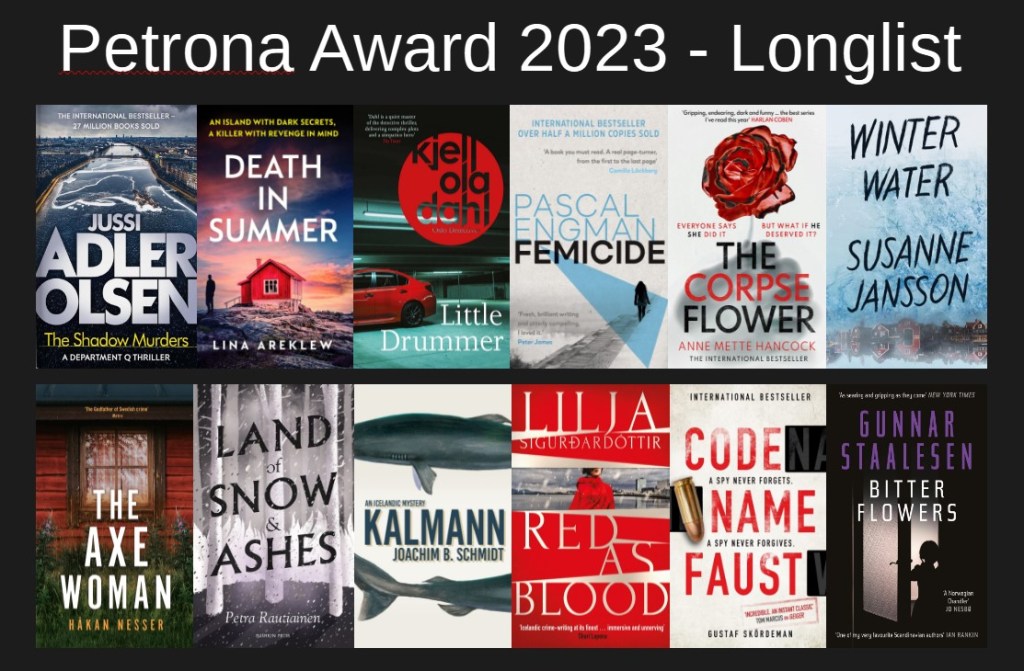
Petrona Award 2023 – Longlist

OUTSTANDING CRIME FICTION FROM DENMARK, FINLAND, ICELAND, NORWAY, SWEDEN AND SWITZERLAND LONGLISTED FOR THE 2023 PETRONA AWARD

The award is open to crime fiction in translation, either written by a Scandinavian author or set in Scandinavia and published in the UK in the previous calendar year. Twelve crime novels from Denmark, Finland, Iceland, Norway, Sweden and Switzerland have made the longlist for the 2023 Petrona Award for the Best Scandinavian Crime Novel of the Year.

They are:

Jussi Adler-Olsen – The Shadow Murders, tr. William Frost (Denmark, Quercus) 

Lina Areklew – Death in Summer, tr. Tara F Chace (Sweden, Canelo Crime)

Kjell Ola Dahl – Little Drummer, tr. Don Bartlett (Norway, Orenda Books)

Pascal Engman – Femicide, tr. Michael Gallagher (Sweden, Legend Press)

Anne Mette Hancock – The Corpse Flower, tr. Tara F Chace (Denmark, Swift Press)

Susanne Jansson – Winter Water, tr. Rachel Willson-Broyles (Sweden, Hodder & Stoughton)

Håkan Nesser – The Axe Woman, tr. Sarah Death (Sweden, Mantle)

Petra Rautiainen – Land of Snow and Ashes, tr. David Hackston (Finland, Pushkin Press)

Joachim B Schmidt – Kalmann, tr. Jamie Lee Searle (Switzerland, Bitter Lemon Press)

Lilja Sigurðardóttir – Red as Blood, tr. Quentin Bates (Iceland, Orenda Books)

Gustaf Skördeman – Codename Faust, tr. Ian Giles (Sweden, Zaffre)

Gunnar Staalesen – Bitter Flowers, tr. Don Bartlett (Norway, Orenda Books)

The significantly increased number of entries for this year’s Petrona Award illustrates the continuing popularity of Scandinavian crime fiction in translation. The longlist contains a mix of new and established authors including previous Petrona Award winner, Gunnar Staalesen. Both large and small publishers are represented on the longlist, with Orenda Books leading with three entries, and the breakdown by country is Sweden (5), Denmark (2), Norway (2), Finland (1), Iceland (1) and Switzerland (1), with translators Don Bartlett and Tara F Chace having translated two entries each.

The shortlist will be announced on 7 September 2023.

The Petrona Award was established to celebrate the work of Maxine Clarke, one of the first online crime fiction reviewers and bloggers, who died in December 2012. Maxine, whose online persona and blog was called Petrona, was passionate about translated crime fiction but in particular that from the Scandinavian countries.

The Petrona Award 2023 judging panel comprises Jackie Farrant, the creator of RAVEN CRIME READS and a bookseller / Area Commercial Support for a major book chain in the UK; Miriam Owen, founder of the NORDIC NOIR blog, passionate about the arts, she moderates author panels and provides support at crime fiction festivals, and Ewa Sherman, translator and writer, and blogger at NORDIC LIGHTHOUSE. The Award administrator is Karen Meek, owner of the EURO CRIME blog and website.

More information on the history of the Award and previous winners can be found at the Petrona Award website (https://www.petronaaward.co.uk/). The Petrona team would like to thank our sponsor, David Hicks, for his generous support of the 2023 Petrona Award.

Translating Mikael Niemi’s To Cook A Bear. Petrona Award translators – part 4.

Deborah Bragan-Turner is a literary translator from Swedish, as well as an editor, working with fiction and non-fiction. She has a degree in Scandinavian Languages from University College London. After a career in academic librarianship in the UK and bookselling in France, she has focused on full-time literary translation since 2012. She was the editor of Swedish Book Review from 2015 to 2020. Most of her published translations have been novels and include, for example, works by Per Olov Enquist and Sara Stridsberg. She enjoys the variety of work translators are offered and having recently translated a film script, she is currently working on a play. When Mikael Niemi’s To Cook A Bear received the Petrona Award in 2021, she was delighted that the novel was so well received by crime fiction enthusiasts. Her only other foray into crime so far has been translating Håkan Nesser’s novella Tom. She has thoroughly enjoyed being involved in both. Here Deborah Bragan-Turner recollects the time she was translating the novel.

“Crime writers and their translators and readers are such interesting and generous people!” 

‘Most books pose interesting challenges of one kind or another for the translator. This book, set in the far north of Sweden, very close to the Finnish border, promised to pose quite a few on a number of counts. The area, the Tornedalen, is a linguistic melting pot, where Sami , Swedish and Finnish are spoken, as well as Meänkieli, which is a local variety of Finnish and recognised today as one of Sweden’s five official minority languages. Mikael Niemi wrote the novel in Swedish and included elements of the other three. It felt essential to reflect that choice and to keep those words in the English translation, as they highlight in a very clear way the cultural as well as linguistic differences in this part of Scandinavia.

My task as the translator was to interpret the mood and style of the original so that readers would hear the author’s voice and picture the scenes he has so vividly created. It meant immersing myself in the mid-19th century so that the English dialogue would sound authentic. Translators can be pernickety creatures at times, and for an avid user of the Oxford English Dictionary, finding appropriate words in use in the 1850s was an enjoyable challenge. I also had a brilliant editor, who was on the lookout for anything too modern that might have crept in.

I like to visualise the topography of the setting when I’m translating and to have a mental map of the geography of a place. In this case I made good use of real maps, getting a feel for the distances Jussi covered on foot, for example, and appreciating just how remote and foreign the rest of Sweden was to the people around Kengis at this time. By coincidence I had visited the area myself some years before, but that was in deep midwinter when every centimetre of ground was covered in thick white snow.

It’s always fascinating when a main fictional character is based on a real person. I needed to find out more about Lars Levi Laestadius and the influence of revivalism on Sami cultural heritage, and to learn about the actual events referred to in the last part of the novel. I was very struck by the compassionate way Mikael deals with his character’s evangelical battle to win over hearts and minds, against the backdrop of an extremely harsh environment and violent unrest. Mikael’s pastor is a deep-thinking man who from the beginning of the book questions his mission, fearing that what he does causes more harm than good.

As well as being a Lutheran priest, Laestadius was also a renowned botanist and wrote a number of articles on plant life in Lapland. And incidentally, it’s through his meticulous eye for the tiniest details in nature that in the novel he becomes an unintentional detective. I love the way the author depicts Jussi’s struggle to learn the Latin names of all the plants the pastor identifies on their expeditions together. Jussi isn’t the only one who had to do a bit of homework on the correct terminology for Arctic marshland flora!

My memories of translating To Cook A Bear include several favourite literary moments, but if I had to single one out, it would be the pastor teaching Jussi to write by scratching letters in the sand. When Jussi learns to read and the power of words is within his grasp, his world begins to change.’

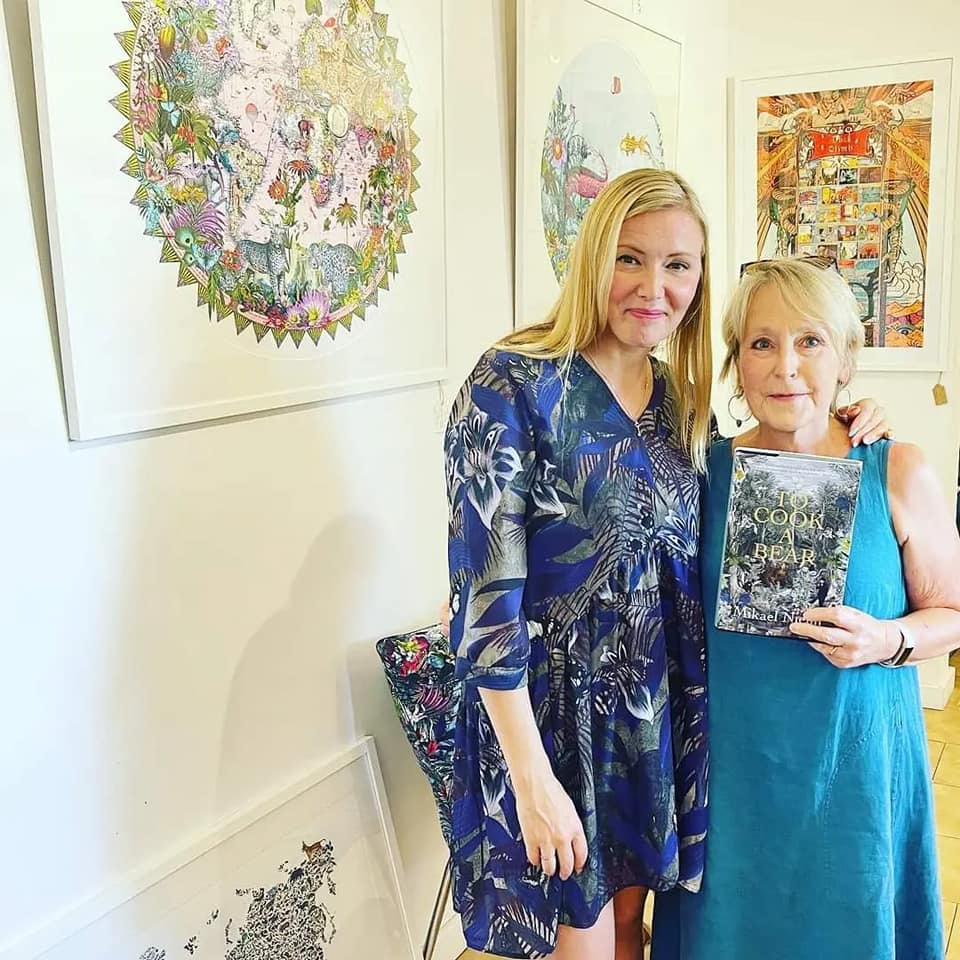
Serendipity is a feature of translation. In 2022 a happy chain of coincidences led me meet the London-based Icelandic artist who designed the cover for the hardback edition of To Cook a Bear, the superbly talented Kristjana S Williams, at an exhibition of her work held at the Galérie Inspiré in the village of Azille in the south of France. A lovely reminder, if we need one, of how many different people and skills go into the making of a book!

Petrona Award 2022 – Longlist

Outstanding crime fiction from Denmark, Finland, Iceland, Norway and Sweden longlisted for the 2022 PETRONA AWARD

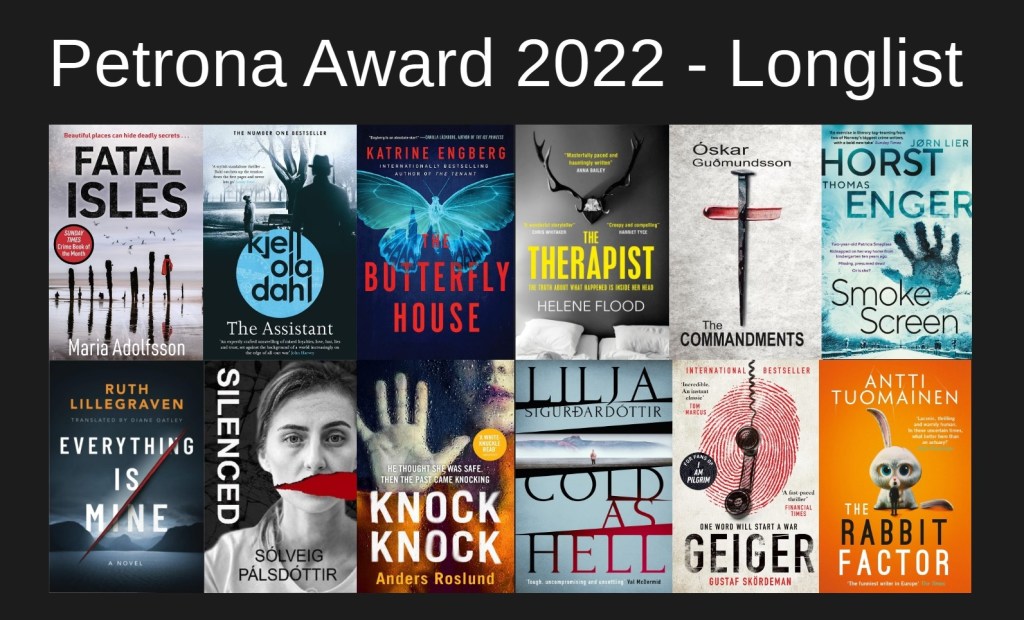
Twelve outstanding crime novels from Denmark, Finland, Iceland, Norway and Sweden have made the longlist for the 2022 Petrona Award for the Best Scandinavian Crime Novel of the Year. They are:

Maria Adolfsson – Fatal Isles tr. Agnes Broomé (Sweden, Zaffre)

Kjell Ola Dahl  – The Assistant tr. Don Bartlett (Norway, Orenda Books)

Katrine Engberg – The Butterfly House tr. Tara Chace (Denmark, Hodder & Stoughton)

Helene Flood – The Therapist tr. Alison McCullough (Norway, MacLehose Press)

Óskar Guðmundsson – The Commandments tr. Quentin Bates (Iceland, Corylus Books Ltd)

Jørn Lier Horst & Thomas Enger – Smoke Screen tr. Megan Turney (Norway, Orenda Books)

Ruth Lillegraven – Everything Is Mine tr. Diane Oatley (Norway, AmazonCrossing)

Sólveig Pálsdóttir – Silenced tr. Quentin Bates (Iceland, Corylus Books Ltd)

Anders Roslund – Knock Knock tr. Elizabeth Clark Wessel (Sweden, Harvill Secker)

Lilja Sigurðardóttir – Cold as Hell tr. Quentin Bates (Iceland, Orenda Books)

Gustaf Skördeman – Geiger tr. Ian Giles (Sweden, Zaffre)

Antti Tuomainen – The Rabbit Factor tr. David Hackston (Finland, Orenda Books)

The quality of the entries for the Petrona Award, now in its tenth year, remains consistently high, so much so that for the first time, the judges have decided to release a longlist. These twelve titles will be whittled down to a shortlist, to be announced on 16 November 2022.

The longlist contains a number of new faces as well as Petrona Award-winning authors, Jørn Lier Horst and Antti Tuomainen, and the previously shortlisted Kjell Ola Dahl and Thomas Enger.

Both large and small publishers are represented on the longlist, with Orenda Books leading with four entries, and the breakdown by country is Norway (4), Iceland (3), Sweden (3), Denmark (1) and Finland (1) with translator Quentin Bates being longlisted for all three Icelandic titles.

The Petrona Award 2022 judging panel comprises Jackie Farrant, the creator of RAVEN CRIME READS and a bookseller/Area Commercial Support for a major book chain in the UK; Miriam Owen, founder of the NORDIC NOIR blog and creator of content for communities, and Ewa Sherman, translator and writer, and blogger at NORDIC LIGHTHOUSE. The Award administrator is Karen Meek, owner of the EURO CRIME blog and website.

Notes to editors:

The award is open to crime fiction in translation, either written by a Scandinavian author or set in Scandinavia and published in the UK in the previous calendar year. More information on the history of the Award and previous winners can be found at the Petrona Award website (https://www.petronaaward.co.uk/).

The Petrona team would like to thank our sponsor, David Hicks, for his generous support of the 2022 Petrona Award.