A Fan’s Perspective. Petrona Award translators – part 3.

I had an enormous pleasure to hear from Don Bartlett and Victoria Cribb about their translation experiences. Now, Anne Bruce takes us on the journey from reading a Norwegian book in the original to translating it into English.

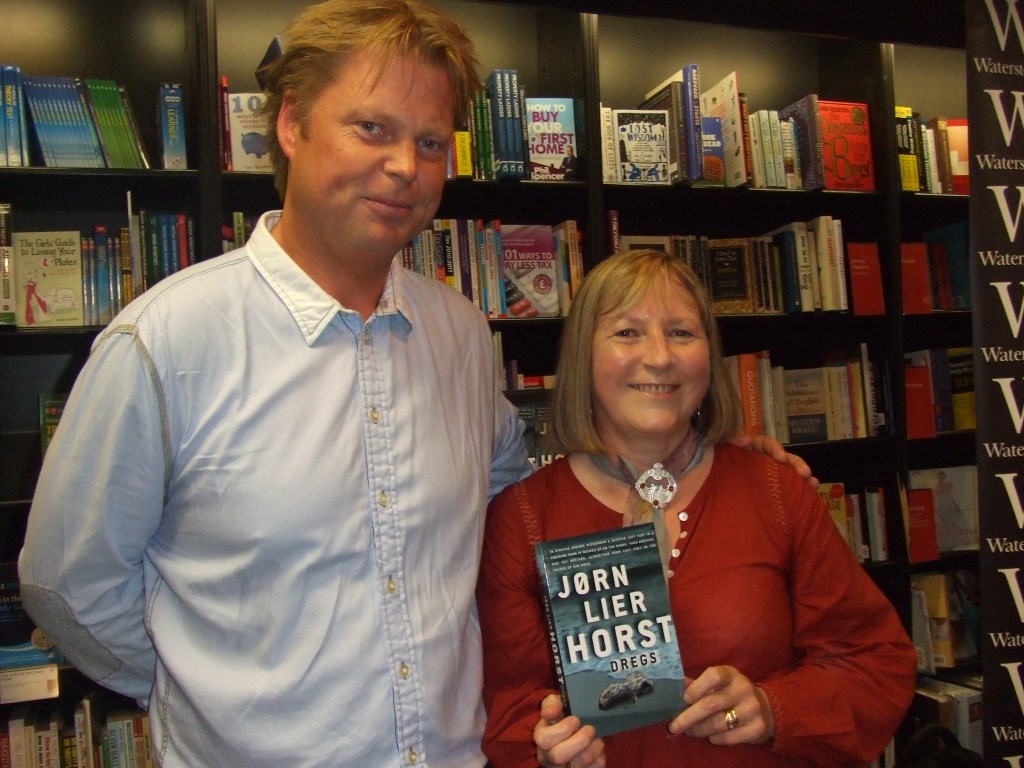
Jørn Lier Horst and Anne Bruce

‘I was a fan before I was a translator. As a reader, I came late to crime fiction, and soon headed in the direction of Nordic Noir, starting with Miss Smilla and moving on through Wallander and Martin Beck to the Norwegian writers I could access in the original – my favourites then being Gunnar Staalesen and Anne Holt. My voracious consumption of translated titles as well as writers not yet translated into English prompted a (perhaps naïve!) belief that this was something I could do, turning my love of the Norwegian language into a practical endeavour that would benefit other readers as well as myself. And so, a translator was born.

I bought and read a few of Gunnar’s crime novels on a visit to the Norwegian book town of Fjærland and went on to read his truly impressive Bergen Trilogy (now a quartet), set in one of my favourite Scandinavian cities and involving a crime and mystery across the time frame of an entire century. I was keen to pitch this to UK publishers but found little interest in such a magnum opus. I went on to try my hand at sample translations and received generous support and encouragement from the staff at NORLA, the Norwegian government’s agency for Norwegian literature abroad as well as Gyldendal’s publishing house in Oslo.

One of the first new writers I came across was Jørn Lier Horst, not yet published in English, but already making a name for himself in Scandinavian crime fiction. As an enthusiastic newly fledged translator, I was keen to help by translating excerpts, blurbs and reviews in an effort to persuade UK publishers to pick up his books. In 2011, Sandstone Press in Scotland agreed to publish Dregs, number six in the Wisting series but the first of his novels to be translated into English. The book garnered positive reviews, and one of the first bloggers to write in glowing terms and go on to champion the author’s writing was Petrona, aka Maxine Clarke, whose particular focus was ‘intelligent crime fiction from around the world’. Her reviews were always astute and insightful, so accolades from her were highly prized.

The series continued in English, with Closed for Winter, which won the Riverton Prize in Norway, and The Hunting Dogs marking a real breakthrough by winning the Nordic Glass Key Award. Both enhanced Horst’s reputation as a masterly exponent of Norwegian crime, underpinned by his wealth of knowledge of the police and their procedures as a former chief inspector himself. He says himself ‘Not many people are allowed behind the police barricades, and that’s my advantage. I’ve been to many crime scenes. It’s where I like to bring my readers. And at crime scenes I often met people who were victims of crimes, or those left behind in murder cases. My job was to talk to them. I came face-to-face with anger, grief, despair, and I think that’s what brings an authentic spark to my books.’ As his translator, I’ve been able to follow the progression of the writing and the characters over the years. The thorniest problems with the translation have, oddly enough, come from the titles rather than the text. Some of the English titles are completely different from the Norwegian ones – Blindgang became Ordeal, Det innerste rommet became The Cabin, Ilvilje became The Inner Darkness and Sak 1569 is published as A Question of Guilt. There was some discussion of how to translate Jakthundene some years ago, but when I realized the title also referred to a constellation of stars, it had to be The Hunting Dogs.

By this time, Maxine had sadly died and the Petrona Award was inaugurated in 2013 in her honour and memory. Of course, given her early backing for the Wisting novels, it was especially gratifying that the fourth book in the English series, The Caveman, was awarded the prize in 2016. I like to think Maxine would have approved!

Since then, of course, Jørn and his hero Wisting have gone on to the dizzy heights of TV fame (The Caveman featured in the first Wisting TV series) and the Petrona Award judges rewarded his prolific output with a second prize in 2019, this time for The Katharina Code. One of the aspects of Jørn’s Wisting series that particularly appealed to me was the Stavern setting, familiar from holiday visits, and Wisting’s foray to Hamburgsund in The Caveman had special resonance too, as I had just holidayed on the west coast of Sweden, part of a trip that took in Wallander’s Ystad and Läckberg’s Fjällbacka. Of course, Line’s trip in the novel was rather more dramatic!

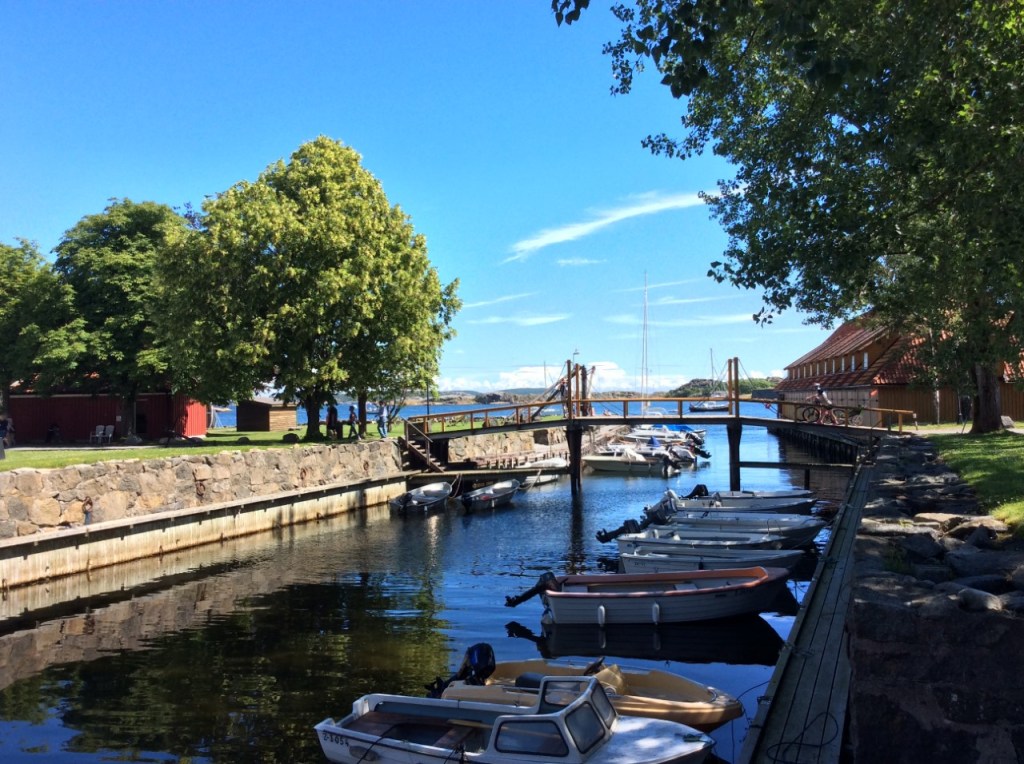
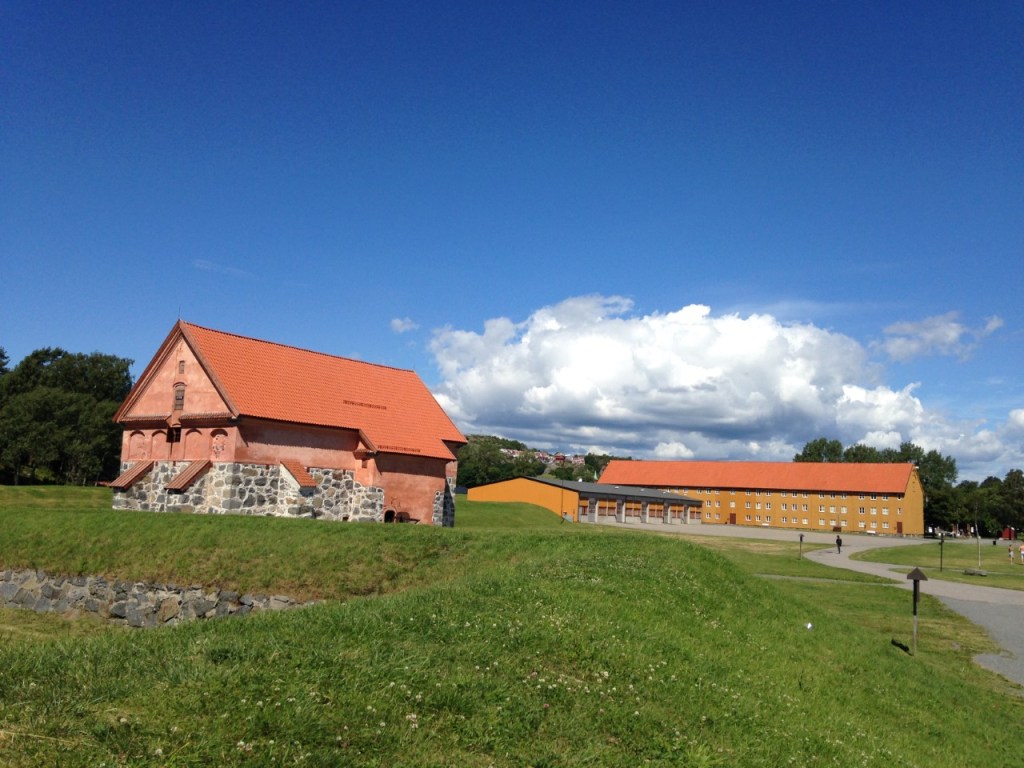
That holiday in 2013 also included a visit to Fredrikstad and the walled ramparts of its Old Town, so it was a genuine pleasure to find this featured in the next Wisting novel I translated, The Hunting Dogs. (Was Wisting dogging my footsteps as I was dogging his?) I had even gone into the Libris bookshop across from the postbox in the wall that gives Line an aha moment so crucial to the plot. In fact, I bought and immediately read Anne Holt’s controversial latest book, What Dark Clouds Hide – little did I know then that I would translate it some time later! These holiday connections also bring to mind one of my favourite Anne Holt quotes: I always say that if you’re visiting a country you’ve never been to before, you should buy a crime novel from the place and an interiors magazine. Those two things will tell you more about that country than any travel guide. Too true!

The success of the early Wisting translations led to me being invited by Simon & Schuster of New York to translate Anne Holt’s Hanne Wilhelmsen crime novels. They had decided to publish the whole series from the start in light of the recent success of 1222 in the prestigious Edgar Awards. As a great fan of the books, I was over the moon, and I relished translating these increasingly complex, often dark, thrillers with political intrigue and social criticism at their heart, in the true spirit of Nordic Noir and Martin Beck. In fact, the English translation by Marlaine Delargy was made from Maj Sjöwall’s translation of the book into Swedish, so yet another link to the roots of Scandi crime! The first of my translations was Blessed are Those who Thirst, and the series ended in English with book 10, In Dust and Ashes, though The Eleventh Manuscript has now been published in Norway and book 12 is forthcoming. Continuing to combine holiday travels with translation research, in 2014 I went for a long walk around the east end of Oslo, not normally part of the tourist trail, visiting all the locations from the Hanne Wilhelmsen series. I even called in at Police Headquarters, Grønlandsleiret 44. No one batted an eyelid as I went in, looked around in the foyer and took photographs of the location and the hanging artwork that Hanne ridicules so often!  

Anne’s next series, with Selma Falck as the lead character, was bang up to date with its focus on the world of celebrity and social media, and the second book in the short series, A Necessary Death, caught the attention of the Petrona Award judges and was shortlisted in 2021.

In the meantime, Jørn Lier Horst had embarked on another series, this time with writing partner Thomas Enger, and the first book in this new series was also shortlisted for the Petrona in 2021.

I never did get to translate any of Gunnar Staalesen’s books but can recommend colleague Don Bartlett’s translations of his Varg Veum series. And in fact, I did encounter Varg in one of Anne Holt’s novels – her famous sense of fun is given free rein in the playful links she introduced to her otherwise deadly-serious narratives and I was delighted to see Hanne meet up with Varg in The Lion’s Mouth. Other tie-ins can be spotted by eagle-eyed readers when Hanne makes an appearance in Death in Oslo, part of the Johanne Vik series, when Adam Stubo turns up in Offline, and when Henrik Holme crosses over from What Dark Clouds Hide to Offline and In Dust and Ashes.

Another humorous anecdote connected to Gunnar’s novels is also related to the perils of translation. I’ve often been asked – ‘Do you just put it all through Google Translate?’ I was a bit taken aback when I first heard this, because anyone who has used a digital translator would know that it leads to some spectacularly awful renditions. One I came across was in a newspaper article about Gunnar Staalesen, which mentioned one of his earliest novels, Bukken til havresekken, and stated that it ‘translates, enigmatically, as Goat of Geese’! The journalist had obviously used Google Translate and been led into a howler of an error. For once, I made an online comment correcting the mistake – the book would be called in English Cat among the Pigeons or Fox among the Geese, to come closer to the reporter’s version, but I see on checking it again recently that the uncorrected version is still on the website!

Looking back, it’s clear that my career as a translator has been closely connected with the Petrona Award over the ten years of its existence – its creation gave a tremendous fillip to translated Scandinavian crime fiction and a real boost to the status of translators. A heartfelt thanks to the founders, judges and supporters for that!’   

How to scare your editor. Petrona Award translators – part 2.

Victoria Cribb (MA, Anglo-Saxon, Norse & Celtic, and History, University of Cambridge; MA, Scandinavian Studies, UCL; BPhil, Icelandic as a Foreign Language, University of Iceland) spent a number of years travelling, studying and working in Iceland before becoming a full-time translator in 2002.

She has translated more than forty books by Icelandic authors including Sjón, Arnaldur Indriðason, Yrsa Sigurðardóttir, Ragnar Jónasson, Eva Björg Ægisdóttir, Gyrðir Elíasson and Andri Snær Magnússon, and poetry by Gerður Kristný. A number of these works have been nominated for prizes. In 2021 her translation of Eva Björg Ægisdóttir’s The Creak on the Stairs became the first translation to win the UK Crime Writers’ Association John Creasey (New Blood) Dagger award, and her translation of Yrsa Sigurðardóttir’s The Silence of the Sea won the UK’s 2015 Petrona Award for Best Scandinavian Crime Novel of the Year. Other nominations include being long-listed three times for the US Best Translated Book Award (Fiction), and twice for the PEN America Translation Prize, both most recently in 2019 with CoDex 1962 by Sjón.Another of her Sjón translations, In the Mouth of the Whale, was short-listed for the UK’s 2012 Independent Foreign Fiction Prize and the 2013 International Dublin Literary Award. Sjón’s work in English (and other languages) has been recognised all around the world and it led to the author being invited to contribute a piece of work to be included in the Future Library project.

In 2017 Victoria Cribb received the Orðstír honorary translation award in recognition of her contribution to the translation of Icelandic literature. She now lives in Vienna, Austria, and knows exactly how to scare an editor. Below is her foolproof suggestion.

Connected by the Icelandic language: Victoria Cribb, writer and translator Quentin Bates, and Yrsa Sigurðardóttir.

‘Translation can be a lonely job. You sit there for months, wrestling with words, your only company a book and a laptop (I am not one of those fortunate translators who has a cat to assist or, more likely, hinder their efforts). Apart from the occasional e-mail exchange with the author or editor, or attempt to pick my other half’s brains (‘What do we call those round thingummies in English?’ — ‘I have no idea.’ — ‘Ah, good, so it’s not just me losing my marbles, then?’), I am alone with the text. So I’m hugely grateful to Nordic Noir bloggers like Ewa, who not only read our books but share their enthusiasm with others, and to the organisers of the Petrona Award, who make us feel that our work might actually be worthy of praise.

I first became aware of the Petrona Award when my translation of Yrsa Sigurðardóttir’s The Silence of the Sea won it in 2015. As it happens, this was the first of her books I had worked on. Two things struck me immediately: Yrsa was funny and Yrsa was good at generating fear – not an easy combination to pull off. There is a tendency among English speakers to think of Nordic literature as unremittingly bleak, but Yrsa is always aware of the comedy inherent in the human condition. In The Silence of the Sea, it is particularly evident in the relationship between the central character, Thóra, and her baleful receptionist, the ironically named Bella. When I told Yrsa that Bella was my favourite character, I was delighted to learn that she was based on a real person.

But my abiding memory of this book is just how much research Yrsa had given me to do. One strand of the story is set on board a luxury yacht. Although I grew up on Arthur Ransome, have read the entire Patrick O’Brian Aubrey series and countless other works about ships and the sea, nautical language remains incredibly difficult to get right. I spent hours trawling the internet for articles and adverts about super yachts, and poring over the thesaurus for different ways to say ‘opulent’. I had to learn all about radar, and NAVTEX and VHF radio. I wandered the lanes of Lisbon with the help of Google Street View to find out what the cobbles looked like. I puzzled over the arcana of scuba-diving equipment, and bombarded Yrsa with pictures of freight containers, demanding to know which one she had in mind.

I am always on my mettle to solve as many problems as I can before I pester the author for explanations, aware that they have many other calls on their time, but with this book I was lucky enough to meet Yrsa in person. I remember querying some detail, thinking I was being clever, only to be silenced by Yrsa’s answer that she had tried out the activity for herself. Here was someone who took her research seriously. Instead of relying on Google like me, she had been out there, scuba diving and visiting the bridge of a trawler (she was unable to drum up a super yacht).

Since then, I’ve translated another nine novels by Yrsa, always grateful for the humour and generally rooting for the animals (if anyone’s going to survive the bloodbath, let it be the dog or cat). My biggest concern is usually about preserving the fear factor. I’m a terrible coward myself, often so badly spooked by the Icelandic original that I can’t continue reading after dark or when I’m alone in the house. But once I’m working on the translation, I have the opposite problem: the work ceases to be scary at all. Disaster! I become convinced that I’ve ruined it. After I handed in The Silence of the Sea, I remember my relief when the editor e-mailed me to say she’d been so frightened by the bit where the ghostly voice speaks through the ship’s radio that she’d had to stop reading and go and make a cup of tea to calm her nerves.

Yrsa and I have got a new horror novel called The Prey coming out in the UK in October 2023. I sincerely hope that it too will have readers reaching for their kettles.’  

God Påske with Don Bartlett. Petrona Award translators – part 1.

God Påske 🐥Happy Easter 🐣. Petrona Award translators – part 1.

The current (Raven Crime ReadsEuro CrimeNordic Lighthouse and Nordic Noir) and past Petrona Award are celebrating 10th anniversary of Petrona Award this year. Last December Margot Kinberg wrote a moving tribute In memory of Maxine Clarke.

Maxine’s memory is preserved in reading, writing about, discussing and enjoying crime fiction from Scandinavian countries, translated into English. In the spirit of Påskekrim and to celebrate translators whose work contributed so much to popularise Scandinavian literature, including crime fiction, I want to present eight translators whose incredible work – masterful craftsmanship, sensitivity, hard graft, feeling for the language and understanding the context of the book in both cultures – made it possible for literature to cross international linguistic bridges. 

A couple of days ago I heard Gunnar Staalesen on the radio. He was talking about Påskekrim tradition that started a hundred years ago, so I decided that the first translator to be presented here is the legendary Don Bartlett. I am not exaggerating. In 2016 Don Bartlett was awarded the Royal Norwegian Order of Merit in rank of Knight, class I for his formidable efforts as a translator of Norwegian literature. Several of the authors whose books Don have translated, often point out that Don’s contribution in many cases has been one of “co-writing” and rendering the book, rather than translating it. Don translates from Danish and Norwegian mainly, but he also knows Swedish and German.I won’t summarise all his achievements here but would like to reach for one or several novels by Karl Ove Knausgård (My Struggle tomes), Jo Nesbø, Gunnar Staalesen, Kjell Ola Dahl, Roy Jacobsen. The list is exciting and huge indeed. 

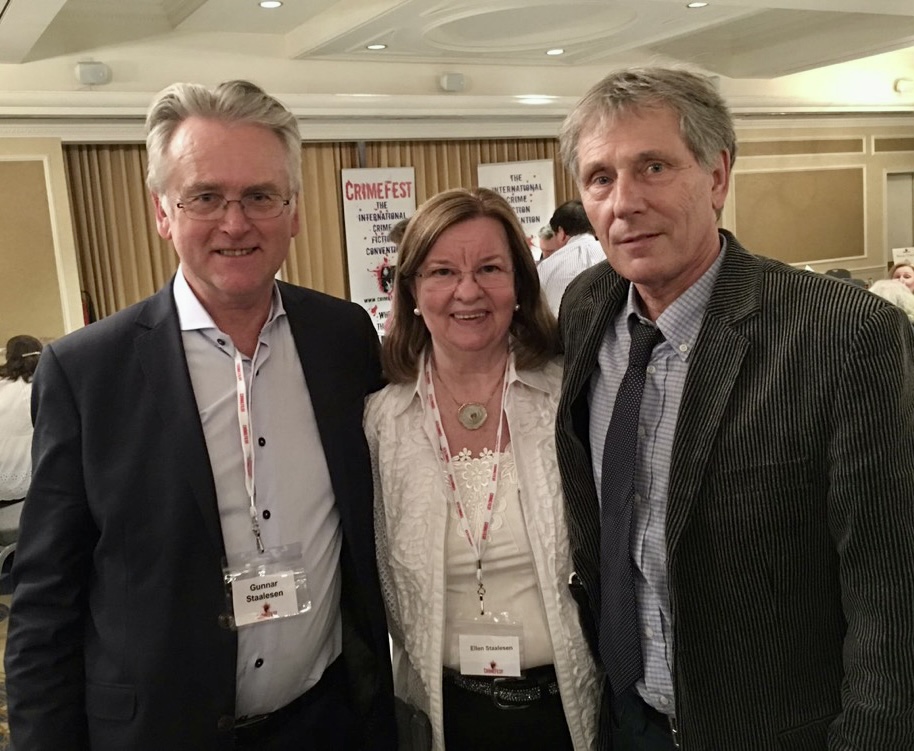
Gunnar Staalesen, his wife Ellen and Don Bartlett at CrimeFest in Bristol in 2017. Staalesen’s novel Where Roses Never Die was the winner of Petrona Award that year.

Here’s what Don says about the translation process. 

Maxine Clark and Karen Meek were the first crime fiction ‘bloggers’ I ever met. So I write this with a nod of warm appreciation to them. When I talked to Maxine & Karen – a good twenty years ago – I used the term ‘blogger’ with some trepidation. I still wasn’t 100% sure what a blog was and didn’t want to understate or overstate its value. I remember asking for and receiving a comprehensive explanation. Now I know, Ewa, we can all relax. And this is a kind of blog.

At the moment I am in the middle of translating Gunnar Staalesen’s latest novel, ‘latest’ in the sense of the ‘next’ Staalesen for Orenda, because the original came out in Norway in 2002. I know Varg Veum pretty well now as I have translated nine of Gunnar’s novels (seven for Orenda; two for Arcadia) and this will be the tenth. I am into double figures and still a big fan. 

I have just finished the first draft of my translation and would like to tell you what is going through my head. First, there is the title: Som i et speil, literally translated  ‘As In A Mirror’. This makes perfect sense in terms of the plot – it is very accurate – but to my mind, and the publisher’s, it doesn’t flow or attract. I have come up with an alternative, which flows better, and I am still mulling it over with respect to the places where this phrase comes up in the novel and the various contexts. At present, I think it works, but that could change as I go through more drafts. 

The first draft is really a rough and ready translation, with several bits in red, where I have to check the geography or cultural details, or I am not happy with my interpretation / translation, and may have to check with Gunnar. He is always happy to help, and a very good sounding board, but I prefer not to disturb him unless it is absolutely necessary. After all, this novel first appeared quite a few years ago, and his mind will be on his new publication this year. 

However, I have to confess I was intrigued by a jazz tune that is mentioned early in the novel. I knew Gunnar was playing on one of its associations, but I was unsure which. So I did ask, and it turned out it was a geographical allusion. Good job I asked. It wouldn’t have been my first guess, but this shows the immense value of having Gunnar there.

The next draft is the one I enjoy most as I begin to nail down who characters are and how they speak. I find myself muttering things like ‘No, no, no, Berit wouldn’t say that. She’s more in-your-face, confrontational.’ And I am clear now about what the ingredients of this novel are. Some Varg Veum novels bristle with cultural and geographical references. This one has a clear Bergen setting, but Gunnar’s focus is very much on the characters and the plot. And there is a narrative technique he hasn’t used before. I have to make sure it works in English as well as it does in Norwegian. Usually at the second stage I go back over jokes or idioms or puns I have highlighted in red. There are not so many in this particular novel, but there is still enough to chew on. I am still a long way from polishing what I have done. Deadline: June 2023.’

The latest novel by Gunnar Staalesen is due to be published later this year by Orenda Books.

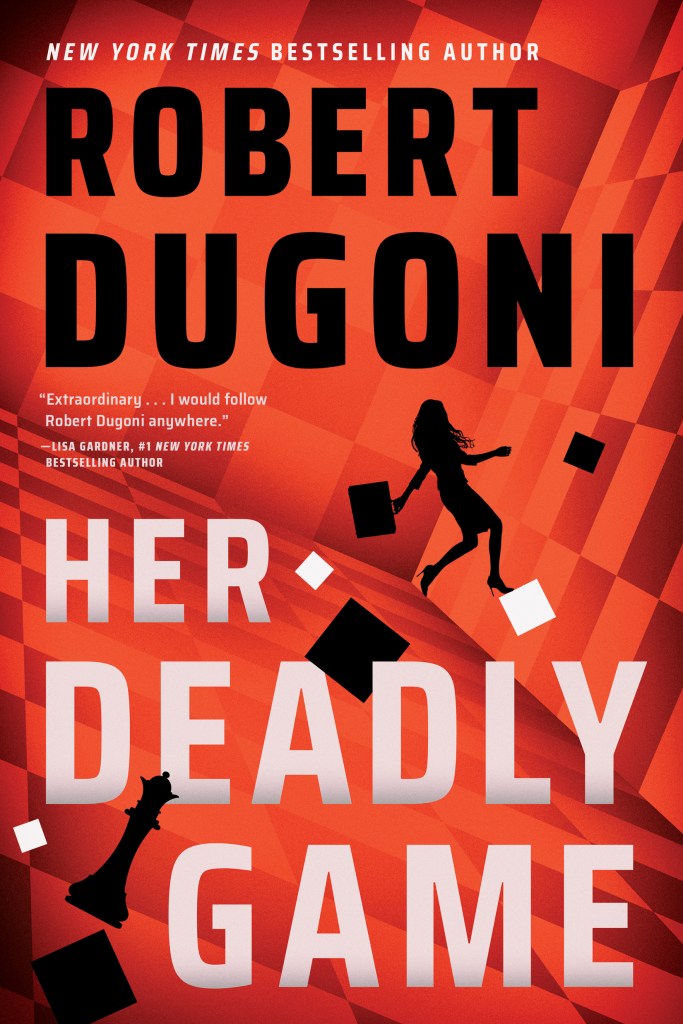
Her Deadly Game by Robert Dugoni

Keera Duggan was building a solid reputation as a Seattle prosecutor, until her romantic relationship with a senior colleague ended badly. Now, returning to her family’s failing criminal defence law firm to work for her father is her only option. But with the right moves, maybe she can restore the family’s reputation, her relationship with her father, and her career.

Keera’s chance to establish herself comes when she’s retained by Vince LaRussa, an investment adviser accused of murdering his wealthy wheelchair-bound wife Anne. There is little hard evidence against him, but considering the couple’s impending and potentially nasty divorce, LaRussa faces life in prison. The prosecutor is equally challenging: Miller Ambrose, Keera’s former lover, eager to destroy her in court on her first homicide defence. But as a competitive former chess prodigy, Keera is confident that she can outmanoeuvre him. 

As Keera and her team start digging, they uncover more than they bargained for. Keera is sure that LaRussa did not kill his wife, but she is starting to suspect that he is not an innocent man. With duty to her client, her family’s legacy, and her own future to consider, she’s caught in a deadly game…

Clients don’t need heroes. They need competent, well reasoned representation. Remember. Evaluate and consider before you make a move. Don’t rush. And don’t let your desire to win influence the moves you make.’

Many years ago I was summoned to do jury service. Twice. The first time it was an attempted murder trial. As I and other jury members listened to the evidence and witnesses’ statements, we managed to come to a conclusion that was reasonable and logical. But that’s my whole experience from the criminal court: even when I completed law degree, my intention was to deal with totally different matters. Alas, that did not exactly happen. And it’s another story.

Getting to know Keera Duggan, her personality and methodological thinking in the latest book by Robert Dugoni was a blast. Of course, British and American legal systems differ significantly. What we might have seen in the films and TV series give us an overview but can we really say that we observe all nuances and lingo, the strategies and games? Well, Dugoni is a master of presenting all that and as he sets seemingly simple tale in motion, he captures the readers’ attention and imagination. He asks questions, makes them think, pulls them inside the story.

The riddle in which Mary is found dead beside a table and an open window. There’s glass on the floor and a puddle of water. The autopsy determines Mary died of shock and loss of oxygen. What happened?

What I enjoyed so much in Her Deadly Game was the constant comparison of the legal preparation to the game of chess. Keera was a child prodigy and still played chess to unwind, gather her thoughts and relax. She also needed mental stimulation. Her mind is brilliant, and her game on and off the court room, can be deadly yet she remains a likeable character, flawed and human, and mindful of all good advice from her father Patsy, also known as Irish Brawler. ‘Focus on the problem before you.’ At times that becomes difficult and infuriating, especially as the arrogant prosecutor Miller Ambrose, his ego bruised by being dumped, wants at all costs to win the case and to humiliate her. That’s when more advice comes in: ‘Opponents make mistakes. Play defense but look for that moment to attack. Games can change with one move, sometimes in an instant. So can trials.’

Keera is fully aware of the dangers ready to catch the committed lawyers: ‘Most people didn’t understand that some days, the good lawyers spent every waking moment thinking about their cases. It explained why so many lawyers were divorced or had addiction issues. The law, she had been told, more than once, was a jealous mistress.’ Her own family wasn’t immune: Her father, she knew, had envisioned the firm to someday be Patrick Duggan & Sons, but her two older brothers, Shawn and Michael, had chosen only one of their father’s passions – drinking, though Michael had been sober for fifteen years.’ Hence Patrick Duggan & Associates became Patsy Duggan and his daughters: Ella, Margaret and Keera. A team that focused completely on their work.

Her Deadly Game is a slick, exciting novel. Intelligent and fast-paced. Sparkling with logical practical wit, verbal duels and sharp dialogues, and on top of all this; with literary references. The intricate web of puzzle pieces are impossible to put into a coherent yet surprising picture until they actually fall in place, and the truth appears before the defence counsel and the very hard-working detectives. Here I need to mention the brilliantly portrayed professional relationship between Keera and Detective Frank Rossi of Seattle Violent Crimes: respectful, knowledgeable of law and its limitations, and understanding of how the system works. They are both aware that it is not the best but it mostly works in the current situation.

The culmination of defence in the controversial LaRussa case, involving intense work behind the screen, employing a private investigator JP Harrison, checking Anne’s family’s contacts and history, and tracking the mysterious book quotes, is both impressive and astonishing. Keera’s achievement was both at professional and personal level. Without giving away the conclusion one thing was certain: ‘Ambrose did what even the Sunday dinners did not. He’d brought them together, gave them a common enemy, made them a family who stood up for one another, and who cared for one another.’ That clearly indicates that more is coming from Duggans and Dugoni. I do hope so.

Thank you to Sophie Goodfellow of FMcM Associates for the invitation to join the blog tour for Her Deadly Game.

Robert Dugoni is the critically acclaimed New York Times, Wall Street Journal, Washington Post, and Amazon Charts bestselling author of the Tracy Crosswhite series, which has sold more than eight million books worldwide. He is also the author of the bestselling Charles Jenkins series; the bestselling David Sloane series; the stand-alone novels The 7th Canon, Damage Control, The World Played Chess, and The Extraordinary Life of Sam Hell, Suspense Magazine’s 2018 Book of the Year, for which Dugoni won an AudioFile Earphones Award for narration; and the nonfiction exposé The Cyanide Canary, a Washington Post best book of the year. He is the recipient of the Nancy Pearl Book Award for fiction and a three-time winner of the Friends of Mystery Spotted Owl Award for best novel set in the Pacific Northwest. He is a two-time finalist for the Thriller Awards and the Harper Lee Prize for Legal Fiction, as well as a finalist for the Silver Falchion Award for mystery and the Mystery Writers of America Edgar Awards. His books are sold in more than twenty-five countries and have been translated into more than two dozen languages.

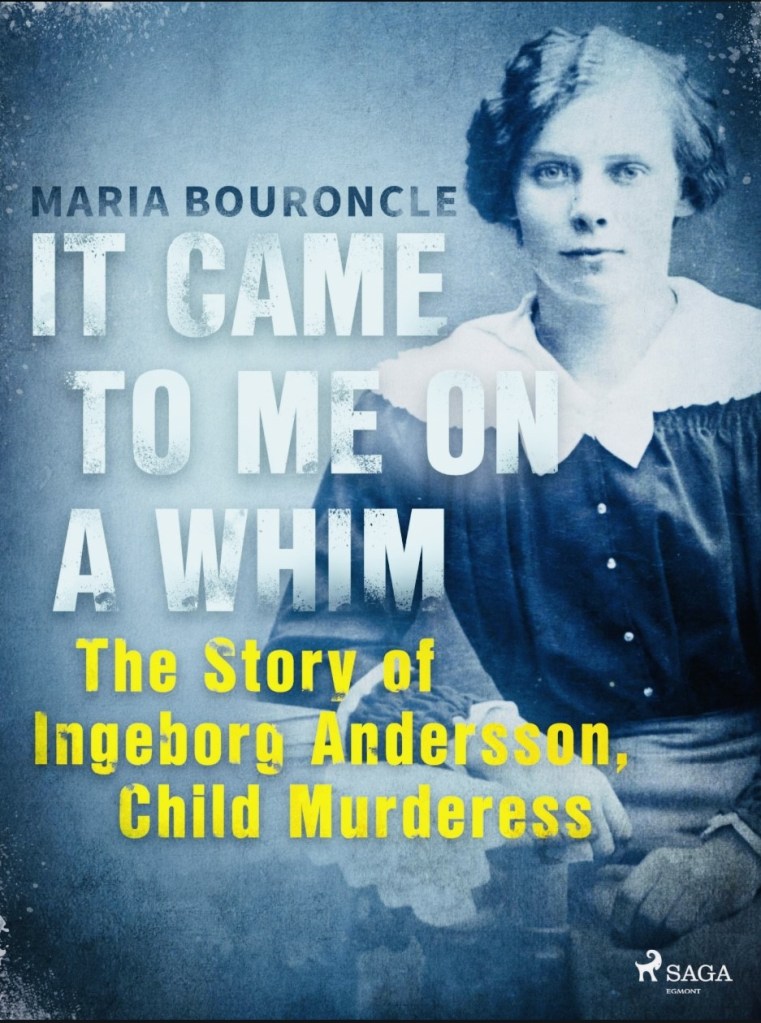
‘It Came to Me on a Whim’

‘A dreadfully sad occurrence in the quiet village of Vesene. A mother drowned her three children in the washtub while her husband was out at work. Naturally this happened in a moment of insanity, the pastor wrote in his diary that evening.’

I didn’t quite know what to expect from a book about a young Swedish woman who killed her three small children Tor, Efraim and Lucia one cold day in March 1929. True crime at its most gruesome and poignant, and very personal to people affected by it, at the time and now.

Ingeborg Andersson remained quiet and detached throughout her ordeal: interrogation by the local sheriff, being arrested and transported to the prison, and attending the trial. The only thing she could think of and say in response to questioning was that the impulse to do that came to her on a whim. But how can you explain that ‘whim’? What was it really? What has happened to Ingeborg and pushed her to commit such a crime in circumstances that on the surface seemed completely ordinary. Her husband Artur was a kind, calm and hardworking man, a devoted husband and father. His world collapsed in a split second when he saw three lifeless bodies next to the large copper washtub in the bedroom of their well-kept house. The laundry wasn’t done, the lunch wasn’t cooked and the wood he had fetched wasn’t important anymore. How could such mundane things be in the face of tragedy? He was no longer the object of much envy in the village but a totally destroyed human being. Yet the novel’s aim isn’t him but the woman unable to understand own actions.

Ingeborg’s grand-niece Maria Bouroncle felt compelled to follow the story which has been a taboo in her family and a deeply hidden secret. No doubt shame must have been one of the reasons why the past events have not been mentioned. Even at the time of the crime, so much depended on the perception by others, and presenting only one’s best sides to the community. Why talk about a mentally unstable female killer and her victims? Initially Bouroncle was shocked when she had discovered fragments of the story. Afterwards she began to arrange own feelings and questions. It Came to Me on a Whim became her search for truth, motives and reasons, and most importantly her quest to understand the timid woman who had murdered her children and although knew she had deserved the punishment, she could not comprehend her own mind and emotions. Ingeborg was aware of basic religious principles but nothing more complex, relating to social norms: ‘’You were not in full command of your senses when it happened, Ingeborg. You have been very ill and are in need of care.” “Going unpunished is out of the question, since I am so well now,” continued Ingeborg. “In another life I hope to go unpunished”. The process of imagining situations and conversations between prison staff, the doctor in charge and then the hospital employees, as well as uncovering processes that might have been in Ingeborg’s mind seem also a difficult personal journey for the author. Certainly access to archives helped to map the events: ‘The purpose of the psychiatric examination was to assess patients’ grounding in reality and their conformity to social norms, and to test their understanding of religion, history and geography and their general knowledge. The exercises included interpreting proverbs, critically examining apparent illogicalities, and answering questions on abstract and ethical concepts.‘ The result in the form of the matter-of-fact yet compassionate book shows the possible state of the care institutions, and empathy in portraying a deeply-troubled young mother. The author spent years going through various documents, focusing on extensive research into penal history in Sweden about a hundred years ago, and investigating letters and papers connected to the antiheroine.

Tom Ellett’s translation from Swedish is excellent, and I assume it must have been a bit of a challenge when translating Ingeborg’s original letters with their simplicity, repetitions and poor language. She knew limitations of some of her skills: ‘I write ugly’ but had no idea how her actions impacted others, especially her husband: ‘Her emotional side became completely dead […] She gradually brightens up enough that she can feel remorse and be reasoned with, but still exhibits, at the time of writing, catatonic and demented traits.’ Nevertheless, the book is very much alive.

You can find out more about the author on her website Maria Bouroncle.

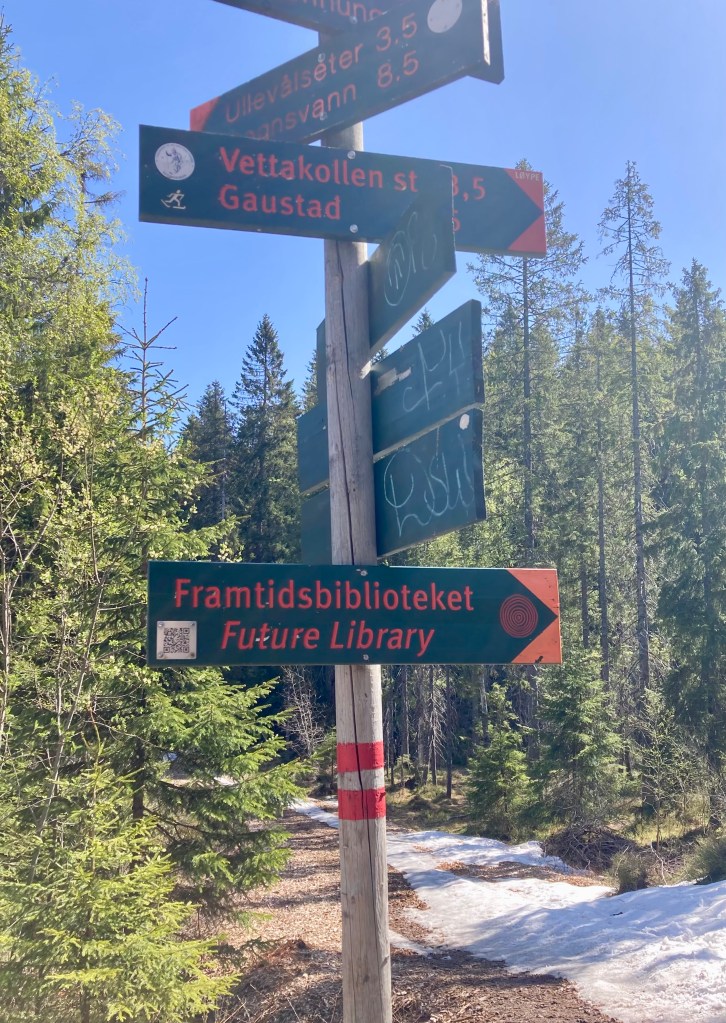
Framtidsbiblioteket

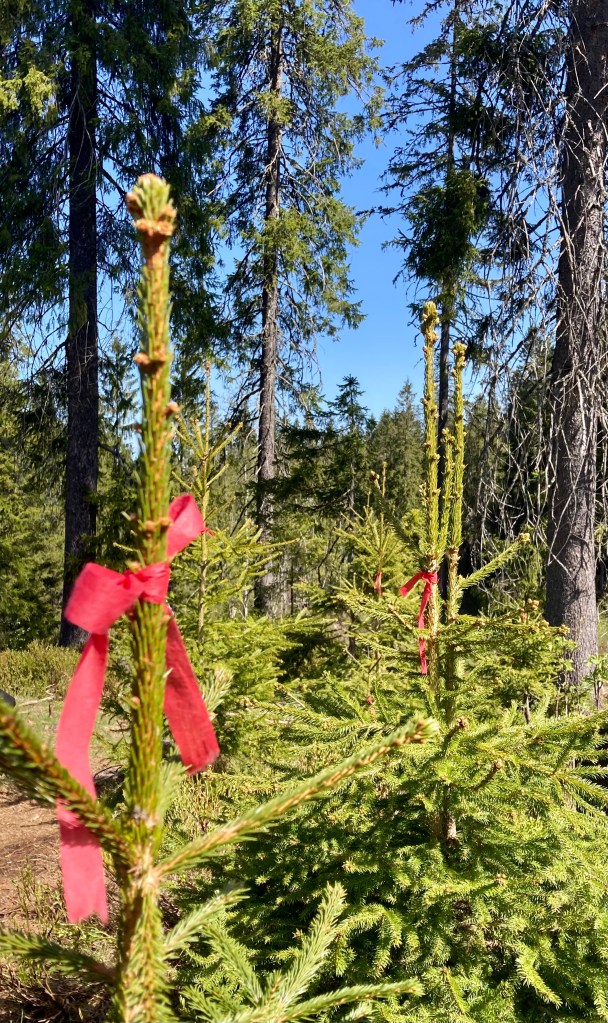
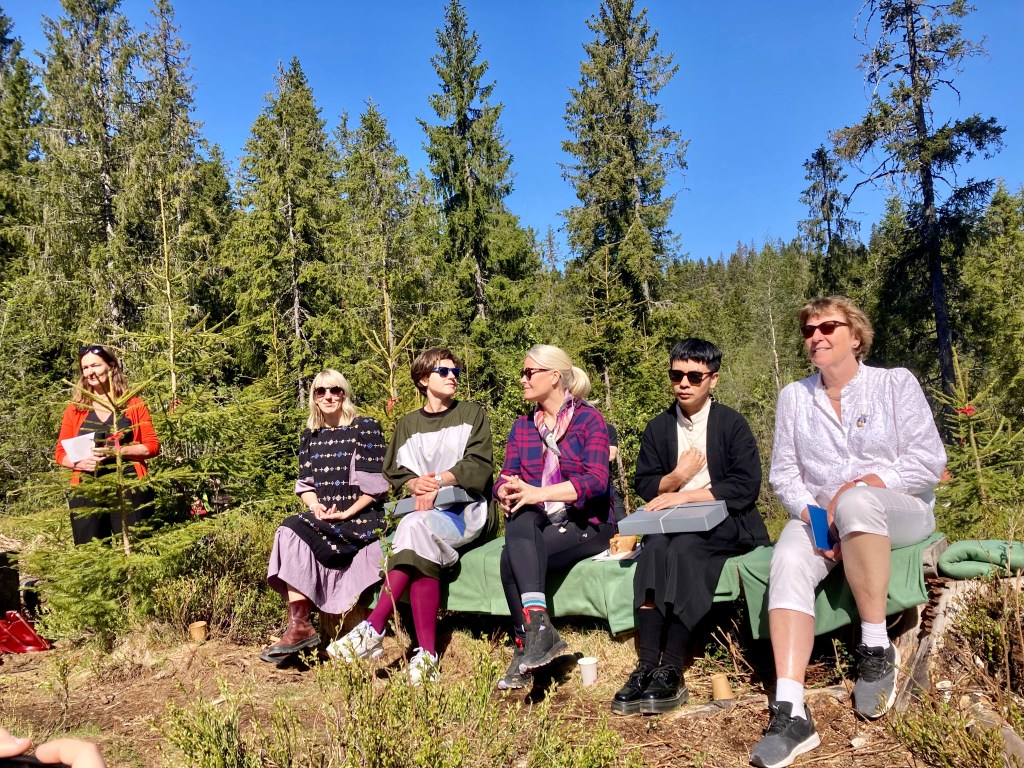
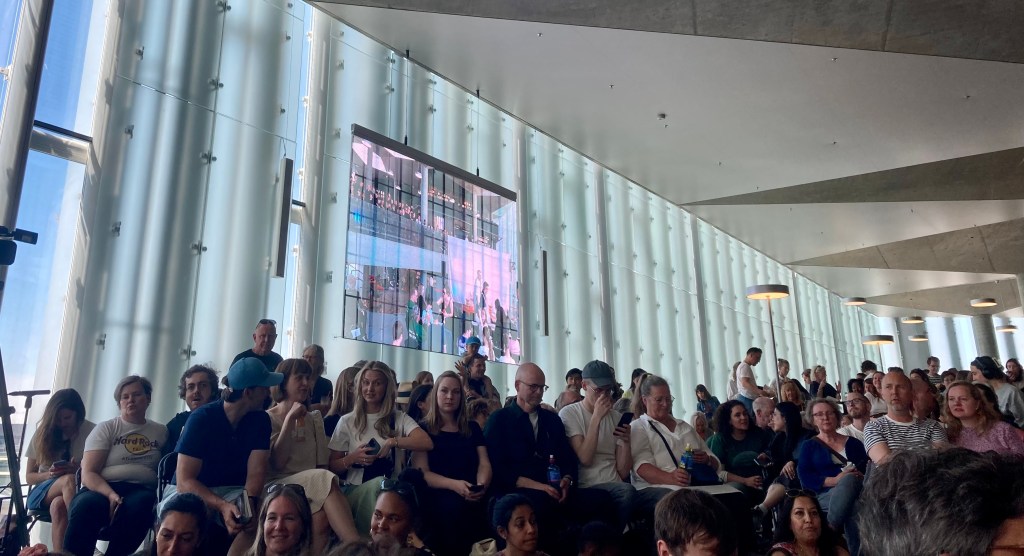
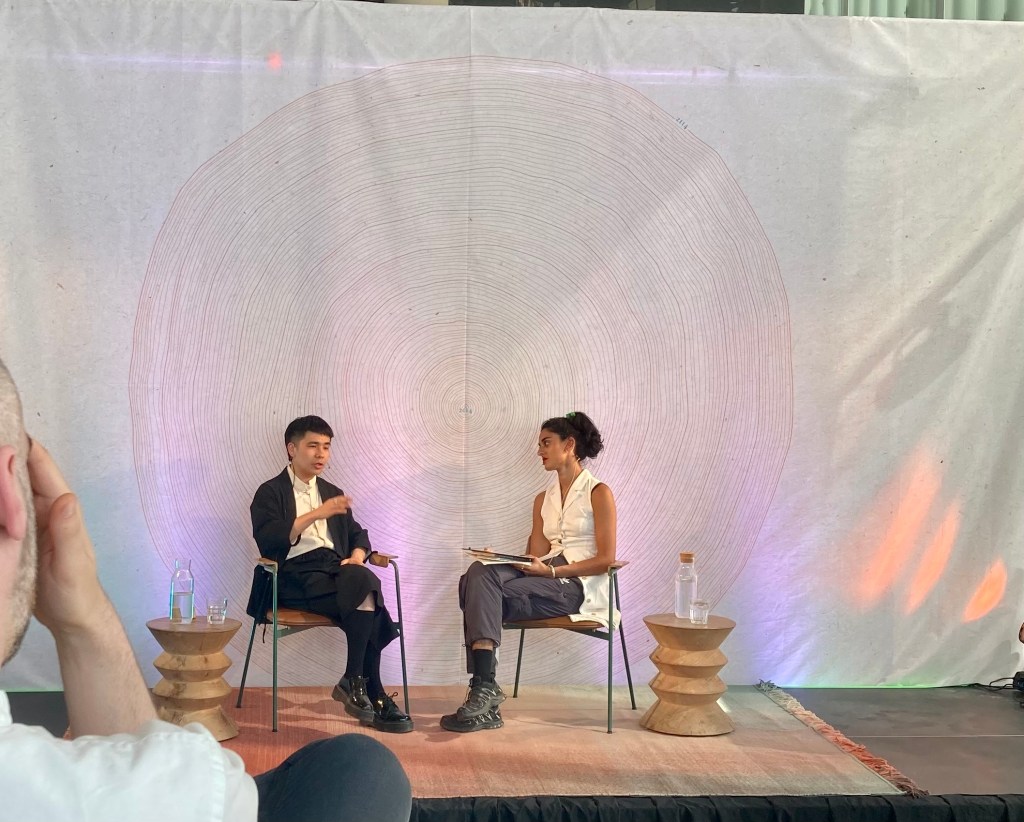
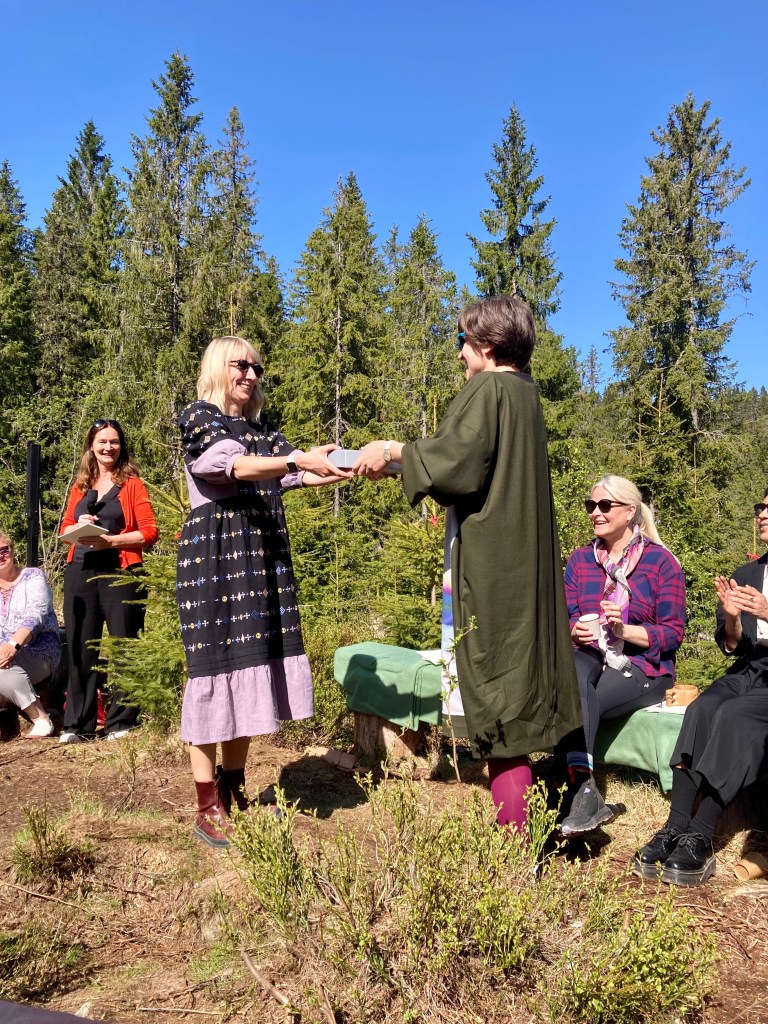
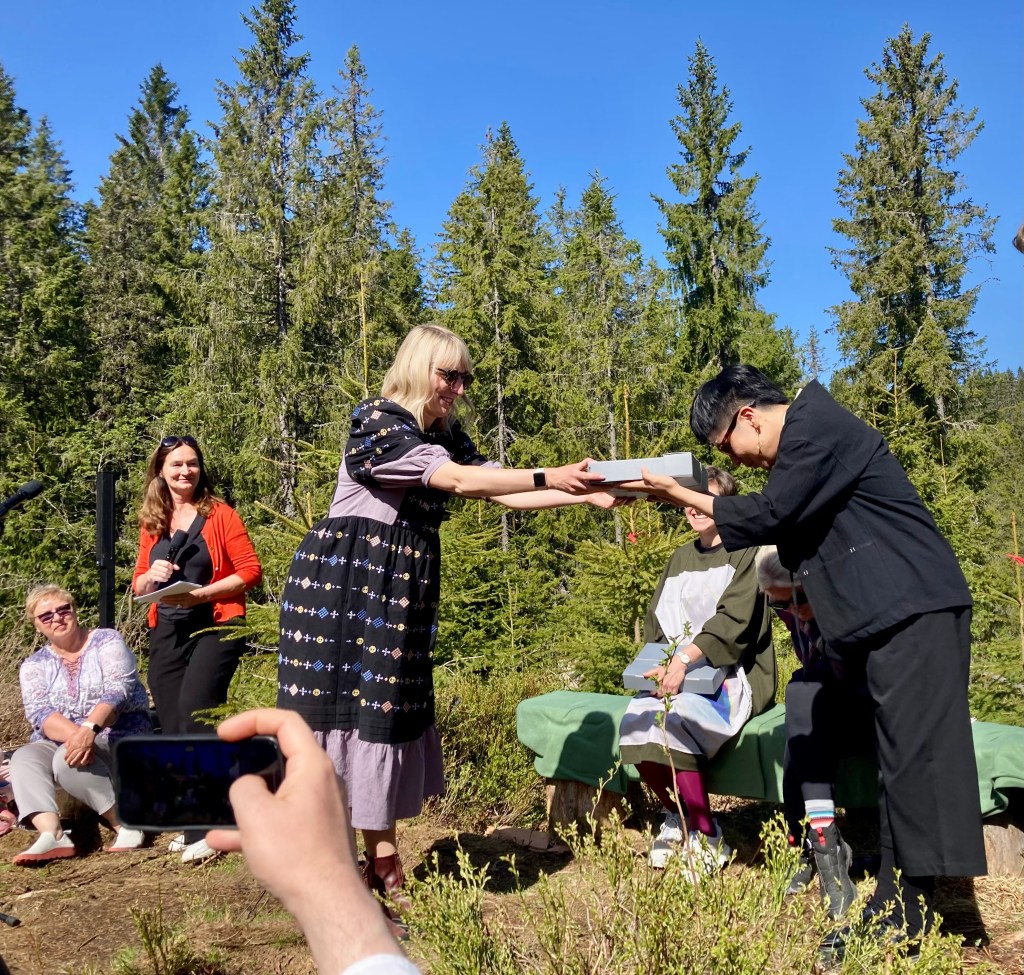
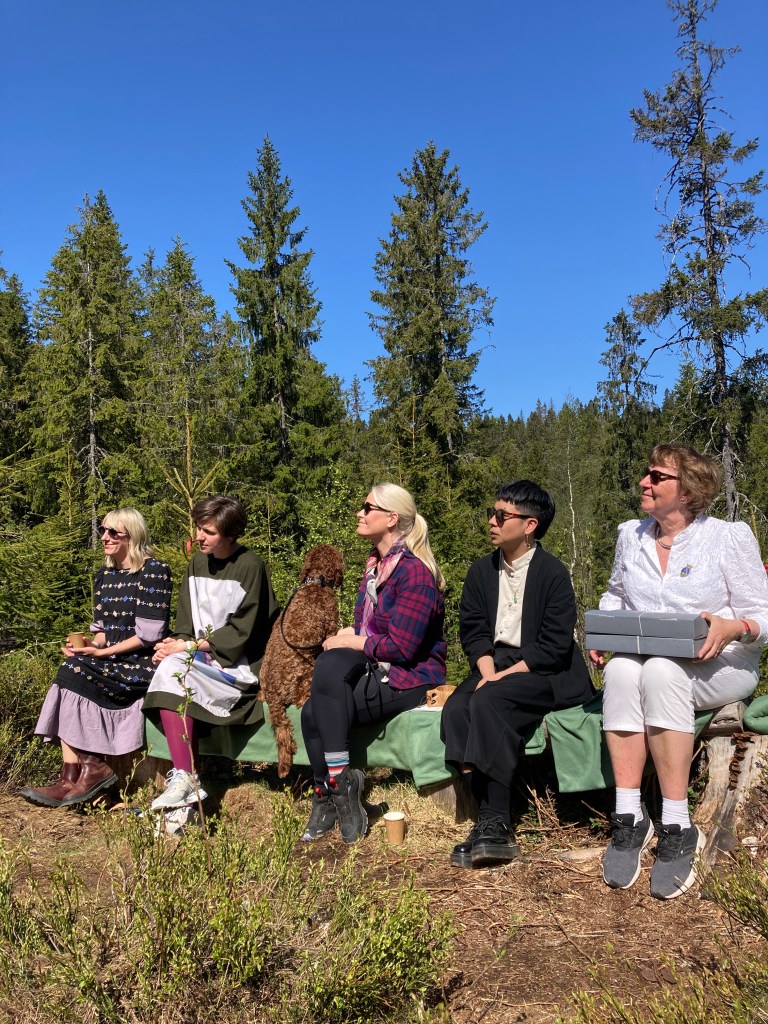
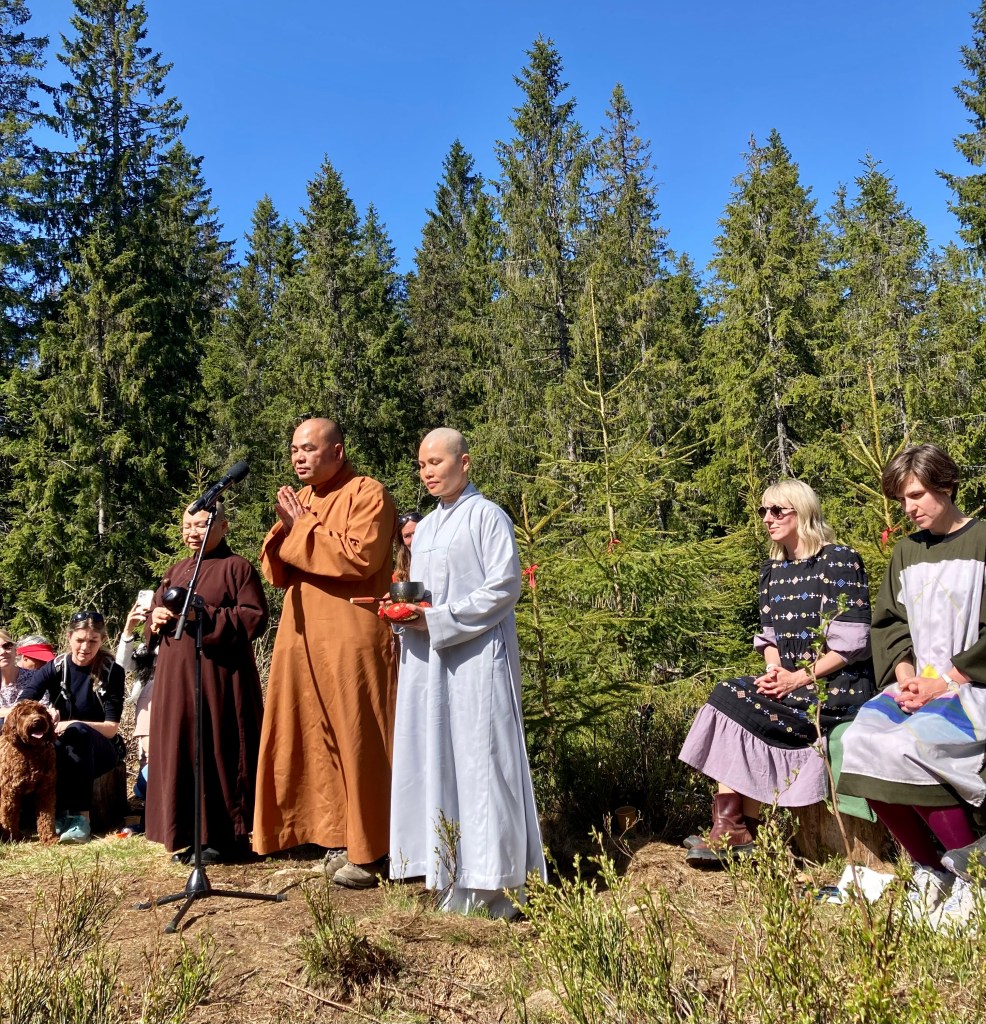
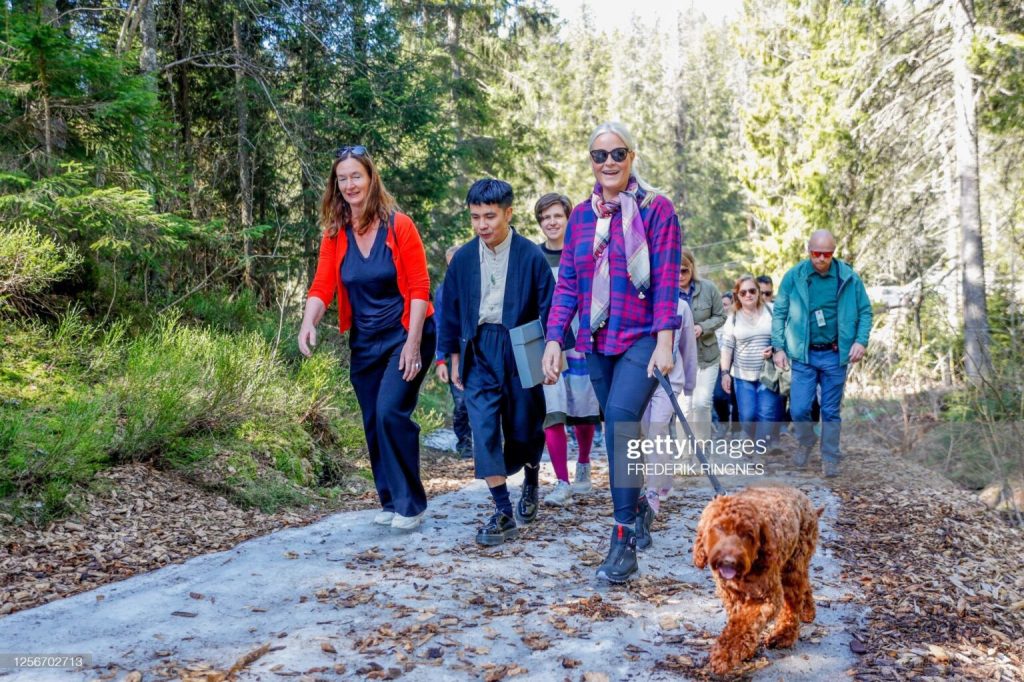
Excited and with some sense of urgency I wanted to arrive on time. To be in the forest when it happens. To join people who are passionate about books, writing, nature, and art that is both lofty and accessible. To celebrate freedom of enjoying clean air and open spaces. It rained a bit and the sun didn’t appear often in the mostly grey sky yet a relaxed crowd of people gathered near the metro station, drank coffee and then walked towards the small clearing in the forest. Adults, children, dogs. Volunteers, artists, readers, council employees. There the handover ceremony was about to start…Yet months after this special event which took place in June 2022 I am only now writing about that quiet ritual in the modern noise. I’ve been thinking about the Future Library a lot though, especially in the midst of darkness and cold as some of the young trees experience their first winter. But as the tress grow the time becomes irrelevant…

Forests and woodland areas overlook Oslo and Oslofjord. They are indispensable around the city and provide beauty, fresh air, silence, wonder, space to be active and to be peaceful, chance to see, smell, look and enjoy true outdoor near the country’s capital yet distanced from everyday rush. One of the forests is remarkable though as one thousand trees have been planted in Nordmarka. They will grow there for an extraordinary purpose: to supply paper for a special collection of books to be printed in about ninety years’ time. In a meantime one writer every year will contribute a text, and all writings are being held in trust until the proposed date of publication 2114. That’s the idea behind the Future Library project conceived by the Scottish conceptual artist Katie Paterson who imagines and creates multilayered multimedia art projects, taking her creations and inspirations on the micro and macro scale. Like a spark she ignites fire of passion and sense of wonder. When she began envisaging Future Library, she knew that many people would have to be involved in realization of that dream: ‘It began as an idea for a book, but this one actually came off the page and became real.’

The project started formally in 2014. It’s commissioned and produced by Bjørvika Utvikling, managed by the Future Library Trust and supported by the City of Oslo and various cultural organisations. Anne Beate Hovind, who has over twenty years’ experience of commissioning and producing art in public spaces, is the Future Library’s Fairy Godmother, and combines vision, steely determination, warmth and passion. Anne Beate and Katie approach authors whose writing is connected to the notions of time, nature and long-term thinking, who want to write a book that won’t be read until the hundred-years’ project comes to completion. Of course, nobody knows what the future brings. We don’t know how the world will be shaped and understood, if the trees will grow tall and strong enough, if humans will be on this planet to enjoy works of acclaimed writers. We do know, however, that in the climate emergency and in the atmosphere of unrest and fear, we can still hope that something good and positive will emerge.

Until recently I haven’t paid much attention to the concept of cathedral thinking even though I did know that in the mankind’s history so many artists and craftsmen, especially of medieval and renaissance eras, made projects that were meant to last for centuries, to benefits next generations. ‘In the Dark Ages, architects who embarked on big projects, such as building cathedrals, knew beforehand they weren’t going to finish it. Cathedral thinking means that you take pleasure in doing things that do not immediately benefit you, but which you know future generations will be able to enjoy.’ As perMr. Sustainability. ‘Cathedral thinking, a mindset derived from medieval thinking, is about thinking in multiple generations, rather than one lifetime. When thinking in generations as opposed to one lifetime or even term, the perspective changes.’

The legendary Canadian author Margaret Atwood was the first invited to the project in 2014. She wrote the text titled Scribbler Moon. Since then more authors have written and delivered their manuscripts that are now hidden safely in the purposely designed beautiful wooden vault / Silent Room at the Deichman Public Library in Bjørvika neighborhood in central Oslo. We will never read the books, but we know some titles. From Me Flows What You Call Time by internationally renowned novelist David Mitchell (2015). As My Brow Brushes On The Tunics Of Angels or The Drop Tower, the Roller Coaster, the Whirling Cups and other Instruments of Worship from the Post-Industrial Age by the Icelandic poet, novelist and lyricist Sjón (2016). The Last Taboo by novelist, public intellectual and political commentator Elif Shafak (2017). Dear Son, My Beloved by the Man Booker prize winning South Korean novelist Han Kang (2018).

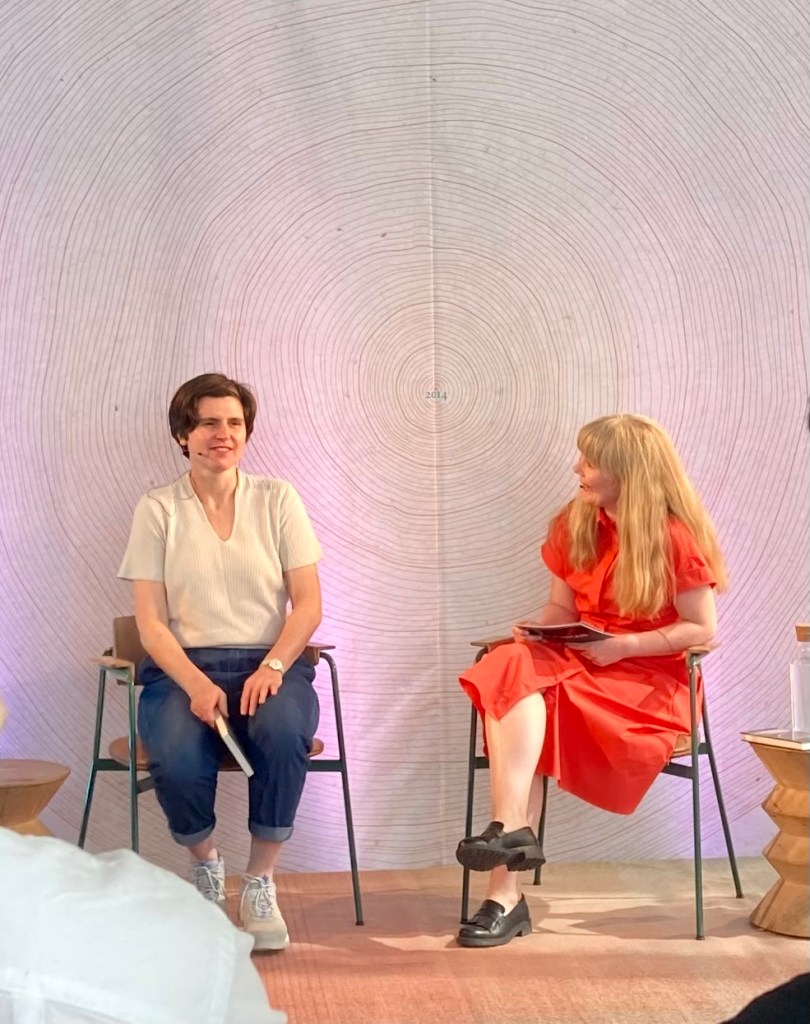
During last year’s handover ceremony three authors Norwegian Karl Ove Knausgård (chosen for 2019), critically acclaimed Vietnamese American writer and poet Ocean Young (2020) and Zimbabwean novelist, playwright and filmmaker Tsitsi Dangarembga (2021) were invited to deliver their manuscripts. The pandemic stopped the yearly tradition of handing over manuscripts in 2020 and 2021. Covid also prevented Ocean Young from travelling to Norway for this joint ceremony. However, previously selected authors Sjón and David Mitchell attended together with Karl Ove Knausgård and Tsitsi Dangarembga. Four magnificent writers contemplated the meaning of writing, time and humanity. Hope and trust.

I write about the things that are important to me, and those are things that take place in my environment, my society. And these are not necessarily things that are important to the publishing capitals. If I started to think about writing about things that are important there, I wouldn’t write very well.

Tsitsi Dangarembga on her writing and audience, and being the first person she writes for

Trees are real. Future is unknown. Writings begin in a place that can move to the new universes. Time is subjective, and a concept perceived differently in some cultures. Perceptions are individual. Together all these elements are intriguing and I do hope that Future Library of that unusual esoteric kind will survive winds of change. The trees will keep growing.

Hella – stubborn as hell: Trouble by Katja Ivar

Helsinki, June 1953. Too much summer light and too many dark secrets. Hella Mauzer, now a reluctant private investigator, has been asked by her former boss at the Helsinki murder squad to do a background check on a member of the Finnish secret services. Not the type of job Hella was hoping for, but she accepts it on the condition that she is given access to the files concerning the roadside death of her father in 1942, at a time when Finland joined forces with Nazi Germany in its attack against the Soviet Union. German troops were sent to Finland, the Gestapo arrived in Helsinki and German influence on local government was strong, including demands for the deportation of local Jews. Colonel Mauzer, his wife and other family members were killed by a truck in a hit and run incident. An accident, file closed, they said. But not for Hella, whose unwelcome investigation leads to some who would prefer to see her stopped dead in her tracks.

Katja Ivar’s latest novel can be read as a stand-alone but I would encourage you to check Evil Things and Deep as Death if you are not familiar with these earlier books. (I have just read my previous reviews and noted that I keep encouraging people to become Ivar’s fan!) Trouble has enough background information about Hella, little snippets of memories, reintroduction to several characters, and I’m confident this allows to form a complete picture of her. Yet, finding out more about events in Lapland and in the south of Finland that had led her to the current situation will make getting into the latest story much more exciting. In addition, her search for answers as why four members of her family have died in a hit-and-run accident.

If there were any professional and financial glass ceilings at the time, she would have definitely smashed them. Such concept didn’t exist then and what Hela wants to do, to carve independent life for herself, is considered as madness by society, in particular men as most of women appearing in the story don’t even have the voice to articulate this notion. 

Working as a private investigator brings constant practical, financial and psychological challenges. Hella doggedly pursues all possible connections to the man she agreed to check. The official opinion of Johannes Heikkinen him as a perfect citizen and a grieving widower, with a mad cousin disturbing the overall perception, changes when she links casual words, random comments and anonymous letters. Is there a murder lurking in his CV? Is there a point in uncovering truth of the secret agent’s past? At the same time she digs into the uncomfortable Finnish past and begins to understand how some Finns operated during the war, or how they had chosen to survive conflicting loyalties. Her personal life takes unprecedented turn which only reinforces the view of how modern and progressive she is in her attitudes and approach, without realising that she might be a trailblazer. This determination to find the truth and to deal with any obstacles thrown her way by the system and various men can be also exhausting yet personal integrity is so much more valuable than a bare existence. However, even if her independence infuriates people around her, I feel that she still manages to be respected by some, without being it shown of course, though there is excellent working relationship and real friendship with the pathologist Tom, and the complicated, often unsettling, connection with Steve.

Ivar creates an authentic world, full of detailed descriptions and observations about life in the 1950s in the country still scarred by the WWII and next to a menacing presence of its powerful neighbour as the Cold War. Trouble is a slick, cleverly plotted and captivating murder mystery. And I want the intelligent, intrepid (warm under her armour) Hella Mauzer to be my friend.

Huge thanks to Bitter Lemon Press for the ARC of this historical yet contemporary Nordic Noir gem. Paperback of Trouble by Katja Ivar is out on 19th January 2023.

Welcome to 2023! Death In Heels by Kitty Murphy

New day, new month, new year AND new novel that will definitely hook you from the start. Death in Heels, published today 1st January 2023 by Thomas & Mercer, is the thrilling first instalment in the Dublin Drag Mystery series by Kitty Murphy. Never heard of it? Well, time to change this. But before you read synopsis below, here is how the author Kitty Murphy feels about books.

‘How wonderful to be thinking about books that have brought me joy over the years. Books are amazing! There’s nothing like the feeling of falling into a story, being wrapped up in another world, absorbed in the lives and the experiences within the covers.

For the book that has influenced me, I have to pick Death on the Nile by Agatha Christie. I grew up loving reading Christie, as many of us did, and I reread them all the time. There’s always at least one in my reading stack. I relish the puzzle of a good mystery and I find the resolution of crime fiction is comforting in stark comparison to Real Life. Christie’s rich, warm, wild characters play each scene so brilliantly, they’re always a pleasure to read. If pushed, I’m Poirot over Marple, but picking my favourite is difficult. Today it is Nile. Another day it is The ABC Murders… or Five Little Pigs

The book that probably means the most to me, is The Worst Witch by Jill Murphy. In the depths of covid despair, I reread the whole series and I adore them just as much as I did when I was eight. At the heart is this amazing friendship between Mildred and Maud, two young girls learning to be witches at Miss Cackle’s Academy. (Also, there are certain people I would very much like to turn into a pig.)

The book I wish I’d written, is Jamaica Inn by Daphne du Maurier. Dark, twisted, gorgeously romantic, and set in the wild Cornish moorland I know, this is my favourite book of all time. I love the nastiness and the mystery of the story, and the strength that Mary Yellen shows. Ripped from the world she loves when her mother dies, she finds herself embroiled in crime and murder, but she doesn’t back down. The scene on the beach never fails to terrify me, and the end of the book is perfect.

I love a good mystery, and I recently read Murder Before Evensong by Rev Richard Coles. I adored the characters, especially Canon Daniel Clement with his dogs and his mother, and there was so much to the story, so many layers. I can’t wait for the next.

The book I’m looking forward to reading is Circus of Wonders by Elizabeth Macneal. I read it when it first came out, finding the gorgeously sprayed edges and the beautiful cover irresistible, but it’s my pick for a book club read so I’m really looking forward to getting into it again. Macneal is one of my favourite writers and Nell’s story here is wonderful, from the beautiful beginnings by the sea, to the betrayal of Nell’s family, to the wildness of the circus, to the way Nell grows and lives, and finds friendship and love in her new life.

That’s the core of it for me: friendship, love, and a little bit of murder sprinkled over the story, here and there…’

Death In Heels follows Fi McKinnery, overwhelmed with pride, watching her best friend Robyn perform his drag debut as the dazzling Mae B at Dublin’s premier drag club TRASH. But the evening is ruined when bitchy young queen Eve Harrington lampoons Mae B’s performance and ruins the show. Eve is unceremoniously evicted from the club, and later that night Fi finds her dead, face down in a flooded gutter. The police decide it was an accident and the queens are keen to move on as well, but Fi isn’t so sure. Eve had made plenty of enemies with her casual cruelty and many people might have wanted her dead. Fi is determined to uncover the truth, even though her ‘Hagatha Christie’ sleuthing is driving a wedge between her and Robyn, whose star is now rising at TRASH. Something dark is lurking beneath the feathers, glitter and sequins of Dublin’s drag scene. Fi is determined to protect her friends, even as they distance themselves from her, and to stop the killer before more people die.

Kitty Murphy lives with her husband, Roger, on the very westerly edge of Co. Clare, Ireland. She adores drag in all its forms and crime fiction in all its chilling splendour. Kitty is bi/queer. From a well-spent youth divided equally between the library and the LGBTQ+ scene, it was only a matter of time until both worlds collided in a flurry of fictional sequins and in a book form.

Thank you Rhiannon Morris of FMcM Associates for the invitation to join the blog tour.

Gott nytt år! And Grattis SELTA!

My childhood was rich in book experiences, especially those coming from other countries. The first encounters with the Swedish literature happened thanks to Teresa Chłapowska, the outstanding translator from Swedish to Polish. She was the one who had bridged two languages with knowledge, precision and fun. Her exquisite translations allowed us to we get to know authors such as Tove Jansson, Astrid Lindgren, Selma Lagerlöf, Gösta Knutsson and Åke Holmberg. The social climate at the time in Poland encouraged publishing the books which are rightly considered classics all over the world. Fizia Pończoszanka (Pippi Långstrump / Longstocking) and The Wonderful Adventures of Nils, The Six Bullerby Children, and the entire Moomin world have always been part of my education and reference points in the literary context.

Years later I began to read Swedish literature in English and discovered a new universe of English translators who work tirelessly to bring all genres of books across the language border. Many of them (all?) are members of The Swedish-English Literary Translators’ Association SELTA. The association aims to promote the publication of Swedish and Finland-Swedish literature in English, and to represent the interests of those involved in the translation process. SELTA held its first Annual Meeting in April 1982, and throughout November and December 2022 it has been celebrating its 40th birthday. Today might be the last day of the celebration yet it is not the end of hard work, collaboration between publishers, cultural and literary organisations, Embassies and many individuals who make this happen and continue. SELTA also produces the online Swedish Book Review which does indeed expand horizons, with its variety of texts, translated extracts of Swedish works, reviews etc SBR covers popular genre fiction, literary fiction, non-fiction, poetry, drama and novels for young adults.

Rather than summarizing the articles and practical information that SELTA shares on its website which in itself is a fantastic resource for anyone interested, I would like to share some of my reviews and to reintroduce translators who are simply brilliant and together with the Swedish authors bring unique works to the English-speaking readers. You might have read these books, you might want to add them to the reading list for future. New year 2023 is round the corner. So shall we read as we enter the unknown…? BUT: there is absolutely no pressure to click on all those links below… As I was searching for names of authors and translators, and the English titles, I realised that we are really lucky have so much to choose from, and I enjoyed looking back and remembering what I have read over the years… Another case of too many books, too little time?

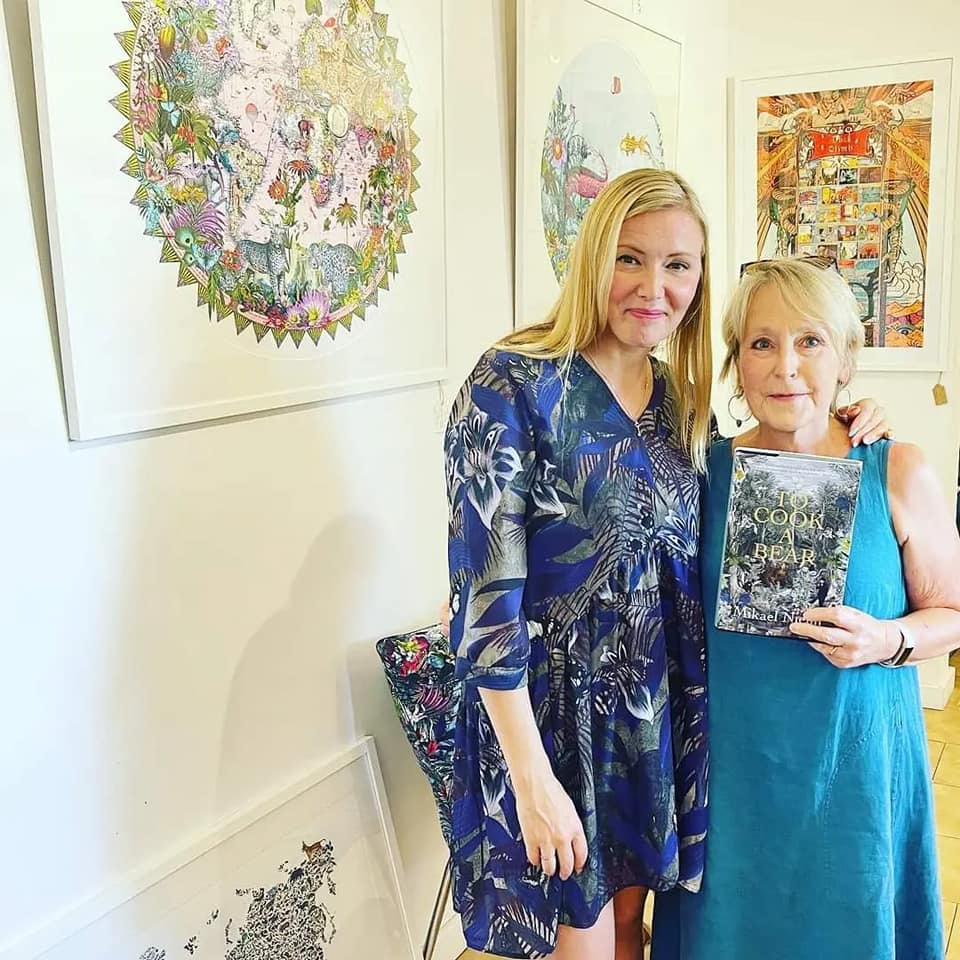
Let me start with the winners of the Petrona Awards for the best Scandinavian Crime Novel published in the UK in a previous calendar year. Agnes Broomé translated Maria Adolfsson’s Fatal Isles, winner in 2022. Deborah Bragan-Turner translated Mikael Niemi’s To Cook A Bear, winner in 2021, Rachel Willson-Broyles Malin Persson Giolito’s Quicksand, winner in 2018, and Neil Smith, translator of Liza Marklund’s Last Will (winner in 2013) and Leif G W Persson’s Linda, as in The Linda Murder (winner in 2014). In the ten years’ history of the Petrona Award Swedish books took half of the trophies.

It appears that I have read and revied several books translated by my favourite Swedish (and Norwegian) translator Neil Smith: Watching You by Arne Dahl, Hunted by Arne Dahl, Water Angels by Mons Kallentoft, Souls of Air by Mons Kallentoft, Earth Storm by Mons Kallentoft, The Final Word by Liza Marklund, The Other Son by Alexander Söderberg, The Silenced by Anders de la Motte, MemoRandom by Anders de la Motte, The Crow Girl by Erik Axl Sund, The Dying Detective by Leif G.W. Persson, The Gilded Cage by Camilla Läckberg, The Lies We Tell by Kristina Ohlsson and The Wednesday Club by Kjell Westö. Plus the following translations by Sara Death The Darkest Day by Håkan Nesser and The Root of Evil by Håkan Nesser. Ian Giles Dark Music by David Lagercrantz, Geiger by Gustaf Skördeman, Good Girls Don’t Tell by Liselotte Roll and The Silent War by Andreas Norman. Elizabeth Clark Wessel 3 Hours by Anders Roslund and Börge Hellström, The Ice Beneath Her by Camilla Grebe and After She’s Gone by Camilla Grebe. George Goulding and Sarah De Sanarclens Hell and High Water by Christian Unge. George Goulding The Carrier by Mattias Berg. Rachel Willson-Broyles A Nearly Normal Family by MT Edvardsson, Fog Island by Mariette Lindstein and The Tunnel by Carl-Johan Vallgren. Fiona Graham 1947: When Now Begins by Elisabeth Åsbrink. Agnes Broomé For the Missing by Linda Bengtsdotter and For the Dead by Linda Bengtsdotter. Marlaine Delargy The Flood by Kristina Ohlsson, An Elderly Lady is Up to No Good by Helene Tursten, The Silent Girl by Michael Hjorth and Hans Rosenfeldt, The Man Who Wasn’t There by Michael Hjorth and Hans Rosenfeldt and The Voices Beyond by Johan Theorin. Susan Beard The Silver Road by Stina Jackson and The Last Snow by Stina Jackson. Saskia Vogel  A Summer with Kim Novak by Håkan Nesser. Tiina Nunnally The Ice Child by Camilla Läckberg.  Michael Gallagher The Invisible Man from Salem by Christoffer Carlsson and The Thin Blue Line by Christoffer Carlsson.

Happy New Year 2023! Gott nytt år! Godt nytt år!

Animal Life by Auður Ava Ólafsdóttir

Do you remember getting lost in the Arnaldur Indriðason’s series featuring detective Erlendur Sveinsson who is unable to let go of hope to find his missing younger brother? Erlendur knows there is no chance of finding the boy who had disappeared during bitter winter many years ago. But he longs for some closure to quieten his own guilt. That’s what I kept thinking about: snowdrifts, cold, darkness, unpassable roads, while reading the moving and tender Animal Life in which death is also mentioned but in a different context: ‘In order to be able to die, a human first has to be born.’

Auður Ava Ólafsdóttir’s latest book is definitely not an example in the crime fiction genre but a slow burner of an exploration of life and nature of humans. It tells a story of a midwife Dómhildur, with sixteen years on maternity ward behind her, as she delivers her 1,922nd baby and contemplates life and death in the days leading up to Christmas. This period often brings quietness or chaos and in her case these two are entwined. A terrible storm approaches Reykjavik and people are preparing for possible devastation. Dómhildur, forced to take unused holidays, decides to make some changes in her apartment, inherited from her grandaunt of the same name, renowned for her unconventional methods and down-to-earth logic, and discovers decades worth of letters and manuscripts hidden amongst her grandaunt’s clutter. While the weather gets worse, the mood in the real and symbolic four walls lifts. Questions and answers float around, and the archives are surprising.

The first Dómhildur embarked on a project to write about practices and skills of midwives whom she started interviewing during her summer holidays. What began as simple conversations in 1970, continued for another quarter of a century, and meant to become a published book on ‘living experiences of seven female midwives and one male midwife in the north-west of the country. the father of light Gísli Raymond Guðrúnarson, known as Nonni.’ It amazed the narrator: the old interviews, full of descriptions and original thoughts, ‘were mostly of my great-grandmother’s generation, born between the end of the nineteenth century and the beginning of the twentieth, and shared the common practice of travelling by foot or on horseback to attend to birthing women. A midwife could say she had seen other horizons, said one of the interviewees about her vocation.’ And here the connection to Erlendur comes: ‘Most of the accounts described the hardships of travelling in bad winter weather. The midwives were escorted by sturdy young men, who according to their accounts, often gave up due to fear of the dark or exhaustion, so the women would carry on alone, getting lost in blizzards, and having to grope their way, trying to find a familiar rock, sinking into the snow up to their waists, then climbing over or down a mountain pass. They waded across unbridged rivers, trudged over barriers of ice, barely crawled out of avalanches alive, and when they finally arrived at their destination and unwrapped all their shawls, the child was often already born, either dead or alive, because the weather doesn’t always bend to the requirements of a woman in need.’ Harsh nature, difficult living conditions, everyday hardships are common threads in the past; however, they can still be found in modern times in the country where darkness takes over the soul. The query about sunshine, light and warmth is never far: ‘Is there any light to be found in this country, is there any light in this world?’ Light is essential for Kristín Marja Baldursdóttir’s Karitas and for the ordinary Icelanders who in 2013 ‘voted for the most beautiful word in their language. They chose a nine-lettered one, the job title of a healthcare worker, the Icelandic term for midwife: ljósmóðir. In its reasoning, the jury stated that the word is a composite of the two most beautiful words: móðir (mother) and ljós (light).’ It is not a secret that metaphorically speaking ‘man grows in the dark like a potato’ and needs a lot of help and care to grow and develop after being born.

Light and darkness. Warmth and coldness. Past and present. Here I focused only on some of the themes in Animal Life which is so much richer, deeply moving, immersed in the Icelandic folklore and filled with delicate humour and touching recollections on human nature. Above all, it brings some joy and some calm and stops you to wonder how subtly and masterfully Auður Ava Ólafsdóttir composes her stylistic wordy world, and how beautifully and sensitively Brian FitzGibbon translated these thoughts into English. Let me leave you with this one, positive and wise:‘For even in the depths of an Icelandic winter, new life will find a way.’

Auður Ava Ólafsdóttir is a prize-winning novelist, playwright and poet. Auður Ava’s novels have been translated into over 25 languages, and they include Butterflies in NovemberHotel Silence and Miss Iceland, also published by Pushkin Press. Hotel Silence won the Nordic Council Literature Prize, the Icelandic Literary Prize, and was chosen Best Icelandic Novel in 2016 by the booksellers in Iceland. Miss Iceland won the Prix Médicis Étranger and the Icelandic Booksellers Prize. 

Brian FitzGibbon translates from Italian, French and Icelandic. Recent translations include Woman at 1000 Degrees by Hallgrímur Helgason as well as Hotel Silence and Miss Iceland by Auður Ava Ólafsdóttir.

Thank you to Pushkin Press for the early copy of the book and for the invitation to join the blog tour.