The Palace at the End of the Sea by Simon Tolkien

‘He was eleven when he was taken. On a day of early summer from almost outside his apartment house out into the bustle of the Village, and then east across Third Avenue under the webbed iron feet of the roaring El into regions of the great city that he had never seen before, smelling of garbage and horse dung and thick, acrid smoke.

And all the time, the old man held Theo’s hand in an iron grip and kept up a quick pace, pulling him along the sidewalk, so he had almost to run if he wasn’t to fall over. He had seen the old man several times in recent weeks, waiting under the spreading chestnut tree at the corner of his street in the early evening. He’d stared at Theo and his mother as they went past with his eyes glowing like coals under the rim of his battered old derby hat, which he wore as if it were an upturned soup bowl, pulled down over his ears like Charlie Chaplin.

He had the hat on now and the same long black alpaca coat, shiny at the elbows, which he was wearing over a clean but frayed white shirt buttoned to the collar with no tie, and Theo could see that in the side of his scuffed shoe there was a small hole that opened and closed as he walked, as if it were another beady eye.

He told Theo that he was his grandfather, speaking slowly in a thick guttural accent, and Theo thought he probably was. He didn’t look like someone who told lies, and besides, there was something about the old man that reminded Theo of his father. Four days before, they’d been walking home and his father had stopped hard in his tracks, telling him sharply to get on home to his mother. But Theo had turned back at the stoop and had seen his father arguing, waving his hands in the air but seeming to have no effect on the old man, who stood there as immobile as the tree behind him. And maybe it was then that Theo had noticed the resemblance.

Afterward, his parents had talked in hushed voices and his mother had cried as she often did, and his father had gotten hot under the collar and said that there were laws to stop people being harassed in the street, and that he had a good mind to complain to the authorities if it happened again. Authorities was one of Theo’s father’s favorite words—he was a great believer in law and order. But it seemed like there was no need to get them involved this time. There were no further sightings of the old man, and today Theo’s mother had woken up with another of her terrible headaches—the curse she called la jaqueca—and had sent him to the pharmacy on MacDougal with a quarter to get some more of her yellow pills. And on the way, without any warning, it had happened.

The old man had not been in his usual place under the tree; instead, it was as if he had appeared out of nowhere like a circus magician, and Theo was so surprised that he didn’t try to resist, at least at first, allowing himself to be led away with his small hand still clutching his mother’s coin, all enclosed inside the old man’s huge calloused palm.’

If you are intrigued by the opening paragraphs of The Palace at the End of the Sea then I am sure that you will love the sweeping tale of a young man who comes of age and crosses continents in search of an identity and a cause at the dawn of the Spanish Civil War. This is a thrilling, timely and emotional historical saga, bringing to life real historical events and creating authentic characters:

New York City, 1929. Young Theo Sterling’s world begins to unravel as the Great Depression exerts its icy grip. He finds it hard to relate to his parents: His father, a Jewish self-made businessman, refuses to give up on the American dream, and his mother, a refugee from religious persecution in Mexico, holds fast to her Catholic faith. When disaster strikes the family, Theo must learn who he is. A charismatic school friend and a firebrand girl inspire him to believe he can fight Fascism and change the world, but each rebellion comes at a higher price, forcing Theo to question these ideologies too.

From New York’s Lower East Side to an English boarding school to an Andalusian village in the foothills of the Sierra Nevada, Theo’s harrowing journey from boy to man is set against a backdrop of societies torn apart from within, teetering on the edge of a terrible war to which Theo is compulsively drawn like a moth to a flame.

Simon Tolkien is the author of No Man’s Land, Orders from Berlin, The King of Diamonds, The Inheritance, and Final Witness. He studied modern history at Trinity College, Oxford, and went on to become a London barrister specializing in criminal defence. Simon is the grandson of J.R.R. Tolkien and is a director of the Tolkien Estate. In 2022 he was named as series consultant to the Amazon TV series The Rings of Power. He lives with his wife, vintage fashion author Tracy Tolkien, and their two children, Nicholas and Anna, in Southern California.

The Palace at the End of the Sea was published on 1st June 2025. Thank you Hannah Born and FMcM Associates for the invitation to join the blogtour.

Going Home in the Dark by Dean Koontz

As teenagers in the idyllic town of Maple Grove, social outcasts Rebecca, Bobby, Spencer and Ernie become inseparable friends in response to the grim reality of their day-to-day lives. Growing up, the ‘Four Amigos’ are there for each other no matter what, until three of them leave Maple Grove to pursue lofty dreams, leaving Ernie behind. Even when Rebecca, Bobby and Spencer achieve stratospheric success in their chosen fields, they remain as loyal to one another as ever, and to dear Ernie, still in Maple Grove.

Years later, when Ernie falls into a coma, his three amigos feel an urgent need to return home. They have the strangest feeling that they remember people lapsing into comas before. And those people always woke up… didn’t they?

Returning after two decades, they find that not a lot has changed in Maple Grove, especially Ernie’s obnoxious, scary mother. But Rebecca, Bobby and Spencer begin to remember things – a hulking, murderous figure and other weird and disturbing memories that they were somehow made to forget. As Ernie sinks deeper into darkness, something strange and deadly awaits any friend who tries to save him.

Having read fairly recently After Death and The Bad Weather Friend, I was back in the gloriously strange world of Dean Koontz, the well-blended mixture of excellent storytelling with elements of thriller, paranormal horror and suspense. There are plenty of references to literature, film and popular culture, as well. As always Koontz creates a plot that is both impeccable and surprising but I will not dive into analysing what’s going on in the novel. You’ve got to read it – and the bloggers who joined this blog tour will whet your appetite. Instead I want to mention what I also enjoyed about Going Home in the Dark: the omnipresent narrator who gives updates on the writing process and the context of various situations. I’m certain this would work in other books, too, as long as it fits with the overall stylistics. Here it’s playful and fun, and sometimes eye-opening. Koontz seems to genuinely care for his main characters Four Amigos – artistic creative souls: actress, writer, painter and songwriter – and so explains things behind the scenes, to some degree. Of course this doesn’t mean that the reader must agree with everything but it allows for a moment of reflection. Additionally it gives plenty of space for dark humour. Here’s an example which perfectly shows the thinking of both the plot and the mechanisms of writing:

As Rebecca settled behind the steering wheel and pulled the door shut, she had the disturbing feeling that something was about to happen that would change the course of her life, something worse than an exploding lithium battery.

[The previous sentence is a flagrant example of foreshadowing, a plot device that creates a pleasant anticipation in the reader. However, as the author, I feel the need to be honest with you, even at the cost of this intrusion, and I’m compelled to acknowledge that besides contributing to a building atmosphere of menace, Rebecca’s “disturbing feeling” also serves as an effective way to end Chapter One before it grows too long. Studies indicate that modern readers prefer shorter chapters. Before purchasing a novel, they conduct a “flip-through” to sample the prose, consider the readability of the typeface, and be sure the number of chapters promises a quick read. Because Rebecca is rich and glamorous and one of the film-business elite, we expect her to be an insufferable narcissist, but she is a likable, vulnerable person whose “disturbing feeling” concerns us and whose fate matters to us just enough to propel us to Chapter Two, which is shorter than Chapter One.]

I will finish with a quote that resonates with me: ‘Friendship is a kind of love, and even on nights when one of the amigos is alone, they live in the light of their friendship.’ If you have friends, then you’re not afraid of monsters of any kind.

Going Home in the Dark is available now and I would like to thank Katrina Power and FMcM Associates for a chance to read this scary and delightful novel.

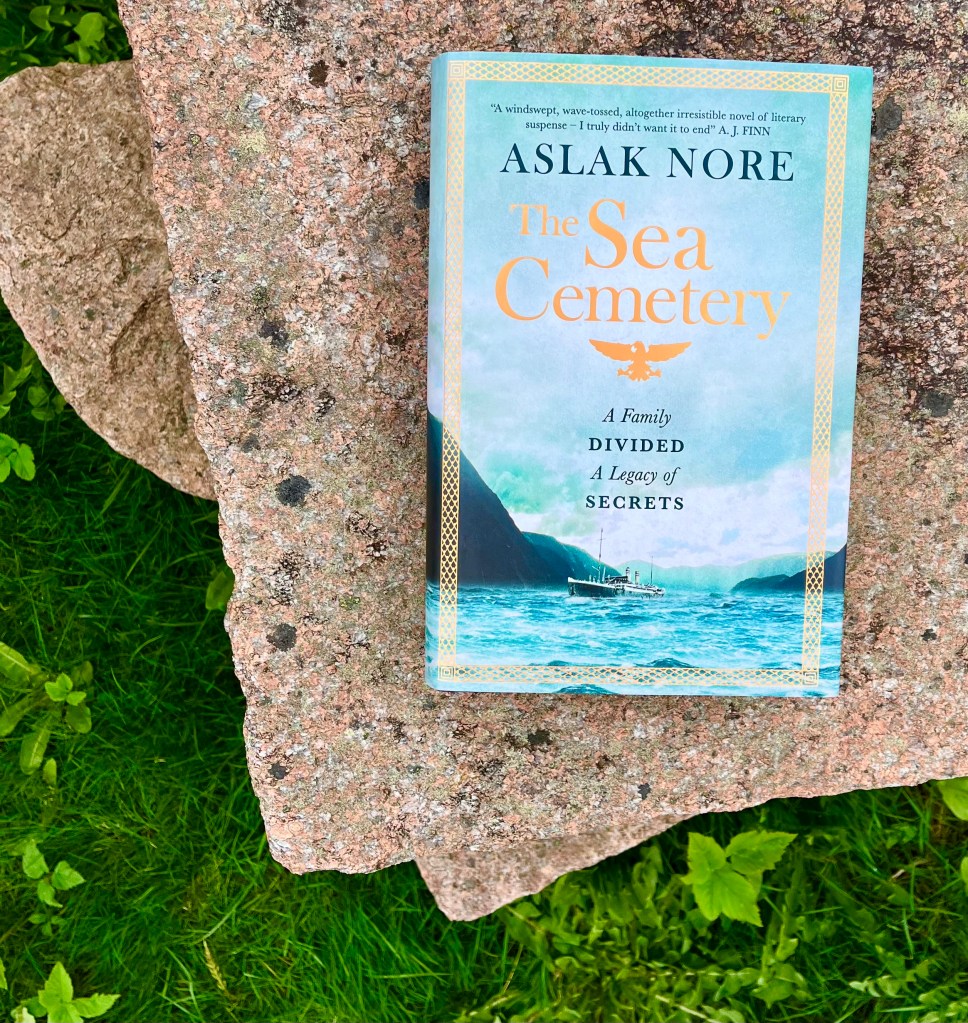
The Sea Cemetery by Aslak Nore

What an incredible novel! From the very first pages I knew that The Sea Cemetery / Havets kirkegård, a literary thriller and family saga combined in one huge tome, would take me on an unforgettable voyage through the recent history of Norway and its connections with the Europe, and questions about individual choices made by the main characters. The universal human issues are hidden just below the surface of the dramatic story about legacy and control, and consequences of hidden secrets in the thriller set among the harsh Norwegian natural beauty.

Aslak Nore’s inspiration came from the authentic sea disaster during the WWII when Norway was under German occupation. Sinking of the Norwegian passenger ship DS Prinsesse Ragnhild in 1940 was the worst wartime tragedy. The ship struck a mine and disappeared under the water between Bodø and Lofoten in the North, with loss of many lives.

Vera Lind, writer and matriarch of a rich and powerful dynasty, commits suicide on the family stunning estate near Oslo. She has been writing memoirs while trying to deal with her own and family’s trauma, going back to the times of wartime shipping disaster in October 1940 that had killed her husband and hundreds of other passengers and German soldiers. However, her earlier attempts to publish the novel were met with fierce opposition by Olav, her son and heir to the fortune. Forty years later in 1970 the manuscript vanished and Vera was placed under a Guardianship Order. Something strange has taken place.  

Not everyone wants to dig into the past to uncover shocking truth but her granddaughter Sasha (Alexandra) is determined to find out what has happened to Vera. Her husband Mads and siblings Sverre and Andrea don’t want to rock the boat, so to speak, and so she does it alone, although Johnny Berg, a journalist and discredited Norwegian secret service agent, decides to help her along the way. This semi-professional relationship is tricky. Sasha is torn between loyalty to her strong-willed father Olav and the family, and the need to ‘avenge’ her grandmother. Berg, apart from his personal motives to search for the manuscript, has also signed the contract to write biography of Hans Falck, a charismatic doctor and an adventurer, notorious for his personal life and famous for his humanitarian work in the Middle East. Sasha’s cousin Hans is from Bergen and convinced that Vera bequeathed the fortune to him and his children. There is no love lost between two branches of the Falck family: in Bergen on the beautiful Norwegian coast and in Oslo, close to the country’s financial centre.  

So far so complex regarding the family ties. However, the power struggles and different sentiments become much more evident as the novel unravels. I enjoyed the occasionally uneven tempo of this epic tale. Hunt for Vera’s missing testament and manuscript was shown through eyes of main players and as a novel-in-novel process, and my view of various people shifted. It’s right to say that ‘History is power. Control the narrative, and you wield the power.’ Chapters exploring conflict in Kurdistan and Afghanistan added both clarity and some confusion necessary to paint a picture of intertwined connections within the family, known only to those who make the decisions. The geopolitical context is relevant as the author also took on the most sacred Norwegian values, such as patriotism and trust, and explored them in the view of family secrets.

The Sea Cemetery, in superb translation by Deborah Dawkin, culminates in a brilliant and completely unexpected twist that paves the way for the second part of this trilogy. It was published by MacLehose Press in 2024. Now I am really looking forward to reading The Heirs of the Arctic / Ingen skal drukne.

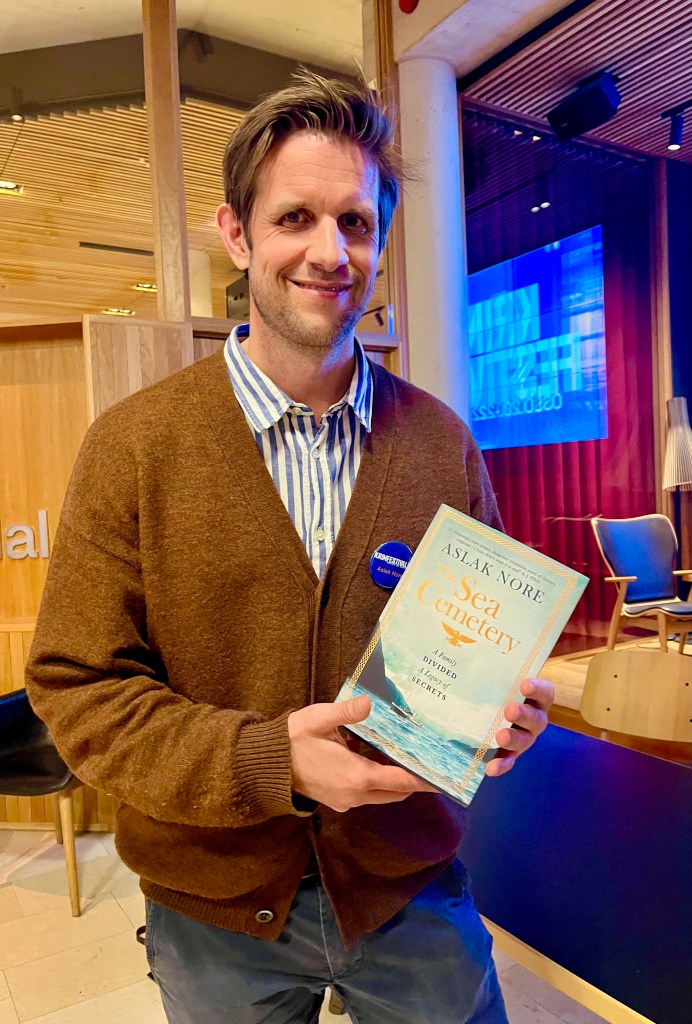
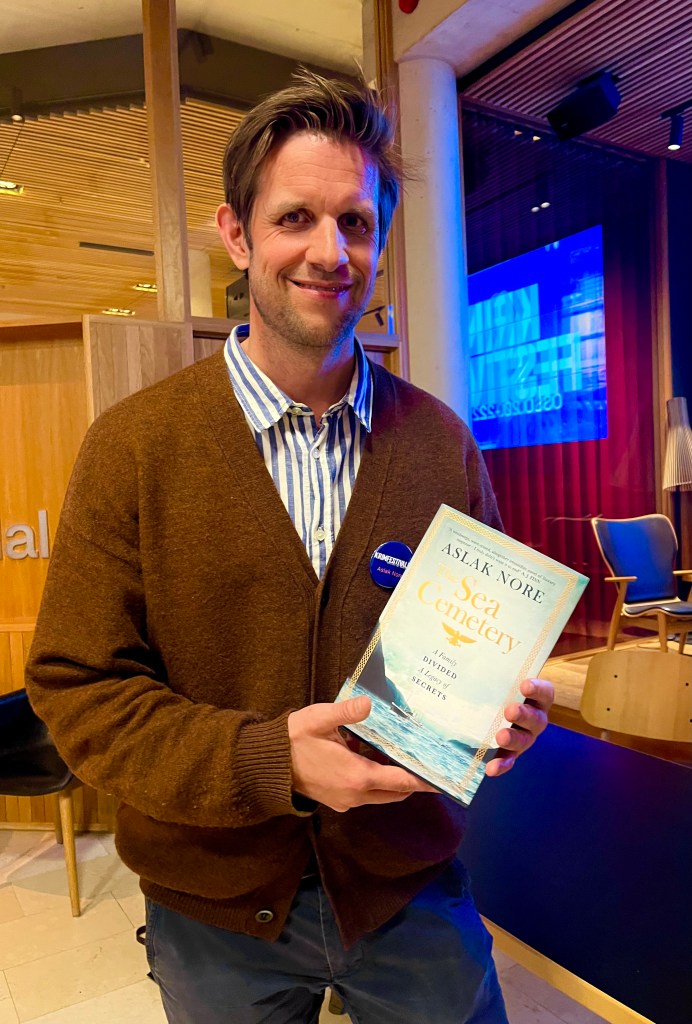
Aslak Nore with The Sea Cemetery during Krimfestivalen 2025

Aslak Nore (b. 1978) grew up in Oslo. He was educated at the University of Oslo and the New School for Social Research in New York and has served in Norway’s elite Telemark Battalion in Bosnia. A modern-day adventurer, Nore has lived in Latin America and worked as a journalist in the Middle East and Afghanistan. He has published several non-fiction books and four novels. Wolfsangel (2017) was a national bestseller and won the Riverton Prize for best crime novel in Norway in 2018. The Cemetery of the Sea (2021) is the first novel in an epic literary thriller series and a huge international success and bestseller. Nore lives in Provence, France. © Winje Agency

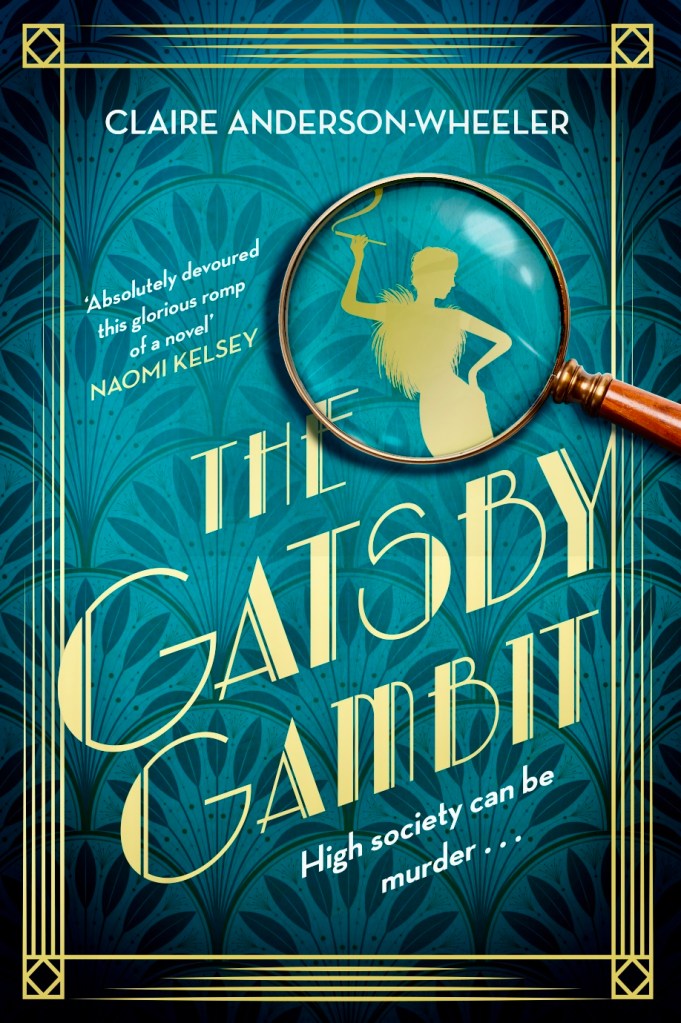
The Gatsby Gambit by Claire Anderson-Wheeler

Freshly twenty-one and sporting a daring new bob, Greta Gatsby – younger sister to the infamous Jay – is finally free of finishing school. An idyllic summer stretches ahead of her at the Gatsby Mansion, the jewel of West Egg. But when Greta arrives at the secluded white-stone estate bathed in the late-afternoon light, she finds she isn’t the only visitor. Jay is hosting an intimate gathering of New York’s fashionable set: Daisy and Tom Buchanan, along with his brother Edgar, Nick Carraway and Jordan Baker.

That evening, the guests enjoy a candelabra-lit dinner party. That night, they dance to the lilt of the gramophone. The next morning, one of them is missing. Murder has come to West Egg, the warm breeze tainted by scandal, betrayal and secrets. Turning sleuth isn’t how Greta meant to spend her summer – but what choice does she have when one of them could be next?

Many of us fell in love with Jay Gatsby and the opulent crazy world he represented, with the social issues bubbling under the surface of Jazz Age fun and apparent freedom. While reading The Gatsby Gambit it will be impossible not to refer to the original classic which was published exactly a hundred years ago in April1925. Francis Scott Fitzgerald’s The Great Gatsby had romance, unattained love, sharp look at social class, conflict between inherited and self-made wealth. And most of all drama and inspiration. However, the novel by Claire Anderson-Wheeler is a beauty of storytelling in its own right.

Here, this environment, seen from Greta’s perspective, acquires more depth and clarity away from the music, illegal drinking, dancing and flapper dresses which were reserved mostly for the rich at the time. Of course the glitz is not far away. She discovers how divided the society is by its norms, racial attitudes and money, mostly by people convinced of their own greatness, for example Tom Buchanan who was above rules and laws, and a fan of: ‘the American Protective League […] a self-appointed group of vigilantes who had organized “slacker raids” during the war, rounding up other civilians they suspected of draftdodging.’

Greta Gatsby’s existence has been quite sad, secure and privileged, and lacking in deep meaningful relationships, apart from the one with her brother Jay, seven years older than her: ’Greta had lived under Jay’s guardianship since their parents had died fifteen years ago.’ Completing her formal education and returning to Gatsby home, a fabulous mansion at West Egg brings contrasting emotions: joy of returning to her brother, a thrilling possibility of freedom and fearing ‘for a new set of restrictions – the world Jay had bought them entry into had already shown itself to be heavy with codes and rules.’ Her concern is the possible boring future as a trophy wife, married into the family with strict rules, just like Daisy Buchanan’s existence.

Rich, charming and inscrutable Jay has always been in love with Daisy and now it’s the time that Greta realises how strong his devotion is. In the hours and days following a discovery of a dead body on his yacht, she learns of secrets and scandals, and of intricacies of his relationships with his friends and people around him, mostly those who take advantage of his wealth: spectacular parties and the influence. Death of person in Jay’s close circle sends shock waves. Initially everyone, including the police, assumes it was suicide. Greta feels that something is not quite right, begins to think of all tiny details that don’t fit and follows her intuition to try and explain what has happened. Her ‘investigation’ makes her experience some dangerous situations but that doesn’t stop her. Her parents brought her up to believe that ‘mind was a terrible thing to waste’ and she is also convinced that life shouldn’t be wasted either. She also remembers that her ‘ mother had been a keenly intelligent woman, and one of those lucky, all-too-rare ones whose intelligence had been welcomed – cherished, even – by her spouse. But she had never failed to remind her daughter that the world wasn’t always so accommodating. A woman’s mind is her sword, she’d say to Greta […] Keep it sharp, she’d add, and keep it hidden.’

Claire Anderson-Wheeler’s take on the dazzling and dangerous era and revisiting a famous location where the iconic hero played with his life is a fantastic example of passion and knowledge. I loved the strong determined heroine who wanted to find the truth and create a purpose for herself. In a process she also learnt of the way the less privileged people had to ascertain their place in the society, and fight for basic existence. This mix of historical context and fun jazzy murder investigation, plus clever twisted plotting sparkled with Agatha Christie’s comments from the men in the story, makes The Gatsby Gambit a very interesting homage to the classic masterpiece, and a joy to read.   

Thank you to Hannah Born of FMcM for the invitation to join the blog tour.

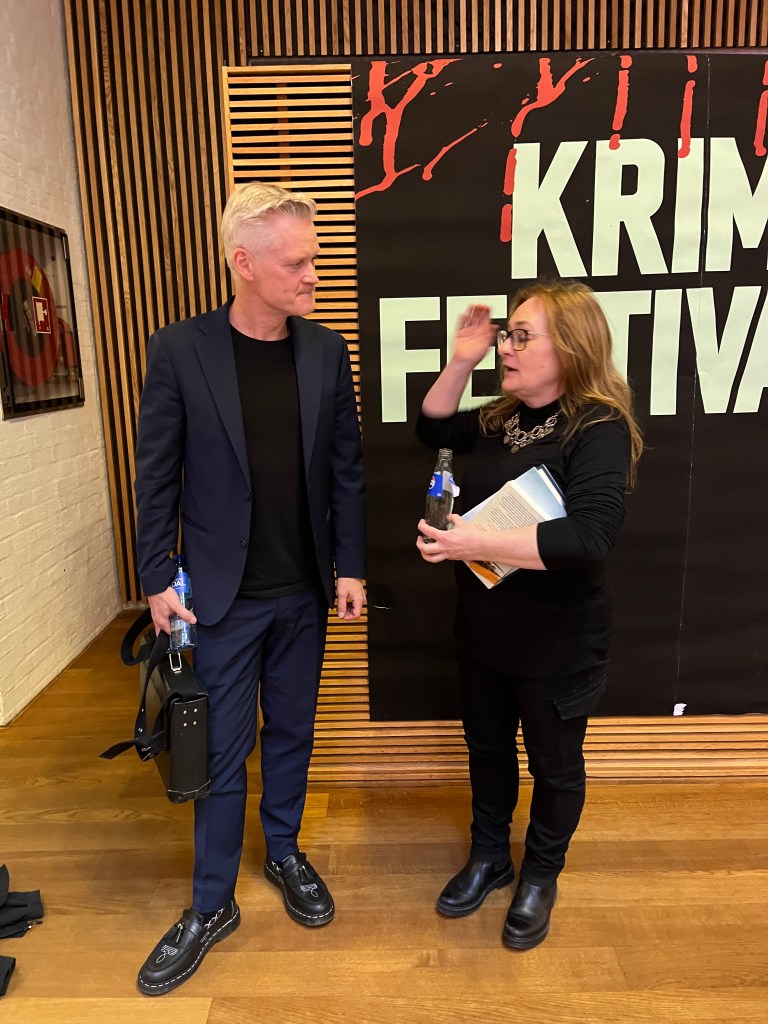
Krimfestivalen 2025

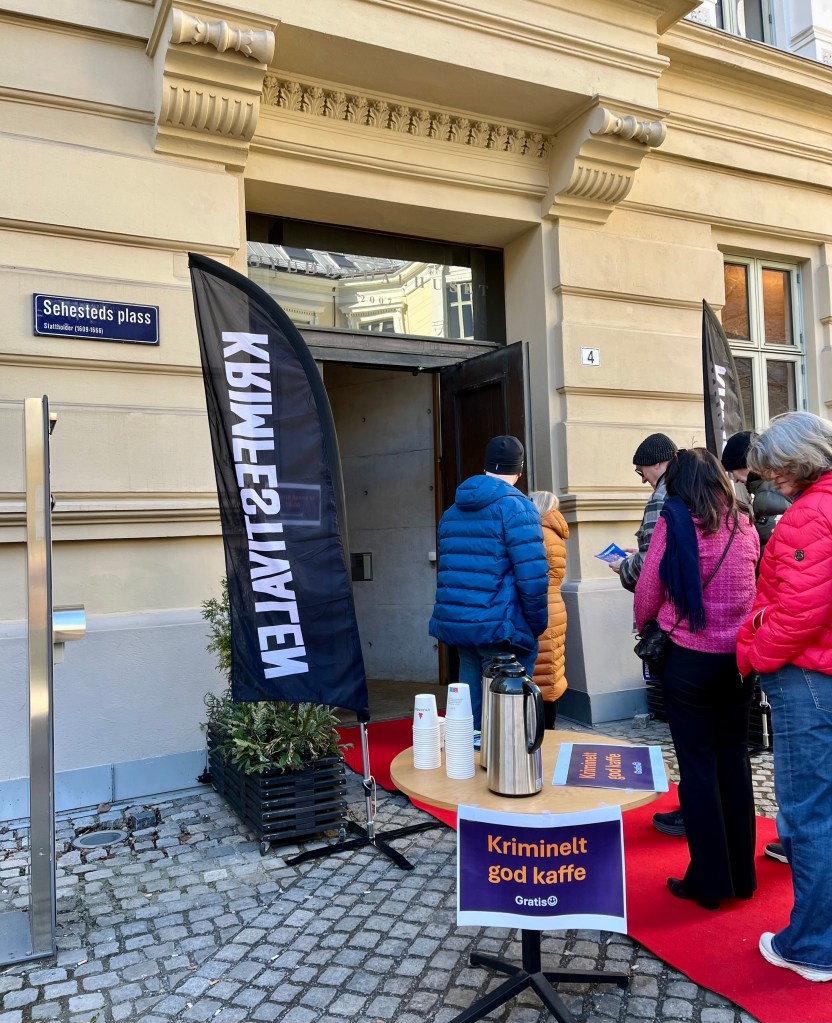
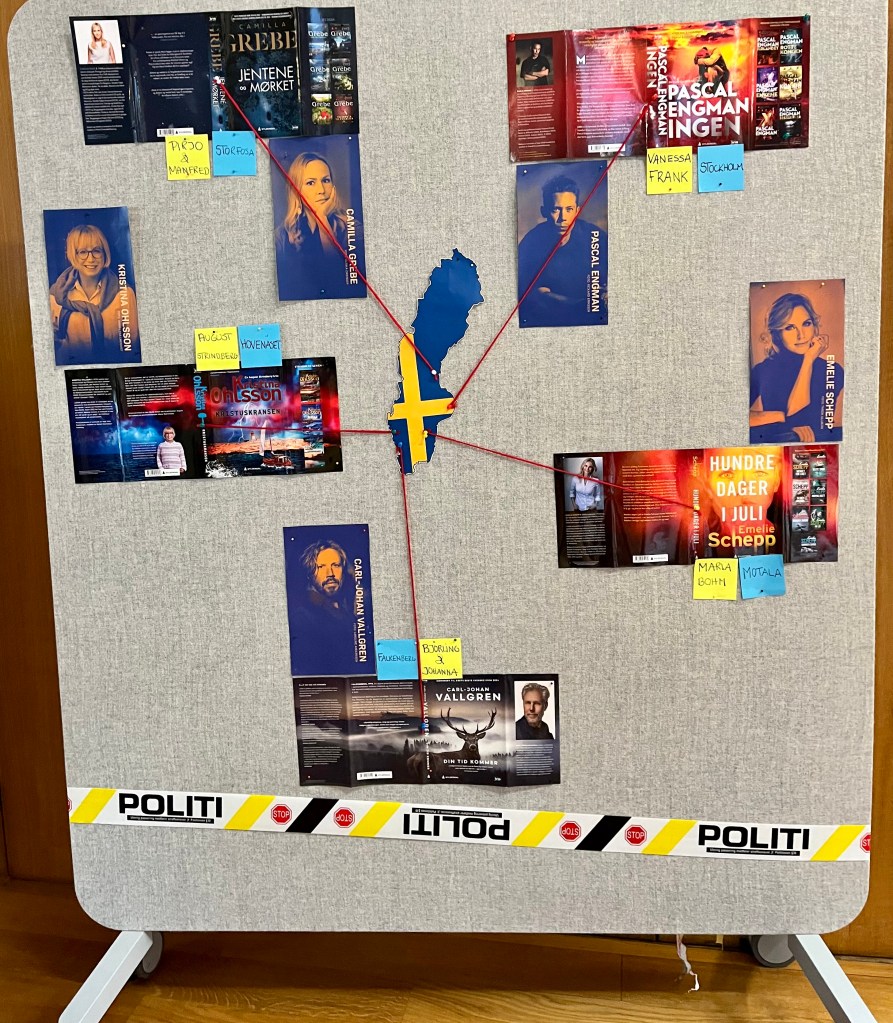
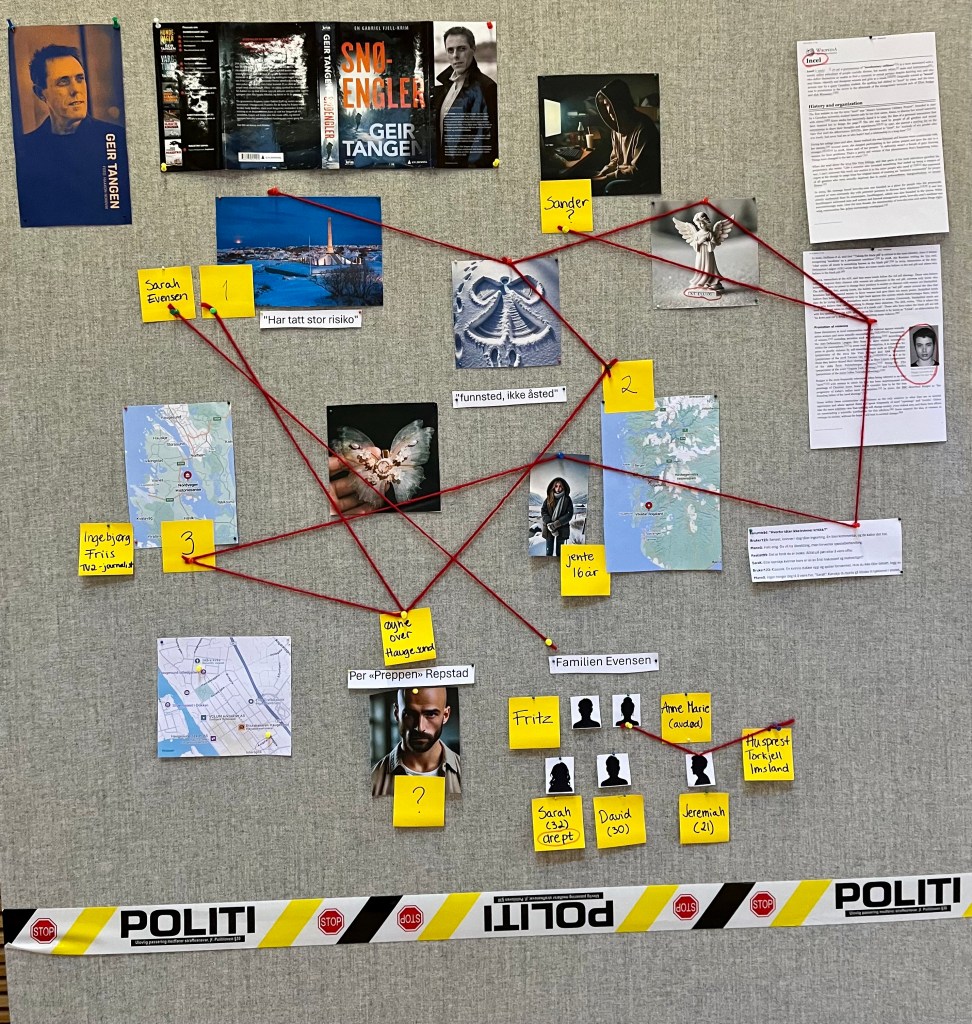
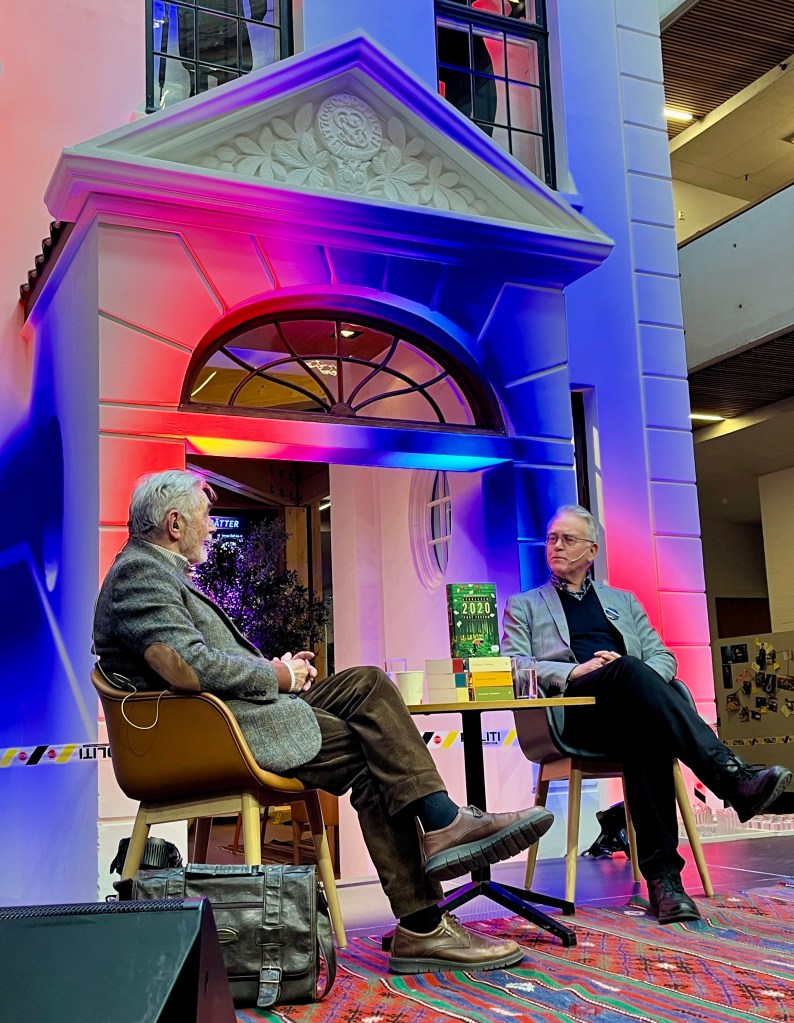
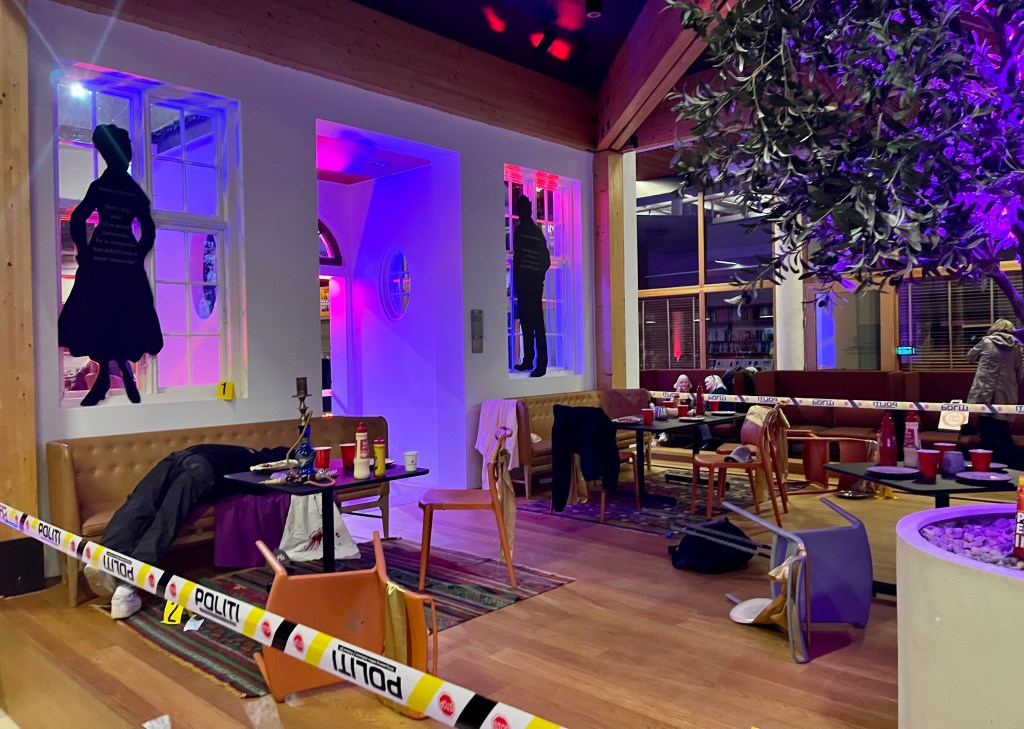
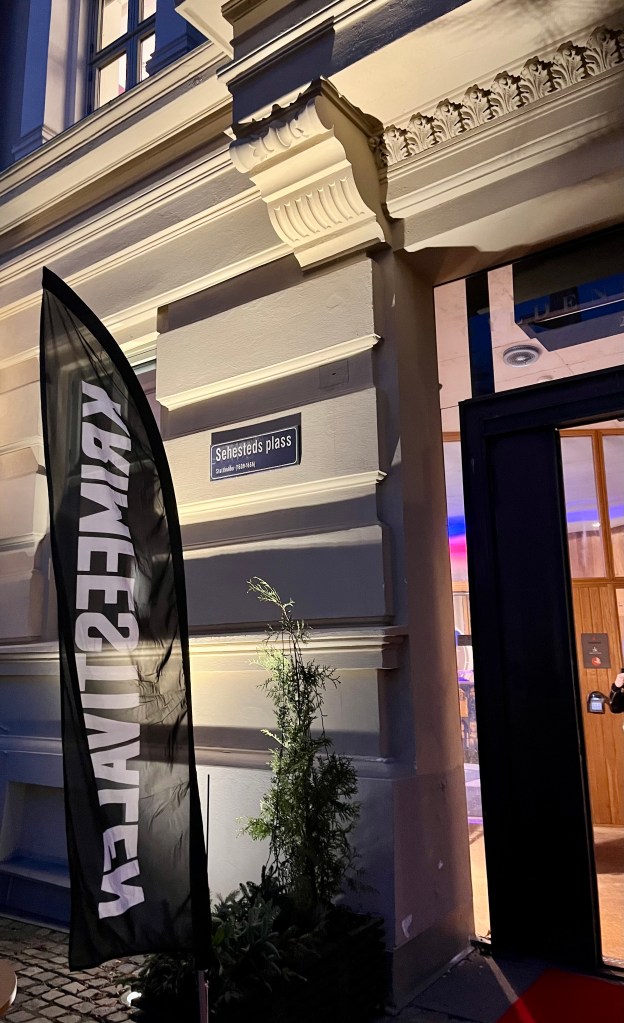
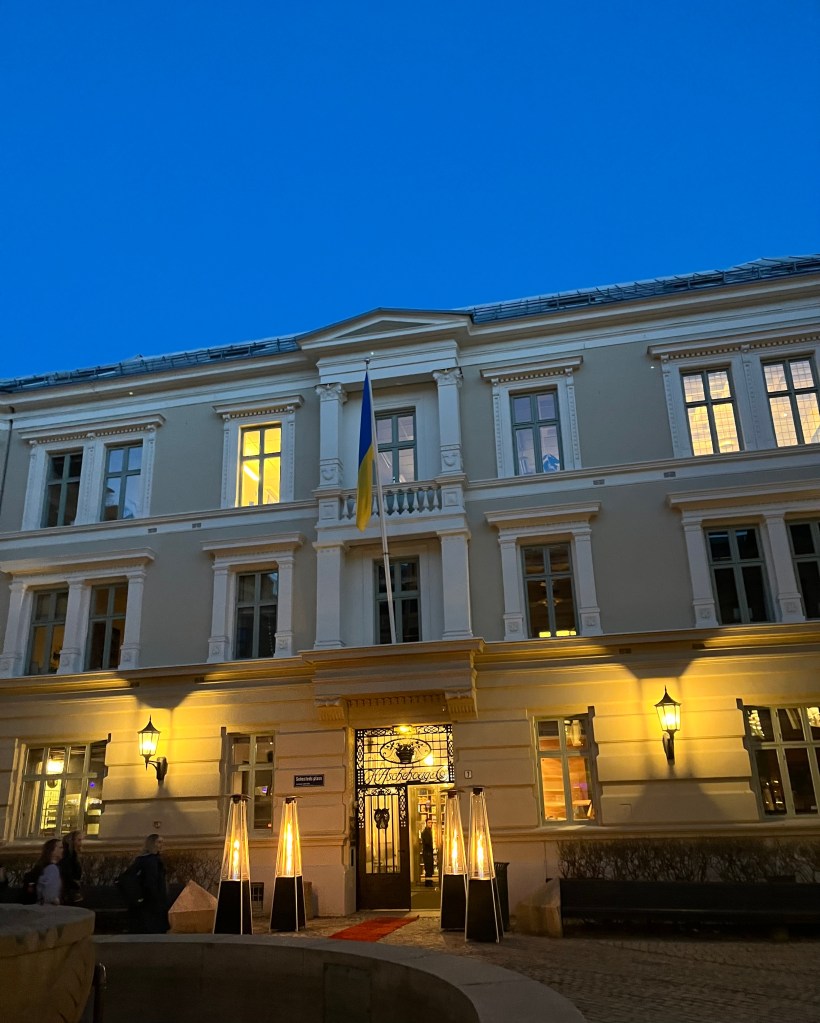
The snow is gone, sun is shining and birds are singing and world seems happy and relaxed as we stand in a long queue outside Gyldendal Norsk Forlag AS, one of the largest Norwegian publishing houses. It was founded in 1925 after buying rights to publications from the Danish company of the same name. However, right now nobody thinks of its illustrious history. The aim is to get inside the beautiful building in central Oslo and find a good seat to enjoy crime. International crime fiction in fact as the new Krimfestivalen is just about to begin. Since the free festival was first held in 2012, it has been a huge success, and now it is considered as one of the world’s leading crime festivals. Over three days fifty writers from Norway and abroad will share some of their secrets, writing tips and opinions in three locations; here at Gyldendal and two other publishers: Cappelen Damm and Aschehoug. The last or so decade has been a golden age for NordicNoir crime fiction. The festival organisers are keen to celebrate this phenomenon and keep Nordic crime fiction within the international perspective, and we – the fans – know how intriguing and fascinating various books in this genre are. We don’t seem to get enough of them, and luckily – the authors keep writing.

Lubna Jaffrey, Minister of Culture and Equality, and Ingeborg Volan, the publishing director at Gyldendal Litteratur, welcomed the crowd of readers and writers.

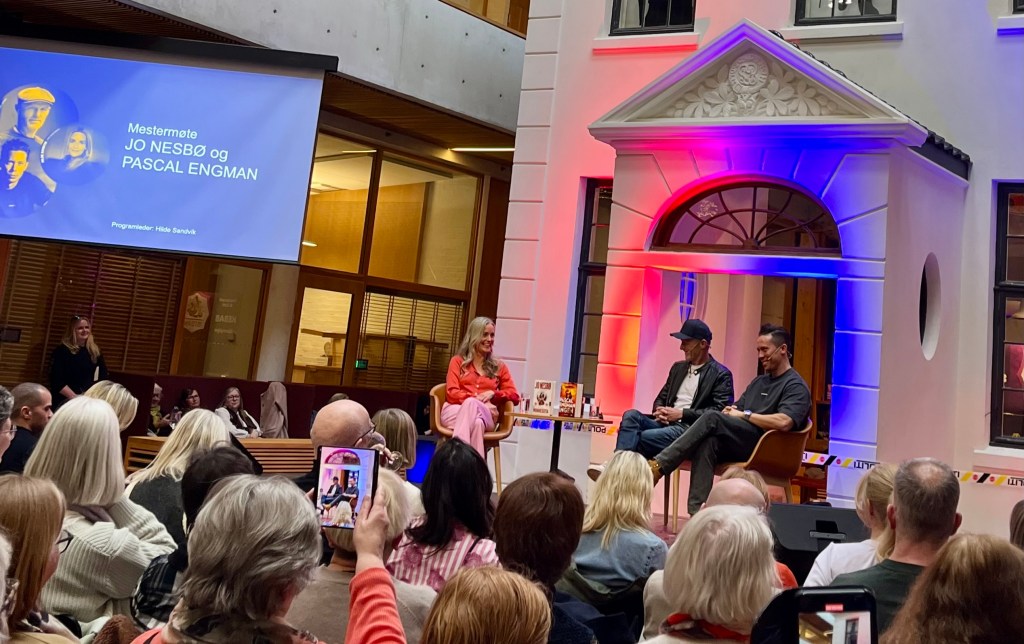
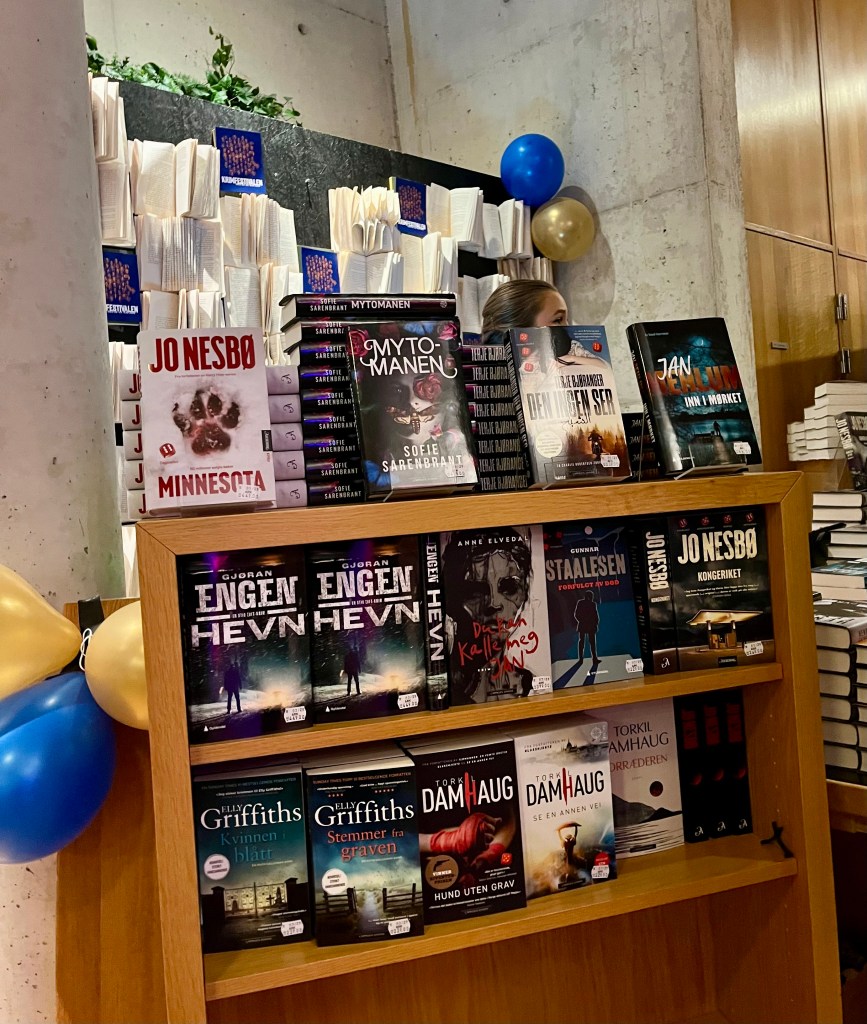
The festival began with the conversation between the journalist Hilde Sandvik and the shining global star Jo Nesbø who discussed various American themes that have influenced both his life and his latest thriller. The English translation by Robert Ferguson is due to be published in August 2025. Minnesota or Wolf Hour, set in the American Midwest in 2016, brings a powerful mix of unexpected twists, dark secrets and personal and political tension. Here’s the blurb: ‘When a small-time crook is shot down in the street, all signs point to a lone wolf, a sniper who has seemingly vanished into thin air. Down-and-out detective Bob Oz is sitting in a dive bar in Minneapolis when he gets a call: there’s been another murder, and they don’t think it will be the last. As the body count grows, Oz suspects that something more sinister is at play. And the closer he gets the more disturbed he becomes. Because the serial killer reminds him of someone: himself’.’

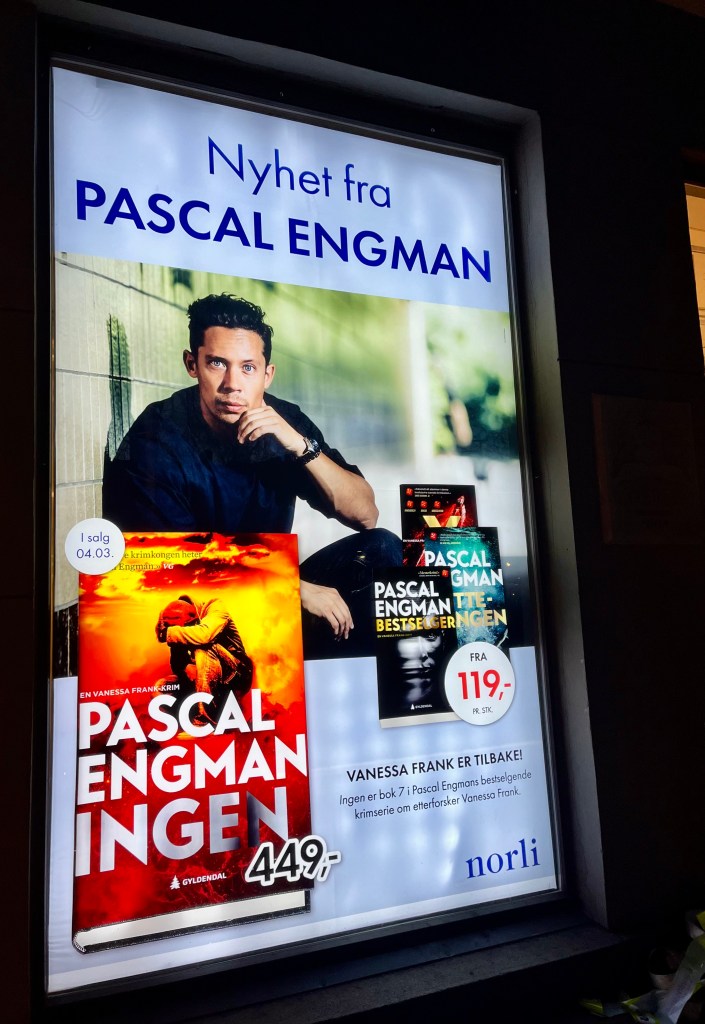
Nesbø was joined on stage by Sweden’s huge star Pascal Engman whose challenging but incredible Femicide / Råttkungen was the Winner of Petrona Award 2023 for the Best Scandinavian Crime Novel of the Year. Discussion in Norwegian and Swedish between masters of the thriller focused on function of the literature which of course includes the crime fiction. Its purpose, apart from entertaining and creating a fantastic reading experience, is the possibility to create some kind of meaning and understanding of the world and what is going on in the current climate, touching on the social, historical and political aspects. Both authors agree that it is also much better to finish a novel with an open ending rather than a happy ending because how would such a ‘happy’ conclusion to a terrifying story work out in practice really?

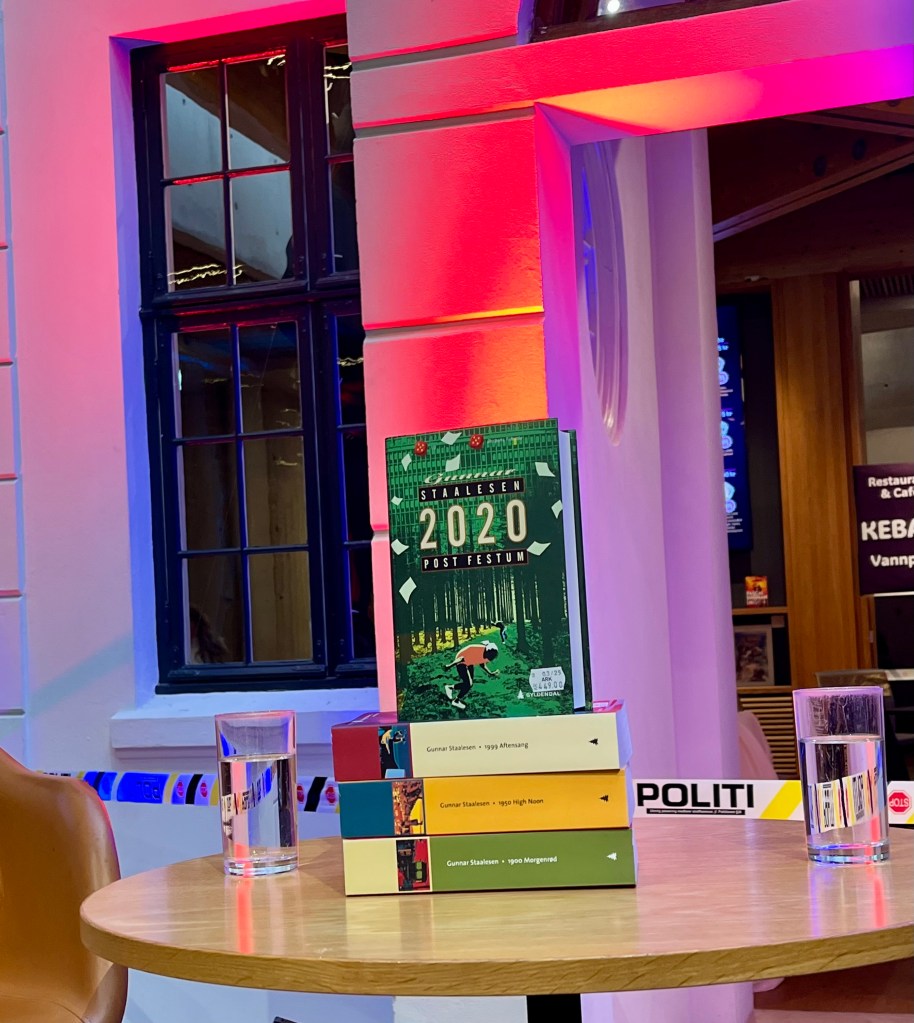
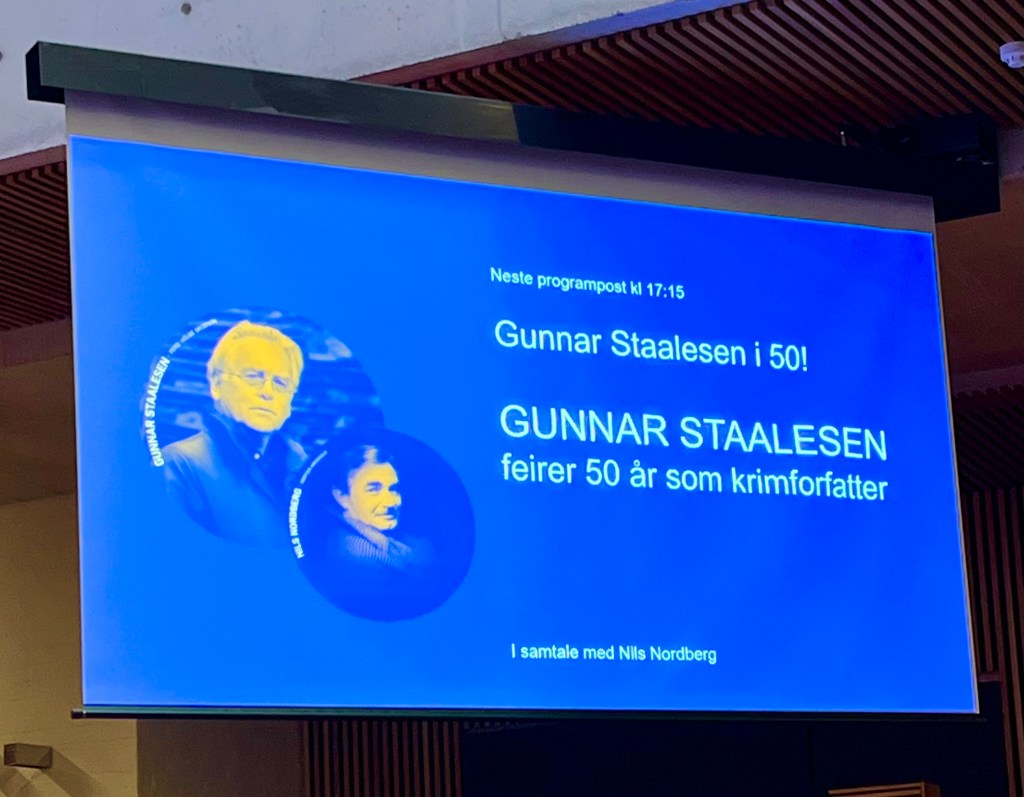
Gunnar Staalesen, called the Norwegian Raymond Chandler, also considers that writing and reading crime fiction can bring some kind of resolution, some sense of what’s happening around us. Staalesen was celebrating 50 years as a writer earlier in January this year. The short summary of his writing career, and relatively short chat on the stage with Nils Nordberg, another great writer and one of leading experts on crime fiction, don’t really show huge impact Staalesen has made on the readers, critics and other writers. I was lucky to read and review several of his books (We Shall Inherit The Wind, Where Roses Never Die, Wolves in the Dark, Big Sister, Wolves at the Door, Fallen Angels). He made his debut at the age of 22 with his first novel Uskyldstider / Times of Innocence in 1969. Since then, he has published a wide range of novels, plays and children’s books, but he is primarily known as a crime fiction writer. The books about a social worker turned private detective Varg Veum have been published in 23 countries, including France, England, Germany, Italy, Russia and Poland, and several of them have been adapted for cinema and television. The iconic Varg Veum is a truly exceptional complex character. And one of my all-time favourite heroes, too.

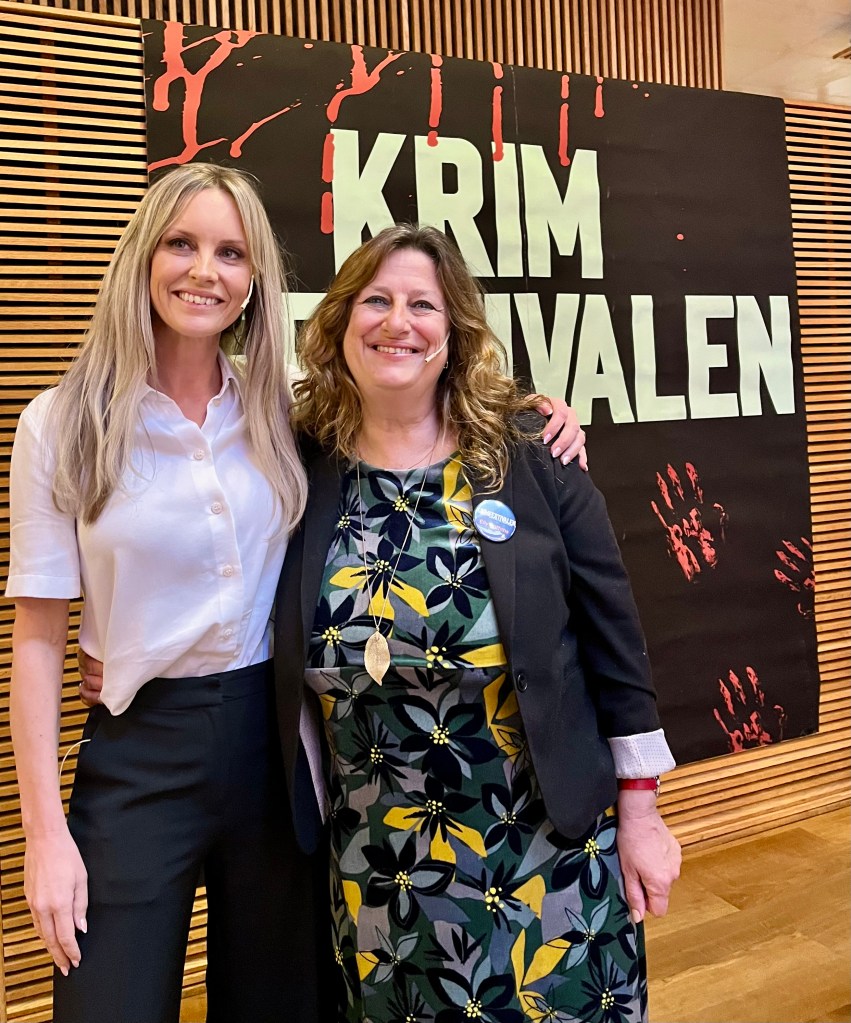
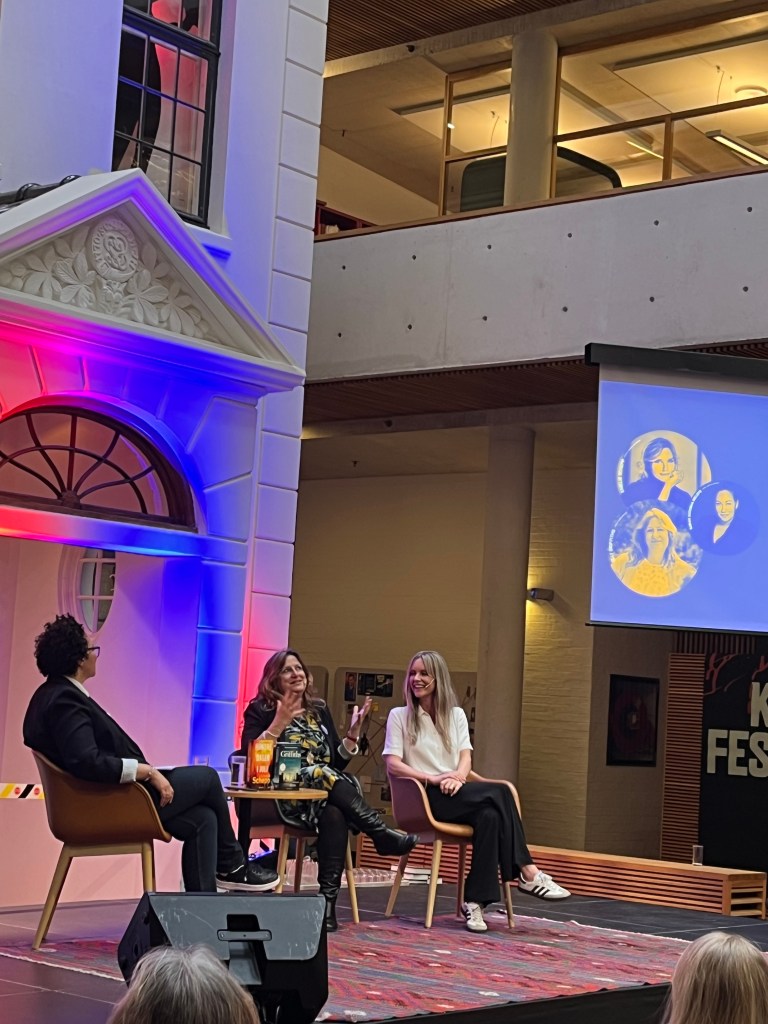
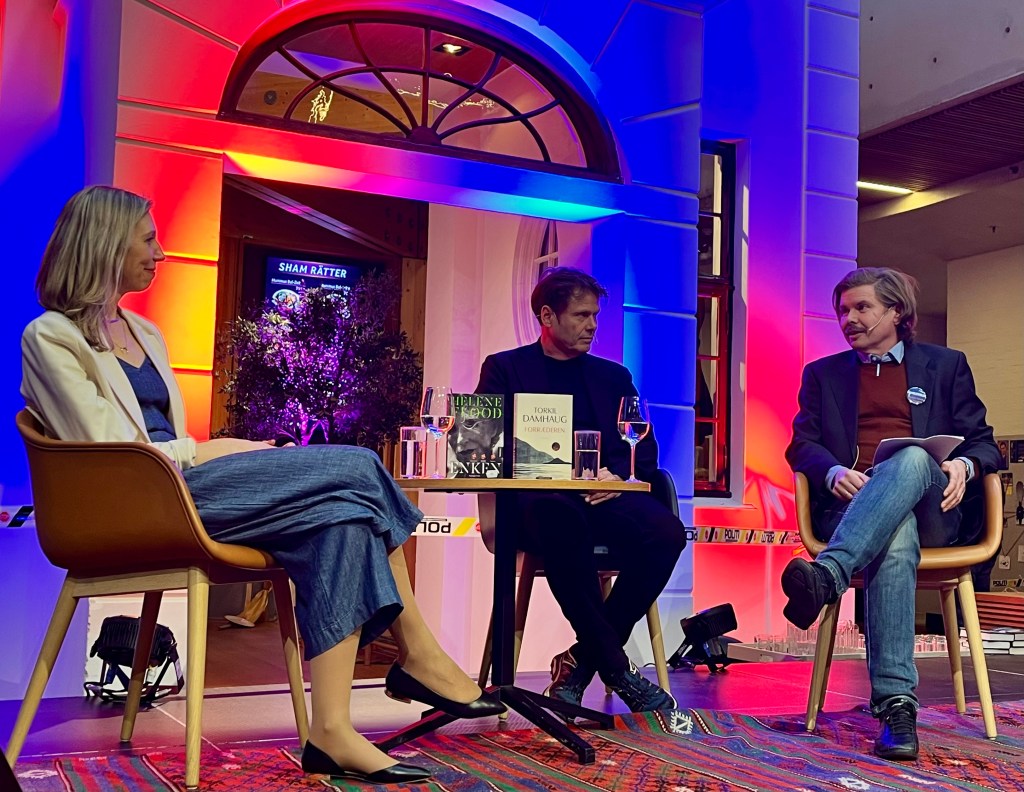
I spent several hours at Krimfestivalen, listened to the chats between Sarah Natasha Melbye and the Swedish mentalist and writer Henrik Fexeus, and later with immensely popular Elly Griffiths (UK) and Emelie Schepp (Sweden) about their fascinating and strong female characters: Ruth Galloway, Jana Berzelius and Maia Bohm. The powerful and often flawed fictional heroines are undoubtedly unforgettable. Helene Flood (The Therapist, The Lover), Torkil Damhaug (Medusa, Certain Signs That You Are Dead) and editor Marius Fossøy Mohaugen shared some of the intricacies of how to write a good authentic psychological thriller. The ‘who’ isn’t as important as ‘why’ to make people’s actions and motives believable.

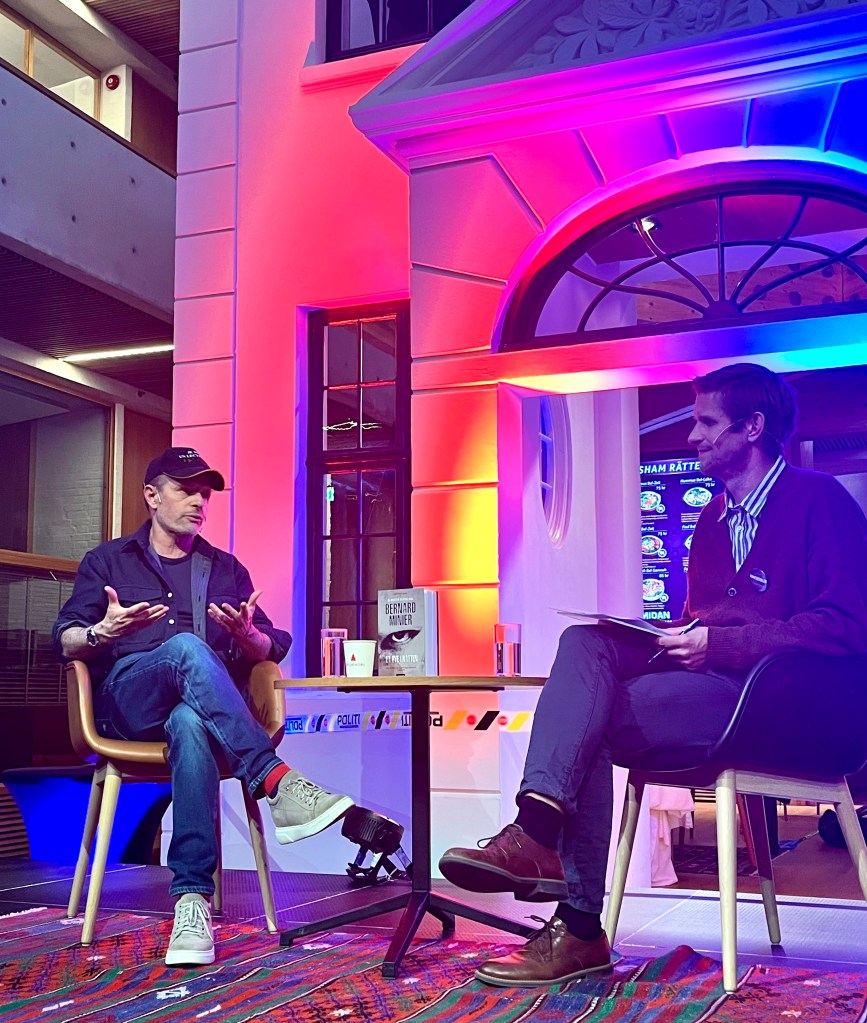
It was getting late when French Noir took over with the French author Bernard Minier and the French resident Aslak Nore in conversation. I enjoyed Night by Bernard Minier and am looking forward to reading Havets kirkegård / The Sea Cemetery by Aslak Nore.

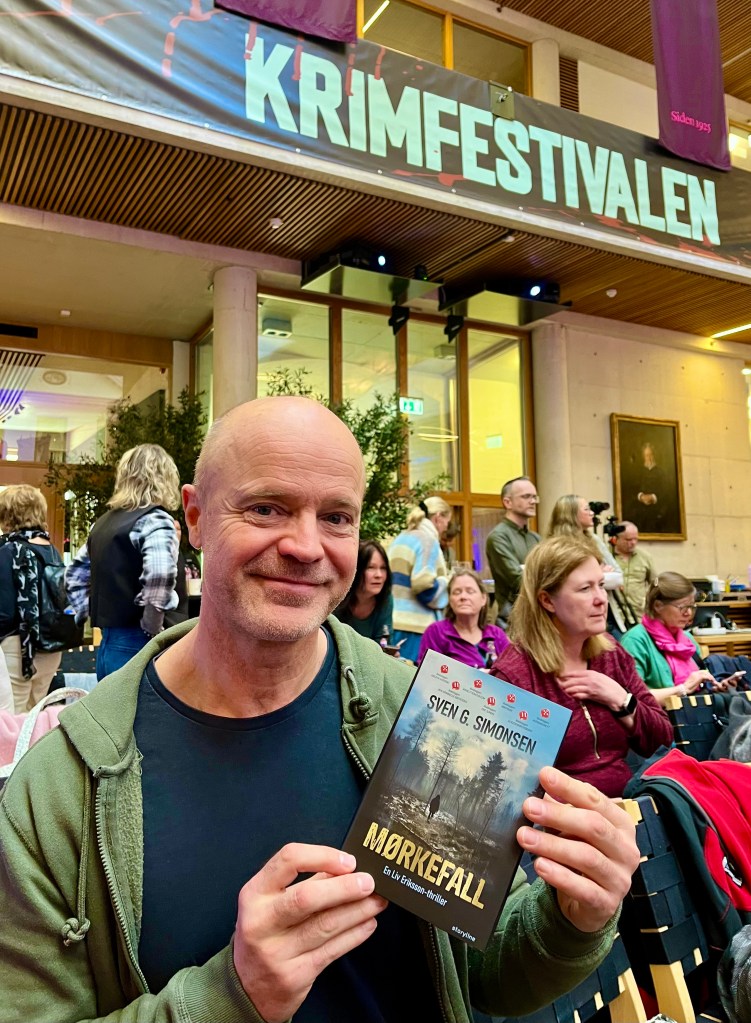
Only one day at the festival. Overwhelmed and tired in the best way possible, I felt that ‘my’ tribe is doing great. I got a new book: Mørkefall by Sven G. Simonsen, and had others signed. I didn’t miss my train home.

One of the exciting moments during the festival is the announcement of the nominees for the Riverton Prize / Golden Revolver 2024, to the author of the best Norwegian crime fiction work in the previous year:

  • Du kan kalle meg Jan / You Can Call Me Jan by Anne Elvedal
  • Fuglekongen / The King of Birds by Eva Fretheim
  • Den ingen ser / The One No One Sees by Terje Bjøranger  
  • Tørt land / The Lake by Jørn Lier Horst
  • Kongen av Os. Kongeriket 2 / Blood Ties. The Kingdom 2 by Jo Nesbø

This year’s prize will be awarded next month.

Nordic Noir & Beyond

I was feeling quite nostalgic about the time when ScandiGang was in full swing. You might have never heard of it but for a group of us it was an amazing experience to be together in person and online and discuss all Scandinavian and Nordic things, go to various events, take photos, talk to big and small stars of the screen, eat cinnamon buns, and generally feed our hunger for NordicNoir. Most of it was possible to our patron saint Jon Sadler who at the time worked at Arrow Films, was instrumental in setting up Nordic Noir TV and its presence on Twitter and Facebook, and organised Nordicana, a hybrid film and literary festival in London. I was at first Nordicana in 2013, then in 2014 and 2015. After reading Jon’s recent post about his opportunity to build a successful brand that brought ideas, fun and frienships together, I looked through my old photos and comments, and found my old post about Nordicana #3.

So here’s it is, originally published on 12 June 2015 on Nordic Noir blog, run by my late friend, the irreplaceable wonderful Miriam V Owen. The blog is full of interesting articles by Miriam and her friends who shared her passion for NordicNoir in all its creative forms. It still available online and I would like to repost some of my earlier texts from my pre Nordic Lighthouse time.

‘ScandiBingo is my real passion, especially when it comes to books, films and TV shows. But when you also get food, drink, maps, mugs, T-shirts, design, culture and travel at the same place then playing the game is just amazing. And what better opportunity to shout ScandiBingo than at Nordicana which brought together all things Nordic Noir and beyond at the Art Deco Troxy in London on 6th and 7th June 2015. As the UK’s only festival of Scandinavian crime fiction the third Nordicana was an engaging, thrilling event and one that hopefully will be organised again.

So on Saturday, also the National Day of Sweden, I was there in search of ScandiBingo stars and heroes. Although tempting, it was impossible to be at two places at once. But ScandiGang friends immersed themselves in the rich programme of screenings, signings, informal chats and so throughout the day we swapped stories and smiles, soaked up the relaxed atmosphere and smell of Scandinavian cooking, and occasionally looked distinctly blue thanks to the lighting in the venue’s ‘mingling’ area.

Honest Cooking: The Simple Art of Scandinavian Food talk here, screening of a brand new French crime series Witnesses there… And a live theatrical performance, by the theatre group Foreign Affairs, of The Contract Killer, a Danish play by Benny Andersen (no, not of Abba’s fame).

Barry Forshaw, Sarah Ward, Quentin Bates & Jakob Stougaard-Nielsen

The literary start of the Nordicana was The Origins of Nordic Noir session, chaired by the omnipresent expert Barry Forshaw, who officially opened the event. Three panelists knew their subject inside out: Sarah Ward, author of In Bitter Chill, and one of The Petrona Award judges (for the Best Scandinavian Crime Novel of the Year), Quentin Bates, author of Frozen Out and further five books set in Iceland, and Jakob Stougaard-Nielsen of UCL Scandinavia Studies who is currently working on his book Scandinavian Crime Fiction. It’s definitely on my ‘To Read’ list. It was a fascinating discussion about the past, present and future of the Nordic Noir genre from different perspectives, experiences and backgrounds.

At the same time the main stage welcomed an exclusive premiere of the episode heralding the new season of the tense, brilliantly acted family drama The Legacy (Arvingerne), followed by a Q&A session with the cast members: Trine Dyrholm, Jesper Christensen and Marie Bach Hansen. Judging by the audience’s reaction after this session I’m certain that second season of The Legacy will be as complex and explosive as the first.

Beautiful and talented actress Sofia HelinThe Bridge star, interviewed by Angie Errigo, took us into the mind of the Swedish cop Saga Noren, a character who is so lonely in social situations, yet who cares about other people and doesn’t want to be lonely. Sofia missed Kim Bodnia who won’t reprise his role as Danish cop Martin Rohde but understood the change was a great thing for series three of The Bridge.

Sofie Gråbøl in conversation with bubbly Emma Kennedy, author of The Killing Handbook, showed how warm, friendly and utterly charming she is, and how different she is from her most famous creation, iconic Danish detective Sarah Lund. Sofie talked about the intense yet unbelievably enjoyable process of making The Killing (Forbrydelsen) and working with the scriptwriter and creator of the series Søren Sveistrup: ‘Writer is a God’. Asked whether there could be a fourth series Sofie replied that there is beauty in ending something that’s still good. She’s got the point, although I’d be happy to see her as Sarah Lund again. And again. Sofie also talked about the incredible chemistry when working with her friend Søren Malling on other projects as well (The Hour of The Lynx), and about giggling which sometimes turned the most heart breaking scene into a fit of laughter and connection: ‘When you giggle you have a certain connection with another actor. It’s akin to tickling emotion, embarrassment, and feeling’.  The highlight of the conversation (and Nordicana!) was a sudden appearance of Søren Malling on stage when overjoyed Sofie couldn’t believe her eyes. And neither could we!

Danish ambassador Claus Grube introduced the screening of deeply moving series 1864. Watching the penultimate episode of shocking yet mesmerising historical drama on the big screen confirmed what we all knew: war is hell, politics seems a game to those who can afford to play, and the ordinary people find themselves helpless. Yet the acting, the drama, the emotions were so powerful! I was left feeling teary and speechless until excited Marian Keys appeared with the stars of the show: Danes Søren Malling, Sarah-Sofie Boussnina, Marie Tourrel Søderberg and Jens Sætter-Lassen, and a charismatic Norwegian Jakob Oftebro. The show contradicted the claim that there are only thirteen actors in Denmark (totally untrue!) and the ‘architects’ of these high quality shows tapped into the whole creative Scandinavian talent, regardless of borders. Discussion centred on Denmark’s response to the show and it demonstrated how differently history is seen through eyes of different generations.

Me with Søren Malling

Camilla Hammerich, author and Borgen producer discussed her work relating to Nordic Noir television and how she turned the intricately woven political series into a worldwide phenomenon. Camilla was overwhelmed by the fans’ interest, queueing for a quick chat and to have a copy of her book The Borgen Experience signed.

The screening of the first episode of the critically acclaimed Swedish mystery thriller Jordskott, and then Q&As with the leading actress Moa Gammell,  creator/co-director Henrik Bjorn and producers Filip Hammarstrom and Johan Rudolphie generated quite a lot of interest from those in the audience.

I cannot wait for Nordicana 2016. In the meantime I’ll be following all Nordic Noir & Beyond stories…’

So this was ten years ago… 🙂

Anne Holt at the BBC World Book Club

Whatever you do this weekend you must also find time to listen to a fantastic BBC World Book Club programme. Last November I was very lucky to sit in the audience during the recording of conversation between BBC’s Harriett Gilbert and the Norwegian writer Anne Holt about Anne’s book 1222. I even asked a question. Harriett Gilbert is a writer, journalist and literary editor and presents also A Good Read on Radio 4. I think Anne Holt, known for her sensible and brave political and social views, doesn’t need introductions: her writing career has been absolutely amazing, rich in interesting characters and story plots, showing the darkness of Scandinavia at various levels. She used to work as a lawyer and was a Minister of Justice, and is a truly engaged person, interested in what’s going on in the world. I’ve been a huge fan of her work, novels including A Grave for Two (2019) and A Memory For Murder (2022).  

Harriett Gilbert and Anne Holt

When published in 2007 the book 1222 was not embraced warmly by the critics in Norway. However,  since then it became one of the most significant and loved by readers around the world. I read it ages ago on the train (where else?) from Oslo to Bergen, and loved translation to English by Marlaine Delargy.

Happy New Year 🥳

Good evening to you all… Hope 1st January has been a good relaxing day. I went for a long walk in the forest with my son, we fell down several times on the icy paths covered by new not-snowman-type snow, then we helped our best friends with snow shovelling and had hot dogs by a fire in the cold white garden. Feeling lazy and content I want to recommend links to the pages that you should or could follow, pages by wonderful bloggers who enjoyed the novel below…

The new year 2025 is very young and full of promises for all of us as we look into the future and want the goodness of the world to win. Again and again. Just like it often happens in the books of various types, and especially in the crime fiction genre. And right now I want to go back to the recent past for long enough to enjoy the strange marvellous beauty of Chris Ould’s latest translation: The Island of Lies by the mysterious O. Huldumann, published a couple of months ago. I organised a blogtour for this Nordic Noir book and so did not write a review for my own blog. However, if I may I would love to share what our favourite Scandi Brit / Icelander Quentin Bates wrote here: The Huldumann Enigma.

The Island of Lies follows Citizen DetectiveCitizen Detective, also translated by Chris Ould who is much better known among crime fiction fans as the author of the fantstic Faroese Trilogy, set, yes, in the Faroe Islands and seen from the perspective of a semi-ousider. Details and reviews can be found in the links.

This is also a perfect occassion to thank brilliant bloggers who support books in all forms, and spread the word about titles and authors that they find interesting, and who are not afraid to read the unusual. I’m sure you are familiar with their insightful posts but I will list them here as a reminder. Thank you Peter turns the pageBrown Flopsy’s Book Burrow, Angry AlgonquinShots BlogWild Writing LifeLove Books, Read Books and West Words Reviews. Happy New Year!

Kallocain by Karin Boye

Leo Kall, a research chemist and a very obedient citizen, has been working on a revolutionary new drug that will force everyone to share the most private and innermost personal thoughts. Police are keen to use Kallocain as a new interrogation technique to crush citizens of the totalitarian ‘World State’. Leo begins to feel alienated and terrified.

Let me start with mentioning the translator David McDuff who did an incredible job bringing this pioneering work of dystopian fiction from a Swedish author into emotive and taut precise English. He also wrote an introduction to the novel, and I would like to quote some of his words to get a better understanding of the poet, novelist and essayist Karin Boye. Her science fiction novel, written in 1940, presented a ‘vision of enslaved humanity, an allegory dream- like and grotesque, yet instantly recognizable to anyone then living through the international crisis.’ It is a novel from one of Sweden’s most acclaimed writers that we know nothing or very little of.

I was reading Kallocain with trepidation, shocked by the incredible clarity of literary vision of its author Karin Boye. It depicts a totalitarian ‘World State’ designed to crush and obliterate the individual and all private thoughts. It is also pure Nineteen Eighty-Four even though it was written eight years before George Orwell’s dystopian classic, with touches of The Handmaid’s Tale which I just couldn’t handle. Boye’s fictionalised futuristic world was influenced by the contemporary unfolding events of the Second World War and two apparently opposing systems: ‘ice-cold reasoning’ of Hitler and the ‘merciless dialectics’ of Stalin’. This chilling and totally absorbing tale follows the research chemist Leo Kall, a very obedient citizen and middle-ranking scientist. He is a Fellow Solider, just as his wife is, and as his three children will be. Their life is rigorously compartmentalised in the society divided by basic skills and needs. Leo has been working on ‘truth drug’ Kallocain which will force truth of anyone when the liquid is injected straight into the bloodstream, making people fall into a sleep-like state and saying what’s on their minds, even the most personal opinions, hidden deep down in subconsciousness. When the drug stops working, everyone is aware and often intensely ashamed of sharing everything. The authorities are excited: ‘Kallocain gives us the possibility of controlling what goes on in people’s minds’ and will replace all other methods of interrogation.

Leo and his superior start initial tests on ‘five subjects from the Voluntary Sacrifice Service’ which proved satisfactory and more ‘human material’ gets brought in to experiment on. Soon the top police get involved, production of Kallocain goes ahead, other Fellow Soldiers are trained to administer it – and Leo begins to fear for his own life. Surrounded by ‘police eyes’ and ‘police ears’ – cameras and microphones – which are in the walls of apartments and houses, and lacking any sense of security at home as Linda often vanishes without a word, he, like everyone else, is terrified of being denounced and found guilty of not denouncing others. Because this is happening as more injections are given to anyone who dares to think differently, more arrests and deaths. However, he realises that there is a seed of opposition in the society, and equally scared of being own person.

Karin Boye paints a bleak desolate landscape of underground buildings and corridors; with a need for surface permissions; dehumanised and alien, lacking colours and smells. Grim. Leo tells his story from the prison where he’s been for over twenty years, not sure how long because of the isolation and induced timelessness, and still continues as a chemist, his existence being still terrified but also a little bit brave and resigned that he must not be completely silent. Whatever happens to him afterwards is unclear; however, I believe that any reader of Kallocain by Karin Boye will be shaken to the core.

Karin Boye (1900–41) was born in Gothenburg, Sweden and studied in Stockholm and Uppsala. As a young woman she joined the international socialist and pacifist organization Clarté and published her first volume of poetry while still in her early twenties. She translated T. S. Eliot’s The Waste Land into Swedish in 1931, and wrote several novels throughout the decade. She married a fellow writer but left her husband after undergoing psychoanalysis in Berlin and formed a lifelong relationship with a German woman, Margot Hanel. Boye’s most famous book, Kallocain (1940), was partly inspired by eye-opening trips to Nazi Germany and Soviet Russia. She died from an overdose of sleeping pills the year after writing the novel.
David McDuff’s translations for Penguin Classics include Dostoyevsky’s Crime and Punishment, The Brothers Karamazov and The Idiot, and Babel’s short stories.

Winner of Petrona Award 2024

The winner of the 2024 Petrona Award for the Best Scandinavian Crime Novel of the Year is:

DEAD MEN DANCING by Jógvan Isaksen, translated from the Faroese by Marita Thomsen and published by Norvik Press. Jógvan Isaksen will receive a trophy, and both the author and translator will receive a cash prize.

The judges’ statement on DEAD MEN DANCING:

Similar to the story of the ancient god Prometheus, a man has been shackled to rocks on the Faroe Islands, and left to drown on the beach. The discovery of his body throws the local community into an unsettling chaos, and as the journalist Hannis Martinsson investigates, he comes across evidence of similar deaths. He realises they are linked to the events in Klaksvík in the 1950s, and a local revolt which tore the community apart. As Martinsson digs into the troubled past, he learns about his country’s history, and also gives the reader a chance to discover what makes the Faroes intriguing and spellbinding. Being a largely unknown territory to most, Dead Men Dancing includes a useful introduction to the modern reality of these islands by the CEO of the Faroese Broadcasting Corporation, mirrored by the social commentary that lies at the heart of the book itself, and the portrayal of the relationship with Denmark throughout the years.

This is only Isaksen’s second novel to be translated into English following Walpurgis Tide. This contemporary Faroese crime fiction writer places his characters in the wild, beautiful, and unforgiving environment and allows them to search for truth. The judges found the location to be absolutely integral to the unfolding of the plot, and how the raw natural beauty of the Faroes served as a reflection of the thoughts and actions of the characters.

Dogged and uncompromising, Martinsson is a superb creation, similar in his ‘detective’ thinking and approach to Gunnar Staalesen‘s lonely wolf PI Varg Veum, which the judging panel found very appealing. Martinsson’s gloomy demeanour and natural cynicism was beautifully balanced throughout with the more empathetic side of his nature, and in the age-old tradition of crime fiction his personal and professional relationships are fraught with tension.

The translation by Marita Thomsen is both accomplished and a little unusual, drawing as she does on the vernacular and intonation of the Scottish dialect. Again, the judges found this to be refreshingly different, and enjoyed the unique cadence and rhythm this gave to the book overall, an essential quality of any book in translation.

The judges agreed that in Dead Men Dancing the balance between location, plot and characterisation worked well, incorporating some of the familiar tropes of crime fiction, but also providing a refreshingly different reading experience. This was achieved by the depiction of the Faroes themselves and their history, working in symmetry with the narrative, and also by the characterisation of Martinsson, reminiscent of the traditional spare style in Nordic crime fiction. The assured and distinctive translation was also a significant factor in the judges’ overall decision.

Statements from the winning author, translator and publisher:

Jógvan Isaksen (author):

I feel it is a great honour to win this award, especially when I see that the competition includes several of my favourite Scandinavian authors. I am also proud to represent my country, the Faroe Islands, a self-governing part of the Danish Kingdom with its own language and traditions. Furthermore there are special bonds between the UK and The Faroes since the friendly occupation during World War II. I personally became a member of Collins Crime Club when I was only thirteen, and fought my way through crime novels I could hardly read. But at last I got there and have for many years been an admirer of Agatha Christie, Dorothy Sayers, Eric Ambler, Colin Dexter, Ian Rankin and many, many more.

Marita Thomsen (translator):

It was thrilling to translate the Faroese novel Dead Men Dancing and a great honour to receive the Petrona Award. I am privileged to find myself in the company of the master crafters of stories and languages shortlisted this year, congratulations to all! My thanks first and foremost to Jógvan Isaksen for keeping us in suspense, as he navigates the rugged outlines of the psychology and wild shores of the Faroe Islands. This book offers a fascinating window into regional tensions in the archipelago and historical tensions in the Kingdom of Denmark. Thank you to the passionate Norvik team for expert guidance and editorial advice. And to Richard and Jane for your patience and boundless enthusiasm for everything, even the difference between rowing boats and oared boats.

Janet Garton (Norvik Press Commissioning Editor):

We are delighted that Dead Men Dancing has won this year’s Petrona Award. Jógvan Isaksen is a master of suspense, and his maverick amateur sleuth Hannis Martinsson takes the reader on hair-raising trips by land and sea before – of course – solving the mystery before the frustrated police. The Martinsson series was the basis of the successful TV series TROM, and this is the second of the series to be published by Norvik Press, after Walpurgis Tide in 2016. Hopefully there will be more to come!

The Petrona team would like to thank David Hicks for his continuing sponsorship of the Petrona Award. Petrona Award 2024 – shortlist