
A young criminologist Helgi Reykdal is finishing his MA dissertation on so called ‘deaths at the sanatorium’, a thirty-years-old case. Stuck in an unhappy relationship and unable to decide on own future in the UK or in Iceland, Helgi focuses instead on what he thinks were murders and begins to follow his far-fetched theory.
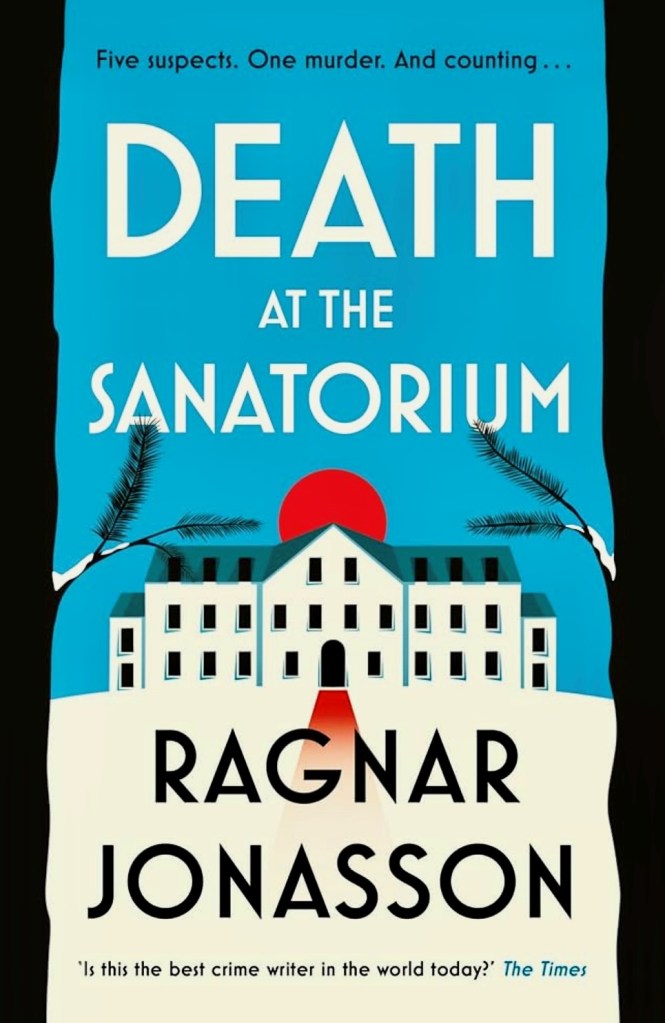
Old sanatoria are not fun places, especially if they are in quite isolated locations and provide care for very ill or dying people. Akureyri tuberculosis sanatorium was such a place, as it stood high up in the mountains in the northern Iceland, surrounded by beautiful nature and very dark memories. In the 1950’s there were still many cases of TB and the medical staff did the best they could to ease their patients’ pain, though death and suffering were always present. In 1983 only one wing of the hospital building remained open to allow conducting of the research, and only six employees worked there: two doctors, two nurses, a caretaker and a young research assistant. When one of them, nurse Yrsa, was found dead in horrible circumstances in her office, others initially became suspects, and an ambitious detective Sverrir Eggertsson was called from Reykjavik. He conducted investigation, assisted by more experienced Hulda Hermannsdóttir, also from CID in the capital, aiming to wrap up the case as quickly as possible. Hulda, known from a previous series of Ragnar Jónasson’s books, wasn’t so keen to follow flaky evidence from a nurse Tinna but had no say. A caretaker Broddi was arrested. Then a body of a doctor was found on the ground. It seemed a suicide, and so Sverrir concluded the investigation. Case was closed but not exactly forgotten.
Nearly thirty years later Helgi Reykdal, a young criminologist finishing his MA dissertation on so called ‘deaths at the sanatorium’, had decided to re-examine a cold case from a purely academic perspective, armed with the latest criminological theories. Fascinated by the classic whodunnit detective stories, Helgi started digging through old documents and news reports, and reluctantly made contact with the sanatorium’s members of staff who in a meantime moved to Reykjavik. Although his intention wasn’t to become an investigator in this situation, his dedication proved very useful.
I appreciated the complex intertwined history between the main characters in the story spanning nearly sixty years and shown from different perspectives. Here the author brilliantly places opinions and thoughts in the social context. Personal experiences and feelings at the time influenced the explanation of possible reasons behind two deaths which Helgi considered to be murders. Small clues are thrown around the novel and any self-respecting fan of Agatha Christie would be able to draw lines between them. Aided by the unsettling connections between people now and then, the sense of foreboding and danger never leaves the reader, and as Helgi keeps working on his semi-investigation, the tension steadily grows. I must admit it was difficult to warm up to the main characters but I understood why they behaved the way they did, regardless of what their moral compasses could have shown. For example Helgi’s uneasy relationship with his girlfriend Bergthóra affects his indecisiveness and how he deals with life generally, or why Braggi’s sense of injustice and despair colour the novel’s mood. Overall Death at the Sanatorium, translated by Victoria Cribb, is an engaging read in Jónasson’s trademark style, combining classic solid ‘technical’ analysis of crime and the strong sense of place.
 Nordic Lighthouse