
I’ve been through the desert on a horse with no name
It felt good to be out of the rain
In the desert you can remember your name
‘Cause there ain’t no one for to give you no pain
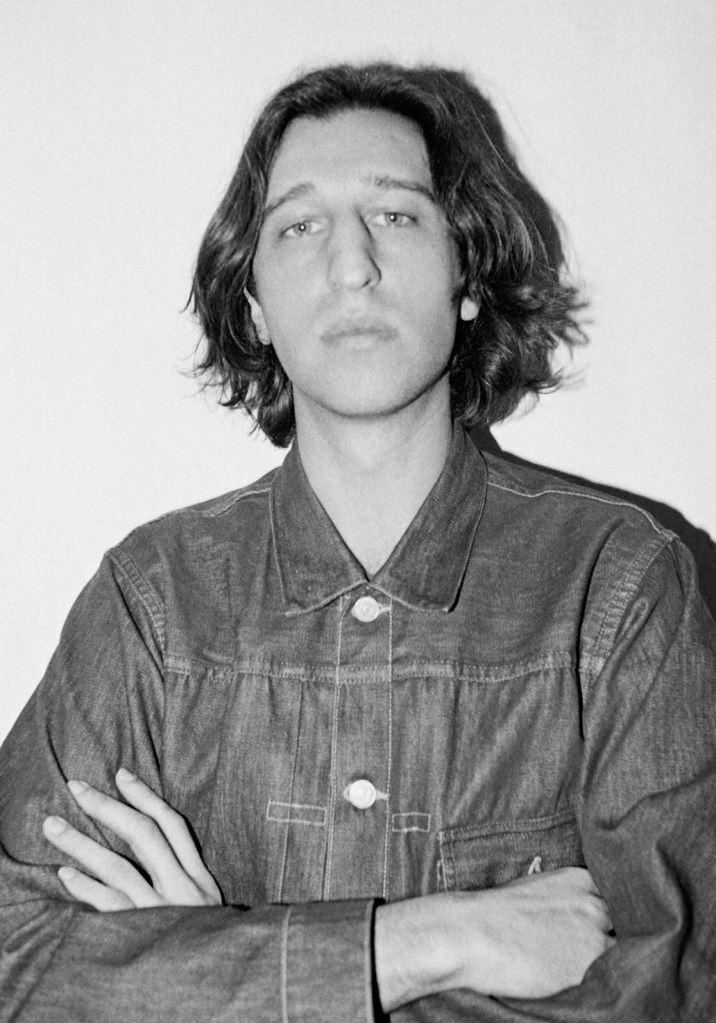
The classic image of a Wild West cowboy on his faithful horse kept popping in my head while I was reading Bruce Omar Yates’ first novel The Muslim Cowboy. The author, born in London to an Indian mother and an English father, grew up in the south of France before returning to London to study Literature and Film at King’s College London. He was principal songwriter in the rock groups Famy and Los Porcos. But here Bruce Omar Yates finds himself in the Middle East telling a tale of the aftermath of the Iraqi war, as far from my usual Nordic climates as imaginable.
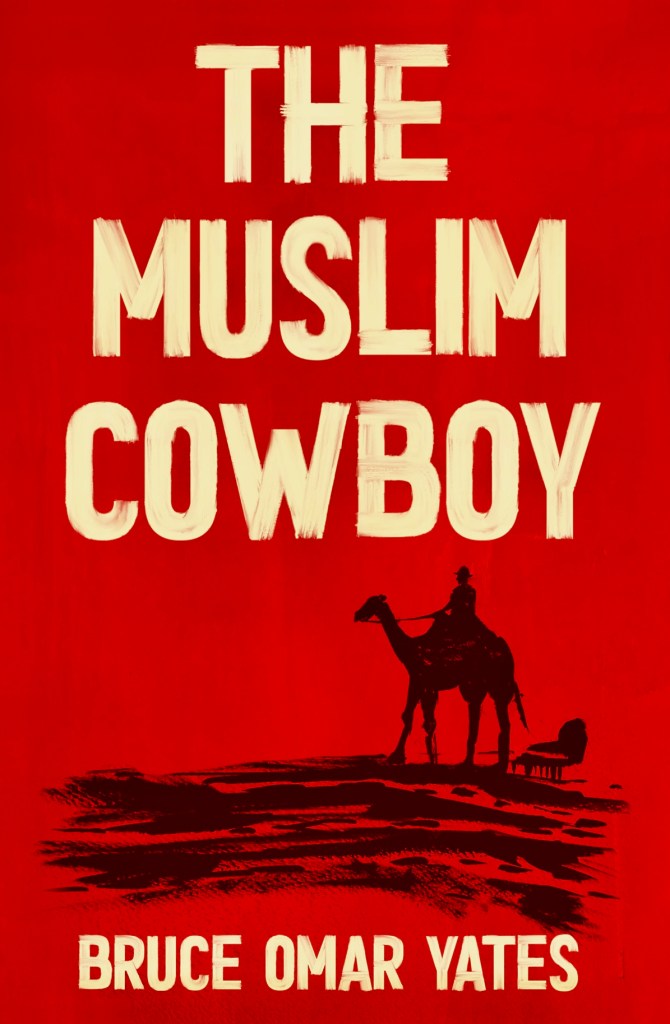
Hypnotic flowing prose, expanse of desert plains in the dangerous post-war atmosphere, travelling alone, fearlessness, following the nature’s universal clock. Alas, this cowboy seems different: clad in double denim, sporting suitable hat, smoking a vape and carrying minimal number of earthly possessions, he indeed lacked name until he was given one: ‘the American’. His loyal steed in contrast was in fact a nonchalant spitting camel called Hosti, constant and unremitting and moaning, but used to the burning sand and strong winds. Together the man and the animal cross vast spaces in search of safety. Yet this safety, this idealistic mental and physical space is impossible to locate, amid the ruins and moral destruction.
The cowboy avoids human contact, hides from any possible confrontation; he just keeps on hoping to abandon his humanity and any connection to his land. He withdraws to the good old-fashioned movies with clear definitions of virtue and principles, where moral compass always works. He drinks Coca-Cola, speaks only English and re-watches old westerns on a portable player. He also prays regularly just as his faith requires. This is his method to cope with the self-imposed loneliness, and to protect himself from pain, grief, sorrow, fear. Survival without emotions becomes the overwhelming goal. Difficult to achieve. When he encounters Nadia, a young girl in an abandoned house, alone with a body of her mother, he feels compassion, and reluctantly decides to take her to his friend where she would have a chance to stay safe. He doesn’t want to admit to himself why he’s taking care of bereaved girl, he doesn’t want to reveal his feelings and the universal need to help and be needed. He has buried his vulnerability.
‘The man and his camel ramble then slowly through an unparticular portion of the naked desert which is pathless and brown and of gravel and dust. As the sun rises to its full intensity the man sees his shadow stretched out and warped before him with its hat and its collar and its camel, and throughout that morning and afternoon he indulges in its outline as its owner. They trudge baked beneath the hot sun until at some point from under the brim of his hat the man squints and sees hovering blobs of darkness that emerge from the dirt and then begin steadily to grow and wobble on the horizon.’
So they begin to travel together, the girl wanting to become friends, him frightened of being close to another human being: ‘In Iraq it’s better not to think about friendship. The most important thing is to survive,’ and then he says, ‘Friendship is bad for survival,’ and, ‘To have friends is to be attached, and after two become attached is when they can be split.’ As they move further from one danger, there is a constant risk of another, as well as the prospect of incomprehensible atrocities from those who took over the country and deliver violent judgments on who is a coward, or a traitor, who deserves to die or who might be useful for a while. Schism in the country, bad ‘Ali Babas’, police, army, Shia militia and Sunni Muslims, Haters and Rejectors. The cowboy – the American while he’s with girl – would like to be an iconic hero but can he really overcome the brutal reality of punishing heat and threat? Does the escape into the archetypal role of a cowboy provide any psychological and spiritual security?
The apparent simplicity of Yates’ narration and language in the Middle Eastern style of One Thousand and One Nights’ storytelling creates a near magical mood and sense of belonging in the bleak beautiful landscape. Bruce Omar Yates writes with passion hidden underneath everyday post-destruction reality. His way of dividing the novel into three distinct but connected parts creates a conduit to analyse three famous westerns and the ethical points: ‘And in those films the man hadn’t only seen the distinct templates for good men and bad men and for a life of questing and justice where actions could lead to clear consequences in contrast to the many ambiguities that had been imposed on him and his country of late, but he had also seen the template for the life of a survivalist, and though his favourite characters were maybe of ignorance and self-indulgence they were also of fairness and honour.’
The Muslim Cowboy is out on 22nd August and you can get a copy directly from the publisher Dead Ink Books or here. Thank you Antara Patel (FMcM Associates) for the invitation to join the blogtour and for the early copy of the book.
 Nordic Lighthouse