
‘It only takes a little damage to turn glass into a weapon.’
Sarah Hilary, the author of D.I. Marnie Rome series, and standalone novels Fragile and Black Thorn, often takes a thought, an idea, and turns it into the most gut-wrenching yet uplifting story, and here in Sharp Glass again she creates an intriguing tense tale that brings the nuanced powerful exploration of life and of every individual person that enters her fictional world. Fictional but firmly anchored in realistic events. She takes obsession to another level of painful but necessary process of understanding and overcoming. The empathy shimmers around, sometimes it shouts, sometimes it just whispers, and every single word has its place, even if it brings doubt and distress. While reading Sharp Glass I was under the impression that Sarah Hilary was living inside the novel and processing every minute experience that her main characters had to face.
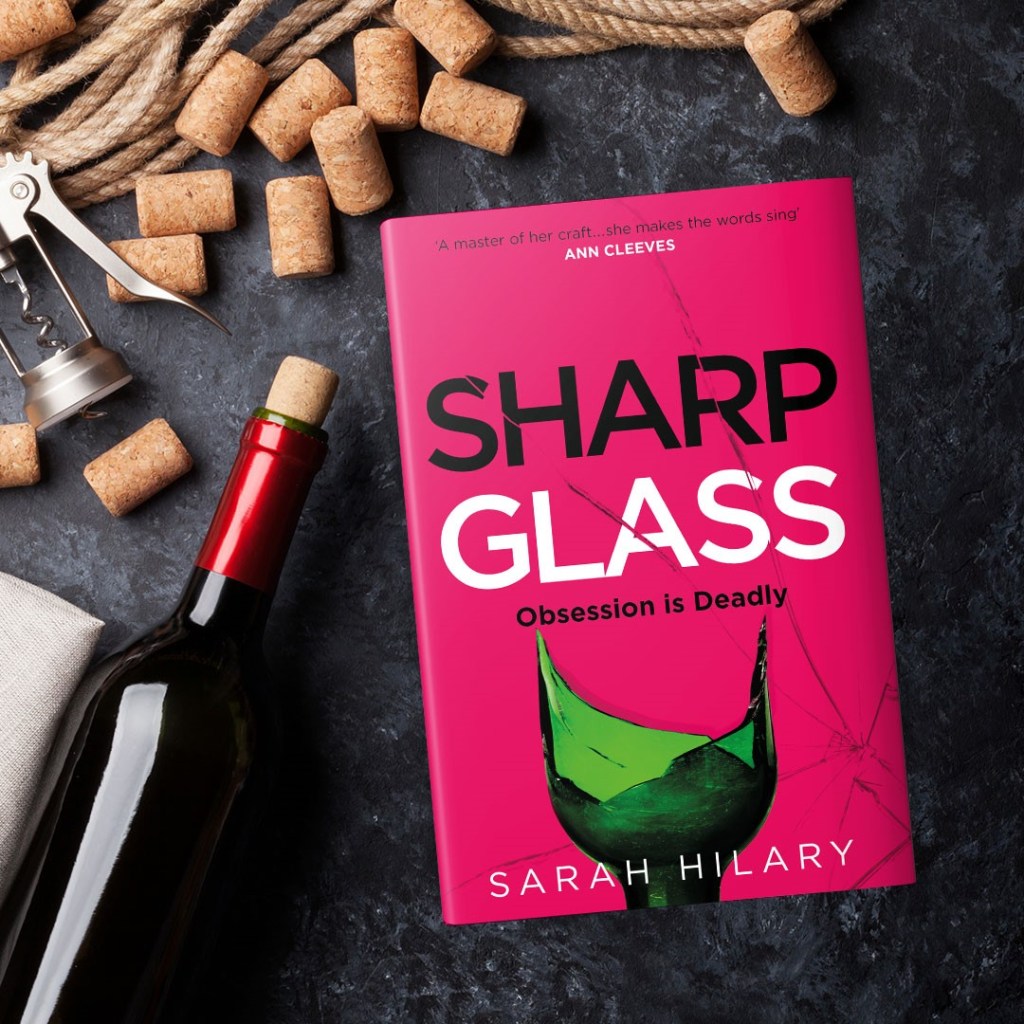
The last thing she remembers is standing outside the empty house. One she was employed to pack, ready for removal. Her job is her life. It is her compulsion to take care of an owner’s precious possessions, to do whatever it takes to help them move on. Now she is cold, dirty, damp, trapped in its cellar with no chance of escape, miles from anywhere. His prisoner.
And then he returns.
Her captor believes she holds the answers to why a young girl was murdered a year ago. He refuses to let her go until she reveals her secrets. But he doesn’t know she has hidden depths, and an anger she works hard to control.
The battle lines are drawn. They are the only two people who can solve the mystery of the dead girl, but when the truth is revealed whose life will shatter…?
What a premise! If you could just imagine the isolated location where the house imposes its dark presence, full of practical challenges and infused with memories and drama that take over logic and any rational thinking. The professional packer Gwen Leonard arrives to prepare contents of seven rooms for removal, keen to get going after the offer from Clare Miranda, a series of job cancellations, and quite traumatic recent assignment which led her to detective-like decision to find the killer of a teenage girl Elise Franklin murdered a year earlier.
Gwen, secure in her practical abilities, begins to unravel while locked in the cellar: ‘There is nothing you can teach me about packing, about neatness. It’s only people who puzzle me. Their attachment, for instance, to broken things.’ This new shocking situation leads her to assessing everything about own life, and to digging through deep concealed layers of secrets, unforgiving memories and thoughts that are not welcome. Panic and confusion settle in, and so do defiance and anger. We can feel there’s something else underneath the logical descriptions and emotions (can they be even called that?) associated with the confinement, the loss of freedom, the captivity. The thinking trajectory goes overboard, winding its way through assumptions, despair, puzzlement, some reckless randomness: ‘How an estate agent would describe my cellar: ‘Deceptively spacious and unspoilt, the perfect project, full of original features.’ How I describe it: Airless, windowless, packed with the smell of myself. Secret, hidden, torturous. A prison.’
‘I buried the last person who lied to me’ isn’t the most trust-inducing statement from the man who keeps her prisoner and insists her name is Grace Maddox. However, he seems to keep both his anger and distress at bay and is relatively kind in the circumstances. In order to maintain semblance of reality Gwen makes lists in her head, and tries to focus on survival and revenge. When a chance of escape appears she grabs it like a mad obsessed hallucinating person that she became after twelve days of captivity, not enough food, water and light, too much darkness, and the evolving desire to avenge Elise that pushes her now. Daniel Roake, child genius, well-educated ophthalmologist ‘knew he was losing his mind; he’d known it for days. A terrible thing had happened. But when he tried to get hold of it, his sight failed.’ He also has terrible gaps in memory which might have been caused by psychotic break, and many repressed feelings that worked on for years to ignore. The one thing that keeps him from descending into total madness is belief that Gwen / Grace knows about Elise’s killer and somehow would be able to help to connect confusing elements of the tragic puzzle.
Love, loss and rage encompass so many tiny details that are life. Power and violence are reactions to what life brings. The two main characters of Sharp Glass need each other to find way of living with childhood trauma and the current ‘fire, flood, explosion’ situation, of learning to trust, and maybe of accepting forgiveness. Their families and friends also need some peace which might be impossible to find. We, the readers, are privileged to join their journey of deep connections and exposed vulnerability. We will be safe but changed at the end of it. Sarah Hilary could say ‘I’ve never yet lost anything precious in transit.’ Very true.
The link to Sharp Glass by Sarah Hilary which is out on 11 July.
 Nordic Lighthouse